
⏱ 32 min read
Table of Contents
- What Is Kalanchoe? A Quick Plant Portrait
- Kalanchoe Plant Blooming Care: Light Requirements
- Watering Your Kalanchoe the Right Way
- Soil and Fertiliser for Maximum Blooms
- How to Grow Kalanchoe: Pots, Beds, and Climate Zones
- How to Make Kalanchoe Rebloom: The Short-Day Secret
- Common Kalanchoe Problems and How to Fix Them
- Propagating Kalanchoe from Cuttings
- Seasonal Care Guide for Kalanchoe
- Medicinal Uses and Safety Notes
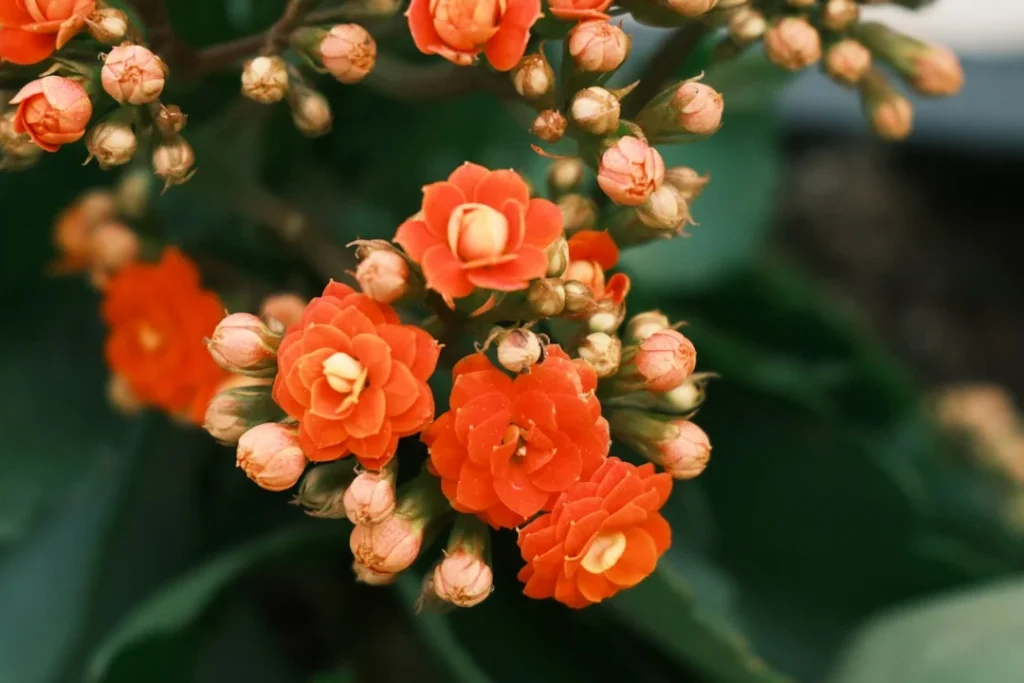
Kalanchoe plant blooming care is simpler than most people think — yet one common mistake keeps millions of gardeners from ever seeing a second bloom. Kalanchoe blossfeldiana is one of the most cheerful, low-maintenance flowering succulents you can grow, indoors or out. It thrives on a sunny windowsill in London, a shaded balcony in Singapore, or a sun-drenched patio in California. Those clusters of tiny, jewel-bright flowers — red, orange, yellow, pink, or white — can last for months with the right care. But getting the plant to rebloom? That’s where the real skill lies. Understanding kalanchoe plant blooming care starts with one counterintuitive truth: this plant needs darkness to flower. Yes — controlled darkness. By the end of this guide, you’ll know exactly why your previous attempts failed, how to trigger a fresh flush of blooms on demand, and how to keep your kalanchoe thriving through every season, no matter where in the world you live. If you enjoy growing this plant, you might also find our guide on Spider Plant Propagation in Water very useful.
Quick Highlights
- Discover the exact light-darkness cycle that triggers kalanchoe reblooming on demand
- Learn climate-specific watering routines for tropical, temperate, and arid growers
- Understand the best soil mix and fertiliser schedule for continuous, vibrant flowers
- Identify and fix the five most common kalanchoe problems before they kill your plant
- Propagate new plants from stem cuttings in as little as three weeks
- Follow seasonal care adjustments for July through every month of the year
Plant Characteristics at a Glance
| Common Name | Kalanchoe, Flaming Katy, Christmas Kalanchoe, Florist's Kalanchoe |
| Scientific Name | Kalanchoe blossfeldiana Poelln. |
| Family | Crassulaceae |
| Origin | Madagascar (southeastern coast); widely naturalised in tropical and subtropical regions globally |
| Habitat | Rocky hillsides, dry scrubland, cliff faces; grows in well-drained, nutrient-poor soils in warm climates |
| Plant Type | Evergreen perennial succulent subshrub; often grown as an annual or biennial in temperate climates |
| Indoor Plant | Yes — excellent indoor plant worldwide; ideal for windowsills and bright indoor spaces |
| Outdoor Plant | Yes — outdoors year-round in USDA Zones 10–12 (RHS H1c); treated as a seasonal outdoor plant in cooler zones |
| Leaves | Thick, fleshy, glossy dark green; ovate to spatulate with scalloped margins; 3–7 cm long; succulent texture |
| Flowers | Small, tubular, four-petalled flowers in dense flat-topped corymbs; colours include red, orange, yellow, pink, white, lilac, and bicolours |
| Flowering Season | Naturally late winter to spring; can be induced to flower at any time of year using short-day (long-night) treatment |
| Fruit | Small follicles (dry seed capsules); rarely produced in cultivation |
| Seeds | Very fine, dust-like seeds; viable but rarely used for propagation; germinate best at 21–24°C (70–75°F) |
| Roots | Shallow, fibrous root system; highly susceptible to root rot in waterlogged conditions; suited to shallow pots |
| Height | 20–45 cm (8–18 inches) as a houseplant; up to 60 cm (24 inches) in warm outdoor climates |
| Growth Rate | Moderate; produces noticeable new growth in spring and summer; nearly dormant in winter without supplemental light |
| Light Requirements | Bright indirect light 6–8 hours daily; some direct morning sun tolerated; 14+ hours complete darkness nightly needed to initiate flowering |
| Soil Requirements | Fast-draining cactus/succulent mix; pH 6.0–7.0; avoid heavy clay or peat-heavy composts; perlite amendment recommended |
| Water Requirements | Low to moderate; drench-and-dry method; allow top 2–3 cm to dry fully between waterings; never allow waterlogging |
| Temperature Requirements | Optimal: 15–29°C (59–84°F); minimum survival: 10°C (50°F); cannot survive frost; avoid temperatures above 35°C (95°F) |
| Humidity Requirements | Low to moderate (40–60% RH); tolerates dry indoor air well; avoid misting leaves directly; good air circulation essential |
| Propagation | Stem cuttings (most reliable); leaf cuttings; seeds (rarely practised). Best done in spring or early summer |
| Uses | Ornamental houseplant; gift plant; patio and balcony container plant; outdoor border plant in tropical/subtropical zones; traditional folk medicine in related species |
| Medicinal Properties | Contains bufadienolides and flavonoids (documented in related species); anti-inflammatory and antimicrobial properties noted in PubMed research; NOT for internal use — toxic |
| Toxicity | TOXIC to cats and dogs (ASPCA-listed); causes vomiting, diarrhoea, and cardiac effects in pets; keep away from children; not for human consumption |
| Cultural Significance | Popular Christmas/holiday gift plant in Europe and North America; associated with good luck and perseverance in some Asian traditions; widely used in feng shui for colour energy |
| Common Pests | Mealybugs, scale insects, spider mites, fungus gnats (in overwatered soil); treat with neem oil solution or rubbing alcohol |
| Common Diseases | Root rot (Phytophthora, Pythium); powdery mildew; botrytis (grey mould) in humid conditions; prevent with good drainage and airflow |
| Special Care Tips | Deadhead spent flower clusters to extend bloom time; cut back leggy stems by one-third after flowering; perform 6-week short-day treatment to rebloom; never leave in standing water |
| Cultural Practices | Start short-day treatment (14 hrs darkness/night) 10 weeks before desired bloom date; repot every 1–2 years in spring; reduce water and stop fertilising in winter |
| Vastu Direction | East or north-east corner of the home; associated with positive energy, vitality, and new beginnings; bright flower colours enhance positive chi in living spaces |
Kalanchoe plant blooming care Names in Different Languages
| English | Kalanchoe / Flaming Katy / Florist's Kalanchoe |
| Mandarin Chinese | 长寿花 (Chángshòu huā — 'Longevity Flower') |
| Spanish | Kalanchoe / Calancoe / Flor de la fortuna |
| Hindi | Kalanchoe (कलंचो) |
| Gujarati | Kalanchoe (કેલેન્ચો) |
| Arabic | كالانكوي / نبات الخلود (Nabāt al-khulūd — 'Immortality Plant') |
| Bengali | Kalanchoe (কালানকো) |
| Portuguese | Kalanchoe / Bela mexicana / Flor da fortuna |
| Russian | Каланхоэ (Kalankhoye) |
| Japanese | カランコエ (Karankoe) |
| Punjabi | Kalanchoe (ਕਲਾਂਚੋ) |
| German | Kalanchoe / Flammendes Kätchen ('Flaming Katie') |
| Javanese | Sosor bebek / Kalanchoe |
| Korean | 칼랑코에 (Kallangkoe) |
| French | Kalanchoé / Herbe de la vie |
| Telugu | Kalanchoe (కలంచో) |
| Marathi | Kalanchoe (कलांचो) |
| Tamil | Kalanchoe (கலஞ்சோ) |
| Urdu | Kalanchoe (کالانکوئی) |
| Turkish | Kalanchoe / Ölmez çiçek ('Immortal Flower') |
| Vietnamese | Cây trường sinh / Kalanchoe |
What Is Kalanchoe? A Quick Plant Portrait
Kalanchoe blossfeldiana is a flowering succulent native to Madagascar, first introduced to European horticulture in the 1930s by German botanist Robert Blossfeld — which is exactly where the species name comes from. According to Kew Gardens, the genus Kalanchoe belongs to the family Crassulaceae and contains over 120 species, most of them drought-tolerant succulents native to Africa and Asia. The florist’s kalanchoe — the compact, brightly flowering type sold in nurseries worldwide — is almost always K. blossfeldiana or one of its hybrids.
Here’s the thing most casual buyers don’t realise: that plant you picked up at a supermarket is not just a pretty ornament. It’s a short-day plant, meaning it needs long periods of darkness to trigger flowering. In its native Madagascar, this happens naturally as the dry season shortens the days. In your home or garden, you need to replicate it manually. That’s the single most important piece of kalanchoe plant blooming care knowledge, and we’ll cover it in full detail later in this guide. For more tips, check out our detailed article on Indoor Plant Humidity & Temperature Guide.
Kalanchoe grows as a compact, upright subshrub, typically reaching 30–45 cm (12–18 inches) tall. Its leaves are thick, fleshy, and glossy dark green with slightly scalloped edges — a classic succulent structure that stores water efficiently. The flowers appear in dense, flat-topped clusters called corymbs, each individual bloom just a centimetre or so wide but collectively forming a vivid, long-lasting display. Under good care, a single flowering period can last six to eight weeks. For more tips, check out our detailed article on succulent watering guide.
Kalanchoe vs. Other Flowering Succulents: What Makes It Special?
Compared to other popular flowering succulents — echeveria, crassula, or sedum — kalanchoe stands apart because it blooms prolifically indoors without needing a cold snap or extreme drought stress. Many succulents require significant temperature drops to trigger flowering. Kalanchoe simply needs darkness. That makes it uniquely suited to indoor gardeners in centrally heated homes across the UK, Canada, and northern Europe, where temperatures stay consistent year-round. Furthermore, its long flowering season (often lasting from November through May with careful management) fills the gap when most garden plants are dormant. In my experience, it’s one of the most rewarding indoor plants for beginners who want colour without complexity. For more tips, check out our detailed article on cactus and succulent soil mix.
Kalanchoe Plant Blooming Care: Light Requirements
Light is the single biggest lever in kalanchoe plant blooming care — both for keeping existing flowers fresh and for triggering new ones. Get it right, and your plant rewards you with months of colour. Get it wrong, and you’ll have a healthy-looking plant that simply never flowers. If you enjoy growing this plant, you might also find our guide on cactus and succulent soil mix very useful.
Kalanchoe loves bright, indirect light during its active growing phase. In temperate climates like the UK, northern Europe, or the US Pacific Northwest, a south-facing windowsill is ideal. In tropical regions like India, Southeast Asia, or sub-Saharan Africa, direct midday sun can scorch those fleshy leaves, so an east-facing window or a spot with morning sun and afternoon shade works much better. In Australia’s Mediterranean-climate zones (Perth, Adelaide), a lightly shaded outdoor spot is perfect during summer.
However, there’s a critical paradox at the heart of kalanchoe light management. While the plant needs bright light to bloom well, it also needs complete darkness — fourteen or more hours per night — to initiate flower buds in the first place. This makes windowsill placement tricky in urban homes with streetlights or table lamps nearby. Even a small amount of artificial light at night can prevent budding entirely. We’ll solve this in the reblooming section, so keep reading.
The RHS recommends placing kalanchoe in a room that receives at least four hours of direct sun daily for best flowering results in temperate climates.
Artificial Light for Indoor Kalanchoe
Gardeners in cold-climate countries — Canada, Scandinavia, northern Russia — often struggle with low winter light. If your windowsill gets fewer than four hours of natural light in winter, a grow light placed 20–30 cm (8–12 inches) above the plant for 8–10 hours daily will keep it healthy. However, switch the grow light off completely at night to maintain the dark period needed for reblooming. Using a timer set to an 8-hour ‘on’ cycle followed by a strict 16-hour ‘off’ cycle produces excellent results. Many gardeners in Helsinki, Oslo, and Toronto have reported consistent winter blooms using exactly this method.
Signs of Too Much or Too Little Light
Too much direct sun causes pale, yellowing leaves with dry, papery patches — a condition called leaf scorch. Too little light produces leggy, stretched stems reaching toward the window, with small, widely spaced leaves and very few flowers. In fact, etiolation (the technical term for this stretching response) is one of the most common complaints among kalanchoe growers. If your plant looks stringy rather than compact, move it to a brighter spot immediately. Similarly, if leaf tips are turning brown and crispy on the side facing the window, pull it back 30 cm and see if the damage stops within two weeks.
Watering Your Kalanchoe the Right Way
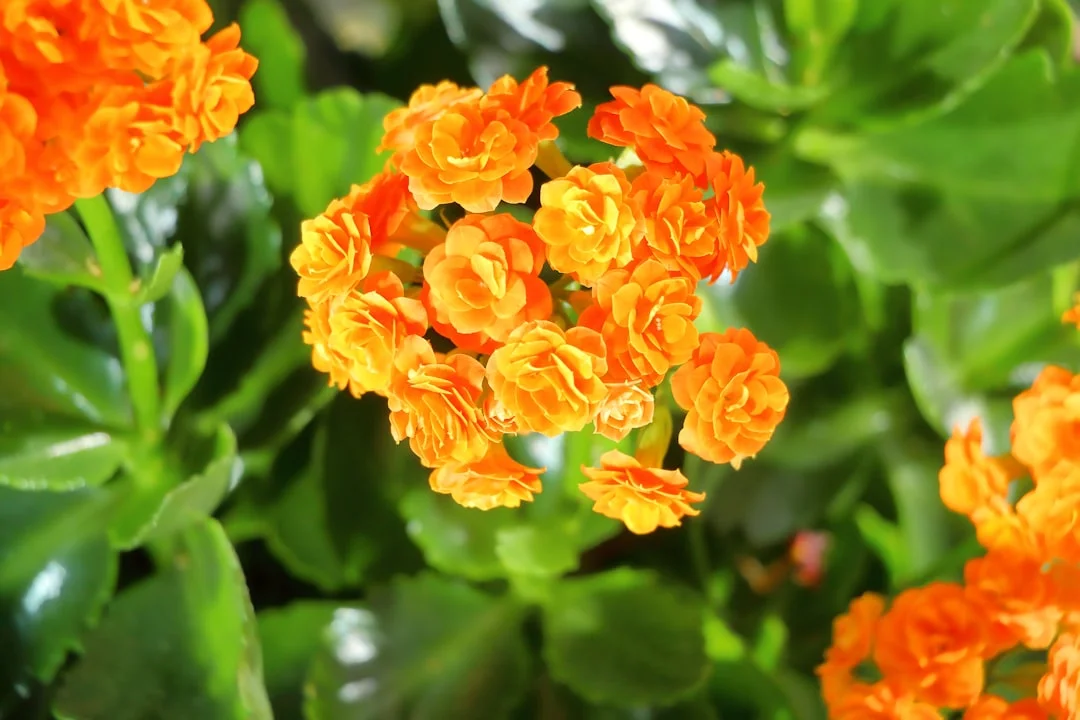
Most people water their kalanchoe too often. That single mistake causes more kalanchoe deaths than any pest or disease combined. Because kalanchoe is a succulent, its thick leaves store water for weeks. Overwatering drowns the roots, causes rot, and kills the plant quickly — sometimes within days.
The correct approach is the ‘drench and dry’ method. Water thoroughly until water flows from the drainage holes, then wait until the top 2–3 cm (about an inch) of soil is completely dry before watering again. In summer, in warm tropical climates like Bangkok, Mumbai, or Lagos, that might mean watering every five to seven days. In winter, in a cool temperate home in Edinburgh or Vancouver, once every two weeks is often enough.
Always use room-temperature water. Cold water from the tap can shock the roots, especially in winter. If your tap water is heavily chlorinated — as it is in many parts of the Middle East and urban North America — let it sit in an open container for 24 hours before use, or use filtered water.
Importantly, never let kalanchoe sit in a saucer of standing water. Root rot sets in fast in waterlogged conditions. Empty saucers within 30 minutes of watering every single time.
Seasonal Watering Adjustments
In July — the current month — growers in the Northern Hemisphere are in peak summer. Higher temperatures and brighter light mean the soil dries faster, so check moisture levels every four to five days rather than weekly. Meanwhile, gardeners in the Southern Hemisphere (Australia, South Africa, South America) are in mid-winter right now, which means kalanchoe growth slows and water needs drop significantly. Reduce watering to once every 10–14 days during this period and avoid fertilising altogether. After that dormant phase, when spring arrives in September, gradually increase watering frequency again as growth resumes.
Soil and Fertiliser for Maximum Blooms
The right soil mix is foundational to kalanchoe plant blooming care. Kalanchoe needs fast-draining, low-to-moderate fertility soil — similar to what cacti and succulents prefer. Heavy garden soil or standard potting compost retains too much moisture and suffocates roots. Instead, use a dedicated cactus and succulent mix, which you’ll find in garden centres worldwide. If you’re making your own, combine two parts standard potting compost with one part perlite and one part coarse sand. Perlite is widely available online and in garden centres from Sydney to Stockholm — it’s the tiny white, spongy granules that improve drainage dramatically.
Soil pH should be slightly acidic to neutral: between 6.0 and 7.0. Most commercial cactus mixes fall naturally in this range. You can test your soil easily with a pH strip kit available for under $5 (£4, ₹400) from most garden centres.
For fertiliser, kalanchoe doesn’t need much. In fact, too much nitrogen produces leafy growth at the expense of flowers. Use a balanced liquid fertiliser (such as a 10-10-10 NPK formula) diluted to half strength, applied once every four weeks during the growing season (spring and summer in the Northern Hemisphere). Alternatively, a high-potassium fertiliser — labelled as a ‘tomato feed’ or ‘flower feed’ in the UK and Australia — encourages more blooms. Stop fertilising entirely during the short-day darkness treatment period, as the plant needs to focus its energy on budding rather than vegetative growth.
Repotting Kalanchoe: When and How
Repot your kalanchoe every one to two years, ideally in spring just as new growth begins. Choose a pot only one size larger than the current one — going too big causes the excess soil to stay wet and promotes root rot. Terra cotta pots are excellent for kalanchoe because their porous walls allow excess moisture to evaporate. Plastic pots work fine too, as long as drainage holes are present. When repotting, gently shake off old soil from the roots, trim any brown or mushy roots with clean scissors, and settle the plant into fresh cactus mix. Water lightly and wait a week before the next watering to allow any disturbed roots to heal.
How to Grow Kalanchoe: Pots, Beds, and Climate Zones
One of the great joys of kalanchoe is its versatility. It grows equally well in containers indoors, on covered balconies, in raised beds, or in sheltered garden borders — depending entirely on your climate.
In USDA Hardiness Zones 10–12 (tropical and subtropical regions including southern Florida, Hawaii, coastal California, and most of tropical Asia and Africa), kalanchoe can grow as a perennial outdoors year-round. In these climates, plant it in a partly shaded border with excellent drainage. It will grow larger than indoor specimens — sometimes reaching 60 cm (24 inches) — and can rebloom naturally each year without any intervention.
In Zones 9 and below (most of continental Europe, the UK, Canada, northern US, and temperate parts of Australia and New Zealand), kalanchoe is best treated as a container plant that spends summer outdoors and winters indoors. According to the USDA plant hardiness zone map, Zone 9 sees minimum winter temperatures of -6.7°C (20°F) — well below what kalanchoe can survive. Bring it indoors when night temperatures drop below 10°C (50°F).
In arid climates (Middle East, parts of North Africa, southwestern US deserts), kalanchoe can grow outdoors in winter and spring but needs protection from intense summer heat above 35°C (95°F). A shaded courtyard or covered terrace works perfectly in Dubai, Riyadh, or Phoenix.
Container Growing Tips for Small Spaces
Container growing is the most popular approach for kalanchoe plant blooming care worldwide, and for good reason. A 15–20 cm (6–8 inch) pot is ideal for a standard nursery-bought kalanchoe. Ensure it has at least one drainage hole at the bottom. Group multiple pots together on a tray — the shared humidity between plants mimics natural conditions and keeps leaves looking glossy. On apartment balconies from Hong Kong to Barcelona, a cluster of different-coloured kalanchoes in matching terra cotta pots creates a stunning display that lasts months. Furthermore, container plants are easy to move indoors when cold or storms threaten, giving you much more control than garden bed planting.
Growing Kalanchoe in Tropical Climates
Gardeners in tropical regions — India, Sri Lanka, the Philippines, Nigeria, Brazil — often find kalanchoe easier to grow outdoors than their counterparts in cold climates. However, intense monsoon rainfall is the main challenge. Waterlogged soil during heavy rains will kill kalanchoe quickly. Raise containers off the ground on pot feet to ensure free drainage. If planting in beds, build slightly raised mounds or ridges to channel excess water away from the root zone. In my experience, kalanchoes grown in dappled shade under a large tree in a tropical garden produce some of the most vibrant flowers I’ve ever seen — the filtered light seems to intensify colour.
How to Make Kalanchoe Rebloom: The Short-Day Secret
This is the section most kalanchoe guides get wrong — or skip entirely. And it’s the heart of true kalanchoe plant blooming care.
Kalanchoe is a short-day plant, which means it only initiates flower buds when it experiences 14 or more hours of uninterrupted darkness per day for at least six consecutive weeks. In the wild, Madagascar’s dry season naturally provides this. In your home, you need to create it artificially.
Here’s exactly how to do it. Starting about ten weeks before you want flowers to appear, place your kalanchoe in a dark location — a cupboard, a box, or a room with no artificial lighting — for 14 hours every night. During the remaining 10 hours of daylight, move it to its normal bright spot. Do this every single day for six weeks without interruption. Even one night of accidental light exposure can reset the clock and delay budding.
After six weeks of this treatment, small flower buds should be visible at the tips of the stems. At that point, stop the darkness treatment and return the plant to its normal bright windowsill position. Within four to six weeks, you’ll have a full flush of blooms.
Many gardeners in the Northern Hemisphere start this process in September or October to time flowers for December and the holiday season. In the Southern Hemisphere, starting in March or April produces blooms for June and July — perfect for the Australian and South African winter season.
Step-by-Step Reblooming Schedule
Week 1–6: Place kalanchoe in complete darkness for 14 hours each night (use a cardboard box or dark cupboard). Give 10 hours of bright indirect light during the day. Do not fertilise. Water sparingly — only when the top inch of soil is dry. Week 7–8: Check for visible flower buds. Once buds appear, return to normal bright light conditions permanently. Resume light watering. Week 9–10: Buds swell and colour becomes visible. You can now display the plant in any well-lit spot. Week 10–12: Full bloom. Enjoy the display. Deadhead spent flowers regularly to extend the blooming period. After flowering: trim leggy stems, fertilise lightly, rest for four to six weeks, then start the dark treatment again.
Common Kalanchoe Problems and How to Fix Them
Even with good kalanchoe plant blooming care, problems do arise. The good news is that most kalanchoe issues are easy to diagnose and fix once you know what to look for.
Root rot is by far the most common problem. It presents as suddenly wilting leaves despite moist soil, a mushy stem base, and a slightly unpleasant smell. The cause is almost always overwatering or poor drainage. To fix it, remove the plant from its pot, cut away all soft, brown roots with sterile scissors, dust cut surfaces with powdered cinnamon (a natural fungicide available everywhere), and repot in fresh, dry cactus mix. Hold off watering for at least a week.
Mealybugs are the most common pest. They look like tiny cotton wool blobs tucked into leaf joints and stem crevices. Wipe them off with a cotton bud soaked in rubbing alcohol, then spray the whole plant with a solution of one teaspoon neem oil plus a drop of dish soap in 500ml of water. Repeat every five days for three weeks.
Powdery mildew — a white, dusty coating on leaves — appears in humid, low-airflow conditions. Improve ventilation around the plant and spray with a dilute baking soda solution (1 teaspoon per litre of water). Avoid wetting leaves when watering.
Leaf drop can result from sudden temperature changes, cold draughts, or moving the plant from a bright shop to a dim home. Give it two weeks to acclimatise in a stable, bright spot before worrying.
Why Won't My Kalanchoe Bloom?
This is the number one question in kalanchoe care forums worldwide. If your plant is healthy and green but refuses to flower, there are three likely causes. First, it hasn’t received enough darkness — even streetlight coming through curtains can disrupt the short-day cycle. Second, it hasn’t had enough bright light during its daytime period — bright indirect light for at least 6–8 hours daily is essential alongside the dark treatment. Third, the plant may be stressed from recent repotting, pest damage, or inconsistent watering. Solve all three, and you’ll almost certainly see buds within eight weeks of starting the darkness treatment.
Yellowing Leaves: Causes and Solutions
Yellow leaves on kalanchoe have several causes, and identifying the right one is key. Overwatering produces soft, mushy yellow leaves near the base. Underwatering causes dry, slightly shrivelled yellow leaves. Nutrient deficiency — especially lack of nitrogen or iron — causes uniform yellowing of newer leaves while older ones stay green. To address nutrient deficiency, apply a dilute balanced fertiliser once and observe improvement within two to three weeks. If older leaves are yellowing but new growth is green and healthy, that’s normal — lower leaves naturally die off as the plant grows taller. Don’t panic. Simply remove those leaves cleanly.
Propagating Kalanchoe from Cuttings
Propagating kalanchoe is one of the most satisfying parts of kalanchoe plant blooming care, and it’s genuinely easy. You can grow dozens of new plants from a single healthy parent — for free.
Stem cuttings are the most reliable method. In spring or early summer, choose a healthy non-flowering stem and cut a 7–10 cm (3–4 inch) section just below a leaf node using a clean, sharp knife or scissors. Remove the lower two or three sets of leaves, leaving a bare stem section that will root into the soil.
Next, allow the cut end to dry — or ‘callous’ — for 24 to 48 hours in a warm, shaded spot. This step is critical. Planting a fresh cut directly into moist soil almost always leads to rot before roots form. Once calloused, dip the cut end lightly in rooting hormone powder (widely available from garden centres globally) and insert it 2–3 cm deep into a small pot of dry cactus mix.
Then, water very lightly — just enough to settle the soil — and place the cutting in a warm spot with bright indirect light. After that, water only when the soil is fully dry. Roots usually form within two to three weeks. You’ll know rooting has occurred when the cutting begins producing new leaves and resists a gentle tug. Once established, treat it exactly like a mature plant.
Propagating from Leaf Cuttings
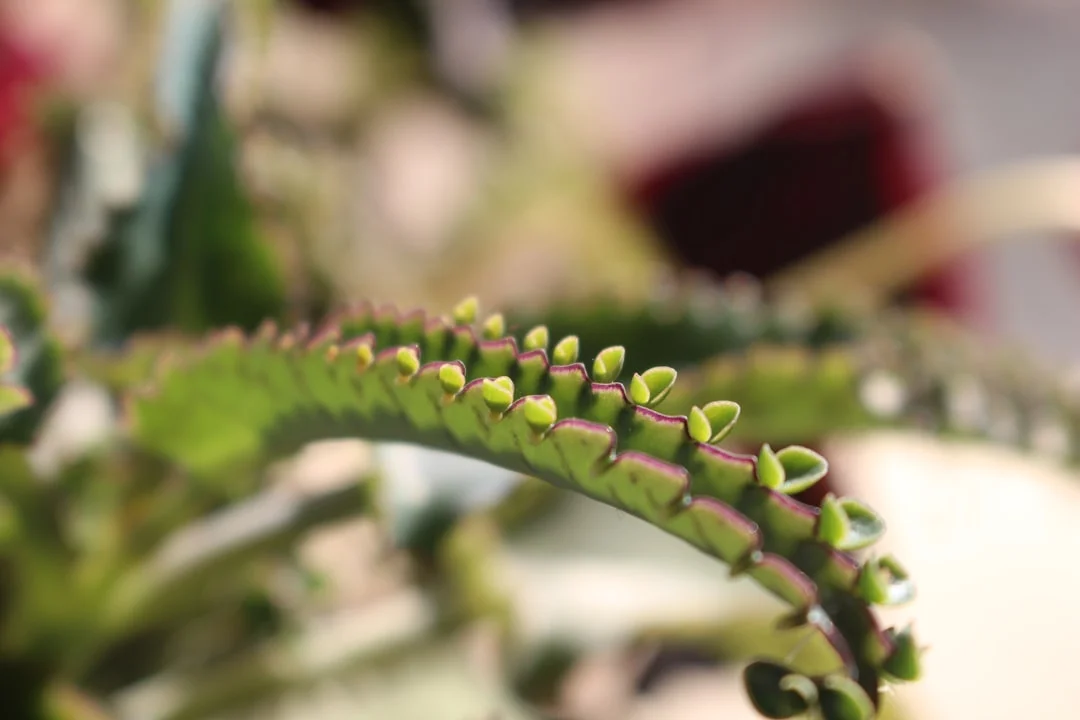
Kalanchoe can also be propagated from individual leaves, though it’s slower and less reliable than stem cuttings. Simply detach a healthy, plump leaf cleanly from the stem — twisting gently usually works without tearing. Allow it to callous for 48 hours, then lay it flat on the surface of dry cactus mix without burying it. Keep it in bright indirect light and mist lightly every few days. Tiny plantlets will form at the leaf base within four to six weeks. Once these plantlets develop two or three sets of their own leaves, carefully separate them and pot them individually. This method works well in warm, humid climates like Southeast Asia and tropical Africa, where ambient humidity accelerates root formation.
Seasonal Care Guide for Kalanchoe
Good kalanchoe plant blooming care means adjusting your routine with the seasons. Kalanchoe doesn’t have a dramatic winter-dormant cycle like some bulbs, but its growth rate, water needs, and light requirements all shift across the year.
Spring (March–May in Northern Hemisphere; September–November in Southern Hemisphere): This is the ideal time to repot, start fertilising, and take stem cuttings. Growth accelerates as day length increases. Gradually move plants outdoors once night temperatures consistently exceed 10°C (50°F).
Summer (June–August in Northern Hemisphere; December–February in Southern Hemisphere): Peak growing season. Water more frequently, fertilise monthly, and protect from intense midday sun. In July specifically — the current month — Northern Hemisphere growers should check soil moisture every four to five days. If you want flowers for the autumn or holiday season, start your short-day treatment in late August.
Autumn (September–November in Northern Hemisphere; March–May in Southern Hemisphere): Begin reducing watering and stop fertilising. If you’re doing the short-day treatment for winter flowers, this is when it starts. Bring outdoor plants inside before first frost.
Winter (December–February in Northern Hemisphere; June–August in Southern Hemisphere): Minimal watering, no fertiliser, maximum available light. This is prime flowering season for plants that completed their dark treatment. Enjoy the blooms.
Kalanchoe Care in July Specifically
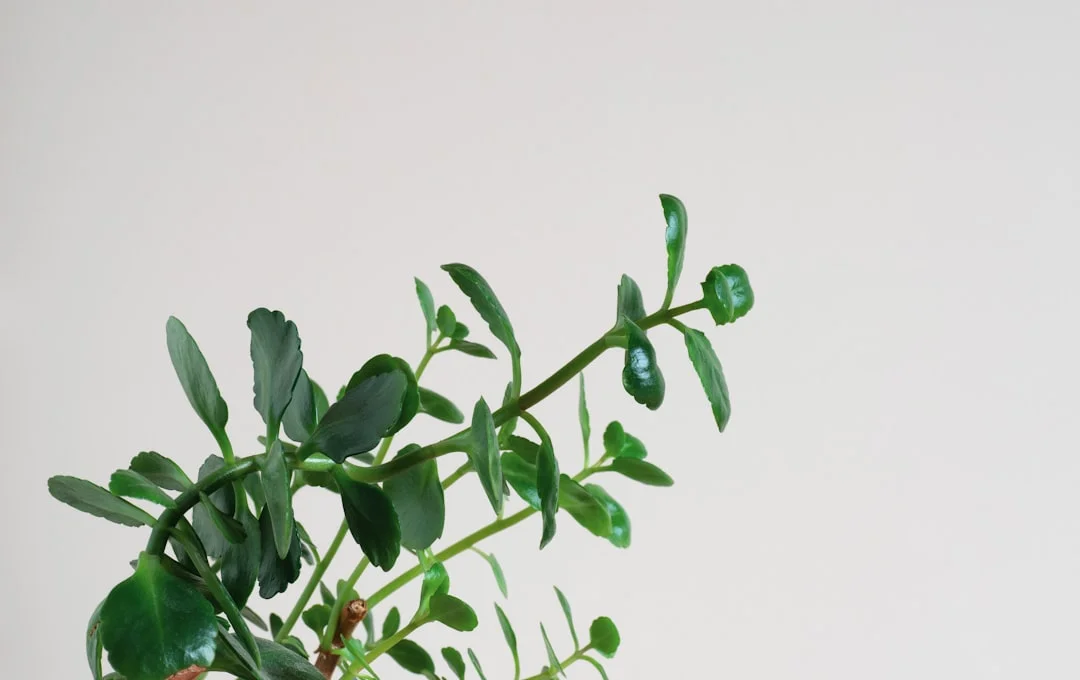
For Northern Hemisphere growers in July, your kalanchoe is in its most vigorous growth phase right now. This is an excellent time to take stem cuttings, apply a light balanced fertiliser, and check for pests — warm conditions accelerate both growth and pest reproduction. If your plant has finished blooming and looks leggy, cut it back by one-third to encourage bushy new growth. Then, in about six weeks from now (mid-August to early September), begin the short-day treatment to trigger flowers for October and November. For Southern Hemisphere growers in their winter July, your kalanchoe may be mid-bloom right now. Enjoy it — simply keep it in the brightest available spot indoors and water sparingly.
Medicinal Uses and Safety Notes
Kalanchoe has a long history of medicinal use in traditional folk medicine across Africa, Latin America, and parts of Asia. In traditional Brazilian herbalism (ethnobotany), K. pinnata — a close relative of K. blossfeldiana — has been used for centuries as a topical treatment for burns, insect bites, and skin inflammations. Research published on PubMed documents flavonoids and bufadienolides (cardiac glycoside compounds) in various Kalanchoe species with demonstrated anti-inflammatory and antimicrobial properties in laboratory settings.
However, the ornamental florist’s kalanchoe (K. blossfeldiana) is not used medicinally and should not be consumed. All parts of the plant contain bufadienolides, which are toxic to cats, dogs, and other animals. According to the American Society for the Prevention of Cruelty to Animals (ASPCA), kalanchoe is classified as toxic to both cats and dogs, causing vomiting, diarrhoea, and in large ingested quantities, serious cardiac effects.
Keep kalanchoe out of reach of pets and small children. If a pet ingests any part of the plant, contact a vet immediately.
For those interested in a deeper dive into safe indoor plant options alongside kalanchoe, our indoor plant care guide covers dozens of species rated by toxicity, care difficulty, and climate suitability.
Traditional Use of Related Kalanchoe Species
While K. blossfeldiana itself isn’t medicinal, the genus has genuine traditional significance. K. pinnata (air plant or cathedral bells) is used in Ayurvedic and folk traditions across South Asia and the Caribbean. In Trinidad, Jamaica, and parts of West Africa, leaf juice from K. pinnata is applied topically for skin rashes and minor wounds — a practice documented in several ethnobotanical surveys. However, internal use of any Kalanchoe species carries cardiac risk due to bufadienolides. No standardised dosage is recognised by the WHO or NIH for any Kalanchoe species, and self-medication with these plants is strongly discouraged. Always consult a qualified medical professional before using any plant medicinally.
Frequently Asked Questions
How do I get my kalanchoe to bloom again after the flowers die?
The key to kalanchoe plant blooming care and reblooming is the short-day treatment. Place your plant in complete darkness for 14 hours every night for six consecutive weeks. During the day, give it 8–10 hours of bright indirect light. After six weeks, flower buds will appear. Return the plant to its normal bright spot and enjoy full blooms within four to six weeks. Even one accidental night of artificial light exposure can reset the process, so be consistent.
Can I grow kalanchoe indoors in a cold climate?
Absolutely. Kalanchoe is an excellent indoor plant for cold climates like Canada, the UK, Scandinavia, and northern Europe. Keep it on a bright south-facing windowsill where it gets 6–8 hours of light. If winter light is very low, supplement with a grow light for 8–10 hours daily. Keep indoor temperatures between 15–25°C (59–77°F) and avoid cold draughts from windows. Never place it on a windowsill where the glass gets below 10°C (50°F) on winter nights.
Is kalanchoe safe for cats and dogs?
No — kalanchoe is toxic to cats and dogs. All parts of the plant contain bufadienolides, cardiac glycoside compounds that cause vomiting, diarrhoea, and potentially serious heart-related symptoms in pets. The ASPCA officially lists kalanchoe as toxic to both cats and dogs. Keep it on high shelves or in rooms your pets cannot access. If your pet ingests any part of the plant, contact a veterinarian immediately. It is also best kept away from young children who might chew on leaves.
How often should I water my kalanchoe?
Water kalanchoe only when the top 2–3 cm (about 1 inch) of soil is completely dry. In warm summer conditions this might be every 5–7 days; in cool winters, once every 10–14 days is often enough. Always water thoroughly until it drains from the bottom, then empty the saucer within 30 minutes. Overwatering is the most common cause of kalanchoe death worldwide. When in doubt, wait another two days before watering — this plant forgives underwatering far more readily than overwatering.
How do I grow kalanchoe in a tropical climate?
In tropical climates like India, Southeast Asia, West Africa, or the Caribbean, grow kalanchoe in partial shade to protect it from intense midday sun. Use a fast-draining cactus mix and raise pots off the ground during heavy monsoon rains. Good drainage is critical — waterlogged roots rot within days in warm, humid conditions. In these climates, kalanchoe may bloom naturally in the cooler dry season (November to February in South Asia) without needing a controlled dark treatment, since shorter days naturally trigger budding.
How long does a kalanchoe plant live?
With proper kalanchoe plant blooming care, a single plant can live for many years — some gardeners report keeping the same plant for five years or more. Each bloom cycle lasts six to eight weeks, and you can trigger multiple cycles per year using the short-day reblooming treatment. Over time, plants can become woody and leggy. When that happens, take stem cuttings from the healthiest growth to propagate fresh young plants, effectively renewing your collection indefinitely from a single original specimen.
What is the best soil for kalanchoe?
Use a fast-draining cactus and succulent mix with a pH of 6.0–7.0. If making your own, combine two parts standard potting compost, one part perlite, and one part coarse sand. Avoid heavy garden soil or standard compost alone — both retain too much moisture and cause root rot. Terra cotta pots help excess moisture evaporate through the pot walls. Globally available brands like Westland Cacti mix (UK), Miracle-Gro Cactus mix (US/Canada/Australia), or Lechuza pon substrate all work well for kalanchoe.
Can kalanchoe grow outside year-round?
Yes, but only in frost-free climates. In USDA Hardiness Zones 10–12 (equivalent to RHS H1c) — which includes tropical and subtropical regions such as southern Florida, Hawaii, coastal California, South Africa, much of India, Southeast Asia, and northern Australia — kalanchoe can grow as a permanent outdoor perennial. In cooler climates (UK, most of Europe, Canada, temperate Australia), keep it outdoors only from late spring through early autumn, then bring it inside before temperatures drop below 10°C (50°F).
Final Thoughts
Mastering kalanchoe plant blooming care comes down to a handful of non-negotiable principles: bright light during the day, total darkness at night for six weeks before flowering, restrained watering, fast-draining soil, and a little patience. Whether you’re growing it on a sunny windowsill in Toronto, a shaded balcony in Singapore, or a south-facing sill in Manchester, this remarkable succulent will reward you with months of vivid colour if you follow those fundamentals. The reblooming secret — that controlled darkness cycle — is the one technique that separates gardeners who see a single flush of flowers and gardeners who enjoy kalanchoe blooms year after year, on demand. Now you know it. Start your next short-day treatment cycle this August, and by October you could have a plant covered in jewel-bright flowers. For more plant care guides covering a wide range of indoor and outdoor species across all climates, explore our full indoor plant care guide. Happy growing.

