
⏱ 30 min read
Table of Contents
- What Is the Hoya Plant?
- Hoya Plant Characteristics at a Glance
- Benefits of Growing Hoyas Indoors
- How to Grow Hoya Plant Indoors
- Soil and Fertilizer for Hoyas
- Watering Your Hoya the Right Way
- Sunlight and Temperature Requirements
- Common Problems and How to Fix Them
- Hoya Propagation: Two Methods That Work
- Seasonal Care for Hoya Plants
- Uses of the Hoya Plant
Here’s something that surprises almost every new plant parent: the hoya plant — famous for its waxy, star-shaped flowers and trailing vines — is one of the most forgiving houseplants on earth, yet it’s quietly dying in thousands of well-intentioned homes right now. Why? Because it looks so tough that people either ignore it completely or smother it with too much water. Getting hoya plant care indoors right is genuinely simple once you understand how this plant thinks. Hoyas are tropical epiphytes — plants that naturally cling to tree bark rather than soil — so their needs are completely different from your average potted plant. That single fact changes everything about how you water, pot, and feed them. In this complete guide to hoya plant care indoors, you’ll discover exactly why your previous attempts may have failed, which common mistakes kill hoyas fastest, and how to coax even a stubborn hoya into blooming — whether you’re growing in a humid flat in Singapore, a dry apartment in Dubai, or a cool Victorian terrace in London. By the end, you’ll know this plant like an old friend. For more tips, check out our detailed article on Best Soil for Succulents.
Quick Highlights
- Discover why hoyas thrive with neglect — and the exact watering rhythm that triggers blooming
- Learn how to adapt hoya plant care indoors for tropical, temperate, arid, and cold climates
- Master the soil mix, light conditions, and feeding schedule that produce the most flowers
- Propagate new hoya plants from cuttings using two reliable methods that work for beginners
- Identify and fix the five most common hoya problems before they become fatal
- Understand seasonal care shifts so your hoya stays healthy and vibrant all year round
Plant Characteristics at a Glance
| Common Name | Hoya Plant, Wax Plant, Porcelain Flower |
| Scientific Name | Hoya carnosa (L.f.) R.Br. |
| Family | Apocynaceae (Dogbane family) |
| Origin | East Asia and Australia (China, India, Japan, and Queensland, Australia) |
| Habitat | Tropical and subtropical forests; grows epiphytically on tree trunks and rocky ledges |
| Plant Type | Evergreen perennial vine / epiphyte |
| Indoor Plant | Yes — excellent indoor plant in all climates |
| Outdoor Plant | Yes, in frost-free climates (USDA Zones 10–12; RHS H1c) |
| Leaves | Thick, waxy, oval to elliptical; dark green; variegated in some cultivars; 3–8 cm long |
| Flowers | Star-shaped florets in spherical clusters (umbels); white to pale pink with red/pink corona; waxy, highly fragrant |
| Flowering Season | Late spring to summer (May–August in Northern Hemisphere); can bloom multiple times per year with good care |
| Fruit | Elongated seed pod (follicle); rarely produced indoors |
| Seeds | Flat seeds with silky white hair tufts; viable but difficult to germinate indoors |
| Roots | Fibrous root system; produces aerial roots used for climbing; highly sensitive to waterlogging |
| Height | Vines reach 2–4 m (6–13 ft) indoors when trained; manageable at any length with pruning |
| Growth Rate | Moderate — approx. 30–60 cm (12–24 inches) per growing season under good light |
| Light Requirements | Bright indirect light; 4–6 hours daily; tolerates some morning direct sun; avoid harsh midday sun |
| Soil Requirements | Fast-draining, airy mix; pH 6.0–6.5; recommended: 40% perlite, 40% potting mix, 20% orchid bark |
| Water Requirements | Drench and dry method; every 7–14 days in summer, every 3–4 weeks in winter; do not let roots sit in water |
| Temperature Requirements | Ideal: 18–27°C (65–80°F); minimum: 10°C (50°F); do not expose to frost |
| Humidity Requirements | Prefers 40–60% relative humidity; tolerates lower humidity but benefits from pebble tray or humidifier in dry climates |
| Propagation | Stem cuttings (most reliable); leaf cuttings (species-dependent); layering; rarely by seed |
| Uses | Ornamental houseplant, hanging basket plant, interior landscaping, biophilic design, gift plant, fragrance plant |
| Medicinal Properties | Folk use: leaf poultices for minor skin inflammation (Southeast Asian tradition); not clinically validated; no approved medical use |
| Toxicity | Non-toxic to cats, dogs, and horses (ASPCA); flower sap may cause mild stomach upset if ingested in large amounts; safe for most households |
| Cultural Significance | Symbol of good fortune in East Asian cultures; prized in Victorian conservatories; popular collector's plant globally |
| Common Pests | Mealybugs (most common), spider mites, aphids, scale insects, fungus gnats (in wet soil) |
| Common Diseases | Root rot (overwatering), botrytis (grey mould in cold/damp conditions), sooty mould (associated with pest honeydew) |
| Special Care Tips | Never remove bloom spurs; allow to become slightly root-bound before repotting; provide cool winter rest to trigger spring blooming |
| Cultural Practices | Popular in East Asian home decor; exchanged as gifts for weddings and housewarmings; central to the global hoya collector community |
| Vastu Direction | East or north-east corner of the home — associated with positive energy, growth, and prosperity in Vastu Shastra |
Hoya plant care indoors Names in Different Languages
| English | Wax Plant / Porcelain Flower / Hoya |
| Mandarin Chinese | 球兰 (Qiú lán) |
| Spanish | Planta de cera / Hoya |
| Hindi | होया (Hoya) |
| Gujarati | હોયા (Hoyā) |
| Arabic | نبات الشمع (Nabāt al-shamʿ) |
| Bengali | মোমের গাছ (Momer gach) |
| Portuguese | Planta de cera / Hoya |
| Russian | Хойя (Khoyya) |
| Japanese | サクララン (Sakura-ran) / ホヤ (Hoya) |
| Punjabi | ਹੋਆ (Hoā) |
| German | Wachsblume / Hoya |
| Javanese | Tanaman lilin (Wax plant) |
| Korean | 호야 (Hoya) / 왁스 식물 (Wakseu sikmul) |
| French | Plante de porcelaine / Hoya |
| Telugu | హోయా మొక్క (Hōyā mokka) |
| Marathi | होया वनस्पती (Hoyā vanaspatī) |
| Tamil | மெழுகு செடி (Meḻuku cheṭi) |
| Urdu | موم کا پودا (Mom ka poda) |
| Turkish | Balmumu çiçeği / Hoya |
| Vietnamese | Cây hoa sáp / Hoya |
What Is the Hoya Plant?
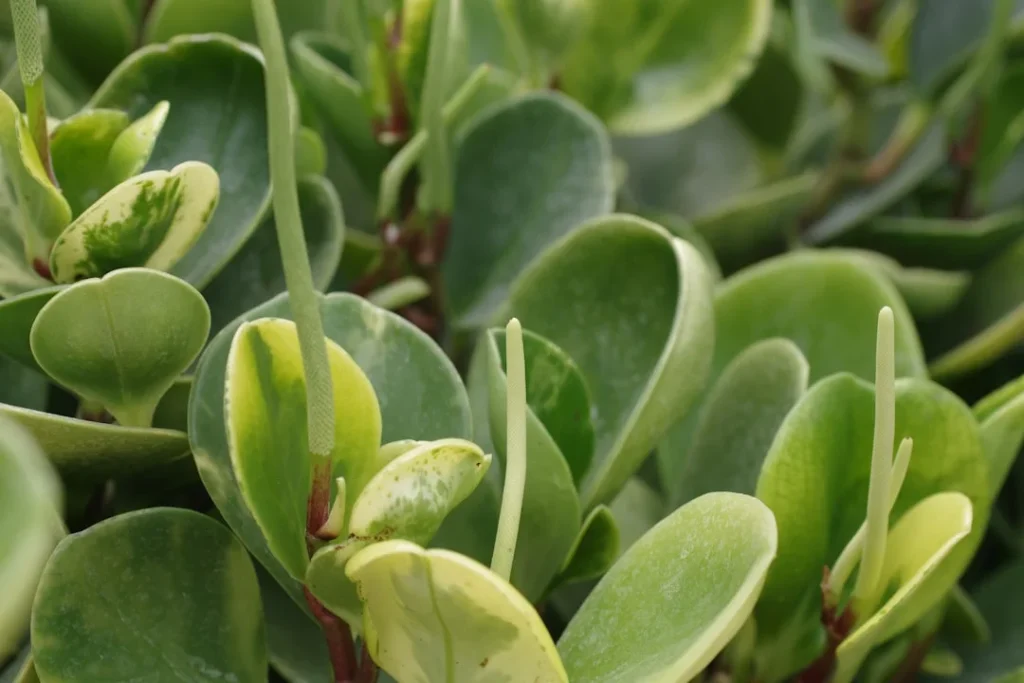
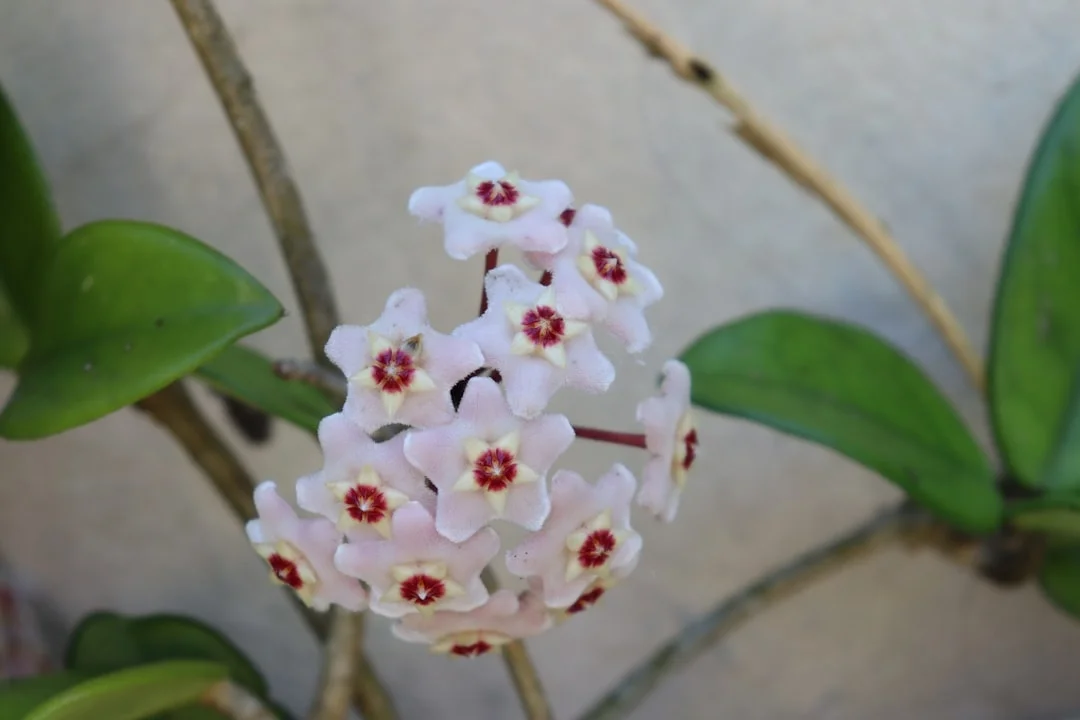
The hoya plant (Hoya carnosa) is a flowering tropical vine native to the forests of East Asia and Australia, where it grows epiphytically — clinging to tree trunks and rocky ledges rather than rooting in deep soil. According to Kew Gardens, the Hoya genus contains over 500 recognised species, making it one of the most diverse groups within the family Apocynaceae. Most houseplant enthusiasts encounter Hoya carnosa first, though varieties like Hoya kerrii (the heart-leaf hoya), Hoya pubicalyx, and Hoya lacunosa are equally popular. The plant’s common names tell you a lot about it — ‘wax plant’ refers to its thick, glossy leaves, and ‘porcelain flower’ describes the impossibly perfect clusters of star-shaped blooms that appear each summer. Here’s the thing most people don’t realise: those flowers emerge from the same short stem spurs year after year. So if you cut those spurs off thinking they’re dead wood, you’ll wait years to see another bloom. In my experience, this is the single most common mistake new hoya growers make — and it’s completely avoidable once you know to look for it. Hoyas have been cultivated as houseplants for over 200 years. Victorian conservatories across Britain prized them for their exotic fragrance and low maintenance, and the RHS still lists Hoya carnosa as an award-winning houseplant to this day. That longevity speaks to one thing: this plant genuinely wants to survive.
Hoya Plant in Different Cultures and Traditions
In traditional East Asian households, hoyas are considered symbols of good fortune and are often gifted at weddings and housewarmings. In parts of the Philippines and Indonesia — where many hoya species grow wild — local herbalists have used leaf preparations as poultices for skin irritations, though these uses are not clinically validated. Western folk traditions, particularly in Victorian England, associated the hoya’s sweet night fragrance with romance and kept potted specimens near bedroom windows. While Ayurvedic texts don’t specifically document Hoya carnosa, the plant’s antimicrobial leaf compounds have drawn attention from modern researchers studying traditional tropical botanicals. If you enjoy growing this plant, you might also find our guide on best hanging basket plants for indoors very useful.
How Many Hoya Varieties Can You Grow Indoors?
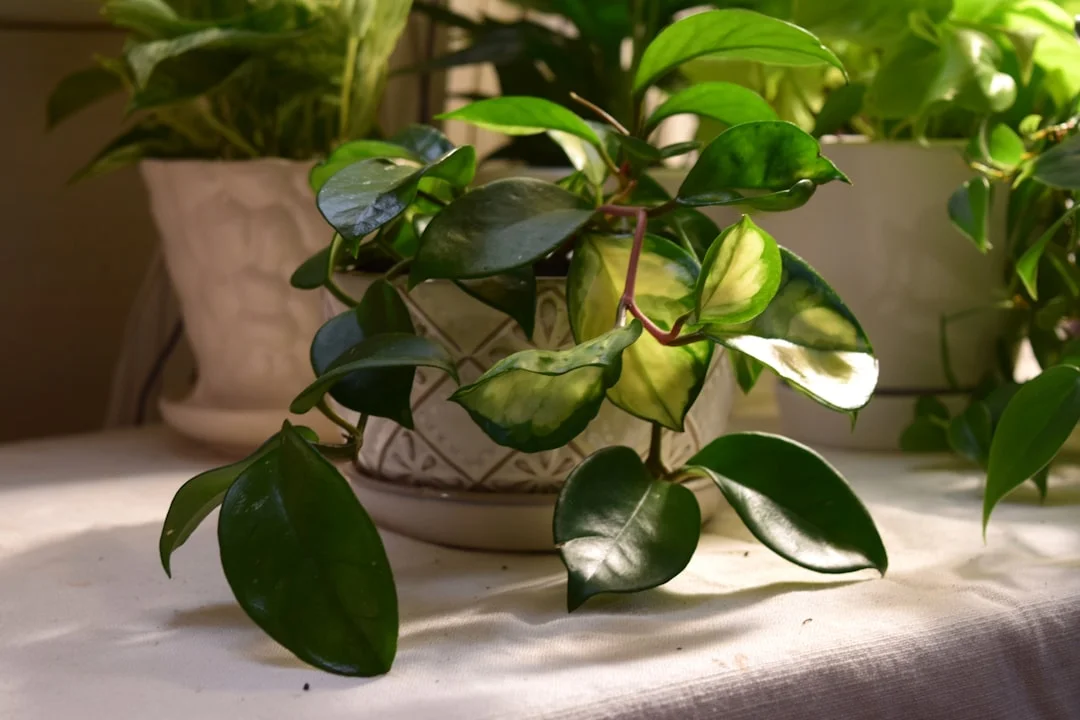
The good news is that dozens of hoya varieties adapt beautifully to indoor life. Hoya carnosa ‘Tricolor’ offers pink-edged variegated leaves. Hoya obovata has large, round leaves with silver flecks. Hoya linearis produces long, slender, almost succulent-like foliage that cascades dramatically from hanging baskets. For beginners, Hoya carnosa and Hoya pubicalyx are the most forgiving. Meanwhile, collectors in temperate climates — such as the UK, US Pacific Northwest, and New Zealand — often find that Hoya australis adapts slightly better to cooler indoor temperatures than other species. For more tips, check out our detailed article on Overwatering vs Underwatering Plants.
Hoya Plant Characteristics at a Glance
Before we dive into the detailed care sections, here’s a quick-reference snapshot of everything you need to know about Hoya carnosa. Whether you’re a first-time grower in Toronto or an experienced plant collector in Bangkok, this table gives you an instant baseline. Use it alongside the care sections below to tailor your approach to your specific climate and growing conditions. If you enjoy growing this plant, you might also find our guide on best hanging basket plants for indoors very useful.
Benefits of Growing Hoyas Indoors
Hoyas aren’t just pretty. They’re genuinely practical plants to have in your home, and the reasons go well beyond aesthetics. First, their thick, waxy leaves lose moisture very slowly — which means they’re incredibly drought-tolerant and perfect for busy people who forget to water. That’s a real advantage in dry climates like Dubai, Phoenix, or Perth, where most houseplants struggle. Furthermore, hoyas are long-lived plants. Many gardeners report specimens that have been in the same family for 20 to 30 years, passed down like heirlooms. That makes them exceptional value — you buy one plant and, with basic care, it grows with your family for decades. There’s also a growing body of research suggesting that flowering houseplants improve mood and reduce psychological stress. A 2015 study published in the Journal of Physiological Anthropology found that active interaction with indoor plants reduced both physiological and psychological stress markers among participants — a finding that supports what plant lovers have always known intuitively. Hoyas, with their sweet honeydew fragrance and dramatic trailing vines, tick every box in that regard. If you enjoy growing this plant, you might also find our guide on best hanging basket plants for indoors very useful.
Are Hoyas Good for Air Quality?
You may have heard that houseplants purify air. The reality is more nuanced. NASA’s 1989 Clean Air Study did find that certain houseplants reduced volatile organic compounds (VOCs) in sealed chamber conditions — but subsequent research, including a 2019 meta-analysis in the Journal of Exposure Science, concluded that you’d need hundreds of plants per room to replicate those conditions in a real home. That said, hoyas do release oxygen during photosynthesis and the fragrant flowers can genuinely improve your experience of a space. Think of them as mood boosters rather than air purifiers, and you won’t be disappointed.
Hoyas as Pet-Friendly Houseplants
This matters enormously if you have cats or dogs. According to the ASPCA, Hoya carnosa is non-toxic to cats, dogs, and horses — a rare and valuable quality in the world of attractive houseplants, where so many popular choices (pothos, philodendrons, ZZ plants) carry toxicity risks. However, the sticky honeydew sap from hoya flowers can cause mild stomach upset if ingested in large quantities, so it’s still worth keeping blooming plants slightly out of reach of very young pets or toddlers. That said, a hoya on a high shelf or trailing from a basket poses minimal risk in most households.
How to Grow Hoya Plant Indoors
Successful hoya plant care indoors starts with one foundational principle: mimic the plant’s natural habitat. In the wild, hoyas grow with their roots in airy, fast-draining organic debris wedged between tree bark — not in dense, moisture-retaining garden soil. So before you choose a pot, a soil mix, or a watering schedule, hold that image in your mind. These are plants that breathe through their roots. Give them air, give them bright indirect light, and don’t drown them — and they’ll reward you generously. Choose a pot with at least two drainage holes. Terracotta pots work brilliantly because they’re breathable — excess moisture wicks through the walls, keeping roots drier between waterings. In humid tropical climates like Singapore, Mumbai, or Bangkok, this breathability is especially helpful. In drier climates (think Madrid, Riyadh, or Denver), you might prefer glazed ceramic to slow moisture loss slightly. Repot only when the plant is truly root-bound — hoyas actually flower more reliably when slightly cramped in their pots, a phenomenon well-documented among hoya collectors worldwide.
Choosing the Right Pot and Position
Position your hoya near a bright window — ideally east-facing for gentle morning light, or west-facing for afternoon sun filtered through a sheer curtain. North-facing windows in the Northern Hemisphere are generally too dim for reliable blooming, though the plant will survive. South-facing windows can be intense in summer; move the plant back 30–60 cm (12–24 inches) from the glass to avoid leaf scorch. In the Southern Hemisphere, reverse north and south accordingly. A hanging basket near a bathroom window — where humidity is naturally higher — creates nearly perfect conditions in temperate climates.
Training and Supporting Your Hoya's Vines
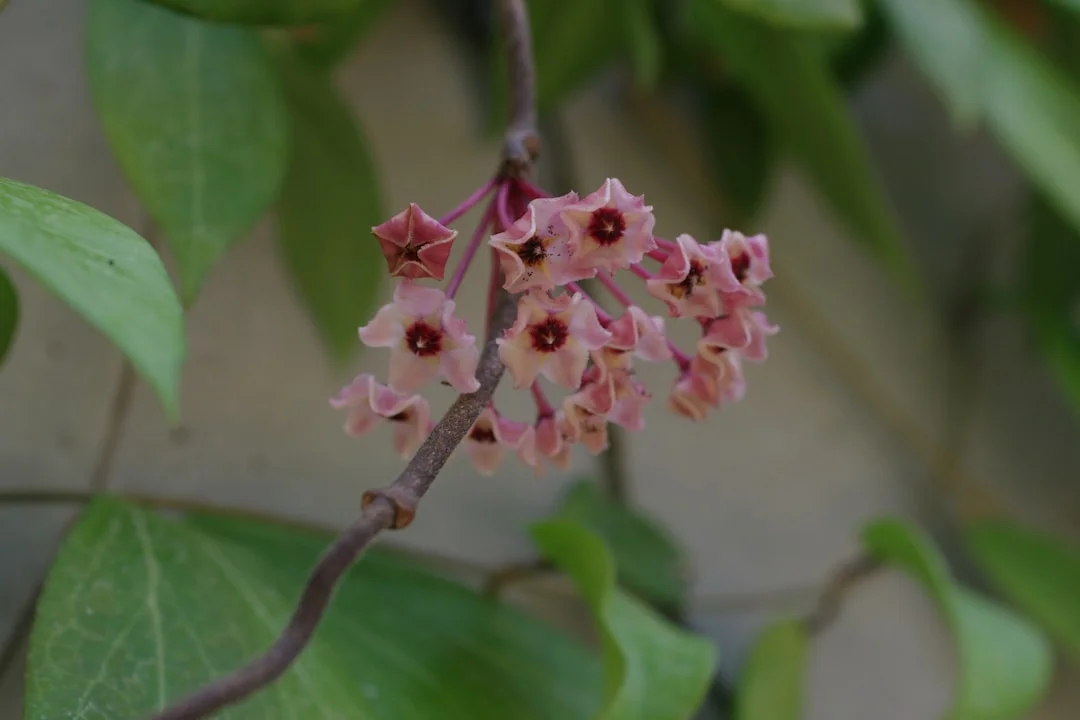
Hoyas are natural climbers. In the wild, they use aerial roots to grip tree bark. Indoors, they’ll happily wind around a trellis, a moss pole, or a series of hooks along a wall. You can also let them trail freely from a hanging basket — both styles work, though climbing tends to produce more compact, bushy growth. Importantly, never remove the leafless peduncles (those short, brown stub-like spurs). These are the bloom spurs from which flower clusters — called umbels — emerge season after season. Once you understand this, you’ll never accidentally prune them off again.
Soil and Fertilizer for Hoyas
Getting the soil right is arguably the most important element of hoya plant care indoors — and it’s where many well-meaning gardeners go wrong. Standard potting compost is too dense and retains too much moisture for a plant that evolved on tree bark. Instead, aim for a mix that drains fast, stays slightly acidic (pH 6.0–6.5), and holds just enough organic matter to feed the roots. A reliable mix that works in climates from Auckland to Amsterdam: 40% perlite or pumice, 40% high-quality potting mix, and 20% orchid bark. This combination creates the airy, chunky structure hoyas love. In tropical climates where ambient humidity keeps the growing medium from drying out too fast, increase perlite to 50%. In very dry climates, you can reduce perlite slightly and add a small amount of coco coir to retain a little more moisture between waterings. For fertilising, less is genuinely more with hoyas. Feed with a balanced liquid fertiliser (such as a 10-10-10 or 20-20-20 formula) diluted to half strength, once a month during the growing season (spring through summer). Switch to a phosphorus-heavy formula (such as 5-10-5) in late spring to encourage flowering. Stop feeding entirely in winter, when the plant rests.
Organic vs. Synthetic Fertilizers for Hoyas
Both work, but they behave differently. Synthetic liquid fertilisers (such as Miracle-Gro or Compo) deliver nutrients immediately and are easy to measure — great for beginners. Organic options like worm castings, fish emulsion, or seaweed extract feed more slowly and build long-term soil health. In my experience, a combination works best: a light monthly dose of liquid synthetic fertiliser during peak growing season, plus a top dressing of worm castings in early spring. This approach is both globally accessible — worm castings are available from garden centres in the US, UK, Australia, and across Asia — and genuinely effective for coaxing reluctant hoyas into bloom.
Watering Your Hoya the Right Way
The internet tells you to water hoyas weekly. Experienced gardeners know that’s the fastest way to rot the roots. Hoyas need what’s called the ‘drench and dry’ method — water thoroughly until it drains freely from the bottom of the pot, then wait until the top 2–3 cm (about an inch) of the soil mix is completely dry before watering again. In practice, this means watering every 7–14 days in summer and every 3–4 weeks in winter, depending on your climate, pot material, and the humidity in your home. Have you ever noticed your hoya’s leaves looking slightly wrinkled or leathery? That’s the plant telling you it’s mildly thirsty — and that’s actually fine. Hoyas store water in their thick leaves, so a little drought stress is far safer than soggy roots. Yellow leaves, mushy stems, or a sour-smelling potting mix are all signs of overwatering, which is by far the number one killer of hoyas globally. Furthermore, the quality of water matters more than most people realise. Hoyas are sensitive to fluoride and chlorine, which accumulate in the soil and can cause brown leaf tips. Use rainwater, filtered water, or simply leave tap water in an open jug overnight to allow chlorine to dissipate before watering.
Humidity Needs for Hoyas in Different Climates
Hoyas prefer humidity between 40–60%. In tropical climates — Bangkok, Chennai, Kuala Lumpur — ambient humidity is usually sufficient year-round. In temperate or continental climates — London, Chicago, Moscow — indoor heating during winter can drop humidity below 20%, which stresses the plant. A simple fix: place the pot on a pebble tray filled with water (ensuring the pot sits above the waterline, not in it), or group your hoyas together so they humidify each other through transpiration. A small room humidifier near your plant collection works beautifully in very dry climates and costs very little to run.
Sunlight and Temperature Requirements
Light is the engine of hoya plant care indoors. Without enough of it, your hoya will survive — but it will never bloom. Hoyas need bright, indirect light for at least 4–6 hours daily. Direct midday sun through glass will scorch the leaves, but gentle morning or late afternoon sun is actively beneficial and often triggers flowering. In terms of USDA hardiness zones, Hoya carnosa can survive outdoors year-round only in zones 10–12 (frost-free climates). The USDA Plant Database classifies it as a tropical perennial. For RHS ratings, it carries an H1c rating — meaning it tolerates minimum temperatures of 5–10°C (41–50°F) and is suitable only for heated greenhouses or indoor growing in most of the UK and northern Europe. The ideal indoor temperature range for hoyas is 18–27°C (65–80°F) during the day. They can tolerate brief dips to about 10°C (50°F) but should never be exposed to frost. Interestingly, a period of cooler temperatures — around 15°C (59°F) at night for several weeks in late autumn — actually stimulates bud formation in Hoya carnosa. This explains why hoyas kept near a cool but not cold window in October and November often erupt into bloom the following spring.
Using Grow Lights for Hoyas in Low-Light Climates
For gardeners in Scandinavia, Canada, or the northern UK, winter light is genuinely insufficient for hoyas to thrive. A full-spectrum LED grow light positioned 30–45 cm (12–18 inches) above the plant and run for 12–14 hours daily bridges the gap beautifully. Modern LED grow lights consume very little electricity — typically 15–30 watts — and the investment pays off quickly in healthier growth and more reliable flowering. Set them on a timer so you don’t have to think about it. Many serious hoya collectors across northern Europe and Canada grow entire walls of blooming hoyas under grow lights, with spectacular results.
Common Problems and How to Fix Them
Even with excellent hoya plant care indoors, problems arise. The key is catching them early. Here are the five most common issues, what causes them, and exactly how to fix them. First: yellow leaves. Usually a sign of overwatering. Check the soil — if it’s still damp after a week, your drainage is insufficient or you’re watering too frequently. Repot into a faster-draining mix and adjust your watering schedule. Second: brown leaf tips. Often caused by fluoride in tap water, low humidity, or salt build-up from synthetic fertilisers. Flush the soil thoroughly with filtered water every 2–3 months and switch to rainwater if possible. Third: failure to bloom. The most likely causes are insufficient light, cutting off bloom spurs, or over-fertilising with nitrogen. Move to a brighter spot, check that spurs are intact, and switch to a phosphorus-heavy fertiliser in spring. Fourth: dropping leaves in winter. Often a response to cold draughts from windows or air conditioning. Move the plant away from vents and cold glass. Fifth: leggy, pale growth. A clear sign of insufficient light. Supplemental grow lighting will solve this within a few weeks.
Dealing with Pests on Hoyas
Mealybugs are the hoya’s most persistent enemy. These soft, white, cottony insects congregate in leaf axils and at stem joints, sucking sap and weakening the plant. Catch them early by wiping leaves with a cotton swab dipped in 70% isopropyl alcohol, then spray the whole plant with a solution of neem oil (2ml), dish soap (1ml), and water (1 litre). Repeat every 7 days for three weeks. Spider mites are the second most common pest, appearing as tiny moving dots on leaf undersides, often with fine webbing. They thrive in hot, dry conditions — so maintaining adequate humidity is the best prevention. A firm spray of water dislodges them effectively in early infestations.
Root Rot: Prevention and Recovery
Root rot, caused by overwatering and poor drainage, is the number one fatal disease for hoyas globally. Signs include mushy black or brown roots, wilting despite moist soil, and a sour smell from the pot. If you catch it early, remove the plant from its pot, trim all rotted roots with sterile scissors, dust the cuts with powdered cinnamon (a natural antifungal), and repot into fresh, dry mix. Leave the repotted plant unwatered for 3–4 days to allow cuts to callous. In severe cases, propagate healthy stem cuttings from the top of the plant and discard the original root system entirely.
Hoya Propagation: Two Methods That Work
Propagating hoyas is one of the most rewarding aspects of growing these plants, and it’s genuinely easy once you know the method. The best time to propagate is late spring to early summer — in June in the Northern Hemisphere, or October to November in the Southern Hemisphere — when the plant is in active growth and rooting happens fastest. There are two reliable methods: stem cuttings in water or in mix, and leaf cuttings (for certain species). Stem cuttings are far more reliable and are recommended for beginners. A single healthy mother plant can produce dozens of cuttings over its lifetime, which makes hoyas wonderful plants for sharing — a tradition that hoya enthusiasts around the world have maintained for generations.
Stem Cutting Propagation: Step by Step
Take a cutting with at least two nodes (the points where leaves emerge from the stem) and one or two healthy leaves. Use clean, sharp scissors. Remove the bottom leaf, leaving one or two leaves at the tip. Place the cutting in a glass of room-temperature water, ensuring the lower node is submerged but the leaves are not. Roots typically appear in 2–4 weeks in warm conditions. Once roots reach 2–3 cm (about an inch) long, pot the cutting into your prepared hoya mix. Alternatively, you can insert the cutting directly into a moist mix of perlite and coco coir, cover loosely with a clear bag to maintain humidity, and keep in bright indirect light at 22–26°C (72–79°F). Direct-to-mix propagation produces stronger roots.
Using Rooting Hormone and Aftercare
Rooting hormone powder or gel, applied to the cut node before inserting into the medium, significantly speeds rooting — reducing the process from 4 weeks to as little as 2 weeks in warm conditions. This is widely available at garden centres across the US, UK, Europe, Australia, and increasingly in India and Southeast Asia. After potting rooted cuttings, keep them in slightly higher humidity than usual for the first 2–3 weeks while the root system establishes. Water sparingly — the new roots are fragile and vulnerable to rot. Once you see new leaf growth, the plant is established and you can begin normal care.
Seasonal Care for Hoya Plants
One of the joys of hoya plant care indoors is that the plant follows clear seasonal rhythms, even when grown entirely indoors. Understanding those rhythms — and working with them rather than against them — is what separates struggling hoyas from thriving ones. In June (the current month for Northern Hemisphere readers), your hoya should be in peak growing mode. This is the ideal time to fertilise actively, check for pest activity, propagate cuttings, and train new vines. For readers in the Southern Hemisphere — Australia, New Zealand, South Africa, southern South America — June marks the onset of winter, so adjust the seasonal advice below accordingly.
Spring and Summer Care (March–August, Northern Hemisphere)
This is your hoya’s active growth window. Water every 7–10 days using the drench-and-dry method. Feed monthly with a balanced fertiliser, switching to a phosphorus-heavy formula in May to promote bud set. Increase light exposure as days lengthen — move the plant slightly closer to the window or extend grow light hours. Watch for mealybug activity, which peaks in warm weather. Prune only to remove dead or damaged material, never the bloom spurs. New vines grow rapidly in summer — train them along their support or let them trail freely.
Autumn and Winter Care (September–February, Northern Hemisphere)
As temperatures drop and days shorten, your hoya naturally slows down. Reduce watering to every 3–4 weeks. Stop fertilising entirely from October through February. This rest period is actually beneficial — a cooler winter followed by a warm spring mimics the seasonal shift hoyas experience in the wild and is one of the most reliable triggers for spring blooming. Keep the plant away from cold windowpanes and heating vents. In the UK, Canada, and northern US states, supplement with grow lights to maintain minimum light levels. The plant may look slightly less vibrant in winter — that’s normal and not a cause for concern.
Uses of the Hoya Plant
Beyond being a stunning houseplant, hoyas have a range of uses that many gardeners aren’t aware of. In terms of interior design, their trailing or climbing habit makes them uniquely versatile — they work equally well in minimalist Scandinavian interiors, lush tropical-inspired spaces, and small urban apartments. The waxy, long-lasting flowers produce a sweet, almost honeyed fragrance that intensifies in the evening, making them a natural choice for living rooms and bedrooms. As mentioned earlier, Hoya carnosa is non-toxic to pets and children, which makes it one of the safest choices for family homes — a significant advantage over many popular houseplants. In traditional folk medicine across parts of Southeast Asia, hoya leaf poultices have been applied to minor skin inflammations. However, these uses are not clinically validated, and no health claims should be made for internal use. As a gift plant, hoyas have no equal. A mature, established hoya is a living heirloom — one that can outlast most other houseplant gifts by decades. For a comprehensive approach to keeping all your indoor plants thriving, explore our complete guide to indoor plant care alongside this hoya-specific advice.
Hoyas in Interior Landscaping and Biophilic Design
Biophilic design — the practice of incorporating natural elements into built environments — has become a major trend in architecture and interior design globally, with leading firms in Tokyo, London, Amsterdam, and New York integrating living plant walls and curated houseplant displays into offices, hotels, and residential spaces. Hoyas are ideal for these settings because they’re low-maintenance, long-lived, visually striking, and safe for public spaces where both adults and children interact. Their ability to grow in hanging baskets, wall-mounted planters, or trained across trellises gives designers exceptional flexibility. In Japan, hoya collections are a well-established part of succulent and exotic plant culture, with specialist growers offering hundreds of varieties to enthusiasts across the country.
Frequently Asked Questions
How often should I water a hoya plant indoors?
Water your hoya using the drench-and-dry method — water thoroughly until it flows freely from the drainage holes, then wait until the top 2–3 cm (about one inch) of the soil mix is completely dry before watering again. In practice, that means every 7–14 days in warm growing months and every 3–4 weeks in winter. Overwatering is the most common cause of hoya death globally, so when in doubt, wait an extra day or two before watering.
Can I grow a hoya plant indoors in a cold climate like Canada or the UK?
Absolutely — hoyas are some of the most adaptable indoor plants for cold climates. Since they live entirely indoors, outdoor temperatures don't affect them directly. The key requirements are bright indirect light (supplement with a full-spectrum LED grow light in winter), temperatures above 10°C (50°F) — which most heated homes easily maintain — and reduced watering in winter. Many hoya enthusiasts across Canada, Scandinavia, and the northern UK grow spectacular collections year-round under grow lights.
Why is my hoya plant not flowering?
The three most common reasons are insufficient light, accidentally removing bloom spurs, and over-fertilising with nitrogen. Hoyas bloom from short stub-like spurs that persist for years — never prune these. Move the plant to a brighter spot, switch to a phosphorus-heavy fertiliser in spring, and give it a cooler rest period (around 15°C/59°F) in autumn. A slightly root-bound plant in a small pot also blooms more readily. Patience matters too — new plants can take 1–2 years to bloom for the first time.
Is the hoya plant safe for pets and children?
Yes — the ASPCA lists Hoya carnosa as non-toxic to cats, dogs, and horses, which makes it one of the safest flowering houseplants you can own. The sticky sap from the flowers may cause mild stomach discomfort if eaten in large quantities, so it's sensible to keep blooming plants slightly out of reach of very young pets or toddlers. Overall, hoyas are among the best choices for pet-friendly and child-friendly homes.
How do I propagate a hoya plant at home?
Stem cutting propagation is the most reliable method. Take a cutting with at least two nodes, remove the lower leaf, and place it either in a glass of water or directly in a moist mix of perlite and coco coir. Keep it at 22–26°C (72–79°F) in bright indirect light. Roots appear in 2–4 weeks in warm conditions, faster if you use rooting hormone powder or gel. The ideal time to propagate is late spring to early summer, when the plant is in active growth and rooting is fastest.
What soil mix is best for hoya plant care indoors?
Hoyas need a fast-draining, airy mix — never standard potting compost alone. A reliable recipe used by growers worldwide: 40% perlite or pumice, 40% quality potting mix, and 20% orchid bark. Target a slightly acidic pH of 6.0–6.5. In humid tropical climates, increase perlite to 50%. In very dry climates, add a small amount of coco coir to slow moisture loss slightly. Good drainage is non-negotiable — always use pots with at least two drainage holes.
How do I encourage a hoya to produce more fragrant flowers?
Several factors together trigger abundant, fragrant blooming: bright indirect light for at least 4–6 hours daily, a cool rest period in autumn (around 15°C/59°F at night), a phosphorus-heavy fertiliser applied in late spring, leaving all bloom spurs intact, and allowing the plant to become slightly root-bound before repotting. Consistently applying these conditions — especially the cool autumn rest — is the single most effective strategy for reliable, fragrant flowering in hoya plant care indoors.
Can I grow a hoya plant in a small apartment with limited space?
Hoyas are ideal apartment plants. They thrive in hanging baskets, on trellises, or simply trailing from a shelf — all of which use vertical space rather than floor space. Compact varieties like Hoya carnosa 'Compacta' (the rope hoya) or Hoya kerrii stay small and slow-growing, making them perfect for windowsills. Even in a small studio flat, a single hoya in a 15 cm (6-inch) pot near a bright window can produce stunning blooms with minimal footprint.
Final Thoughts
Hoya plant care indoors is one of those rare gardening pleasures where patience genuinely pays off. These aren’t plants that reward constant fussing — they reward understanding. Give your hoya bright indirect light, a fast-draining soil mix, infrequent but thorough watering, and a cool autumn rest, and it will return the favour with decades of lush growth and impossibly beautiful flowers. Whether you’re growing in a sun-drenched flat in Singapore, a cool Victorian terrace in Edinburgh, or a high-rise apartment in New York, the fundamentals of hoya plant care indoors are the same. The most important rule? Never cut those bloom spurs. Follow that single piece of advice, alongside everything else in this guide, and you’ll likely find yourself — as so many hoya growers do — quietly addicted, collecting new varieties, and passing cuttings to friends for years to come. Start with one healthy plant, apply these principles, and watch what happens. You might just be surprised.

