
⏱ 32 min read
Table of Contents
- What Is the Flapjack Succulent (Kalanchoe luciae)?
- Flapjack Succulent Benefits and Uses
- How to Grow Flapjack Succulent: Climate and Conditions
- Soil and Fertiliser for Flapjack Succulent
- Watering Your Flapjack Succulent the Right Way
- Sunlight Requirements and Placement
- Flapjack Succulent Common Problems and How to Fix Them
- Propagating Flapjack Succulent Step by Step
- Seasonal Care Guide for Flapjack Succulent
- Safety and Toxicity: Is Flapjack Succulent Safe?
A gardener in Bristol once messaged me with a photo of her flapjack succulent — flat, paddle-shaped leaves blushing the most stunning coral-red at the tips, sitting in a sunny windowsill. Three weeks later, she sent another photo. The whole plant had turned to mush. Same pot. Same window. Nothing had changed — or so she thought. Understanding flapjack succulent common problems care is exactly what separates thriving plants from disappointing ones. Kalanchoe luciae, commonly called the flapjack succulent or paddle plant, is one of the most visually striking succulents you can grow — indoors or out. But it comes with a short list of non-negotiable needs that, when ignored, lead to fast decline. In this guide, we’ll cover every aspect of flapjack succulent common problems care: from soil and watering to sunlight, pests, propagation, and seasonal adjustments. By the end, you’ll know exactly why your previous attempts may have struggled — and what to do beautifully different this time. Many gardeners who grow this plant also love to read about How to Care for Succulent Plant.
Quick Highlights
- Identify the top flapjack succulent common problems — root rot, etiolation, leaf scorch — and fix them fast
- Grow Kalanchoe luciae successfully across tropical, temperate, Mediterranean, and arid climates
- Master the exact watering schedule that prevents the #1 killer of paddle plants worldwide
- Propagate new plants from offsets or leaves using a simple, proven step-by-step method
- Discover which soil mix, fertiliser ratio, and pot type unlock the boldest red-tipped colour
- Understand seasonal care shifts for monsoon, summer, winter, and spring growing conditions
Plant Characteristics at a Glance
| Common Name | Flapjack Succulent, Paddle Plant, Desert Cabbage, Red Pancake |
| Scientific Name | Kalanchoe luciae |
| Family | Crassulaceae |
| Origin | South Africa, Swaziland, Lesotho |
| Habitat | Rocky hillsides, semi-arid grasslands, 1000–2500 m elevation |
| Plant Type | Monocarpic succulent perennial |
| Indoor Plant | Yes — excellent on bright, sunny windowsills |
| Outdoor Plant | Yes — suitable for USDA Zones 9b–11 outdoors year-round |
| Leaves | Large, flat, rounded, paddle-shaped; grey-green with red-pink margins in bright light; up to 15 cm (6 in) across |
| Flowers | Tubular, yellow to orange-red, borne on tall stalks up to 90 cm (3 ft) |
| Flowering Season | Late winter to spring (January–April in the Northern Hemisphere) |
| Fruit | Small dry capsule containing multiple tiny seeds |
| Seeds | Very fine, dust-like; difficult to germinate at home |
| Roots | Shallow, fibrous root system; drought-adapted; susceptible to rot in wet conditions |
| Height | 30–60 cm (12–24 in) in leaf rosette; up to 90 cm (3 ft) when in flower |
| Growth Rate | Slow to moderate; rosette develops fully over 2–3 years |
| Light Requirements | Full sun to bright indirect light; minimum 6 hours direct sunlight daily preferred |
| Soil Requirements | Fast-draining, gritty succulent mix; pH 6.0–7.0; 50% mineral content (perlite/coarse sand) recommended |
| Water Requirements | Low; soak-and-dry method; every 10–14 days in summer, once a month or less in winter |
| Temperature Requirements | Optimal: 15–30°C (59–86°F); minimum: -1°C (30°F) briefly; avoid frost |
| Humidity Requirements | Low; prefers dry air (30–50% RH); avoid high humidity — use covered shelter in monsoon regions |
| Propagation | Offset division (most reliable), leaf propagation, rarely from seed |
| Uses | Ornamental houseplant, xeriscaping, succulent gardens, container planting, rockeries |
| Medicinal Properties | Limited for this species; broader Kalanchoe genus studied for anti-inflammatory properties (ethnobotanical use only — not for self-treatment) |
| Toxicity | TOXIC to cats, dogs, birds, livestock, and children; contains cardiac glycosides (bufadienolides); keep out of reach |
| Cultural Significance | Ornamental value in South African gardens; grown globally as a symbol of resilience and drought tolerance |
| Common Pests | Mealybugs, scale insects, vine weevils (in outdoor containers), occasionally spider mites in dry conditions |
| Common Diseases | Root rot (Pythium, Phytophthora), powdery mildew in humid conditions, leaf spot fungi |
| Special Care Tips | Never let water sit in the rosette centre; avoid clay soils; acclimatise gradually to full sun; monocarpic — parent rosette dies after flowering; collect offsets to continue the plant |
| Cultural Practices | Repot every 2–3 years in spring; remove spent flower stalks promptly; dust leaves gently with a dry brush to remove accumulated debris |
| Vastu Direction | East or South-East placement recommended for succulents representing growth and positive energy |
Flapjack succulent common problems care Names in Different Languages
| English | Flapjack Succulent / Paddle Plant |
| Mandarin Chinese | 扇形伽蓝菜 (Shān xíng jiā lán cài) |
| Spanish | Planta paleta / Suculenta flapjack |
| Hindi | फ्लैपजैक सक्यूलेंट (Flapjack Succulent) |
| Gujarati | ફ્લેપજેક સક્યુલન્ટ (Flapjack Sukulent) |
| Arabic | نبات الفلاب جاك (Nabat al-flapjack) |
| Bengali | ফ্ল্যাপজ্যাক সাকুলেন্ট (Flapjack Sakulenta) |
| Portuguese | Planta panqueca / Suculenta remo |
| Russian | Каланхоэ Люсия (Kalankhoye Lyusiya) |
| Japanese | フラップジャック (Furappujakku) |
| Punjabi | ਫਲੈਪਜੈਕ ਸੁਕੁਲੈਂਟ (Flapjack Sukulaent) |
| German | Wüstenkohlpflanze / Flapjack-Sukkulente |
| Javanese | Tanduran Flapjack |
| Korean | 플랩잭 다육식물 (Peullaepjaek dayug singmul) |
| French | Plante palette / Kalanchoé en spatule |
| Telugu | ఫ్లాప్జాక్ సక్యులెంట్ (Flaapjaak Sakyulant) |
| Marathi | फ्लॅपजॅक सक्युलेंट (Flajak Sakyulent) |
| Tamil | பேட்டை செடி (Paetai Chedi / Flapjack Succulent) |
| Urdu | فلیپ جیک سکولنٹ (Flapjack Sukulant) |
| Turkish | Kürek bitki / Flapjack sukülenti |
| Vietnamese | Cây mọng nước bơi chèo (Flapjack) |
What Is the Flapjack Succulent (Kalanchoe luciae)?
The flapjack succulent — botanically known as Kalanchoe luciae — is a striking succulent native to the rocky slopes and semi-arid grasslands of South Africa, Swaziland, and Lesotho. It belongs to the Crassulaceae family, the same family as jade plants and echeverias. Most people fall for it immediately. The large, flat, rounded leaves — resembling pancakes or flapjacks, hence the name — fan out in a rosette pattern and turn a vivid scarlet-orange at the tips when exposed to bright light or cool temperatures. According to Kew Gardens botanical records, Kalanchoe luciae is frequently confused with Kalanchoe thyrsiflora, its near-identical twin. The key difference? K. luciae produces red-edged leaves and has a more compact growth habit, while K. thyrsiflora is typically grey-green with powdery white coating. In my experience, most plants sold as ‘flapjack’ in garden centres worldwide are actually Kalanchoe luciae — though both are equally beautiful and cared for in the same way. Here’s something most new owners don’t know: the flapjack is monocarpic in the wild, meaning the original rosette flowers once — spectacularly — then dies back, leaving behind offsets that continue the plant’s life. That discovery often alarms beginners who see their mother plant decline after flowering. It’s completely normal.
Kalanchoe luciae vs. Kalanchoe thyrsiflora: Key Differences
These two species are so similar that even experienced nurseries mislabel them. However, a few details give it away. Kalanchoe luciae has leaves with distinct red or pink margins, especially in bright light, and produces a faint powdery coating only on the upper leaf surface. Kalanchoe thyrsiflora, on the other hand, shows a heavy white powdery farina across the entire leaf. Furthermore, K. luciae tends to form offsets (pups) more freely around the base, making it better suited for propagation. For the purposes of this guide, all care advice applies equally to both species. For more tips, check out our detailed article on Moonstone Succulent Indoor Care.
Natural Habitat and What It Tells Us About Care
Understanding where a plant comes from tells you almost everything about how to grow it. Kalanchoe luciae grows naturally on dry, stony hillsides in southern Africa, in full sun, with infrequent rainfall and excellent drainage. Temperatures in its native range swing between 5°C (41°F) at night in winter and 38°C (100°F) in summer. That heritage explains why overwatering and shade are its two biggest enemies — conditions it never experiences in the wild. Similarly, it explains why sandy, mineral-rich soil produces the healthiest plants.
Flapjack Succulent Benefits and Uses
You might be surprised to learn that the flapjack succulent isn’t just a pretty face. While it isn’t a medicinal plant in the traditional Ayurvedic or TCM sense, the Kalanchoe genus as a whole has attracted significant scientific attention. Several species — particularly Kalanchoe pinnata — are documented in folk medicine across Africa, the Caribbean, and South Asia. The broader genus has been studied for potential anti-inflammatory and cytotoxic properties, though Kalanchoe luciae specifically is primarily valued as an ornamental. A 2016 review published on PubMed/NIH surveying ethnobotanical uses of Kalanchoe species noted their widespread use in wound treatment and fever reduction across sub-Saharan Africa. Kalanchoe luciae itself has traditional use in some South African communities as a topical remedy for skin irritation — though this should not be taken as medical advice, and internal use is not recommended due to toxicity concerns (more on this in the safety section). As a houseplant and garden specimen, however, the flapjack succulent offers clear ornamental value: dramatic visual presence, year-round colour, low maintenance, and drought resilience that makes it ideal across diverse climates from Singapore to southern California.
Ornamental and Landscape Uses
In warm climates — including South Africa, Australia, the Mediterranean, California, and the Arabian Gulf — flapjack succulents are used widely in xeriscaping (water-efficient landscape design). They pair beautifully with agaves, aloes, and ornamental grasses. In cooler regions like the UK, Germany, and Canada, they’re grown as container plants that move indoors over winter. The RHS recommends Kalanchoe luciae for sunny borders and gravel gardens in milder UK regions (RHS Hardiness Rating H2, tolerating temperatures down to around -1°C/30°F briefly). As an indoor specimen, a well-lit windowsill flapjack adds striking architectural interest to any room.
How to Grow Flapjack Succulent: Climate and Conditions
One of the great things about flapjack succulents is their adaptability. Whether you’re in Mumbai, Melbourne, Manchester, or Miami, you can grow this plant successfully — though your approach will differ slightly depending on your climate. The USDA hardiness zone range for outdoor growing is Zone 9b–11 (minimum temperatures of about -3°C/27°F). Outdoors in frost-prone regions, the plant must overwinter inside. In tropical climates like those of Southeast Asia and coastal India, the main challenge isn’t cold — it’s humidity and excessive rain. In arid climates like the Middle East or inland Australia, full outdoor sun is possible with some afternoon shade in peak summer. Temperate growers in the UK, Pacific Northwest USA, and Canada will get the best results growing flapjack succulents in pots that come indoors from October to April. For more tips, check out our detailed article on Baby Toes Succulent Common Problems &.
Growing in Tropical and Humid Climates
In tropical regions — think Chennai, Bangkok, Lagos, Kuala Lumpur — the flapjack succulent faces its biggest enemy: humidity and waterlogged soil during wet seasons. The key is drainage above everything else. Use a terracotta pot (which breathes and wicks away moisture), a very gritty soil mix, and place the plant under a covered patio or rain shelter during monsoon months (June–September in South Asia). Reduce watering to near-zero during heavy rain periods. Many gardeners in tropical climates find that keeping the plant partially shaded also helps prevent leaf scorch in intense heat above 40°C (104°F). If you enjoy growing this plant, you might also find our guide on Baby Toes Succulent Problems Pests very useful.
Growing in Temperate and Cold Climates
Gardeners in the UK, northern Europe, Canada, and the northern US will grow flapjack succulents as indoor plants for at least five to six months of the year. Place them in the sunniest south-facing window you have (or north-facing in the Southern Hemisphere). A grow light — such as a full-spectrum LED at 2000–4000 lux — can supplement winter light and prevent the stretching (etiolation) that plagues indoor succulents in low-light winters. Keep temperatures above 10°C (50°F) at all times, and bring outdoor pots inside well before the first frost. For more tips, check out our detailed article on propagating succulents from leaves and offsets.
Growing in Mediterranean and Arid Climates
For gardeners in California, southern Spain, Greece, parts of Australia, and the Arabian Peninsula, flapjack succulents are almost effortless. Plant them in raised beds with sandy or gravelly soil, in a position that gets at least six hours of direct sun. In regions where summer temperatures regularly exceed 40°C (104°F), afternoon shade cloth (30–50% shade) prevents tip burn. Water deeply but infrequently — once every 2–3 weeks in summer is usually sufficient in arid conditions.
Soil and Fertiliser for Flapjack Succulent
Here’s the thing — most succulent deaths start not with watering mistakes, but with the wrong soil. Flapjack succulents demand a fast-draining, mineral-rich medium that mimics their native stony hillside environment. A standard potting mix holds too much moisture and will eventually cause root rot, even with careful watering. The ideal mix is 50% gritty mineral material (coarse sand, perlite, or pumice) and 50% organic base (cactus compost or well-structured potting mix). Commercial cactus and succulent mixes from brands like Miracle-Gro or Westland are a reasonable starting point, but adding 30–40% extra perlite significantly improves drainage. For those who prefer DIY, a blend of 2 parts coarse river sand, 1 part compost, and 1 part fine gravel works excellently across most climates. Soil pH should sit between 6.0 and 7.0 — slightly acidic to neutral. Fertilising is minimal. During the active growing season (spring and early summer in the Northern Hemisphere), apply a balanced, diluted liquid fertiliser — 10-10-10 or a dedicated succulent feed — at quarter strength once a month. In my experience, less is always more with flapjack succulents. Over-fertilising pushes leafy, soft growth that is more susceptible to pests and disease.
Choosing the Right Pot
Pot choice matters enormously for flapjack succulents. Terracotta pots are the gold standard — they’re porous, allow air exchange at the root zone, and dry out faster than plastic or glazed ceramic. Always choose a pot with at least one drainage hole. The pot should be only slightly larger than the plant’s root ball — oversized pots hold excess moisture around the roots. In very humid climates, elevating the pot on feet or a saucer filled with gravel also helps prevent waterlogging. Furthermore, heavy pots suit outdoor growing in windy areas, since the large flat leaves act like sails.
Watering Your Flapjack Succulent the Right Way
The internet tells you to water succulents weekly. Experienced gardeners know that’s one of the fastest ways to kill a flapjack. The correct approach is the ‘soak and dry’ method: water deeply — until water drains freely from the bottom of the pot — then wait until the soil is completely dry before watering again. In summer, this typically means watering once every 10–14 days in temperate climates, and once every 2–3 weeks in tropical or humid climates. In winter, water sparingly — once a month or even less. The plant’s leaves store water, and the roots are adapted to drought. Overwatering is, without question, the most common flapjack succulent problem across every climate zone. A simple test: push your finger 3–4 cm (1.5 inches) into the soil. If it feels even slightly damp, don’t water yet. Water in the morning so excess moisture evaporates during the day. Avoid getting water on the leaves, especially in humid climates — wet leaves sitting overnight invite fungal problems. In July, during monsoon season in South Asia and subtropical regions, you’ll likely need to water not at all — rainfall may be more than sufficient, and rain shelter becomes essential.
Signs of Overwatering vs. Underwatering
Many gardeners confuse overwatered and underwatered flapjack succulents because both can cause wilting. However, the leaves tell the real story. Overwatered leaves turn soft, translucent, and mushy — often yellowing at the base first. The stem may feel spongy. Underwatered leaves become thin, wrinkled, and slightly rubbery, but they stay firm. If you gently squeeze a leaf and it feels like a water balloon that’s starting to deflate, it’s thirsty. If it feels like wet tissue paper, there’s too much water in the root zone. In severe overwatering cases, you’ll also smell the soil — a sour or rotten odour means root rot has likely begun.
Sunlight Requirements and Placement
Flapjack succulents are sun worshippers. They need at least 6 hours of bright direct sunlight daily to look their best and maintain the vivid red colouration at their leaf tips. That striking red colour isn’t just cosmetic — it’s the plant producing anthocyanin pigments as a stress response to intense light and temperature variation. In other words, the more sun (within reason), the more colourful the plant. Place outdoor plants in full sun. For indoor plants, a south-facing windowsill in the Northern Hemisphere (or north-facing in Australia, New Zealand, and South Africa) is ideal. In very hot climates where temperatures exceed 40°C (104°F) regularly, afternoon shade prevents actual leaf scorch. A common mistake: moving a plant from low-light conditions directly into full midday sun. This causes sun scald — bleached, papery patches on the leaves. Instead, introduce increased light gradually over 1–2 weeks. If your indoor light is limited during winter months, a full-spectrum grow light placed 20–30 cm (8–12 inches) above the plant for 12–14 hours a day will maintain good health and colour. This is especially relevant for growers in the UK, Canada, Scandinavia, and the northern US during winter.
How Light Affects Leaf Colour
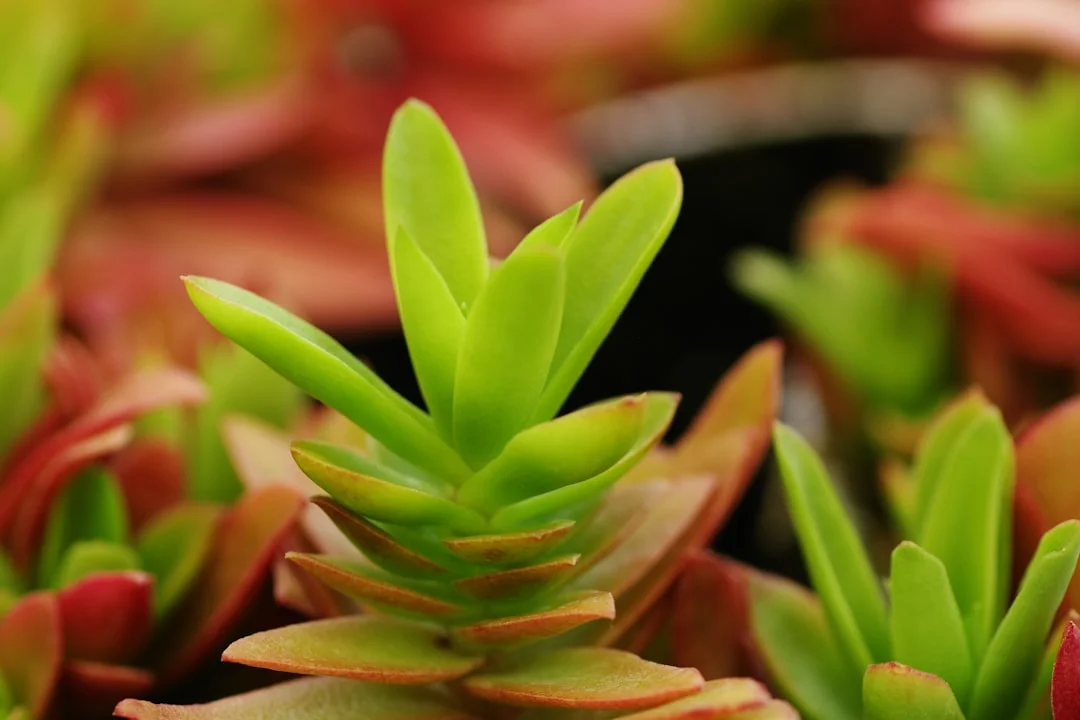
Here’s something that surprises many growers: a flapjack succulent grown in shade will be entirely green — beautiful, but not the dramatic red-tipped specimen you see in photos. The red colouration at the leaf margins intensifies in response to high light intensity, temperature fluctuation between day and night, and mild drought stress. This is a natural survival mechanism. If you want maximum colour, place the plant where it receives morning sun (which is gentler) through to mid-afternoon, and allow the compost to dry out completely between waterings. Cool nights — even indoors near a window in autumn — also intensify the red tones significantly.
Flapjack Succulent Common Problems and How to Fix Them
This is the heart of the guide — and arguably the most important section for anyone whose plant is struggling right now. Flapjack succulent common problems care comes down to a surprisingly short list of recurring issues. The good news is that almost all of them are fixable, often quickly. Let’s go through each one in detail. Understanding flapjack succulent common problems care starts with recognising that this plant sends clear signals before things get serious. The key is learning to read those signals early. Most flapjack succulent common problems care issues fall into four categories: watering errors, light problems, pest infestations, and root or soil issues. We’ll tackle all of them here — along with the fixes that actually work.
Root Rot: The Silent Killer
Root rot is the number one cause of flapjack succulent death worldwide. It’s caused by Pythium or Phytophthora fungi that thrive in consistently wet, poorly draining soil. Early signs include yellowing lower leaves, a soft or mushy stem base, and a sour smell from the soil. If you catch it early, here’s what to do: unpot the plant immediately, shake off all the old soil, and inspect the roots. Healthy roots are white or light tan and firm. Rotten roots are brown, mushy, and may smell foul. Cut all rotten sections away with sterilised scissors, dust the cuts with powdered cinnamon (a natural antifungal) or sulphur powder, let the plant air-dry for 24–48 hours, then repot into fresh, dry gritty mix. Do not water for at least a week after repotting.
Etiolation: When Your Plant Stretches Toward the Light
Etiolation is the technical term for a plant stretching thin, weak, and leggy toward a light source. It happens when a flapjack succulent doesn’t get enough light — very common for indoor plants in winter months. The leaves become smaller, the stem elongates, and the plant loses its compact rosette shape. Unfortunately, etiolation can’t be reversed in the affected growth. However, you can prevent further stretching by moving the plant to a brighter location or adding a grow light. The new growth that emerges in better light will be compact and healthy. In my experience, even growers in sunny climates can accidentally cause etiolation by placing the plant too far from a window or in a spot that only gets reflected light.
Mealybugs and Scale Insects
Flapjack succulents are susceptible to mealybugs — small, white, cottony insects that cluster at leaf joints and the base of the rosette. Scale insects also appear as brown, hard-shelled bumps along stems. Both suck sap and weaken the plant. Treatment: use a cotton bud dipped in 70% isopropyl alcohol to remove visible insects manually, then spray the whole plant with neem oil solution (2–3 ml per litre of water) or insecticidal soap. Repeat every 7–10 days for three treatments. Isolate affected plants immediately to prevent spread. Additionally, mealybugs often hide in soil — replacing the top layer of soil helps.
Leaf Scorch and Sun Damage
Paradoxically, too much sudden sun causes damage even in a sun-loving plant. Leaf scorch appears as pale, bleached, or papery patches — usually on the upper leaf surface. This typically happens after moving a plant from indoors to a bright outdoor spot without gradual acclimatisation. The fix is to move the plant to filtered or dappled light for 1–2 weeks before full sun exposure. Already scorched leaves won’t recover, but new growth will be fine once the plant adapts. In extremely hot climates (Middle East, interior Australia), summer afternoon shade is genuinely necessary even for fully acclimatised plants.
Yellowing Leaves: Causes and Fixes
Yellow leaves on a flapjack succulent can have several causes. Overwatering is the most common culprit. However, nutrient deficiency (particularly nitrogen), natural lower leaf senescence, and root restriction in a too-small pot are also frequent causes. If only the lowest, oldest leaves are yellowing and the rest of the plant looks healthy, this is likely natural leaf turnover — not a problem. If yellowing is spreading upward through the plant, check the soil moisture and root condition first, then consider whether the plant needs repotting or a light fertiliser application.
Propagating Flapjack Succulent Step by Step
One of the most rewarding aspects of growing flapjack succulents is how easily they propagate. Because the parent rosette eventually dies after flowering (being monocarpic), knowing how to propagate is actually essential for keeping the plant in your collection long-term. There are two main methods: offset division and leaf propagation. Offset division is faster and more reliable. Leaf propagation is slower but works well when you want to produce many plants from one specimen. The best time to propagate is spring or early summer in temperate climates — or at the start of the dry season in tropical regions. Avoid propagating during monsoon in humid climates, as excess moisture increases the risk of fungal infection in unrooted cuttings. For a broader understanding of how propagation fits into overall plant care, check out our indoor plant care guide which covers propagation principles across dozens of species.
Propagating from Offsets (Pups)
Mature flapjack succulents produce small rosette offsets (called pups) around the base. These are genetically identical to the parent and root quickly. Wait until the offset is at least 5 cm (2 inches) across before separating it. Use a clean, sharp knife to cut it away from the parent, keeping a small section of stem. Allow the cut surface to callous over in a dry, shaded spot for 24–48 hours. Then plant it in a small pot of dry, gritty succulent mix. Do not water for the first week — this encourages the roots to seek moisture and establish quickly. Within 3–6 weeks, gentle resistance when you tug the plant lightly confirms rooting.
Propagating from Leaves
Leaf propagation is slower with flapjack succulents than with many other succulents (like echeverias), but it does work. Select a healthy, plump leaf and twist it gently from the stem in one clean motion — you need the whole leaf base intact, not a torn stub. Allow it to callous for 2–3 days, then lay it flat on top of moist (not wet) succulent mix. Do not bury it. Keep it in bright indirect light and mist the soil lightly every few days. In 4–8 weeks, tiny pink roots and a small rosette bud will appear at the base of the leaf. The original leaf will eventually shrivel and can be removed once the new plant has several of its own leaves.
Seasonal Care Guide for Flapjack Succulent
Flapjack succulent common problems care changes with the seasons — and adjusting your routine accordingly is one of the biggest upgrades you can make. Many gardeners apply the same care year-round, which works against the plant’s natural growth rhythms. Here’s a seasonal breakdown that works for multiple climate zones. In July specifically — the current month — growers across South Asia, West Africa, and parts of the Caribbean are in the thick of monsoon or wet season. This is a high-risk period for overwatering and fungal problems. Growers in the Northern Hemisphere’s temperate zones (Europe, US, Canada) are in peak summer, which is actually ideal for outdoor growing. Southern Hemisphere growers (Australia, South Africa, South America) are in mid-winter and should be reducing water significantly and protecting plants from frost.

Spring (March–May, Northern Hemisphere)
Spring is the flapjack succulent’s most active growing season. Gradually increase watering as temperatures rise. Repot if the plant has outgrown its pot — you’ll see roots emerging from the drainage hole or circling the root ball. Begin monthly fertilising with a diluted balanced feed. Move outdoor pots back outside once night temperatures consistently stay above 10°C (50°F). This is also the ideal time to propagate offsets.
Summer (June–August, Northern Hemisphere)
Summer care splits by climate. In temperate zones, summer is ideal for outdoor growing — full sun, warm nights, and good growth. Water every 10–14 days or when the soil is bone dry. In tropical and monsoon climates, place the plant under a sheltered overhang to avoid constant rain exposure. Reduce watering dramatically during wet spells. In arid climates, consider 30% shade cloth during the hottest weeks and water every 2–3 weeks at most.
Autumn and Winter (September–February, Northern Hemisphere)
This is the rest period. Reduce watering to once a month or less. Stop fertilising entirely from October to February. Bring outdoor plants inside before the first frost — flapjack succulents cannot tolerate frost (they begin showing damage below -1°C/30°F). Indoors, place in the brightest possible window. Cooler indoor temperatures and bright light in autumn actually intensify the red leaf colouration beautifully — one of the best times of year to enjoy the plant visually.
Safety and Toxicity: Is Flapjack Succulent Safe?
This is a section you shouldn’t skip — especially if you have pets or small children. Kalanchoe luciae is toxic. The plant contains bufadienolide cardiac glycosides — compounds that affect the heart and gastrointestinal system when ingested. According to the USDA and ASPCA plant toxicity records, all Kalanchoe species are listed as toxic to cats, dogs, birds, and livestock. Ingestion can cause vomiting, diarrhoea, lethargy, and in severe cases, abnormal heart rhythms. Children who ingest leaves or flowers may experience similar symptoms. Place your flapjack succulent out of reach of pets and children — on high shelves or in rooms they don’t access. If you suspect ingestion by a pet, contact your nearest veterinary clinic or the ASPCA Animal Poison Control Center (US: +1-888-426-4435) immediately. For children, contact your regional poison control service. Touching the plant is generally safe for adults — the sap isn’t typically an irritant — but always wash hands after handling, especially before touching eyes or mouth.
Safe Placement and Precautions
In homes with free-roaming cats — who are particularly drawn to chewing succulent leaves — a closed terrarium or a high, inaccessible shelf is the safest choice. Alternatively, consider growing flapjack succulents exclusively in outdoor spaces where pets and children have limited unsupervised access. Gardeners in the UK can check the Royal Horticultural Society’s plant toxicity page on the RHS website for further guidance on toxic plants in domestic gardens. Always inform household members about the plant’s toxicity so everyone in the home is aware.
Frequently Asked Questions
Can I grow a flapjack succulent indoors in a cold climate like the UK or Canada?
Yes — absolutely. Flapjack succulents make excellent indoor plants in cold climates. The key requirement is a very bright, sunny windowsill — ideally south-facing in the Northern Hemisphere — that receives at least 4–6 hours of direct or very bright indirect sunlight daily. In low-light winters (November to February in the UK and northern Canada), a full-spectrum LED grow light placed 20–30 cm above the plant for 12–14 hours daily prevents the stretching (etiolation) that's the main indoor problem. Keep temperatures above 10°C (50°F) at all times and water very sparingly in winter — once every 3–4 weeks is often enough.
Is flapjack succulent safe for pets and children?
No — flapjack succulent (Kalanchoe luciae) is toxic to cats, dogs, birds, and livestock, and potentially harmful to small children. The plant contains bufadienolide cardiac glycosides, which can cause vomiting, diarrhoea, lethargy, and — in larger quantities — abnormal heart rhythms. Keep the plant on high, inaccessible shelves if you have free-roaming pets. If you suspect ingestion by a pet, contact your vet or the ASPCA Poison Control Center (+1-888-426-4435 in the US) immediately. Handling the plant externally is generally safe for adults — just wash hands afterward.
Why are my flapjack succulent's leaves turning green and losing their red colour?
Flapjack succulents need bright, direct light and some temperature stress to produce the vivid red-orange colour at their leaf margins. If leaves are turning entirely green, the plant almost certainly isn't getting enough light. Move it to a sunnier location — ideally where it receives at least 6 hours of direct sunlight daily. Cool nights (below 15°C/59°F) also intensify colouration. Mild drought stress (allowing the soil to dry completely between waterings) further enhances the red tones. The green colour itself is harmless — the plant is healthy — but better light will restore the trademark red tips within a few weeks.
How do I grow a flapjack succulent in a container on a balcony or terrace?
Container growing is ideal for flapjack succulents, especially for gardeners in flats or apartments. Choose a terracotta pot with a drainage hole — at least 20 cm (8 inches) wide for a mature plant. Use a gritty succulent mix with 40–50% perlite or coarse sand added. Place the container in the sunniest spot on your balcony. In monsoon or wet climates, move it under an overhang during heavy rain to prevent waterlogging. In frost-prone regions, bring it indoors when temperatures approach 0°C (32°F). Water using the soak-and-dry method, and fertilise lightly once a month in spring and summer only.
Why is my flapjack succulent stretching and growing tall and thin?
This is etiolation — the plant is stretching toward a light source because it isn't getting enough. It's one of the most common flapjack succulent common problems care issues for indoor growers, especially in winter. The stem elongates, leaves become smaller and more widely spaced, and the plant loses its compact rosette shape. Unfortunately, existing stretched growth can't be reversed. Move the plant to the brightest spot available, or add a grow light. New growth in better light will be compact. If the stem is very long and unsightly, you can cut the healthy rosette top, allow it to callous, and replant it in fresh gritty mix.
When should I repot my flapjack succulent, and how do I do it?
Repot every 2–3 years in spring, or when you see roots growing from the drainage hole or the plant becoming unstable in its pot. Choose a pot only slightly larger than the current one — no more than 2–3 cm wider. Use fresh, fast-draining succulent mix. Water the plant lightly a day before repotting to reduce root stress. After repotting, wait 5–7 days before watering again to allow any root disturbance to heal. Spring repotting gives the plant the whole growing season to settle into its new home.
What causes root rot in flapjack succulents, and how do I save a plant that has it?
Root rot is caused by overwatering combined with poor drainage, allowing soil to stay wet and enabling fungal pathogens (mainly Pythium) to attack the roots. Signs include yellowing leaves, a soft mushy stem base, and a sour smell from the soil. To save the plant: unpot it immediately, remove all dark or mushy roots with sterilised scissors, dust the cuts with cinnamon or sulphur powder, let the plant air-dry for 24–48 hours, then repot into fresh, completely dry gritty mix. Do not water for 7–10 days. With early intervention, most plants recover fully.
Does the flapjack succulent die after flowering?
Yes — the main rosette is monocarpic, meaning it flowers once and then gradually dies back. This is completely normal and not a sign of poor care. The flower stalk is dramatic — up to 90 cm (3 ft) tall with clusters of yellow-orange tubular flowers. Once flowering finishes, the rosette deteriorates. However, well before or during flowering, most plants produce several offsets (pups) around the base. These are the plant's next generation. Simply separate and repot the offsets to continue growing the species in your collection indefinitely.
Final Thoughts
Flapjack succulents are one of the most visually dramatic plants you can grow anywhere in the world — from a sunny windowsill in London to a terrace garden in Singapore to a desert rockery in Arizona. But their good looks come with a clear set of requirements. Get the drainage right, give them enough sun, and resist the urge to overwater — and they’ll reward you with years of that spectacular, paddle-shaped beauty. Mastering flapjack succulent common problems care really does come down to a handful of core principles: fast-draining soil, infrequent deep watering, maximum light, and vigilance for the early warning signs of root rot and pests. The plant is far more resilient than it sometimes appears — it just needs conditions that mimic its native South African hillside habitat. Whether you’re a first-time succulent grower or adding to a serious collection, Kalanchoe luciae is an extraordinary plant to have in your space. Follow this guide, stay observant, and enjoy the journey.