
⏱ 33 min read
Table of Contents
- What Is the Moonstone Succulent?
- Moonstone Succulent Benefits and Why Gardeners Love It
- Light Requirements: The Make-or-Break Factor
- Soil and Fertiliser: Building the Perfect Foundation
- Watering Your Moonstone Succulent the Right Way
- How to Grow Moonstone Succulent Indoors Step by Step
- Propagation: Growing New Plants from Single Leaves
- Common Problems, Pests, and Diseases
- Seasonal Care Through Every Climate
- Moonstone Succulent Uses and Cultural Significance
Moonstone succulent indoor care is easier than most people think — but there’s one mistake that kills more of these plants than anything else, and it has nothing to do with watering. Pachyphytum oviferum, commonly called the moonstone succulent, is a soft-leaved Mexican native with plump, pastel-coloured leaves that look almost too beautiful to be real. It thrives indoors across tropical, temperate, and arid climates alike, making it one of the most globally versatile succulents you can grow. Mastering moonstone succulent indoor care means understanding a single core principle: this plant craves light far more than most indoor growers expect. Get the light right, and almost everything else falls into place. Get it wrong, and those gorgeous pastel leaves stretch, lose their colour, and turn limp. By the end of this guide, you’ll know exactly why your previous attempts may have failed — and precisely what to do differently. We’ll cover soil, watering rhythms, propagation, seasonal adjustments, and the one growing condition almost no beginner considers. If you enjoy growing this plant, you might also find our guide on best succulent soil mix for containers very useful.
Quick Highlights
- Discover the exact light requirements that keep moonstone leaves plump and pastel-coloured year-round
- Learn a foolproof watering method that prevents the most common cause of moonstone death — root rot
- Understand soil mix ratios and fertiliser schedules that work across tropical, temperate, and arid climates
- Propagate new plants from single leaves with a simple step-by-step method that works even for beginners
- Identify the top pests and diseases early, plus natural and chemical remedies available worldwide
- Apply seasonal care adjustments for July through winter so your plant stays healthy all year long
Plant Characteristics at a Glance
| Common Name | Moonstone Succulent, Sugared Almond Plant, Pearly Moonstones |
| Scientific Name | Pachyphytum oviferum |
| Family | Crassulaceae |
| Origin | San Luis Potosí, Mexico |
| Habitat | Rocky hillsides and cliffs at 1,000–2,000 m (3,300–6,600 ft) elevation; semi-arid, well-drained terrain |
| Plant Type | Perennial succulent; rosette-forming, low-growing |
| Indoor Plant | Yes — excellent indoor plant for bright windowsills worldwide |
| Outdoor Plant | Yes, in frost-free climates (USDA Zones 10–11); needs winter protection in temperate zones |
| Leaves | Plump, egg-shaped, covered in waxy farina (powdery coating) in shades of lavender, peach, pink, blue-grey |
| Flowers | Small, bell-shaped, red-orange or coral blooms on arching stalks; 5-petalled |
| Flowering Season | Late winter to spring (February–April in Northern Hemisphere) |
| Fruit | Small, dry capsule-type seed pods; rarely produced indoors |
| Seeds | Tiny; slow to germinate; leaf propagation strongly preferred over seed propagation |
| Roots | Shallow, fibrous root system; highly susceptible to rot in waterlogged conditions |
| Height | 10–15 cm (4–6 inches) tall; spreads 10–15 cm wide |
| Growth Rate | Slow; produces a few new leaves per season under ideal conditions |
| Light Requirements | Bright direct to bright indirect light; minimum 4–6 hours daily; south-facing window (Northern Hemisphere) ideal |
| Soil Requirements | Fast-draining succulent/cactus mix; pH 6.0–7.0; 50% grit or perlite content recommended |
| Water Requirements | Deeply but infrequently; allow soil to dry completely between waterings; every 10–21 days depending on season and climate |
| Temperature Requirements | Ideal: 18°C–26°C (64°F–79°F); tolerates briefly down to 5°C (41°F); avoid frost; USDA Zones 10–11 |
| Humidity Requirements | Low to moderate: 30%–50% relative humidity ideal; poor tolerance of high humidity and steam |
| Propagation | Leaf propagation (most common), stem cuttings, offsets; rarely by seed |
| Uses | Ornamental houseplant; dish garden and terrarium feature; interior decor; mixed succulent arrangements |
| Medicinal Properties | None established in Ayurveda, TCM, or Western herbalism; purely ornamental |
| Toxicity | Mildly toxic to cats and dogs (ASPCA); causes gastrointestinal upset if ingested; not severely toxic to humans |
| Cultural Significance | Prized in Japanese wabi-kusa aesthetics, Korean kawaii home decor, and global minimalist interior design |
| Common Pests | Mealybugs (most common), spider mites, fungus gnats, scale insects |
| Common Diseases | Root rot (most common; caused by overwatering), edema, powdery mildew in high humidity |
| Special Care Tips | Never touch the farina coating; handle leaves from below; use terracotta pots; avoid misting leaves directly |
| Cultural Practices | Rotate pot quarterly for even growth; repot every 2–3 years in spring; stop fertilising in winter |
| Vastu Direction | East or south-facing windowsill recommended; associated with calm, clarity, and positive energy in the home |
Moonstone succulent indoor care Names in Different Languages
| English | Moonstone Succulent / Sugared Almond Plant |
| Mandarin Chinese | 星美人 (Xīng měi rén) — 'Star Beauty' |
| Spanish | Suculenta Piedra de Luna |
| Hindi | मूनस्टोन सक्युलेंट (Moonstone Succulent) |
| Gujarati | મૂનસ્ટોન સક્યૂલન્ટ (Moonstone Succulent) |
| Arabic | نبات حجر القمر (Nabat Hajar al-Qamar) |
| Bengali | মুনস্টোন সাকুলেন্ট (Moonstone Sukulent) |
| Portuguese | Suculenta Pedra da Lua |
| Russian | Пахифитум яйценосный (Pakhifitum yaytsenosny) |
| Japanese | 月美人 (Tsuki Bijin) — 'Moon Beauty' |
| Punjabi | ਮੂਨਸਟੋਨ ਸੁਕੂਲੈਂਟ (Moonstone Sukulent) |
| German | Mondstein-Sukkulente |
| Javanese | Tanaman Batu Bulan |
| Korean | 월석 다육식물 (Wolseok Dayuk Sikmul) |
| French | Plante Pierre de Lune |
| Telugu | మూన్స్టోన్ సక్యులెంట్ (Moonstone Sukulent) |
| Marathi | मूनस्टोन रसाळ वनस्पती (Moonstone Rasaḷ Vanaspati) |
| Tamil | நிலவுக்கல் சதைப்பிடிப்பு தாவரம் (Nilavukkal Sadaippidipu Daavaram) |
| Urdu | چاند پتھر کا پودا (Chaand Patthar ka Poda) |
| Turkish | Aytaşı Sukulent |
| Vietnamese | Cây Đá Mặt Trăng |
What Is the Moonstone Succulent?
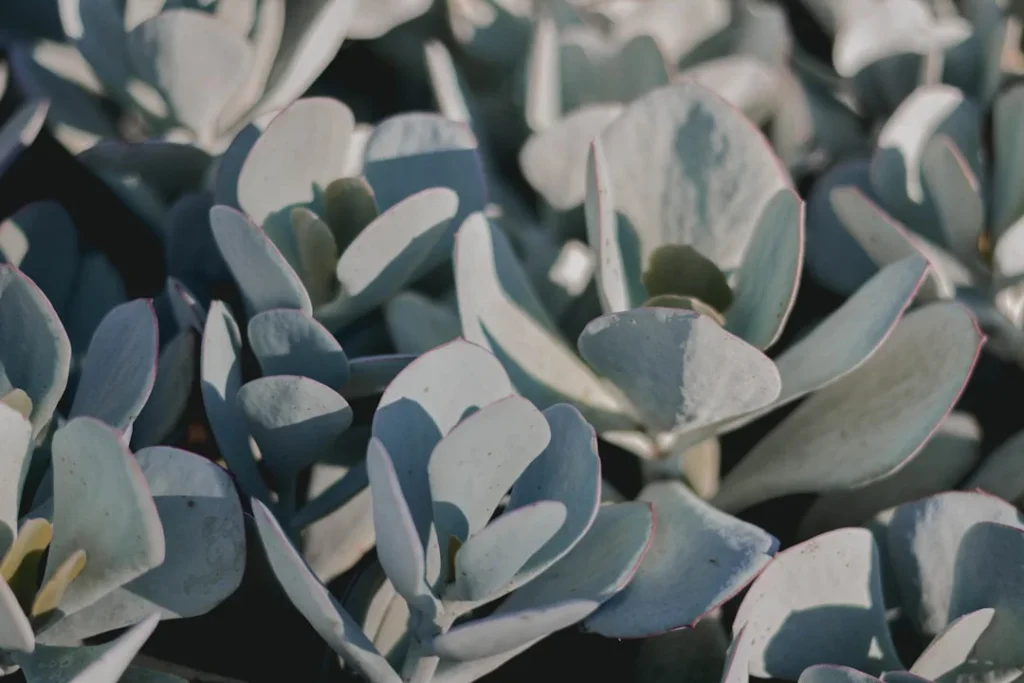
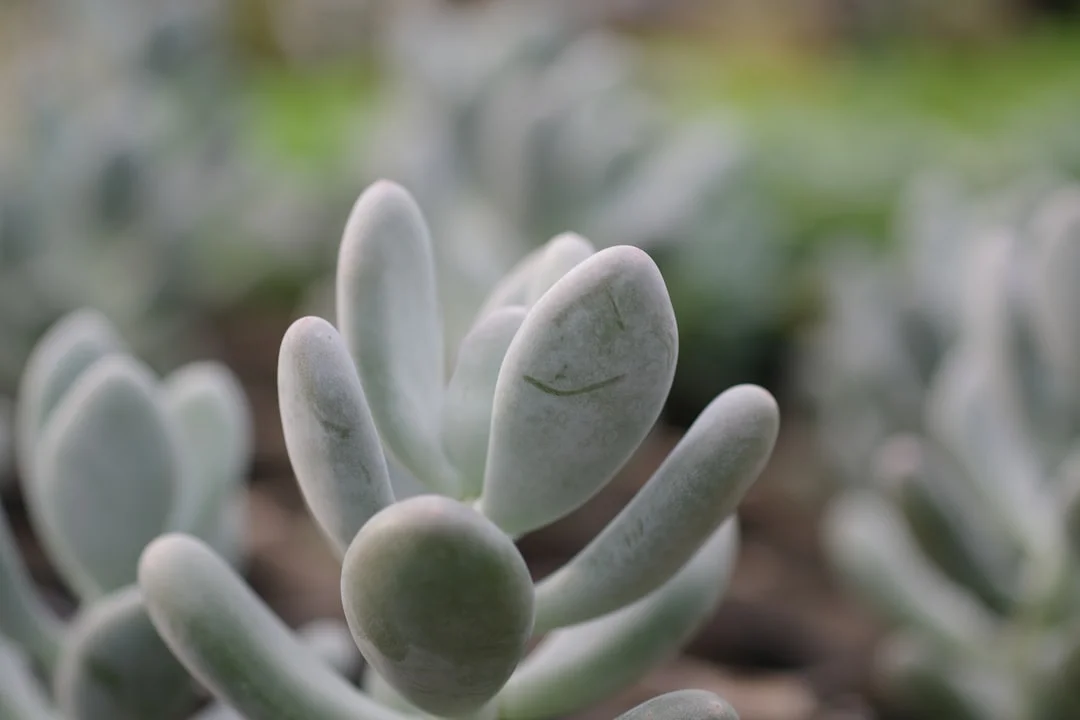
The moonstone succulent (Pachyphytum oviferum) is a small, rosette-forming succulent native to the rocky hillsides of San Luis Potosí, Mexico. Its name comes from the Greek ‘pachys’ (thick) and ‘phyton’ (plant), and ‘oviferum’ means ‘egg-bearing’ in Latin — a direct reference to those famously rounded, egg-shaped leaves. The plant belongs to the Crassulaceae family, the same family as echeveria and sedum, which explains its similarly striking looks and drought-tolerant nature. If you enjoy growing this plant, you might also find our guide on best succulent soil mix for containers very useful.
What makes this plant genuinely unusual is its farina — a powdery, waxy coating on each leaf that gives it that soft, frosted appearance in shades of lavender, peach, pink, and blue-grey. This coating is not dirt. In fact, touching it too often removes it permanently, so handle with care. According to Kew Gardens, the farina functions as a natural sunscreen, reflecting excess UV radiation in its native high-altitude habitat.
In its natural environment, this plant grows at elevations between 1,000 and 2,000 metres (3,300–6,600 feet), where nights are cool, days are bright, and rainfall is seasonal. Understanding that origin is the secret to successful moonstone succulent indoor care anywhere in the world. Many gardeners who grow this plant also love to read about String of Pearls Plant Propagation.
Pachyphytum oviferum vs. Similar Succulents
Many gardeners confuse moonstone succulents with echeveria, and it’s an understandable mistake — both are rosette-forming, both have farina, and both love bright light. However, moonstone leaves are noticeably rounder and more swollen, almost like small pebbles, while echeveria leaves tend to be flatter and more pointed. Moonstone plants also stay quite compact, rarely exceeding 10–15 cm (4–6 inches) in height, making them ideal for windowsills and small containers. Furthermore, Pachyphytum oviferum can hybridise with echeveria to produce x Pachyveria hybrids, which are widely sold in garden centres across Europe, North America, and Asia. If you enjoy growing this plant, you might also find our guide on Kalanchoe Plant Blooming Care very useful.
Is It Safe for Pets and Children?
Here’s important information every household gardener needs: Pachyphytum oviferum is considered mildly toxic to cats and dogs according to the ASPCA, primarily causing gastrointestinal upset if leaves are chewed. It is not classified as severely toxic, but keeping it out of reach of curious pets and toddlers is always the safest approach. There are no documented cases of serious human toxicity, and it has no established medicinal use in Ayurveda, Traditional Chinese Medicine, or Western herbalism — it is grown purely as an ornamental plant.
Moonstone Succulent Benefits and Why Gardeners Love It
Ask any experienced succulent collector why they keep moonstone plants, and you’ll hear the same answer: nothing else looks quite like it. Those softly frosted, almost luminous leaves create a focal point on any shelf or windowsill that feels genuinely sculptural. But the benefits go beyond aesthetics. If you enjoy growing this plant, you might also find our guide on Spider Plant Propagation in Water very useful.
Moonstone succulents are exceptionally low-maintenance once you understand their needs. They don’t demand daily watering, they rarely need repotting, and they’re surprisingly forgiving of the neglect that occasionally happens in busy households. Furthermore, their compact size — typically staying under 15 cm (6 inches) — means they fit comfortably in apartments, offices, and small urban homes across Mumbai, London, Singapore, Toronto, and beyond.
From an air quality perspective, all succulents perform a type of photosynthesis called CAM (Crassulacean Acid Metabolism), where they absorb CO₂ at night rather than during the day. While the effect on room air quality is modest, the psychological benefit of tending a living plant is well documented. A 2015 study published in the Journal of Physiological Anthropology found that interacting with indoor plants reduced both physiological and psychological stress markers in participants across multiple trials.
There’s one more benefit many gardeners overlook entirely: moonstone succulents are extraordinarily easy to propagate from single leaves, meaning one plant can become dozens over a single growing season.
Aesthetic and Therapeutic Value
In my experience, few plants generate as many compliments from visitors as the moonstone succulent. The colour palette — ranging from soft lilac and dusty rose to pale mint and silver — pairs beautifully with modern minimalist interiors, Japandi-style decor, and the kind of earthy, terracotta-heavy aesthetic that has dominated home design trends globally in recent years. Many gardeners also find the act of caring for succulents genuinely meditative. The deliberate, patient rhythm of watering only when the soil is completely dry encourages a slower, more mindful relationship with a living thing.
Light Requirements: The Make-or-Break Factor
Here’s the honest truth about moonstone succulent indoor care that most beginner guides skip: this plant needs more light than almost any other popular indoor succulent. In its native Mexican hillside habitat, it receives 6–8 hours of direct or near-direct sunlight daily. Indoors, replicating even half of that requires deliberate placement.
The ideal position is a south-facing windowsill (for growers in the Northern Hemisphere — that’s the UK, USA, Canada, Europe, Japan, India) or a north-facing windowsill (for growers in the Southern Hemisphere — Australia, New Zealand, South Africa). East-facing windows work reasonably well, providing bright morning sun. West-facing windows are acceptable. North-facing windows in the Northern Hemisphere (south-facing in the Southern Hemisphere) will almost always result in etiolation — the stretching of stems and spacing of leaves as the plant reaches desperately toward inadequate light.
Many gardeners make this mistake: placing their moonstone on a coffee table in the middle of a room because it looks beautiful there. It does look beautiful there. For about three weeks. Then the stretching begins, and once it starts, you can’t reverse it.
If natural light is insufficient — especially during winter months at high latitudes in the UK, Canada, or the US Midwest — a dedicated grow light placed 15–20 cm (6–8 inches) above the plant for 12–14 hours daily will replicate the plant’s natural light requirements effectively. Full-spectrum LED grow lights are widely available for under $20 / £15 / ₹1,500 and make a dramatic difference.
Light Needs by Climate Region
Gardeners in tropical regions like southern India, Southeast Asia, or equatorial Africa will find that bright indirect light through a shaded window works well year-round — direct afternoon tropical sun can actually bleach the farina and scorch leaves. In temperate zones like the UK, Germany, or the US Pacific Northwest, maximum available natural light is critical from October through March, so placing the plant as close to the glass as possible matters greatly. In arid regions like the Middle East, interior California, or parts of Australia, bright indirect light is ideal indoors since the intensity of direct sunlight through glass can generate excessive heat even in winter.
Recognising Light Stress
Two visible signals tell you immediately whether your light levels are wrong. Etiolation — where the stem elongates and leaves become widely spaced — means insufficient light. This is the more common problem. Leaf bleaching or a washed-out, papery look to the farina means too much direct intense sun through glass. The sweet spot is bright, consistent light without the scorching effect of concentrated afternoon sun in summer. Rotating the pot a quarter turn every week ensures all sides of the rosette receive equal light and prevents the plant from leaning permanently toward the window.
Soil and Fertiliser: Building the Perfect Foundation
Successful moonstone succulent indoor care stands or falls on one thing most gardeners get completely wrong: drainage. Pachyphytum oviferum evolved in rocky, porous, mineral-rich soil with almost no organic matter. Planting it in standard potting compost — the kind sold in most garden centres for houseplants — is almost guaranteed to cause root rot within a few months.
The ideal soil mix is roughly 50% inorganic grit or perlite and 50% a well-draining cactus and succulent compost. Brands like Westland Cactus Compost (UK), Miracle-Gro Cactus Mix (USA), or any commercially blended succulent soil from Asian garden centres work well as the organic base. Then add coarse perlite, pumice, or horticultural grit to improve drainage further. If you’re mixing your own from scratch, a ratio of 2 parts coarse sand or perlite, 1 part loam, and 1 part grit produces excellent results.
The ideal soil pH for Pachyphytum oviferum sits between 6.0 and 7.0 — slightly acidic to neutral. Most commercially available succulent mixes fall within this range naturally.
For containers, always choose a pot with at least one drainage hole. Terracotta pots are particularly well-suited because their porous walls allow excess moisture to evaporate from the sides, reducing the risk of waterlogged roots. Avoid glass bowls, sealed ceramic vessels, or any container without drainage.
Fertilising Schedule and Recommendations
Moonstone succulents are light feeders. Over-fertilising — a common mistake among enthusiastic growers — causes soft, weak leaf growth that’s more susceptible to pests and fungal disease. During the active growing season (spring and early summer in the Northern Hemisphere), a diluted, balanced liquid fertiliser applied once a month at half the recommended strength is sufficient. Use a fertiliser with a roughly equal NPK ratio, such as 5-5-5 or 10-10-10. In July, which marks the height of summer in the Northern Hemisphere, feeding can continue at the same reduced rate. Stop fertilising entirely during autumn and winter when growth naturally slows. In tropical climates with year-round warmth, a very light monthly feed can continue all year.
Watering Your Moonstone Succulent the Right Way
The most reliable watering rule for moonstone succulent indoor care is also the simplest: water deeply, then wait until the soil is completely dry before watering again. Not slightly dry. Completely dry — as in, you push a finger an inch into the soil and feel no moisture whatsoever.
In practice, during active growing months (spring and summer) in temperate climates, this typically means watering every 10–14 days. In tropical climates with high humidity, the interval may stretch to 3 weeks. In winter at high latitudes, once a month or even less is entirely normal and healthy.
When you do water, water thoroughly. Pour water slowly and evenly until it runs freely from the drainage holes, then empty the saucer completely. Never let a moonstone succulent sit in standing water, even briefly — root rot can establish within 48 hours in warm conditions.
The method of watering matters too. Bottom watering — placing the pot in a shallow tray of water for 20–30 minutes until the soil absorbs moisture from below — is particularly useful for moonstone plants because it keeps water off the leaves entirely, protecting that precious farina coating. However, top watering works perfectly well as long as you pour directly onto the soil and avoid splashing the leaves.
A quick tip here: during July in the Northern Hemisphere, your plant is likely in its warmest, brightest phase of the year. Check the soil more frequently than usual, since heat and light together accelerate moisture loss significantly.
Signs of Overwatering vs. Underwatering
Overwatering is the leading cause of moonstone succulent death worldwide. The signs are: mushy, translucent leaves that collapse when touched, a blackening or softening of the stem base, and a sour or rotten smell from the soil. If you catch root rot early, remove the plant from its pot, trim all black or brown roots, dust with powdered cinnamon (a natural antifungal), allow the roots to air-dry for 24–48 hours, and replant in fresh dry succulent mix. Underwatering, on the other hand, produces wrinkled, slightly deflated leaves that still feel somewhat firm — not mushy. The fix is simply to water thoroughly and the leaves will plump up again within a day or two.
How to Grow Moonstone Succulent Indoors Step by Step
Growing moonstone succulents indoors is genuinely rewarding, but the setup phase is where most problems begin. Getting the container, soil, light position, and watering rhythm right from the very first day saves you weeks of troubleshooting later.
Many gardeners find that starting with a purchased plant from a garden centre or online nursery is far more reliable than starting from seed, since seeds are slow-germinating and require very specific conditions to sprout. Leaf propagation — which we’ll cover in depth shortly — is the preferred method for multiplying plants once you have an established specimen.
Moonstone succulent indoor care begins with selecting the right pot. Choose a terracotta or unglazed ceramic container that is only slightly larger than the root ball — roughly 1–2 cm (0.5–1 inch) wider than the plant’s widest point. Oversized pots hold excess moisture and dramatically increase the risk of root rot. A 7–10 cm (3–4 inch) pot is typically perfect for a young plant.
Placement near a south-facing window (Northern Hemisphere) with 4–6 hours of bright light daily is the single most important decision you’ll make. Everything else — watering, feeding, temperature — is secondary to getting the light right. As the RHS notes in their succulent growing guides, inadequate light is the most common cause of failure for indoor succulents in temperate climates, and moonstone plants are among the most light-hungry of all.
Temperature and Humidity Requirements
Pachyphytum oviferum thrives at temperatures between 18°C and 26°C (64°F–79°F) — a range that coincides comfortably with normal indoor conditions in most homes worldwide. It can tolerate a brief dip to around 5°C (41°F) and is rated USDA Hardiness Zones 10–11 for outdoor growing, meaning it survives mild frosts only with protection. Outdoors in the UK, it requires frost protection from October to April. In terms of humidity, this plant prefers the drier side — between 30% and 50% relative humidity. Bathrooms and kitchens with high steam humidity are generally unsuitable. If your home is very humid (common in coastal tropical cities like Mumbai, Singapore, or Miami), ensure excellent air circulation around the plant.
Repotting and Container Sizing
Moonstone succulents grow slowly and don’t need frequent repotting. In my experience, repotting every 2–3 years is sufficient for most plants. The best time to repot is in spring, when new growth is just beginning. Signs that repotting is needed include roots visibly growing from drainage holes, roots circling the base of the pot visibly when removed, or a plant that has become top-heavy and unstable. When repotting, go up only one pot size. Allow the plant to settle in its new container for a week before watering again — any root damage during repotting heals better in dry conditions.
Propagation: Growing New Plants from Single Leaves
This is where moonstone succulents genuinely surprise people. A single healthy leaf, placed on dry succulent mix, will produce a complete new plant entirely on its own — no rooting hormone, no special equipment, no greenhouse needed. It’s one of the most satisfying processes in all of home gardening, and it works reliably for beginners and experts alike.
The key is selecting the right leaves and handling them correctly. Because of the delicate farina coating, moonstone leaves are more fragile than most succulents — they bruise easily and a bruised leaf rarely propagates successfully. Select plump, firm, unblemished leaves from the outer ring of the rosette. Gently twist each leaf from side to side while pulling outward until it detaches cleanly from the stem with the base fully intact. A leaf that snaps partway up the stem will not propagate — the meristematic tissue at the very base is essential.
Furthermore, patience is non-negotiable here. Moonstone leaves are among the slower succulent propagators, often taking 3–6 weeks just to produce the first tiny root hairs, and another 4–8 weeks before a recognisable rosette appears. Don’t water during this phase — the leaf contains enough stored moisture to sustain itself, and any additional water will cause rot before roots can establish.
Leaf Propagation Step-by-Step
Once you have your detached leaves, lay them on top of — not buried in — a tray of dry, well-draining succulent mix. Place the tray in bright indirect light. After 2–3 weeks, small pink or white root hairs will emerge from the base of each leaf. Once roots appear, you can begin misting the soil very lightly every 3–4 days — never soaking it. A tiny rosette will begin to form at the base. Once the rosette has 4–6 leaves of its own and appears stable, you can transplant it to its own small pot. The original propagation leaf will gradually shrivel and die as the plant absorbs its nutrients — this is completely normal. Do not remove it until it has dried completely.
Stem Cuttings and Offsets
Mature moonstone plants occasionally produce offsets — small rosettes at the base of the main plant. These can be separated carefully with a clean, sharp knife or scissors and potted individually. Allow the cut end to callous over for 24–48 hours before planting in dry succulent mix. Stem cuttings also work well: cut a rosette with 2–3 cm of stem attached, allow the cut end to callous for 2 days, then plant in barely moist succulent mix. Rooting typically occurs within 2–4 weeks. The USDA Plant Database classifies Pachyphytum as a genus with high vegetative propagation success, which aligns with what experienced growers report globally.
Common Problems, Pests, and Diseases
Even with excellent moonstone succulent indoor care, problems occasionally arise. The good news is that most issues with this plant follow predictable patterns and respond well to early intervention.
Root rot is, by a significant margin, the most common cause of moonstone plant death. It’s caused by overwatering combined with poor drainage, and it moves fast. A plant can look healthy on Monday and be unsalvageable by Friday if the conditions are warm and the soil stays wet. Prevention through correct soil mix and watering discipline is far easier than treatment.
Mealybugs are the most common insect pest on moonstone succulents. These tiny white, cottony insects cluster in the joints between leaves and stems, sucking sap and weakening the plant over time. They’re introduced most often through new plants brought home from nurseries, or through infested soil. Check new plants carefully before bringing them near your existing collection. Treatment involves dabbing each visible mealybug with a cotton swab dipped in 70% isopropyl alcohol — available at pharmacies worldwide. For heavier infestations, a spray of neem oil diluted in water (1 teaspoon per litre) applied weekly for 3–4 weeks is highly effective.
You might be surprised to learn that fungus gnats — those tiny flies hovering around your soil — don’t usually harm the moonstone plant directly. However, their larvae feed on root hairs, and a severe infestation in already-wet soil can accelerate root rot. Allowing the soil to dry completely between waterings is the single most effective prevention.
Identifying and Treating Leaf Problems
Yellowing leaves with a mushy texture point to overwatering or root rot. Brown, crispy leaf tips suggest underwatering or excessive direct heat. A pale, washed-out colour combined with stretched growth confirms insufficient light. Scabby, corky patches on leaves can indicate either physical damage to the farina (from handling) or a fungal issue called edema, which occurs when the plant absorbs water faster than it can transpire — often seen during sudden humidity spikes. In most cases, improving drainage and reducing watering frequency resolves edema without further intervention.
Preventing Problems Before They Start
In my experience, the majority of moonstone succulent problems are entirely preventable with four habits: using a well-draining soil mix from day one, watering only when soil is bone dry, ensuring at least 4–6 hours of bright light daily, and inspecting the plant closely every two weeks for early signs of pests. A monthly application of diluted neem oil as a preventive spray — even when no pests are visible — creates a protective barrier that dramatically reduces pest establishment. This approach is widely recommended by succulent specialists at the Royal Horticultural Society and independent growers worldwide.
Seasonal Care Through Every Climate
One of the most practical aspects of moonstone succulent indoor care is understanding how your care routine should shift across seasons — and how those shifts differ depending on where in the world you live.
In July, readers in the Northern Hemisphere are in peak summer. This means your moonstone is at or near its most active growth phase. Light intensity is at its annual maximum, temperatures are warmest, and the plant may need watering slightly more frequently than usual. However, be cautious: in regions with very hot summers (southern US, Middle East, parts of Australia during their January peak), indoor temperatures above 35°C (95°F) near a window can stress the plant. A light shade cloth or moving the plant a few centimetres back from direct glass exposure during the hottest hours helps.
For readers in the Southern Hemisphere — Australia, New Zealand, South Africa, Argentina — July is mid-winter. Growth has slowed, and watering should be reduced significantly, perhaps to once every 3–4 weeks. If your home is kept warm by central heating, the plant won’t fully go dormant, but it will still grow much more slowly than in summer.
In tropical regions with relatively stable year-round temperatures — Singapore, Malaysia, coastal India, equatorial Africa — seasonal variation is subtler. The main adjustment is tracking monsoon humidity levels, which can spike dramatically and create conditions favourable to fungal disease. Increasing airflow around the plant during monsoon months is the most effective adaptation.
Winter Care for Cold-Climate Growers
Winter is genuinely the most challenging season for moonstone succulent indoor care in temperate and continental climates. Short days and low light angles mean even a south-facing windowsill in Manchester, Toronto, or Chicago may receive barely 2–3 hours of useful light in December and January. This is when a grow light makes the most meaningful difference. Reduce watering to once a month or less — the combination of low light, cool temperatures, and slow growth means the soil stays moist for far longer than in summer. Avoid placing the plant near cold draughts from windows or doors, but equally avoid placing it directly above a radiator, since the rising dry heat causes rapid soil moisture loss and stresses leaf tissue.
Spring and Summer Care
Spring is the most rewarding time for moonstone succulent growers. As day length increases and light strengthens, the plant wakes from its winter slowdown and begins producing new leaves noticeably. This is the ideal window for repotting, propagating new leaves, and introducing a monthly diluted feed. During summer, monitor for heat stress if temperatures inside your home regularly exceed 30°C (86°F). Good air circulation — a gentle fan, an open window — helps the plant manage heat far better than stagnant warm air. For growers in Mediterranean climates like California, southern France, or parts of South Africa, summer conditions naturally mirror the plant’s native Mexican habitat most closely.
Moonstone Succulent Uses and Cultural Significance
Unlike many plants featured on gardening websites, the moonstone succulent has no established medicinal use in Ayurveda, Traditional Chinese Medicine, or Western herbalism. It is grown purely as an ornamental plant, and its value lies entirely in its extraordinary visual character. That said, it has built a genuinely significant cultural presence in the global succulent collecting community.
In Japan, where miniature plant cultivation has deep aesthetic roots in the traditions of bonsai and kokedama, Pachyphytum oviferum has developed a devoted following. It’s widely sold under its Japanese name and is considered a prized specimen among wabi-kusa (living moss and plant arrangements) enthusiasts. In South Korea, the global K-beauty and home aesthetic movement of the 2010s drove significant consumer interest in pastel-coloured succulents, and moonstone plants became particularly associated with the soft, dreamy aesthetic known locally as ‘kawaii’ style.
In Western interior design communities, moonstone succulents have become closely associated with the minimalist and Scandinavian-influenced home styles that dominated lifestyle media throughout the late 2010s and early 2020s. Their naturally soft, almost architectural quality makes them one of the most photographed succulents on platforms like Instagram and Pinterest globally.
For a deeper look at how to integrate moonstone plants with other indoor species, the complete indoor plant care guide on TheLeafyCare.com offers comprehensive advice for building a thriving indoor plant collection across all skill levels.
Decorative and Display Ideas
Moonstone succulents work beautifully as standalone specimens in small terracotta pots, but they genuinely shine in mixed succulent arrangements. Their rounded, frosted leaves contrast perfectly with the spiky geometry of haworthia, the flat rosette of echeveria, and the trailing stems of string-of-pearls (Senecio rowleyanus). In dish gardens — shallow, wide containers with a mix of compatible succulents in well-draining mix — moonstone plants hold their own visually while their similar care requirements make group maintenance simple. One practical tip: always place taller growing companions behind or beside moonstone plants rather than in front, since blocking their light even partially will trigger etiolation.
Frequently Asked Questions
Can I grow moonstone succulent indoors in a cold climate like Canada or the UK?
Yes, absolutely. Moonstone succulent indoor care is very achievable in cold climates — the key is compensating for low natural light in winter. Place the plant on your brightest south-facing windowsill and consider adding a full-spectrum LED grow light during the darkest months (October–March). Keep it away from draughty windows and reduce watering to once a month during winter. With these adjustments, moonstone succulents thrive indoors in Toronto, London, Edinburgh, and similar climates year-round.
How often should I water a moonstone succulent indoors?
Water only when the soil is completely dry — typically every 10–14 days in summer and every 3–4 weeks in winter for most temperate climates. In tropical high-humidity environments, extend the interval to 3 weeks even in summer. Always water deeply, then allow full drainage. Never let the pot sit in standing water. Consistent moonstone succulent indoor care means resisting the urge to water on a fixed schedule — always test the soil first.
Is the moonstone succulent safe for pets?
The moonstone succulent (Pachyphytum oviferum) is considered mildly toxic to cats and dogs by the ASPCA. If a pet chews or ingests leaves, it may experience gastrointestinal upset including vomiting or diarrhoea. It is not classified as severely or fatally toxic, but it is best kept out of reach of cats and dogs to be safe. There is no documented evidence of serious toxicity in humans, though it should not be consumed. If your pet ingests a significant amount, consult a veterinarian promptly.
Why are my moonstone succulent leaves losing their colour and stretching?
Stretching stems and faded leaf colour are the classic signs of insufficient light — a condition called etiolation. This is the most common moonstone succulent indoor care problem globally. The plant is reaching desperately toward inadequate light, which causes stem elongation and colour loss. Move the plant immediately to your brightest windowsill or add a grow light positioned 15–20 cm above the plant for 12–14 hours daily. Unfortunately, stretched growth cannot be reversed, but new growth will emerge correctly once light levels improve.
How do I grow moonstone succulent in containers for a balcony or patio?
Container growing is ideal for moonstone succulents. Choose a terracotta pot only slightly larger than the root ball (7–10 cm for young plants), fill with 50% succulent compost and 50% perlite or coarse grit, and ensure at least one drainage hole. For outdoor containers in summer, place in bright morning sun with afternoon shade to prevent farina bleaching. Bring containers indoors before the first frost — moonstone plants are damaged by temperatures below 5°C (41°F). In tropical and subtropical climates, outdoor container growing is viable year-round with dappled light and good drainage.
Why is my moonstone succulent dying after I just bought it?
This is a frustratingly common experience, and it almost always traces back to three causes: the nursery pot uses standard potting compost instead of well-draining succulent mix, the plant was overwatered before purchase, or it's been placed in insufficient light at home. When you bring a new moonstone succulent home, check the soil — if it feels dense and water-retentive, repot immediately into a proper gritty succulent mix. Place it in your brightest window and don't water for 1–2 weeks. Good moonstone succulent indoor care starts with the right foundation at the very beginning.
When and how do I propagate moonstone succulents from leaves?
The best time to propagate is spring or early summer when growth is most active. Select plump, healthy outer leaves and twist gently until they detach cleanly at the base — the base attachment point must be intact for propagation to succeed. Lay leaves on dry succulent mix in bright indirect light. Do not water for the first 2–3 weeks. Once tiny root hairs appear, mist lightly every few days. A small rosette will form within 6–10 weeks. This leaf propagation method is central to good moonstone succulent indoor care because it lets you replace any damaged plants quickly and build your collection at no cost.
Does moonstone succulent need special care during summer heat?
In July and peak summer months, moonstone succulents in hot climates may experience heat stress if indoor temperatures regularly exceed 35°C (95°F). Ensure good air circulation — a gentle fan or an open window works well. Check soil moisture more frequently since heat and bright light together accelerate drying. Move the plant a few centimetres back from glass if direct afternoon sun is creating intense heat concentration on the leaves. In very arid climates like the Middle East or Australian summers, bright indirect light through a shaded window prevents both bleaching and overheating while supporting healthy growth.
Final Thoughts
Moonstone succulent indoor care comes down to a handful of non-negotiable principles: generous bright light, deeply infrequent watering, fast-draining soil, and the patience to let this plant grow on its own quiet schedule. Get those four things right, and Pachyphytum oviferum is genuinely one of the most forgiving and rewarding indoor plants you can keep — whether you’re growing in a Mumbai flat, a London apartment, a Toronto townhouse, or a Singapore high-rise. The most important shift for most growers is simply rethinking light. More than soil, more than watering frequency, light determines whether your moonstone thrives or merely survives. Start there, build the rest of your care routine around it, and you’ll find those dreamy, frosted leaves staying plump and pastel-perfect for years to come. Handle the farina gently, trust the dry-down between waterings, and don’t rush the propagation process. This plant rewards patience with extraordinary beauty — and once you’ve successfully grown a whole new rosette from a single leaf, you’ll understand exactly why moonstone succulent collectors around the world become so devoted.
