
⏱ 22 min read
Table of Contents
- Overview of Plant Propagation
- What You'll Need to Get Started
- Step-by-Step Guide to Propagating Cuttings
- Choosing the Right Soil and Pot for How to Propagate Plants Cuttings India
- Watering Schedule for New Cuttings
- Fertilizing Young Plants
- Common Mistakes and How to Fix Them
- Climate-Specific Tips for Global Gardeners
- Harvesting and Transplanting Your New Plants
Learning how to propagate plants cuttings India is one of the most rewarding skills any gardener can pick up. It’s free, it’s fun, and it works almost anywhere in the world. Whether you garden on a Mumbai balcony, a London windowsill, or a Sydney patio, the same simple rules apply. First, you take a piece of a parent plant. Then, you give it the right conditions and watch it grow roots. That’s the magic of propagation. In this guide, I’ll walk you through how to propagate plants cuttings India step by step, with notes for tropical, temperate, and arid climates. Furthermore, you’ll learn what tools to gather, which soil mix works best, and how to avoid the mistakes that kill most cuttings. Drawing from 15 years of hands-on work and global research from Kew Gardens and the RHS, this guide gives you everything you need to start propagating today.
Quick Highlights
- Master 5 proven propagation methods used by gardeners worldwide
- Discover the best season and conditions for rooting success in any climate
- Learn the exact soil mix and pot setup professional nurseries trust
- Avoid the top 7 mistakes that cause cuttings to rot or fail
- Save money by multiplying your favourite plants for free
- Apply Ayurvedic and global gardening wisdom to boost root growth naturally
Plant Characteristics at a Glance
| Common Name | Plant Propagation Methods (Cuttings) |
| Scientific Name | Vegetative propagation (asexual reproduction) |
| Family | Applicable across most plant families |
| Origin | Practised globally since ancient times — India, China, Mediterranean |
| Habitat | Home gardens, nurseries, greenhouses, balconies |
| Plant Type | Technique used on herbs, shrubs, trees, succulents, vines |
| Indoor Plant | Yes — ideal for windowsills and bright corners |
| Outdoor Plant | Yes — works in gardens, patios, and greenhouses |
| Leaves | Keep 2–3 leaves per cutting; remove the rest |
| Flowers | Avoid flowering stems for best rooting success |
| Flowering Season | Take cuttings before or after flowering, not during |
| Fruit | Fruiting plants like fig, pomegranate root easily from cuttings |
| Seeds | Cuttings bypass seed stage for faster, identical plants |
| Roots | New roots form at nodes within 2–6 weeks |
| Height | Cuttings 10–15 cm (4–6 inches) long are ideal |
| Growth Rate | Roots in 2–6 weeks; full plant in 3–6 months |
| Light Requirements | Bright, indirect light — no direct sun on fresh cuttings |
| Soil Requirements | Well-draining mix: coco coir, perlite, compost (pH 5.5–6.5) |
| Water Requirements | Consistently moist, never soggy |
| Temperature Requirements | 20–28°C (68–82°F) ideal for rooting |
| Humidity Requirements | 60–80% — use plastic dome if needed |
| Propagation | Stem, leaf, root, softwood, hardwood, water, air layering |
| Uses | Cloning favourite plants, saving money, preserving varieties |
| Medicinal Properties | Propagation of Ayurvedic plants like tulsi, neem, ashwagandha |
| Toxicity | Depends on plant — handle toxic species like oleander with gloves |
| Cultural Significance | Practised in Vrikshayurveda, TCM, Western horticulture |
| Common Pests | Fungus gnats, aphids on tender new growth |
| Common Diseases | Stem rot, damping off, fungal mould |
| Special Care Tips | Sterilise tools, use clean water, maintain humidity |
| Cultural Practices | Take cuttings during waxing moon (traditional belief) |
| Vastu Direction | Place new plants in east or north for positive energy |
How to propagate plants cuttings Names in Different Languages
| English | Plant Propagation / Cuttings |
| Mandarin Chinese | 植物繁殖 (Zhíwù fánzhí) |
| Spanish | Propagación de plantas / Esquejes |
| Hindi | पौधों का प्रसार (Paudhon ka Prasar) |
| Gujarati | છોડનો પ્રસાર (Chodno Prasar) |
| Arabic | إكثار النباتات (Ikthar al-Nabatat) |
| Bengali | গাছের বংশবিস্তার (Gacher Bongshobistar) |
| Portuguese | Propagação de plantas / Estacas |
| Russian | Размножение растений (Razmnozhenie rasteniy) |
| Japanese | 挿し木 (Sashiki) |
| Punjabi | ਪੌਦਿਆਂ ਦਾ ਪ੍ਰਸਾਰ (Paudiyan da Prasar) |
| German | Pflanzenvermehrung / Stecklinge |
| Javanese | Stèk tanduran |
| Korean | 꺾꽂이 (Kkeokkkoji) |
| French | Bouturage des plantes |
| Telugu | మొక్కల వ్యాప్తి (Mokkala Vyapti) |
| Marathi | रोपांचे प्रसारण (Ropanche Prasaran) |
| Tamil | செடி பெருக்கம் (Sedi Perukkam) |
| Urdu | پودوں کی افزائش (Paudon ki Afzaish) |
| Turkish | Bitki çoğaltma / Çelik |
| Vietnamese | Nhân giống cây / Giâm cành |
Overview of Plant Propagation
Plant propagation simply means making new plants from existing ones. In Hindi, it’s called पौधों का प्रसार, and the practice goes back thousands of years across India, China, and the Mediterranean. Ancient Ayurvedic texts like the Vrikshayurveda describe taking cuttings of medicinal plants like tulsi and neem long before modern horticulture existed. Today, gardeners across six continents use the same core methods. There are several ways to propagate plants, but cuttings remain the most popular. Why? Because they’re quick, cheap, and give you an exact clone of the parent plant. You skip the long wait of growing from seed. In addition, you get genetic copies, which means the new plant will have the same flowers, fruit, or leaf colour. Understanding the key how to propagate plants cuttings India methods starts with knowing the four main cutting types: stem, leaf, root, and softwood. Each suits different plants and seasons. Many gardeners who grow this plant also love to read about Homemade Fertilizer Plants India.
Why Propagation Matters for Home Gardeners
Here’s the thing — buying plants gets expensive fast. A single mature monstera can cost $40 (₹3,500, £30) at a garden centre. However, one healthy cutting from a friend gives you the same plant for free. Beyond cost, propagation builds skill. You learn how plants grow, what they need, and how they respond to stress. Many gardeners find that propagating their first cutting changes how they see every plant after that. Furthermore, it helps preserve rare varieties. If a beloved plant dies, cuttings you’ve shared with friends become a backup. That’s why botanical gardens like Kew keep extensive cutting collections. If you enjoy growing this plant, you might also find our guide on best soil mix for indoor plants very useful.
How to Propagate Plants Cuttings : Types of Cuttings Explained
Stem cuttings are the most common — you snip a piece of stem with a few leaves. Leaf cuttings work for succulents, African violets, and snake plants. Root cuttings suit plants like raspberries and horseradish. Softwood cuttings come from new growth in spring, while hardwood cuttings come from mature stems in winter. Each type has its season and its star plants. For example, rose growers in Pune use hardwood cuttings in December, while basil growers in California take softwood cuttings in April. Similarly, mint growers across India take softwood cuttings throughout the monsoon season with excellent results. For more tips, check out our detailed article on When to Repot Plants India.
What You'll Need to Get Started
Good news — you don’t need fancy gear. Most of what you need is already in your kitchen or garden shed. That said, a few simple tools make the job much easier and boost your success rate. I always tell new gardeners to gather everything before they start cutting. It saves stress and keeps cuttings fresh. Many gardeners who grow this plant also love to read about best soil mix for indoor plants.
Essential Tools and Materials
First, you’ll need sharp, clean pruners or a craft knife. Dull blades crush stems and invite disease. Next, gather small pots or recycled containers with drainage holes. You’ll also want a well-draining potting mix — more on that below. Rooting hormone helps but isn’t always needed. Many Indian gardeners use honey or aloe vera gel as a natural alternative, both of which have mild antibacterial properties backed by NIH research. Finally, grab a clear plastic bag or bottle to create a mini greenhouse. It traps humidity, which young cuttings love.
Optional Items That Help
A heat mat speeds up rooting in cool climates like the UK or Canadian winters. Meanwhile, a spray bottle keeps cuttings misted without overwatering. Labels matter too — trust me, after a week, all those green sticks look identical. In addition, a small notebook helps you track which cuttings rooted and which failed. Over time, this becomes your personal propagation diary.
Step-by-Step Guide to Propagating Cuttings
Now for the fun part. Understanding how to propagate plants cuttings India means following a clear sequence. Skip a step, and your cutting may rot before it roots. However, follow this method carefully, and you'll see roots within 2–6 weeks for most plants. I've used this exact process to propagate everything from money plants to hibiscus across three continents.
- Picking the Right Parent Plant
Choose a healthy, pest-free plant. Importantly, avoid stressed, wilting, or flowering stems. The best cuttings come from semi-mature growth — not too soft, not too woody. In tropical India, morning hours work best because the plant is well-hydrated. In temperate zones like the UK or US Pacific Northwest, take cuttings on a cool, overcast day to reduce moisture loss.
- Making the Cut Correctly
Cut just below a node — that small bump where leaves emerge. Nodes contain the cells that form roots. Aim for a 10–15 cm (4–6 inch) cutting with 3–5 leaves. Next, remove the bottom leaves so only the top 2–3 remain. This reduces water loss while the cutting has no roots. Finally, make a clean, angled cut at about 45 degrees. The angle increases surface area for root growth.
- Rooting the Cutting
Dip the cut end in rooting hormone, honey, or aloe gel. Then push it 3–4 cm deep into moist potting mix. Firm the soil gently around the stem. Cover with a clear bag to lock in humidity, but leave a small gap for air. Place in bright, indirect light. As a result, your cutting stays cool and moist while roots develop. Check every 2–3 days for moisture and mould.
Choosing the Right Soil and Pot for How to Propagate Plants Cuttings
Soil makes or breaks propagation. Cuttings need a mix that holds moisture but drains fast. Regular garden soil is too heavy — it traps water and rots stems. This is where most beginners go wrong when learning how to propagate plants cuttings India. A proper rooting mix gives air to the new roots while keeping them just damp enough.
The Best Rooting Mix Recipe
My go-to mix is 50% coco coir, 30% perlite, and 20% fine compost. Coco coir holds moisture without getting soggy. Perlite adds drainage and air pockets. Compost gives a gentle nutrient boost. In India, you can buy all three for under ₹300 ($4, £3) at any nursery. In the US or UK, peat moss can replace coco coir, though coco coir is more earth-friendly. The USDA recommends well-draining growing material with pH 5.5–6.5 for most cuttings.
Pot Size and Drainage
Small pots work best — 7–10 cm (3–4 inch) wide is ideal. Larger pots hold too much water, which leads to rot. Make sure every pot has drainage holes. Terracotta pots breathe and dry faster, which suits humid climates like Kerala or Singapore. On the other hand, plastic pots hold moisture longer and suit drier regions like Rajasthan or Arizona.
Watering Schedule for New Cuttings
Watering trips up more gardeners than any other step. Too much water rots the stem. Too little dries out the cutting. The sweet spot is consistently moist — like a wrung-out sponge. Check soil with your finger daily. If the top 1 cm feels dry, mist or water lightly.
Tropical vs Temperate Watering
In hot climates like India, the UAE, or northern Australia, cuttings dry out fast. Because of this, mist them once or twice daily. In cooler regions like the UK, Canada, or New Zealand, once every 2–3 days is enough. Always use room-temperature water. Cold water shocks tender roots. Furthermore, rainwater or filtered water works best because tap water in many cities contains chlorine that can stress new roots.
Fertilizing Young Plants
Don’t fertilise cuttings while they’re still rooting. New roots are delicate and burn easily. Wait until you see fresh leaf growth, which means roots have formed. Then start with a weak, diluted feed — about quarter strength. Liquid seaweed or compost tea works well for the first month.
After that, switch to a balanced natural fertiliser like fish liquid or worm tea. Feed every 2–3 weeks during active growth. Cut back in winter when plants rest. In my experience, gentle feeding produces stronger, bushier plants than heavy doses. In fact, many gardeners find that homemade banana peel water — high in potassium — gives young plants a great boost without chemicals.

Natural Fertilizers from Around the World
Ayurvedic gardening traditions use panchagavya, a fermented mix of cow products that boosts soil microbes. Similarly, Western herbalists often use comfrey tea. Japanese gardeners use bokashi, a fermented bran. Each works because it feeds soil life rather than just the plant. Even simple compost from kitchen scraps gives excellent results for new cuttings.
Common Mistakes and How to Fix Them
Even seasoned gardeners lose cuttings. The trick is learning why they failed. Most failures fall into a few common patterns. Understanding how to propagate plants cuttings India means knowing what to avoid. Let’s walk through the top mistakes and easy fixes for each one.
Top 7 Propagation Mistakes
1) Overwatering — leads to black, mushy stems. Fix: let soil dry slightly between waterings. 2) Direct sun — burns leaves. Fix: use bright, indirect light. 3) Dull tools — crush cells and spread disease. Fix: clean blades with alcohol. 4) Wrong season — slows rooting. Fix: take softwood in spring, hardwood in autumn. 5) No humidity — cuttings dry out. Fix: use a plastic bag dome. 6) Too many leaves — water loss exceeds uptake. Fix: trim to 2–3 leaves. 7) Disturbing cuttings — breaks new roots. Fix: leave them alone for 3 weeks. Furthermore, keeping a log of each attempt helps you spot patterns and improve your results over time.
Climate-Specific Tips for Global Gardeners
Climate changes everything in propagation. What works in Chennai won’t work the same way in Toronto. Knowing the proven how to propagate plants cuttings India techniques for your specific zone makes all the difference. Here’s how to adapt based on where you live.
Tropical and Subtropical Climates
Regions like India, Southeast Asia, northern Australia, and southern Florida (USDA zones 10–11) offer warm temperatures year-round. As a result, cuttings root fast — often in 10–14 days. However, humidity also speeds up fungal growth. Use breathable bags and check daily for mould. The monsoon season in India is excellent for the major how to propagate plants cuttings India methods because natural humidity stays high.
Temperate and Cold Climates
In the UK (RHS hardiness H4–H5), most of the US (zones 5–9), and central Europe, take cuttings during the growing season from April to September. Use a heat mat to keep the root zone at 20–24°C (68–75°F). A bright south-facing window or grow light helps during short winter days. In addition, indoor propagation works year-round if you control temperature and humidity carefully.
Arid and Mediterranean Climates
In Dubai, southern California, Spain, or parts of South Africa, low humidity is the main challenge. Cuttings dry out fast. Use enclosed propagators or clear plastic bottles to trap moisture. Mist twice daily during summer. Importantly, early morning is the best time to take cuttings, before the heat sets in.
Harvesting and Transplanting Your New Plants
After 3–6 weeks, gently tug your cutting. If it resists, roots have formed. Time to transplant. Move the new plant to a slightly larger pot — about 12–15 cm (5–6 inch). Use regular potting mix this time, not the rooting mix. Water well after transplanting and keep in shade for a week to reduce shock. After that, slowly introduce it to its permanent spot. In my experience, plants that get a gentle transition settle in faster and grow stronger.

Caring for Newly Transplanted Plants
Treat young plants like patients recovering from surgery. Avoid direct sun for 7–10 days. Skip fertiliser for 2 weeks. Water when the top 2 cm of soil feels dry. Watch for wilting, yellowing, or pest damage. After a month, your propagated plant should look strong and ready for normal care. Then you can share cuttings with friends and keep the cycle going. That’s the how to propagate plants cuttings India cycle at its best — one plant becoming many.
Frequently Asked Questions
What is the best season to take cuttings ?
The monsoon and post-monsoon months (July to October) are ideal because humidity stays high and temperatures are warm. However, you can take cuttings year-round indoors. For hardwood cuttings of roses or pomegranate, December to February works well. Softwood cuttings of basil, mint, and tulsi root best from March to June. When learning how to propagate plants cuttings India, match the cutting type to the season. Tropical regions like Kerala allow year-round propagation, while northern states like Punjab need winter protection. In fact, many experienced Indian gardeners consider July the single best month for the key how to propagate plants cuttings India methods.
Can I propagate plants indoors in a cold climate like the UK or Canada?
Absolutely. Indoor propagation works year-round if you control temperature and humidity. Use a heat mat to keep the root zone at 20–24°C (68–75°F). Place cuttings near a bright south-facing window or under a grow light for 12–14 hours daily. A clear plastic dome traps humidity. The [RHS](https://www.rhs.org.uk/) recommends propagating houseplants like pothos, philodendron, and spider plants this way during winter months. Furthermore, many gardeners find indoor propagation actually has higher success rates than outdoor methods in cold climates. That said, the how to propagate plants cuttings India approach adapts beautifully to any indoor setup worldwide.
Do I really need rooting hormone, or can I use a natural alternative?
Rooting hormone helps, but it isn't essential for easy plants like money plant, basil, or coleus. Natural options work well too. Honey has mild antibacterial properties. Aloe vera gel contains plant hormones and is widely used in Indian households. Cinnamon powder prevents fungal infection. Similarly, willow water — made by soaking willow stems — contains natural rooting compounds. For harder-to-root plants like roses or hibiscus, commercial rooting powder gives better results. Always dip the cut end briefly, then tap off excess.
Why are my cuttings turning black and mushy?
Black, mushy stems mean rot — usually from overwatering or poor drainage. The fix is simple but firm: reduce watering and use a better-draining mix. Sterilise your tools with rubbing alcohol before cutting. Make sure pots have drainage holes. Use the right rooting medium — 50% coco coir, 30% perlite, 20% compost works for most plants. Also check temperature; cuttings below 15°C (59°F) often rot before rooting. When learning how to propagate plants cuttings India, remember that less water is almost always better than more. Furthermore, good airflow around the cuttings reduces fungal problems significantly.
Is plant propagation safe for pets and children?
Propagation itself is safe, but the plants you propagate may not be. Common toxic plants include pothos, philodendron, oleander, and dieffenbachia. These can cause mouth irritation, vomiting, or worse if chewed. Always wear gloves when handling sap from plants like euphorbia, which can irritate skin. Keep cuttings and parent plants out of reach of curious pets and toddlers. The ASPCA maintains a detailed list of toxic plants online. For child-safe propagation, choose spider plant, basil, mint, or African violet.
How long does it take for cuttings to grow roots?
Most cuttings root in 2–6 weeks. Fast rooters like money plant, mint, and coleus show roots in 7–14 days. Medium rooters like hibiscus and lavender take 3–4 weeks. Slow rooters like rose, magnolia, and citrus may need 6–10 weeks. Temperature, humidity, and light all affect speed. Warm, humid conditions (24–28°C / 75–82°F, 70% humidity) speed things up. On the other hand, cooler conditions slow rooting but often produce stronger roots. Be patient — don't tug at cuttings to check progress, as this damages young roots.
Can I propagate plants in water instead of soil?
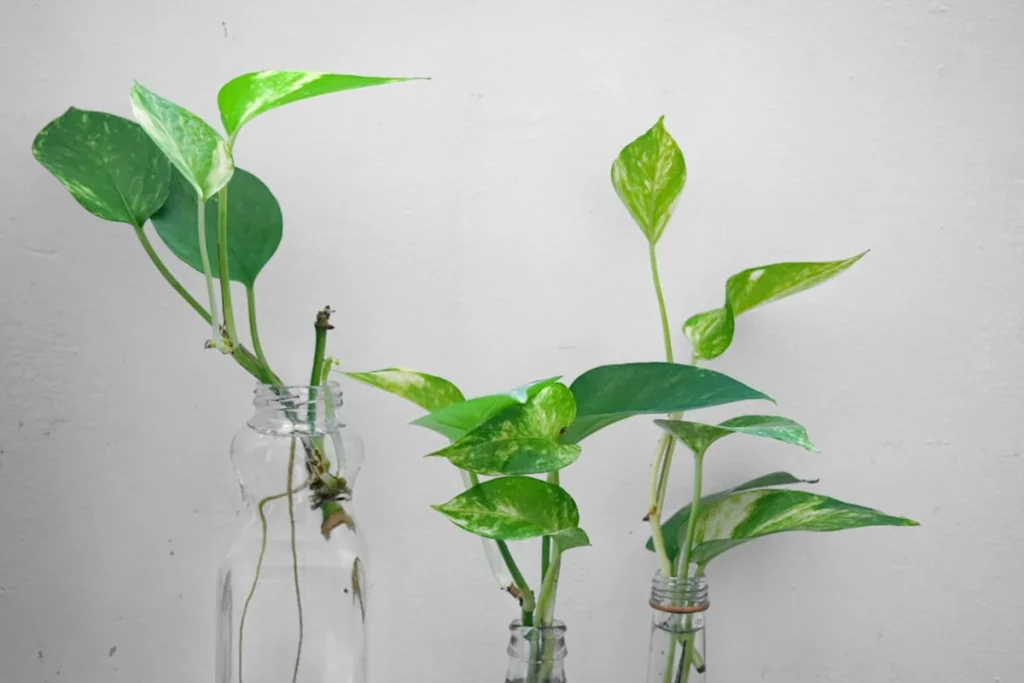
Yes, water propagation works beautifully for many plants. It's also fun to watch roots grow. Pothos, monstera, philodendron, mint, basil, and African violet all root well in water. Use a clear glass jar with room-temperature water. Change the water every 4–5 days to prevent algae. Once roots reach 5–7 cm long, transplant to soil. Note that water roots differ from soil roots, so the plant may sulk briefly after transplanting. Meanwhile, keep humidity high for the first week to ease the transition.
How do I propagate plants in containers on a small balcony?
Container propagation is perfect for apartments and small spaces. First, use small pots (7–10 cm wide) grouped together on a tray. Next, cover the whole tray with a clear plastic sheet to make a mini greenhouse. Place on an east-facing balcony for gentle morning light. Avoid harsh afternoon sun by using a shade cloth or moving pots inside during peak heat. Water lightly with a spray bottle. In fact, a single 60 cm tray can hold 20–30 cuttings, giving you a small plant nursery in minimal space. This is one of the most practical how to propagate plants cuttings India approaches for urban gardeners with limited room.
Final Thoughts
Learning how to propagate plants cuttings India opens up a whole new world of gardening. You’ll save money, multiply your favourite plants, and gain skills that last a lifetime. The process is simpler than most people think — pick a healthy stem, give it the right conditions, and let nature do the rest. Furthermore, whether you live in tropical Mumbai, temperate London, or arid Phoenix, the same core principles apply. Start small with easy plants like money plant, basil, or pothos. As your confidence grows, try harder plants like roses or hibiscus. Keep notes on what works and what doesn’t. Share cuttings with friends and family — it’s one of the oldest ways gardeners around the world have built community. Remember: every gardener loses cuttings sometimes. That’s part of learning. However, stay patient, stay curious, and within a season you’ll have new plants thriving on your windowsill. Happy propagating!

