

Marigold Flower is a well-known and beautiful flower popular worldwide for its vibrant colors and pleasant fragrance. Beyond just decoration, marigold flowers are used for medicinal, religious, and cosmetic purposes. In this blog, we will explore the various uses and health benefits of marigold flowers in detail.
Table of contents
- Medicinal Uses of Marigold Flowers
- Religious and Cultural Uses
- Beauty and Skincare
- Agricultural Uses
- Other Uses
- Emotional and Mental Health
- Environmental Benefits
- How to Grow Marigold Flowers
- Marigold Planting Season in India
- Different Names of Marigold Flower in Various Languages
- Conclusion
- FAQs about Marigold Flowers
- Suggested Links
Medicinal Uses of Marigold Flowers

Antiseptic Properties: Marigold flowers possess antiseptic and antibacterial properties that help in treating wounds and skin infections. Applying a paste of marigold flower directly to wounds or infected areas can promote healing.
Beneficial for Eyes: Marigold flower juice is useful for various eye problems such as conjunctivitis and eye fatigue. Straining its juice through a clean cloth and applying it to the eyes can provide relief.
Relief from Inflammation and Pain: Marigold oil is effective in reducing inflammation and pain. Massaging with this oil can relieve muscle and joint pain.
Religious and Cultural Uses
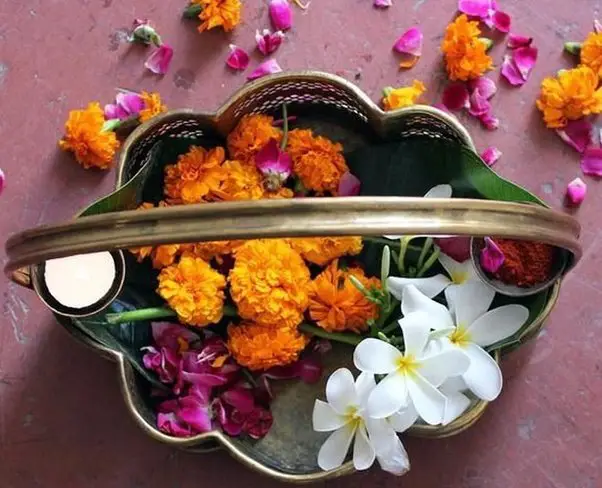

Marigold flowers hold significant religious and cultural importance. In India, they are prominently used in various rituals and festivals. Garlanding deities with marigold flowers is a common practice. Additionally, marigold flowers play a vital role in wedding and other important ceremonies for decoration.
Beauty and Skincare
Helpful for Skin Problems: Marigold extract aids in reducing skin problems such as pimples, acne, and blemishes. Its antioxidant properties protect the skin from free radical damage.
Beneficial for Hair: Marigold oil is useful for hair care as well. Regular application on the scalp can relieve dandruff and itching. It strengthens hair roots and promotes healthy hair.
Agricultural Uses
Natural Pesticide: Marigold flowers are used as a natural pesticide. Planting them along field borders protects crops from pests and diseases caused by moisture. The chemicals released from marigold roots help in killing nematodes.
Companion Crop: Many farmers grow marigold as a companion crop to protect main crops and enhance soil quality.
Other Uses
Fragrance and Decoration: Due to its attractive color and fragrance, marigold flowers are extensively used for home and garden decoration. Planting them in gardens, lawns, and balconies enhances beauty.
Culinary Use: In some countries, marigold petals are used to garnish salads and other dishes, enhancing their taste. Marigold juice and extract add color and flavor to food items.
Emotional and Mental Health
Relaxation and Peace: The fragrance of marigold flower provides mental peace and relaxation. Marigold oil is used in aromatherapy to reduce stress and anxiety. It also promotes sleep and calms the mind.
Environmental Benefits
Biodiversity: Cultivating marigold flower increases biodiversity. It attracts pollinators like bees and butterflies, maintaining environmental balance.
The garden suggests there might be a place where we can meet nature halfway.
Michael Pollan
Here is a detailed table summarizing essential information for growing marigold plants:
| Attribute | Details |
|---|---|
| Scientific Name | Tagetes |
| Common Varieties | French Marigold (Tagetes patula), African Marigold (Tagetes erecta), Signet Marigold (Tagetes tenuifolia) |
| Plant Height | French Marigolds: 6-18 inches; African Marigolds: 1-4 feet |
| Bloom Size | French Marigolds: 1-2 inches; African Marigolds: up to 4 inches |
| Bloom Color | Yellow, orange, red, maroon, white (rare) |
| Sunlight | Full sun (6-8 hours daily) |
| Soil Type | Well-drained, loamy soil |
| Watering | Regular watering, allowing the soil to dry out between watering |
| Planting Depth | 1/4 inch deep |
| Spacing | French Marigolds: 8-10 inches apart; African Marigolds: 10-12 inches apart |
| Fertilizer | Light application of balanced, slow-release fertilizer |
| Pests and Diseases | Generally pest-resistant; susceptible to powdery mildew if overwatered |
| Companion Plants | Tomatoes, eggplants, peppers (acts as a natural pesticide) |
| Planting Season | Spring (after last frost) and Monsoon in India (July-September) |
| Propagation | Seeds (easily germinates within a week in warm conditions) |
| Maintenance | Deadhead spent flowers, pinch back early buds to promote bushiness, mulch to retain moisture |
| Uses | Ornamental, medicinal, culinary, religious, companion planting |
How to Grow Marigold Flowers
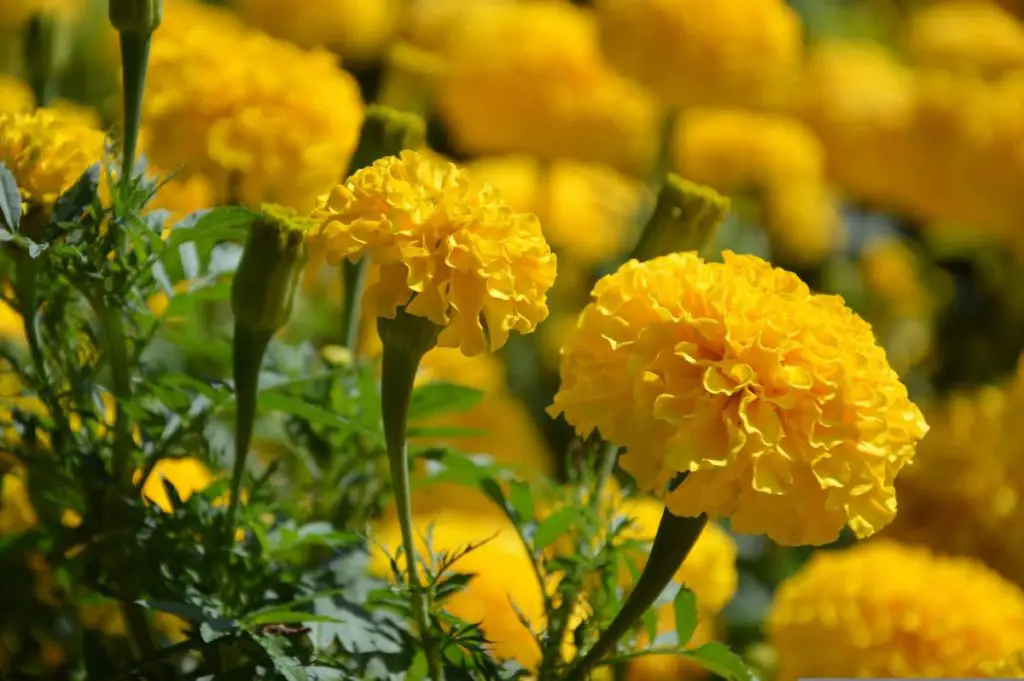
Growing marigold is quite simple and rewarding. These flowers thrive in well-drained soil and prefer full sunlight. Here’s a basic guide to help you grow marigold flowers:
- Choose the Right Location: Marigolds need at least 6 hours of sunlight daily.
- Soil Preparation: Ensure the soil is well-drained and fertile. Adding compost can improve soil quality.
- Planting: Sow marigold seeds 1/4 inch deep and water them gently.
- Watering: Keep the soil moist but not waterlogged.
- Care: Remove weeds regularly and deadhead spent flowers to encourage new blooms.
Marigold Planting Season
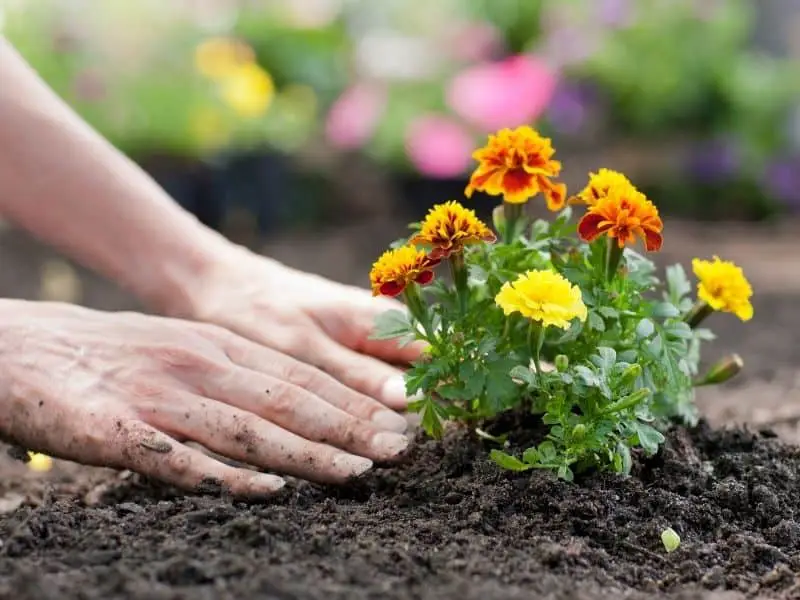
In India, the planting season for marigolds varies slightly by region, but generally, they are planted during:
Different Names of Marigold Flower in Various Languages
Marigold is known by different names in various languages. Here’s a table listing some of them:
| Language | Name |
|---|---|
| English | Marigold |
| Hindi | गेंदा (Genda) |
| Gujarati | ગાંદો, ગલગોટા |
| Marathi | झेंडू |
| German | Ringelblume |
| French | Souci |
| Spanish | Caléndula |
| Italian | Calendula |
| Portuguese | Calêndula |
| Chinese | 金盏花 |
| Japanese | マリーゴールド |
| Korean | 금잔화 |
| Arabic | القطيفة |
| Russian | Бархатцы |
Conclusion
Marigold is not just a beautiful plant; it offers numerous health, agricultural, religious, and cultural benefits. Its medicinal properties, cosmetic benefits, agricultural utility, and religious significance make it a unique and important flower. By using marigold flowers wisely, we can fully utilize all their benefits.
FAQs about Marigold Flowers
Marigold flowers are used for their antiseptic, antibacterial, anti-inflammatory properties, and eye health benefits.
They are used in garlands for deities and decorations in various ceremonies and festivals.
Yes, marigold extract and oil help reduce skin problems and improve hair health.
They act as natural pesticides and improve soil quality when used as companion crops.
The fragrance of marigold flower aids in stress reduction, relaxation, and mental peace.

