
⏱ 24 min read
Table of Contents
- What is the Burro's Tail Succulent?
- Benefits of Growing Burro's Tail Succulent
- How to Grow Burro's Tail Succulent: The Foundations
- Soil and Fertilizer Requirements
- Watering Burro's Tail Succulent the Right Way
- Sunlight and Temperature Needs
- Common Problems and How to Fix Them
- Propagation: Turning One Plant Into Many
- Seasonal Care Across Global Climates
- Uses and Cultural Significance
- Frequently Asked Questions
A reader in Manchester emailed me last spring with a photo that made me smile — a Burro’s Tail Succulent so heavy with plump, blue-green beads it looked like a living chandelier. Her secret? She’d ignored most online advice. That’s where burro’s tail succulent care gets interesting. Most guides tell you to water weekly and place it in bright light. Both tips can quietly kill your plant. Burro’s tail succulent care really comes down to understanding one truth: this plant evolved in the rocky highlands of southern Mexico, where rain is rare and roots cling to crevices. Once you get that, everything clicks. In this guide, you’ll learn exactly how to water, light, feed, and propagate Sedum burrito across tropical, temperate, Mediterranean, and arid climates. There’s also one growing trick — discovered by accident in a California nursery in the 1980s — that almost nobody talks about. I’ll cover it later. Let’s start with what this plant actually is, because the surprises begin there. For more tips, check out our detailed article on succulent propagation step-by-step.
Quick Highlights
- Discover the exact watering rhythm that prevents the #1 killer of trailing succulents
- Learn light, soil, and humidity tips that work across tropical, temperate, and arid climates
- Master a 5-minute propagation method that turns one stem into dozens of plants
- Avoid the three feeding mistakes most gardeners make with Sedum burrito
- Identify pests, rot, and stress signs early — before your plant drops its iconic beads
- Get season-by-season care steps for indoor and outdoor growers worldwide
Plant Characteristics at a Glance
| Common Name | Burro's Tail Succulent, Baby Donkey Tail |
| Scientific Name | Sedum burrito |
| Family | Crassulaceae |
| Origin | Veracruz, southern Mexico |
| Habitat | Rocky limestone cliffs and crevices, 1500–2000 m elevation |
| Plant Type | Evergreen trailing succulent perennial |
| Indoor Plant | Yes — excellent in hanging baskets near bright windows |
| Outdoor Plant | Yes — in USDA Zones 9b–11, RHS H2 |
| Leaves | Small, plump, blue-green, oval beads tightly arranged along stems |
| Flowers | Small, star-shaped, pink to red, rare in cultivation |
| Flowering Season | Late spring to early summer (mature plants only) |
| Fruit | Insignificant follicles; rarely produced indoors |
| Seeds | Tiny; propagation almost always via leaves or cuttings |
| Roots | Shallow, fibrous, drought-adapted |
| Height | Stems trail 30–90 cm (12–36 inches) |
| Growth Rate | Slow to moderate (5–15 cm per year) |
| Light Requirements | Bright indirect light with 2–3 hours gentle direct sun |
| Soil Requirements | Gritty, fast-draining cactus mix with perlite or pumice |
| Water Requirements | Low — every 10–14 days in growth, every 3–4 weeks in winter |
| Temperature Requirements | 18–27°C (65–80°F) day; tolerates down to -1°C (30°F) briefly |
| Humidity Requirements | Low to moderate (30–50%); avoid high humidity |
| Propagation | Leaf cuttings or stem cuttings — extremely easy |
| Uses | Ornamental, hanging baskets, living walls, decorative arrangements |
| Medicinal Properties | Not significant; related Sedum species have folk medicinal uses |
| Toxicity | Non-toxic to cats, dogs, and humans (ASPCA listed safe) |
| Cultural Significance | Mexican housewarming gift symbolising resilience |
| Common Pests | Mealybugs, aphids, occasionally spider mites |
| Common Diseases | Root rot, fungal stem rot from overwatering |
| Special Care Tips | Don't move once placed; handle stems minimally; root-bound is fine |
| Cultural Practices | Bottom-water occasionally to avoid leaf moisture; rotate quarterly |
| Vastu Direction | Southeast corner for positive energy and prosperity |
Burro's tail succulent care Names in Different Languages
| English | Burro's Tail, Baby Donkey Tail |
| Mandarin Chinese | 玉串 (Yù chuàn) |
| Spanish | Cola de Burro |
| Hindi | बुर्रो टेल (Burro Tail) |
| Gujarati | બુરો ટેલ સક્યુલન્ટ |
| Arabic | ذيل الحمار (Dhayl al-Himar) |
| Bengali | বুরোস টেইল |
| Portuguese | Rabo-de-Burro |
| Russian | Очиток Моргана (Ochitok Morgana) |
| Japanese | ビアホップ (Bia hoppu) |
| Punjabi | ਬੁਰੋ ਟੇਲ |
| German | Eselsschwanz, Schlangen-Sedum |
| Javanese | Sedum Buntut Kuldi |
| Korean | 새단 부리토 (Sedeom burito) |
| French | Queue d'Âne |
| Telugu | బుర్రో టెయిల్ |
| Marathi | बुरो टेल |
| Tamil | புரோஸ் டெயில் |
| Urdu | گدھے کی دم |
| Turkish | Eşek Kuyruğu |
| Vietnamese | Sen Đuôi Lừa |
What is the Burro's Tail Succulent?
The Burro’s Tail Succulent (Sedum burrito) is a trailing, evergreen succulent native to the rocky cliffs of Veracruz, Mexico. Its name comes from the Spanish word for ‘little donkey’ — a nod to its thick, ropy stems lined with plump, overlapping leaves. Many people confuse it with its larger cousin, Sedum morganianum (Donkey’s Tail). The difference is subtle but real. Burrito has rounder, smaller, blue-green beads that hold tight to the stem. Morganianum has longer, more pointed leaves that drop at the slightest touch. If you enjoy growing this plant, you might also find our guide on succulent propagation step-by-step very useful.
Here’s a surprising fact: Sedum burrito was only formally described in 1977 by botanist Reid Moran, and some taxonomists still debate whether it’s a true species or a stable cultivar. According to records held by Kew Gardens, it remains one of the most popular trailing succulents in cultivation worldwide.
In the wild, it clings to limestone cliffs, drinking only what rain and morning fog provide. That harsh upbringing explains everything about how it behaves on your windowsill. But knowing where it comes from is just the start — the real question is why so many gardeners fall in love with it. Let’s get into that.
Burro's Tail vs. Donkey's Tail: The Quick Identifier
Pick up a stem and gently tug a leaf. If it stays firmly attached and looks almost spherical, you’ve got Sedum burrito. If it pops off easily and is shaped like a tiny banana, that’s Sedum morganianum. Both are gorgeous, but burrito is far more forgiving for beginners because its leaves don’t shatter when you breathe on them. In my experience, nurseries often mislabel the two — so check before you buy.
Benefits of Growing Burro's Tail Succulent
Beyond looking stunning in a hanging basket, this plant earns its place for practical reasons. First, it’s a water-wise champion. A mature plant in a 6-inch pot needs roughly 60–80 ml of water every 10–14 days during active growth — that’s less than half a teacup. For gardeners in drought-prone regions like California, southern Australia, or Rajasthan, this matters.
Second, it acts as a passive humidity buffer in dry indoor spaces. While not a true air purifier, NASA’s 1989 Clean Air Study and follow-up research from the NIH suggest succulents contribute mildly to indoor air quality by absorbing carbon dioxide at night through their CAM (Crassulacean Acid Metabolism) photosynthesis pathway. Translation: they breathe in CO2 while you sleep.
Third, it’s nearly indestructible once you understand it. A community gardener in Bristol told me her Burro’s Tail Succulent survived three weeks of holiday neglect, a December cold snap, and a curious cat — and still bloomed pink in spring. For more tips, check out our detailed article on succulent propagation step-by-step.
The benefits are clear. But none of them matter if you can’t keep the plant alive past month two. That’s where the next section comes in.
How to Grow Burro's Tail Succulent: The Foundations
Successful burro’s tail succulent care rests on three pillars: drainage, restraint, and patience. Get these right and the plant practically grows itself. Get any one wrong and you’ll watch beads turn translucent within a week. Many gardeners who grow this plant also love to read about succulent propagation step-by-step.
Start with the container. Choose a terracotta or unglazed clay pot with at least one large drainage hole. Plastic works too, but clay wicks moisture away from roots — a huge advantage in humid climates like Mumbai, Singapore, or Florida. Hanging baskets are ideal because the stems trail down beautifully, sometimes reaching 60 cm (24 inches) within two years.
Next, think about placement. This plant hates being moved. Once you find a spot it likes, leave it alone. Stems are brittle, and every bump knocks off leaves. Many gardeners find that mounting the pot on a sturdy hook near a bright window — and never touching it — produces the lushest growth.
Here’s the counterintuitive trick I promised earlier: slightly crowded roots produce denser foliage. Don’t rush to repot. A plant happily root-bound for two or three years often outperforms a freshly repotted one.
But none of this works if your soil is wrong. And soil is where most gardeners make their biggest mistake.
Choosing the Right Pot Size
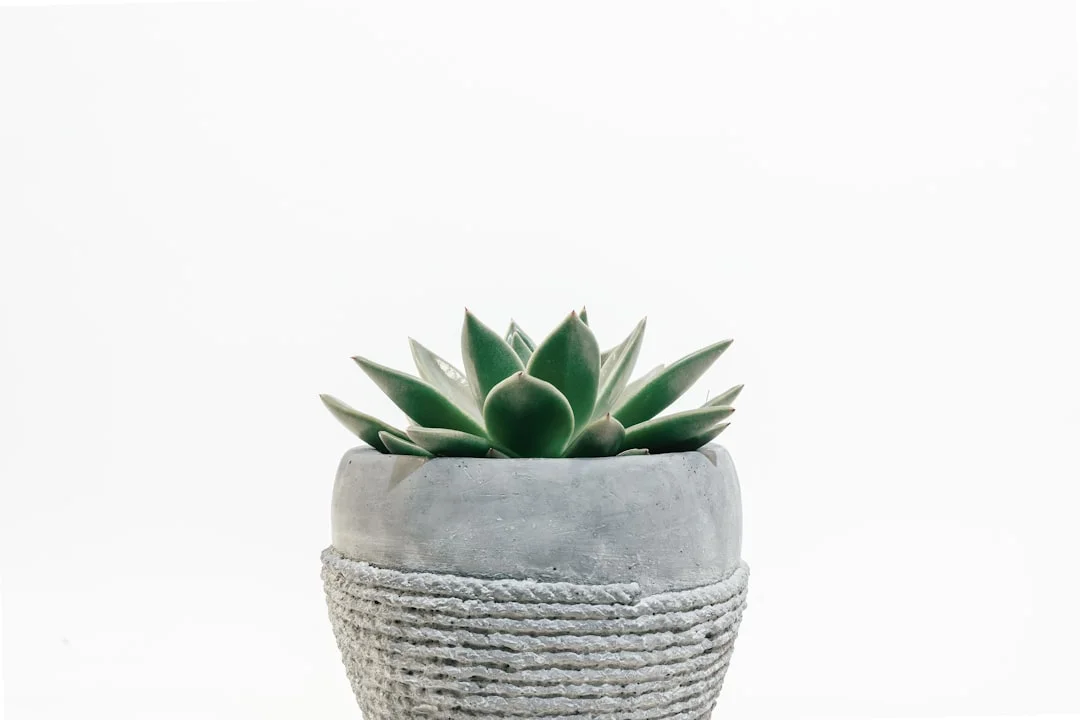
Start with a pot just 2–3 cm wider than the root ball. For a young plant, that’s typically a 10–13 cm (4–5 inch) container. Going too big traps moisture around roots and triggers rot. As the plant matures, only size up when you see roots circling the bottom or pushing through drainage holes — usually every 2–3 years, not annually.
Soil and Fertilizer Requirements
Burro’s tail succulent care lives or dies by soil drainage. A standard houseplant mix holds far too much water. What you need is a gritty, fast-draining medium that mimics those Mexican cliff crevices. If you enjoy growing this plant, you might also find our guide on succulent propagation step-by-step very useful.
My go-to recipe — used by succulent growers from the RHS recommended hobbyist circles to small nurseries in Tamil Nadu — is simple:
• 2 parts cactus or succulent potting mix • 1 part coarse perlite or pumice • 1 part coarse sand or fine gravel
This blend drains within seconds of watering. If you can’t find pumice, horticultural grit or even crushed terracotta works. Gardeners in India often use coco coir mixed with river sand and a handful of neem cake — a brilliant local alternative.
Feeding is where restraint pays off. Sedum burrito is a light feeder. Use a balanced liquid fertilizer (NPK 10-10-10 or 5-10-10) diluted to one-quarter strength, applied once every 6–8 weeks during spring and summer only. Skip feeding entirely in autumn and winter.
Over-fertilizing causes weak, stretched stems and leaf drop. In fact, the most common mistake I see is gardeners feeding monthly with full-strength fertilizer. Don’t.
Get the soil right and feeding becomes almost an afterthought. But there’s still one variable that trips up nearly everyone — water.
Organic Alternatives for Eco-Conscious Gardeners
If you prefer organic feeding, diluted seaweed extract or worm castings tea applied every 8 weeks works beautifully. Many gardeners in Australia and the UK swear by a light top-dressing of compost in early spring. Avoid manure-based fertilizers entirely — they’re too rich and hold too much moisture against the stems.
Watering Burro's Tail Succulent the Right Way
Here’s the thing about watering this plant: less is almost always more. The fastest way to kill a Burro’s Tail Succulent is overwatering. Yet nearly every beginner does exactly that, because the plant looks ‘thirsty’ when it’s actually fine.
The rule is simple: water deeply, then wait until the soil is bone dry. Not slightly damp — completely dry. Stick your finger 5 cm (2 inches) into the soil. If you feel any moisture, wait another 3–4 days.
In spring and summer, that usually means watering every 10–14 days. In autumn and winter, stretch it to every 3–4 weeks. Gardeners in tropical climates like Kerala or Queensland may water slightly more often during dry spells, while those in cool, damp UK winters may go a full month between waterings.
Water the soil directly, not the leaves. Water trapped in those tightly packed beads invites fungal rot. Use room-temperature rainwater or filtered water if possible — hard tap water leaves mineral crusts.
A quick tip: morning watering is best. It gives soil time to dry before cooler night temperatures arrive.
Watch the leaves themselves. Plump and firm? You’re golden. Slightly wrinkled? Time to water. Soft, translucent, or yellowing? You’ve already overwatered. Now ease off and let the plant recover.
Signs of Overwatering vs. Underwatering
Overwatered leaves feel mushy, look translucent, and drop at the lightest touch. The stem near the soil may turn black — a clear sign of root rot. Underwatered leaves shrivel from the bottom up but stay firmly attached. The fix differs: overwatering needs immediate repotting in dry soil; underwatering needs a slow, gentle soak. Knowing the difference saves plants.
Watering Frequency by Climate
Tropical humid (Singapore, Mumbai, Miami): every 12–16 days in growing season. Temperate (UK, US Pacific Northwest): every 10–14 days summer, every 4 weeks winter. Mediterranean (California, southern Spain): every 10 days summer, every 3 weeks winter. Arid (Dubai, Phoenix, Perth): every 7–10 days summer with shade protection, every 3 weeks winter.
Sunlight and Temperature Needs
Light is the second biggest variable in burro’s tail succulent care. The plant wants bright, indirect light for most of the day, with 2–3 hours of gentle direct sun — ideally morning sun. East-facing windows are perfect. South-facing windows work too, but only with a sheer curtain to filter harsh midday rays.
Too little light causes etiolation — stems stretch, gaps appear between leaves, and the plant loses its plump, beaded look. Too much direct sun, especially summer afternoon sun in places like Arizona, Rajasthan, or central Australia, scorches leaves brown or bleaches them pale yellow.
For outdoor growers, this plant is hardy to USDA Zone 9b–11 (RHS H2). That means it survives short dips to about -1°C (30°F) but won’t tolerate hard frost. Ideal temperature range is 18–27°C (65–80°F) during the day, with a slight night drop to 13–18°C (55–65°F).
In cold climates like Canada, northern Europe, or the UK, grow it as a houseplant year-round or move outdoor pots inside before the first frost. In hot arid regions, provide afternoon shade and increase watering slightly.
Many gardeners find a covered porch, balcony, or sunroom strikes the perfect balance.
Indoor Light Tips for Low-Light Homes
If your home lacks bright windows, a basic LED grow light positioned 30 cm above the plant for 10–12 hours daily keeps it healthy. Look for a full-spectrum bulb rated 20–40 watts. Gardeners in winter-dark regions like Scandinavia or Scotland often rely on grow lights from October through March — it’s the single best investment for indoor succulent keepers.
Common Problems and How to Fix Them
Even with good burro’s tail succulent care, problems pop up. The good news? Most are easy to fix once you spot them early.
Root rot is enemy number one. Caused by overwatering or poor drainage, it shows as blackened stems and mushy leaves at soil level. The fix: unpot immediately, snip off rotted roots with sterilised scissors, let the plant air-dry for 2–3 days, then repot in fresh, dry, gritty mix. Don’t water for a week after repotting.
Mealybugs are the second most common pest — small, white, cottony clusters hiding between leaves. Dab them off with a cotton swab dipped in 70% isopropyl alcohol. For heavy infestations, spray weekly with neem oil diluted at 5 ml per litre of water. Neem is widely available in India, Australia, and online globally.
Leaf drop is normal in small amounts, especially after handling. Massive leaf drop signals overwatering, sudden temperature change, or pest pressure.
Etiolation — those long, stretched stems with widely spaced leaves — means insufficient light. Move the plant closer to a window. The stretched section won’t recover, but you can prune it and propagate the cuttings.
Finally, sunburn appears as pale, papery patches. Move the plant out of direct afternoon sun immediately.
Propagation: Turning One Plant Into Many
Here’s where Sedum burrito becomes magical. Drop a leaf accidentally? Congratulations — you just started a new plant. Propagation is so easy it almost feels like cheating.
The leaf method works best. Gently twist off a few plump, healthy leaves from the stem (don’t pull straight out — twist sideways for a clean break). Place them on top of dry, gritty succulent mix in a shallow tray. Don’t bury them. Don’t water yet.
Leave the tray in bright, indirect light. Within 2–3 weeks, tiny pink roots emerge from the leaf base, followed by miniature rosettes. Once roots are 1 cm long, mist lightly every 4–5 days. After 6–8 weeks, you’ll have tiny baby plants ready to pot up.
The stem cutting method is faster for filling out a hanging basket. Cut a 10–15 cm stem section, remove the bottom 3 cm of leaves, and let the cut end callous over for 2–3 days. Then plant the calloused end in dry mix. Wait a week before watering.
A gardener I spoke with in Melbourne turned a single rescued stem into 47 plants in one year using this method — most gifted to friends.
Step-by-Step Leaf Propagation Guide
First, choose 8–10 plump, healthy leaves. Second, twist them off sideways. Third, lay them on dry succulent mix in bright shade. Fourth, wait 2 weeks without watering. Fifth, mist lightly once roots appear. Sixth, transplant tiny rosettes into individual pots after 8 weeks. The mother leaf will eventually shrivel — that’s normal and signals success.
Seasonal Care Across Global Climates
Burro’s tail succulent care shifts with the seasons, but the changes are gentler than for most houseplants. Here’s how to adapt year-round across major climate zones.
Spring (March–May in the Northern Hemisphere, September–November in the Southern): the plant wakes from winter rest. Resume regular watering, start light feeding every 6–8 weeks, and check for pests as temperatures rise. This is the ideal propagation window.
Summer (June–August north, December–February south): peak growth season. Water every 10–14 days. Protect from harsh afternoon sun if you’re in a hot region like the Middle East, central India, or the American Southwest. Indoor plants near south-facing windows may need a sheer curtain.
Autumn (September–November north, March–May south): growth slows. Reduce watering, stop fertilising. Bring outdoor plants inside if night temperatures dip below 10°C (50°F). For UK and Canadian gardeners, this transition usually happens in early October.
Winter (December–February north, June–August south): semi-dormancy. Water only every 3–4 weeks. Place near the brightest window available. Don’t fertilise. Keep away from cold drafts and heating vents — both stress the plant.
June-specific note for Northern Hemisphere readers: this is prime propagation month. Take cuttings now and they’ll establish before autumn slowdown.
Uses and Cultural Significance
While Burro’s Tail Succulent isn’t a major medicinal plant in Ayurveda, Traditional Chinese Medicine, or Western herbalism, related Sedum species have a long folk-medicine history. Sedum sarmentosum is used in TCM as a mild liver tonic, and Sedum acre appears in European folk traditions as a topical remedy for skin irritation. Sedum burrito itself is grown almost entirely as an ornamental.
Its cultural significance is decorative and symbolic. In Mexico, where the plant originates, it’s traditionally given as a housewarming gift symbolising resilience and quiet beauty — qualities anyone who’s grown it can appreciate.
In Vastu Shastra, succulents like this are generally placed in the southeast corner of a home to encourage positive energy, though traditional texts don’t mention Sedum burrito specifically. Feng Shui practitioners often suggest hanging trailing plants in northern or eastern zones to soften sharp angles.
A safety note: Sedum burrito is considered non-toxic to humans and is listed as generally safe for cats and dogs by the ASPCA. However, ingestion of any plant material can cause mild stomach upset, so keep curious toddlers and pets from chewing on stems. The sap may also cause mild skin irritation in sensitive individuals — wear gloves if you have sensitive skin when pruning.
Decorative Uses Around the Home
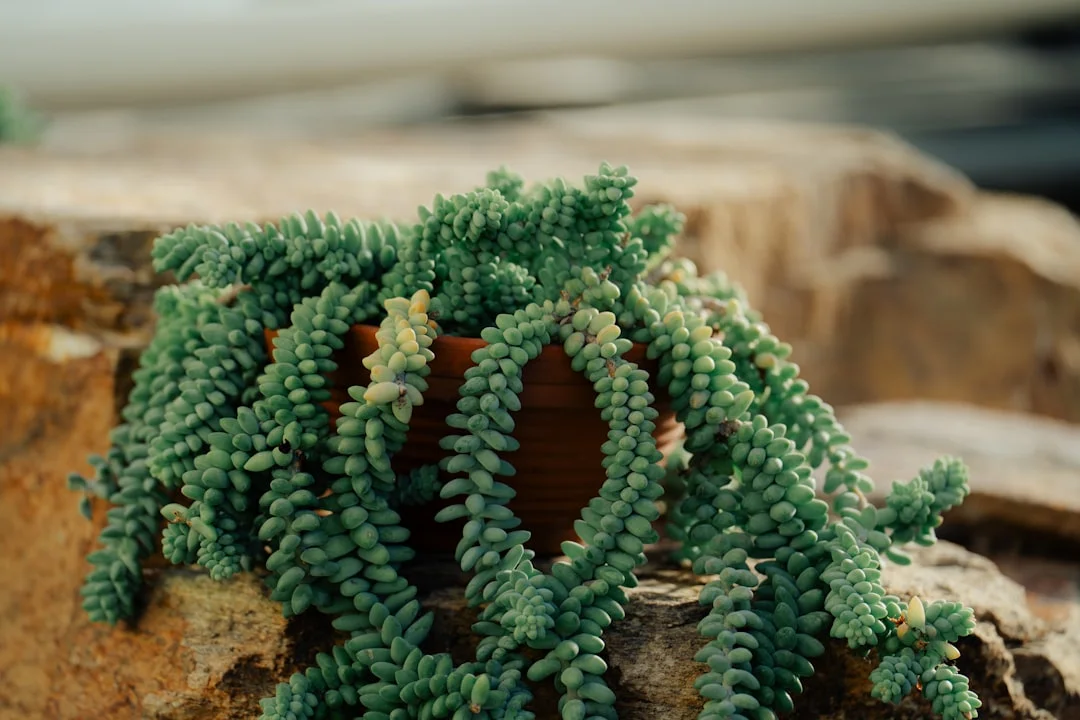
This plant shines in hanging baskets, tall pedestals, wall-mounted planters, and macramé hangers. It’s also stunning in a living wall arrangement. Bathroom shelves with a small skylight or kitchen windowsills above the sink are popular spots, since the gentle humidity matches its natural cliff habitat. Just remember — once you find a happy spot, stop moving it.
Frequently Asked Questions
Below are the questions I’m asked most often by readers worldwide. They cover the situations that trip up beginners and intermediate growers alike — from cold-climate indoor care to pet safety to container choices.
Frequently Asked Questions
Can I grow Burro's Tail Succulent indoors in a cold climate?
Yes, absolutely. In cold climates like Canada, the UK, or northern Europe, grow it as a year-round houseplant near a bright east or south-facing window. Keep it away from cold drafts and heating vents. From October through March, supplement with a full-spectrum LED grow light for 10–12 hours daily. Good burro's tail succulent care in winter means watering only every 3–4 weeks and skipping fertiliser entirely. The plant tolerates indoor heating well as long as humidity stays below 50%.
Is Burro's Tail Succulent safe for pets like cats and dogs?
Yes. The ASPCA lists Sedum burrito as non-toxic to both cats and dogs, which is a relief for pet owners. However, ingestion of any plant material can cause mild stomach upset, vomiting, or diarrhoea in sensitive animals. The bigger concern is physical — curious pets often knock down hanging baskets and bruise themselves on falling pots. I always recommend mounting the plant at least 2 metres above the floor on a sturdy ceiling hook, well out of reach of jumping cats and tail-wagging dogs.
How often should I water Burro's Tail Succulent?
Water every 10–14 days during spring and summer, and every 3–4 weeks in autumn and winter. The exact frequency depends on your climate, pot type, and indoor humidity. The golden rule of burro's tail succulent care is to check the soil first — stick your finger 5 cm (2 inches) deep, and only water if it's completely dry. Tropical humid regions need less frequent watering than arid zones. When in doubt, wait another few days. Underwatering is far easier to fix than overwatering.
Why are the leaves falling off my Burro's Tail?
A few leaves dropping after handling is completely normal — the stems are notoriously fragile. However, massive leaf drop usually signals one of three issues. First, overwatering causes mushy, translucent leaves to fall in clusters. Second, sudden temperature changes (like moving the plant outdoors in spring) shock the plant. Third, pest pressure, especially mealybugs hiding between leaves, weakens attachment. Inspect carefully, adjust watering, and avoid touching the plant unnecessarily. Fallen leaves can be propagated, so don't throw them away.
How do I grow Burro's Tail Succulent in containers and hanging baskets?
Hanging baskets are the ideal home for this trailing beauty. Choose an unglazed clay or terracotta pot with excellent drainage, just 2–3 cm wider than the root ball. Fill with a gritty succulent mix made of 2 parts cactus soil, 1 part perlite, and 1 part coarse sand. Hang in bright, indirect light near an east-facing window or sheltered patio. Water sparingly, never let the basket sit in water, and avoid moving it once placed. Stems may reach 60–90 cm within 2–3 years of patient growing.
Can Burro's Tail Succulent survive outdoors in tropical or hot climates?
Yes, but with shade protection. In tropical regions like Kerala, Singapore, southern Florida, or northern Australia, grow it on a covered porch or under 30–50% shade cloth. Direct midday sun in these climates scorches leaves quickly. Protect from monsoon rains too — heavy rainfall causes root rot within days. In arid hot climates like Dubai or Phoenix, morning sun with full afternoon shade works best. Water slightly more often during dry season, but always let soil dry completely between waterings.
How long does it take to propagate from a leaf?
Roots typically appear within 2–3 weeks after placing a healthy leaf on dry succulent mix. Tiny rosettes emerge from the leaf base around weeks 4–5. By weeks 6–8, you'll have small baby plants ready to pot up individually. The mother leaf gradually shrivels as the new plant absorbs its nutrients — that's a sign of success, not failure. Patience is key. Avoid watering until roots are visible, then mist lightly every 4–5 days. Spring and early summer offer the highest success rates worldwide.
Why is my Burro's Tail stretching with gaps between leaves?
That's etiolation — the plant is reaching for more light. It's the most common complaint I hear from indoor growers in low-light homes. The stretched section won't return to its compact form, but the fix is simple. Move the plant closer to a brighter window, or add a full-spectrum LED grow light positioned 30 cm above for 10–12 hours daily. New growth will return to tight, beaded form. You can also prune the stretched stems and propagate the cuttings — they'll grow back compact in better light.
Final Thoughts
Mastering burro’s tail succulent care really does come down to those three principles: drainage, restraint, and patience. Give it gritty soil, water only when bone dry, place it in bright indirect light, and then — this is the hardest part — leave it alone. Don’t move it, don’t fuss with it, don’t overfeed it. This humble Mexican cliff-dweller rewards quiet neglect with stems that cascade like living jewellery for years, even decades. Whether you’re growing it on a Mumbai balcony, a London windowsill, a Sydney patio, or a Toronto sunroom, the rules stay the same. Start with one healthy plant from a reputable nursery, propagate freely once you’ve found your rhythm, and within a year you’ll have enough babies to share with every plant-loving friend you have. That’s the quiet magic of Sedum burrito — it teaches you that the best gardening is often the gardening you don’t do. Now go check your soil. Is it dry yet?

