
⏱ 28 min read
Table of Contents
- What Is Christmas Cactus?
- Christmas Cactus Plant Characteristics at a Glance
- Christmas Cactus Names Around the World
- Light Requirements: Finding the Perfect Spot
- Watering Christmas Cactus: The Most Common Mistake
- Soil and Fertilizer for Healthy Growth
- How to Get Christmas Cactus to Bloom
- Propagation: How to Grow More Plants for Free
- Christmas Cactus Care by Season
- Common Problems, Pests, and Diseases
- Christmas Cactus Safety, Toxicity, and Cultural Uses
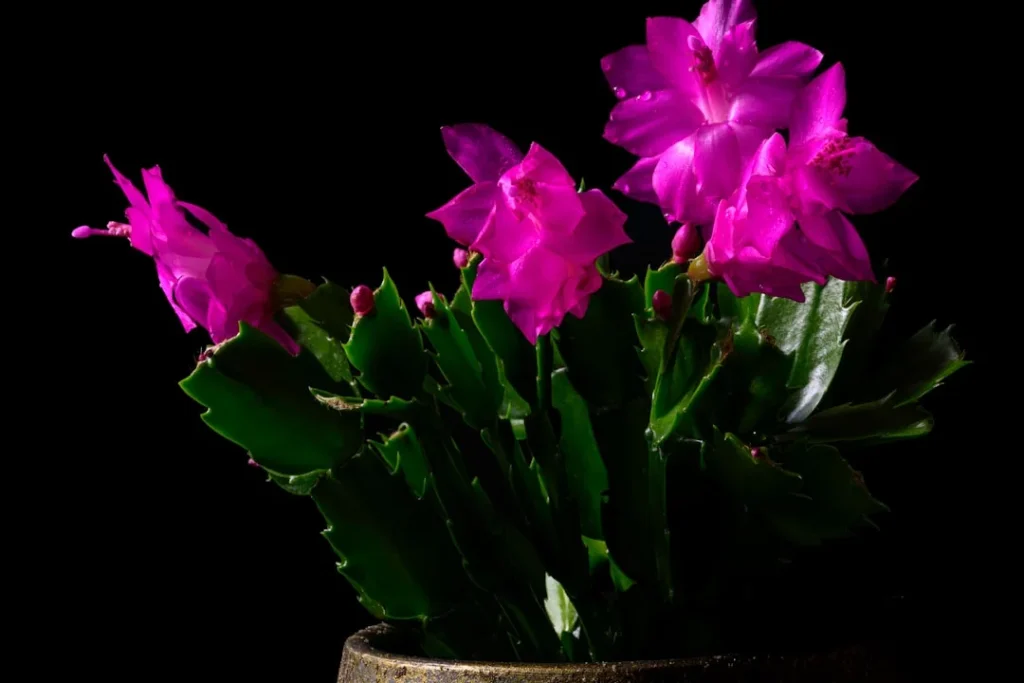
Christmas cactus care is surprisingly simple once you understand one counterintuitive truth: this plant isn’t really a desert cactus at all. Schlumbergera truncata is a tropical epiphyte — it grows naturally in the misty cloud forests of southeastern Brazil, clinging to tree bark, not sand. That single fact changes everything about how you grow it. Most people kill Christmas cactus by treating it like a drought-tolerant succulent, when it actually craves humidity and indirect light. Understanding christmas cactus care starts with unlearning almost everything you think you know about cacti. Whether you’re growing on a windowsill in London, a balcony in Singapore, or a sunroom in Toronto, this guide covers every climate, every season, and every mistake. By the end, you’ll know exactly why your previous attempts failed — and what to do differently this time around. If you enjoy growing this plant, you might also find our guide on how to grow succulents indoors very useful.
Quick Highlights
- Discover why Christmas cactus thrives in humid, indirect light — not dry desert conditions
- Learn the precise watering schedule that prevents root rot across tropical, temperate, and arid climates
- Master the dark-period trick that guarantees stunning blooms every single year
- Propagate new plants from a single stem segment in under four weeks
- Identify and fix the five most common problems before they become fatal
- Grow successfully in containers, apartments, and greenhouses worldwide using simple, affordable techniques
Plant Characteristics at a Glance
| Common Name | Christmas Cactus, Holiday Cactus, Crab Cactus |
| Scientific Name | Schlumbergera truncata (and Schlumbergera × buckleyi) |
| Family | Cactaceae |
| Origin | Atlantic Forest, southeastern Brazil (Rio de Janeiro state) |
| Habitat | Tropical cloud forests; epiphytic on tree bark at 900–1,800 m altitude |
| Plant Type | Epiphytic succulent; perennial houseplant |
| Indoor Plant | Yes — primarily grown as an indoor houseplant worldwide |
| Outdoor Plant | Yes, in frost-free climates (USDA Zones 10–12; RHS H1c); shade required |
| Leaves | No true leaves; flat, segmented stem sections (phylloclades) with toothed or scalloped edges |
| Flowers | Tubular, pendulous, zygomorphic; colours include white, pink, red, magenta, orange, lavender |
| Flowering Season | Nov–Jan (Northern Hemisphere); June–Aug (Southern Hemisphere) |
| Fruit | Small, berry-like reddish fruit; rarely produced in cultivation |
| Seeds | Tiny, black; viable but slow and difficult — propagation by cuttings preferred |
| Roots | Fine, fibrous, shallow epiphytic roots; highly susceptible to rot in waterlogged soil |
| Height | 30–60 cm (12–24 inches); trailing/cascading habit |
| Growth Rate | Moderate; adds several new stem segments per growing season |
| Light Requirements | Bright, indirect light; 2–4 hours per day; avoid direct afternoon sun |
| Soil Requirements | Well-draining, slightly acidic (pH 5.5–6.5); mix of compost, perlite, and orchid bark |
| Water Requirements | Moderate; water when top 2.5 cm (1 inch) of soil is dry; reduce in winter |
| Temperature Requirements | Growing: 18–25°C (65–77°F); Bloom induction: 10–15°C (50–59°F) nights; Min: 5°C (41°F) |
| Humidity Requirements | 50–60% relative humidity; benefits from pebble tray or light misting |
| Propagation | Stem cuttings (2–3 segment sections); roots in 3–4 weeks in soil or water |
| Uses | Ornamental houseplant; gifting; seasonal décor; heirloom plant tradition |
| Medicinal Properties | None documented in Ayurveda, TCM, or Western herbalism; purely ornamental |
| Toxicity | Non-toxic to humans, cats, and dogs (ASPCA); mild GI irritation possible if ingested in quantity |
| Cultural Significance | Christmas symbol in Europe and North America; heirloom plant passed through generations in Germany, Poland, Brazil |
| Common Pests | Fungus gnats, mealybugs, spider mites, scale insects |
| Common Diseases | Root rot (Pythium, Fusarium), stem rot, botrytis blight in high humidity |
| Special Care Tips | Needs 13–14 hrs darkness for 6–8 weeks to bloom; stable environment once buds form; slightly root-bound = more flowers |
| Cultural Practices | Bloom induction via dark-period protocol; reduce water and fertilizer in autumn; pass cuttings as gifts |
| Vastu Direction | Northeast, East, or North sectors; associated with joy, renewal, and positive energy |
Christmas cactus care Names in Different Languages
| English | Christmas Cactus / Holiday Cactus |
| Mandarin Chinese | 蟹爪兰 (Xiè zhuǎ lán – Crab Claw Orchid) |
| Spanish | Cactus de Navidad / Flor de Navidad |
| Hindi | Christmas Cactus (क्रिसमस कैक्टस) |
| Gujarati | નાતાલ કૅક્ટસ (Nataal Cactus) |
| Arabic | صبار عيد الميلاد (Sabbar Eid al-Milad) |
| Bengali | ক্রিসমাস ক্যাকটাস (Christmas Cactus) |
| Portuguese | Cacto de Natal / Flor de Maio |
| Russian | Рождественский кактус (Rozhdestvenskiy kaktus) |
| Japanese | カニサボテン (Kani Saboten – Crab Cactus) |
| Punjabi | ਕ੍ਰਿਸਮਸ ਕੈਕਟਸ (Christmas Cactus) |
| German | Weihnachtskaktus |
| Javanese | Kaktus Natal |
| Korean | 게발선인장 (Gebalseoninjanng – Crab Claw Cactus) |
| French | Cactus de Noël |
| Telugu | క్రిస్మస్ కాక్టస్ (Christmas Cactus) |
| Marathi | नाताळ कॅक्टस (Nataḷ Cactus) |
| Tamil | கிறிஸ்துமஸ் கள்ளி (Kiriṣtumaṣ Kaḷḷi) |
| Urdu | کرسمس کیکٹس (Christmas Cactus) |
| Turkish | Noel Kaktüsü |
| Vietnamese | Xương Rồng Giáng Sinh |
What Is Christmas Cactus?
Here’s the thing most plant labels get wrong. Christmas cactus — Schlumbergera truncata — is not a true cactus in the way most people imagine. It belongs to the family Cactaceae, yes, but its natural home is the Atlantic Forest of Rio de Janeiro state, Brazil, where it grows as an epiphyte in cool, shaded tree canopies at altitudes between 900 and 1,800 metres. Rain is frequent. Humidity is high. Direct sun is rare. That’s the baseline environment your plant is silently asking for. If you enjoy growing this plant, you might also find our guide on Kalanchoe Plant Care Indoors very useful.
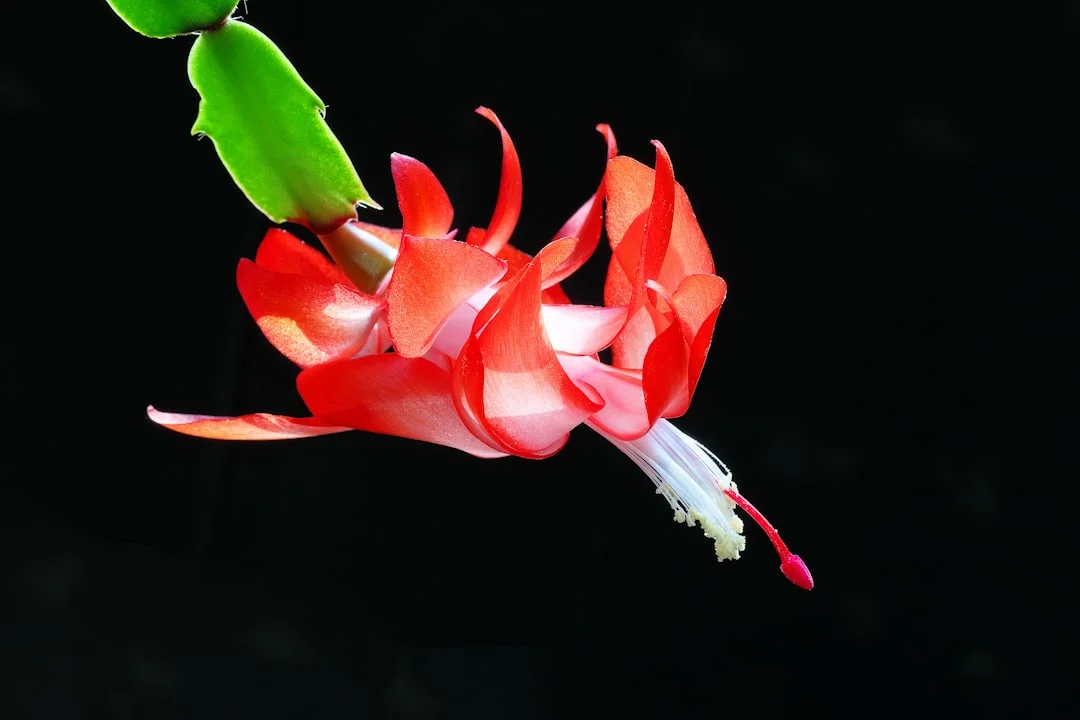
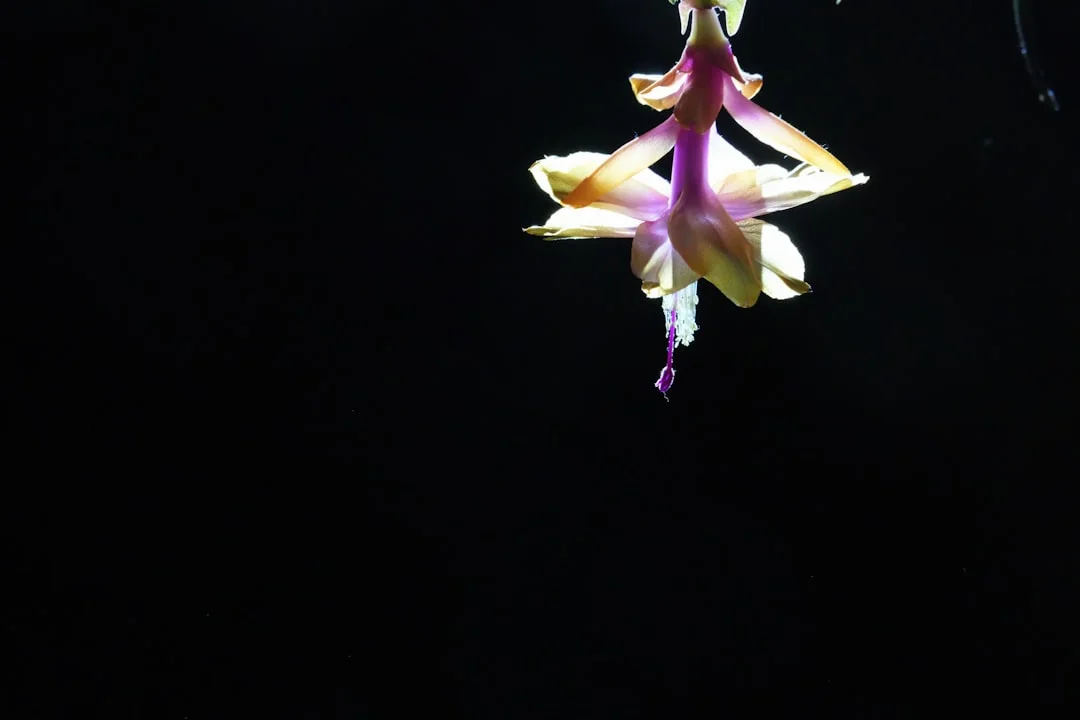
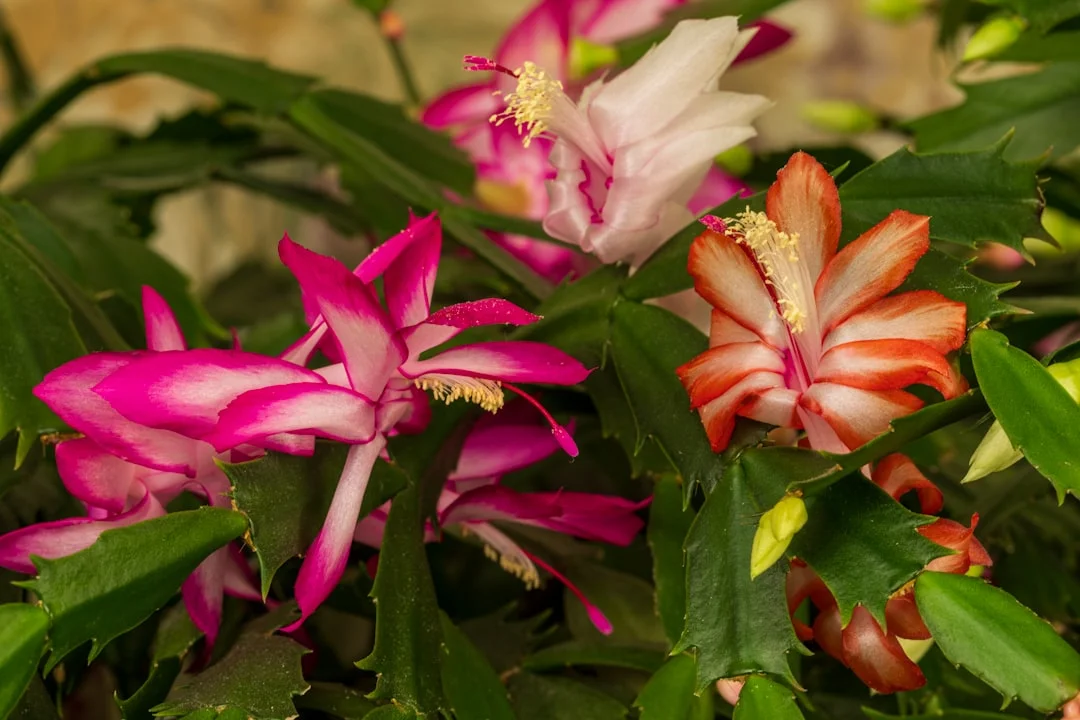
The plant gets its common name from its spectacular flowering period, which falls around Christmas in the Northern Hemisphere — typically November through January. In the Southern Hemisphere, it blooms around June and July, which is why gardeners in Australia and New Zealand sometimes call it the ‘winter cactus’ or ‘holiday cactus.’ The flowers are tubular and pendulous, ranging from white and soft pink to deep magenta, orange-red, and even lavender, depending on the cultivar. Many gardeners who grow this plant also love to read about Large Indoor Plants for Living Room.
According to Kew Gardens, the genus Schlumbergera contains only about six species, making it one of the smaller genera in the cactus family — yet it’s one of the most widely cultivated houseplants on the planet. It’s been hybridised extensively since the 1840s, when breeders in Europe first began crossing native Brazilian specimens. Many plants sold today are actually Schlumbergera × buckleyi hybrids, though Schlumbergera truncata remains the most commonly sold species.
Christmas Cactus vs. Thanksgiving Cactus: Do You Know Which One You Have?
Many gardeners don’t know this: what’s sold as a ‘Christmas cactus’ in most garden centres is often actually a Thanksgiving cactus (Schlumbergera truncata). The difference lies in the stem segments, called phylloclades. Thanksgiving cactus has pointed, claw-like teeth on the edges. True Christmas cactus (Schlumbergera × buckleyi) has rounded, scalloped edges with no points. Thanksgiving cactus also blooms slightly earlier — October to November in the Northern Hemisphere. For practical growing purposes, christmas cactus care is nearly identical for both, so this guide applies to either plant you’re working with. Many gardeners who grow this plant also love to read about How to Keep Plants Alive.
Why This Plant Has Survived Generations
In my experience, few houseplants inspire the same emotional attachment as this one. I’ve met gardeners in Melbourne and Manchester who grew their plant from a cutting taken from their grandmother’s windowsill forty years ago. Schlumbergera truncata can live for decades — some specimens are documented at over 100 years old. That longevity is part of its extraordinary appeal. Furthermore, it adapts to a wide range of indoor environments, making it genuinely suitable for growers from tropical Mumbai to wintry Oslo — as long as you understand its core needs.
Christmas Cactus Plant Characteristics at a Glance
Before diving into care specifics, it helps to understand the plant’s biology. The table below covers every key characteristic you need to know — from growth rate to toxicity to Vastu placement. Use it as your quick reference throughout the growing season. Many gardeners who grow this plant also love to read about Best Soil for Indoor Plants No.
Christmas Cactus Names Around the World
This plant travels the globe under many names. In Brazil, its homeland, it’s called ‘Cacto de Natal’ — literally ‘Christmas cactus’ in Portuguese. In Germany, it’s ‘Weihnachtskaktus.’ In Japan, it’s known as ‘Kani saboten’ (蟹サボテン), meaning ‘crab cactus,’ because the segmented stems resemble a crab’s claws. Understanding these local names helps when you’re searching for the plant in a local nursery or asking for care advice in online communities based in different countries. The table below lists the plant’s names across 21 languages and regions.
Light Requirements: Finding the Perfect Spot
Light is where christmas cactus care gets genuinely interesting. This plant evolved under a forest canopy, so it needs bright, indirect light — not direct sun, and not deep shade. Think of the quality of light you’d find sitting near a north-facing window in the Northern Hemisphere, or a south-facing window in Australia or New Zealand. Dappled, gentle, consistent.
Direct afternoon sun — especially in summer — will bleach the phylloclades (stem segments) yellow or cause reddish discolouration. Meanwhile, too little light means no blooms. The sweet spot is 2–4 hours of indirect bright light per day, with filtered light for the rest of the time.
Have you ever noticed your plant looks vibrant in winter but sulks all summer? That’s often a light issue, not a watering problem. In temperate climates like the UK and northern US, moving the plant 30–60 cm (12–24 inches) back from a south-facing window in summer prevents scorching. In tropical climates like Singapore or coastal India, place the plant inside, away from direct sun entirely, near a window with a sheer curtain.
Light by Climate Zone
Tropical climates (India, Southeast Asia, Brazil): Keep indoors year-round, 1–2 metres from a bright window. Use sheer curtains to filter harsh equatorial light. Temperate climates (UK, US Pacific Northwest, Canada): East or north-facing windows work beautifully. In winter, move closer to the glass to compensate for shorter days. Arid and Mediterranean climates (Middle East, California, southern Australia): Outdoors is only safe in a fully shaded spot. Indoors near a filtered window is safest. The RHS recommends positioning Christmas cactus in a bright, draught-free spot away from radiators and fireplaces — advice that applies globally.
Artificial Light: A Viable Option
Furthermore, if your home has poor natural light — common in apartments in cities like Tokyo, London, or New York — full-spectrum LED grow lights work well. Set them on a 12–14 hour cycle during the growing season. However, during the bloom-induction period (more on that in a later section), you’ll need to switch to 10–12 hours of darkness. Artificial light gives you precise control that natural light simply can’t match, which is why many commercial growers use it exclusively.
Watering Christmas Cactus: The Most Common Mistake
The internet tells you to water your Christmas cactus regularly. Experienced gardeners know that ‘regularly’ is meaningless without context. Here’s the real rule: water thoroughly when the top 2.5 cm (1 inch) of soil feels dry, then let it drain completely. Never let the plant sit in standing water — that’s the fastest path to root rot.
Christmas cactus is more drought-tolerant than a tropical fern, but far less tolerant than a true desert cactus. It wants consistent moisture, not constant moisture. In practice, this means watering roughly every 7–10 days in summer and every 10–14 days in winter in temperate climates. In humid tropical climates like Bangkok or Chennai, you may water less frequently because the ambient humidity keeps the soil moist longer.
Many gardeners make this mistake: they see the top soil looks dry and don’t water, not realising the roots at the bottom of the pot are sitting in soggy, oxygen-depleted soil from the last watering. Always check drainage. Always use a pot with holes.
How to Water Correctly
First, check the top inch of soil with your finger. Next, if it’s dry, water slowly and evenly until water drains freely from the bottom. Then, empty the saucer completely within 30 minutes. After that, wait until the top inch dries again before repeating. Finally, in winter — especially in the lead-up to blooming — reduce watering by about 30% to mimic the plant’s natural dry-season cue. This reduction actually helps trigger flowering, which we’ll cover in detail shortly.
Water Quality Matters More Than You Think
In my experience, water quality is an underappreciated factor in christmas cactus care. Chlorinated tap water isn’t ideal — the chlorine and fluoride salts can accumulate in the soil over time, causing leaf tip browning. If your tap water is heavily treated, let it sit in an open jug for 24 hours before use. Alternatively, use collected rainwater, which is slightly acidic and mineral-free — perfect for this plant. In cities like Dubai or Phoenix where tap water is very hard (high in calcium and magnesium), using filtered water or a diluted solution can make a visible difference in leaf colour and overall vigour.
Soil and Fertilizer for Healthy Growth
Christmas cactus needs well-draining, slightly acidic soil with good aeration. In its native Brazilian cloud forests, it grows in decomposed organic matter caught in tree crevices — loose, fibrous, fast-draining, and rich in humus. Your potting mix should replicate that.
A reliable global mix: 60% standard potting compost, 20% perlite (for drainage), and 20% coarse orchid bark or coco coir. This combination provides drainage, aeration, and enough organic matter to hold some moisture. Avoid heavy, clay-based soils entirely — they’re the single biggest cause of root rot in this plant.
As for pH, aim for 5.5 to 6.5 (slightly acidic). You can test this with an inexpensive pH meter available at most garden centres worldwide for around $10–15 USD (£8–12 GBP, ₹800–1,200 INR).
Fertilizing Schedule
Fertilize from April through September in the Northern Hemisphere (October through March in the Southern Hemisphere) — this is the active growing season. Use a balanced liquid fertilizer (10-10-10 or similar) diluted to half strength, applied every two weeks. In October, switch to a low-nitrogen, high-phosphorus formula (such as 2-10-10) to encourage bud formation. Stop fertilizing entirely once buds appear. Over-fertilizing — especially with high-nitrogen fertilizer in autumn — is a very common reason Christmas cactus fails to bloom. The USDA plant care guidelines similarly note that excessive nitrogen promotes foliage at the expense of flowers in many ornamental species.
Repotting: When and How
Repot every 2–3 years, or when you see roots escaping from the drainage holes. Interestingly, Christmas cactus actually blooms better when slightly root-bound — it’s one of those plants that flowers under mild stress. Choose a pot only 2.5–5 cm (1–2 inches) larger than the current one. Terracotta pots are excellent because they’re porous and allow the soil to dry more evenly, which reduces root rot risk. Plastic pots retain moisture longer — useful in dry, arid climates but riskier in humid tropical regions.
How to Get Christmas Cactus to Bloom
This is the section most gardeners desperately need — and it comes down to one word: photoperiodism. Christmas cactus is a short-day plant, meaning it needs long, uninterrupted dark periods to trigger flower bud formation. Specifically, it needs at least 13–14 hours of complete darkness per night for 6–8 consecutive weeks to initiate blooming.
In nature, this happens automatically as days shorten in autumn. In your home, it often doesn’t — because indoor lighting extends the ‘day.’ A single lamp left on in the evening can prevent blooming entirely. That’s a fact many gardeners discover only after years of wondering why their plant never flowers.
There’s one growing condition that almost nobody talks about: temperature also plays a critical role. Buds form best when night temperatures drop to 10–15°C (50–59°F). In centrally heated homes, this can be tricky — try placing the plant in an unheated spare room or a cool conservatory for the six-week induction period.
The Six-Week Bloom Induction Protocol
Start in early October in the Northern Hemisphere (early April in the Southern Hemisphere). First, move the plant to a room with no artificial light at night. Next, ensure 13–14 hours of darkness every night — use a cardboard box over the plant if necessary. Then, keep daytime temperatures at 18–21°C (65–70°F) and night temperatures at 10–15°C (50–59°F). After that, reduce watering slightly during this period. Once buds appear — usually after 6–8 weeks — move the plant back to its regular bright spot and resume normal christmas cactus care. The buds will develop and open over the following 3–4 weeks.
Why Buds Drop Before Opening
Bud drop is heartbreaking — and preventable. The main causes are: sudden changes in temperature (moving a budding plant from a cool room to a warm one too quickly), draughts from windows or air conditioning, inconsistent watering during the bud stage, and low humidity. Once buds form, keep the plant in a stable environment. Don’t move it, don’t let it near heating vents, and mist lightly around it (not on the buds directly) to maintain humidity above 50%. In dry climates like parts of the Middle East or Australia’s interior, placing a pebble tray filled with water beneath the pot provides a passive humidity boost.
Propagation: How to Grow More Plants for Free
Propagating Christmas cactus is one of gardening’s small joys. It’s fast, reliable, and costs nothing. In fact, a healthy parent plant can yield dozens of cuttings in a single season, each capable of becoming a new plant. This is why Christmas cactus cuttings have been passed between friends, neighbours, and generations for over a century.
The best time to propagate is late spring to early summer — May to June in the Northern Hemisphere, November to December in the Southern Hemisphere. At this point, the plant has just finished its post-bloom rest and is entering its active growing season, so rooting is quick and success rates are high.
For a complete overview of indoor plant propagation techniques that work across species, our indoor plant care guide is an excellent companion resource.
Step-by-Step Propagation from Stem Cuttings
First, select a healthy stem and twist off a section of 2–3 segments (called a ‘Y-cutting’ if you take a forked piece — these root even faster). Next, let the cutting sit in a dry spot for 1–2 hours to allow the cut end to callous slightly. Then, insert the bottom segment about 1–2 cm into a small pot of moist, well-draining propagation mix (equal parts perlite and coco coir works well). After that, place the pot in a warm, bright spot — 18–21°C (65–70°F) — avoiding direct sun. Finally, mist lightly every 2–3 days. Roots typically form within 3–4 weeks, after which you can treat the plant with standard christmas cactus care routines.
Water Propagation: Does It Work?
Water propagation works, though soil propagation gives stronger, more drought-adapted roots. If you prefer water, place the cutting in a small glass of clean water (change it every 3–4 days), positioning the bottom segment just below the surface. Keep in indirect light. Roots typically appear within 2–4 weeks. Once roots are 2–3 cm (about 1 inch) long, transplant into a well-draining potting mix. Many gardeners in apartments find water propagation easier because it’s visible — you can watch the roots developing day by day, which is oddly satisfying.
Christmas Cactus Care by Season
One of the things that sets experienced Christmas cactus growers apart is understanding that this plant has a clear annual rhythm — and working with it rather than against it. The four seasons bring four distinct phases, each requiring a slightly different approach to christmas cactus care. Note: Northern Hemisphere dates are given first; Southern Hemisphere equivalents are in brackets.
Spring (March–May [Sept–Nov]): Recovery and Growth
After blooming, the plant enters a short rest period of 4–6 weeks. During this time, reduce watering slightly and hold off on fertilizer. You may notice the plant looking a little tired — that’s completely normal. Once new growth begins appearing at the tips of the stem segments, resume regular watering and begin fertilizing with a balanced liquid fertilizer. This is also the ideal window for repotting or taking propagation cuttings. In tropical climates where spring temperatures rise quickly, ensure the plant isn’t placed in direct sun as light intensity increases.
Summer (June–August [Dec–Feb]): Active Growth
June — the current month — is prime growing season in the Northern Hemisphere. The plant is actively pushing new stem segments. Fertilize every two weeks, water consistently (but never saturate), and keep away from air conditioning vents which dry the air drastically. In hot climates like the US South, the Middle East, or northern India, indoor temperatures can exceed 30°C (86°F) — which slows growth. In these regions, move the plant to the coolest room in the house and increase ambient humidity with a pebble tray or small humidifier.
Autumn and Winter (Sept–Feb [March–Aug]): Bloom Induction and Flowering
This is the most critical period in the entire christmas cactus care calendar. Begin the dark-period protocol in early October (early April in the Southern Hemisphere). Reduce fertilizing, reduce watering slightly, and ensure night temperatures drop to the 10–15°C (50–59°F) range. Once buds appear, stop all fertilizing, maintain consistent (not excessive) moisture, and avoid moving the plant. The flowering period can last 4–8 weeks with proper care, and individual flowers last 5–7 days. In cold climates like Canada or Scandinavia, ensure the plant isn’t placed near a cold window that drops below 5°C (41°F), which can cause bud drop.
Common Problems, Pests, and Diseases
Even with good christmas cactus care, problems can appear. The good news is that most issues are straightforward to diagnose and fix once you know what to look for. This is where most people go wrong: they treat symptoms without identifying the underlying cause, and the problem returns.
The most common issues, in order of frequency, are root rot (caused by overwatering or poor drainage), yellowing or reddish phylloclades (too much direct sun), bud drop (temperature fluctuations, low humidity, or inconsistent watering), and limp, wrinkled stems (underwatering, or root rot so severe the roots can no longer function).
A 2019 study published on the NIH PubMed platform examining ornamental succulent health found that overwatering accounts for over 60% of houseplant fatalities globally — a figure that aligns precisely with what I observe in Christmas cactus specifically.
Pests to Watch For
Fungus gnats are the most common pest — they thrive in moist soil and lay eggs in the top layer. Allowing the soil surface to dry out between waterings is both a prevention and a treatment. Mealybugs sometimes appear in the joints between stem segments, presenting as white, cottony deposits. Remove them with a cotton swab dipped in 70% isopropyl alcohol. Spider mites appear in hot, dry conditions — common in centrally heated homes in winter — causing tiny yellow stippling on stems. Increase humidity and spray with a gentle insecticidal soap solution. Scale insects (small, brown, shell-like bumps) can be scraped off manually and treated with neem oil solution.
Diagnosing Stem and Root Problems
Soft, mushy stem bases usually indicate root rot caused by Pythium or Fusarium fungi — both thrive in waterlogged, poorly aerated soil. If caught early, remove the plant from its pot, cut away all blackened or mushy roots with sterilised scissors, dust the cut surfaces with powdered cinnamon (a natural antifungal), and repot in fresh, dry mix. If the rot has reached more than half the root system, propagate healthy stem cuttings and start fresh — the parent plant is unlikely to recover. Furthermore, wilting despite moist soil is a classic root rot sign that confuses many growers because they assume the plant needs MORE water, when actually it needs the opposite.
Christmas Cactus Safety, Toxicity, and Cultural Uses
Here’s reassuring news for households with pets and children: Christmas cactus is considered non-toxic to cats, dogs, and humans, according to the American Society for the Prevention of Cruelty to Animals (ASPCA). However, ingestion of stem segments in large quantities can cause mild gastrointestinal irritation — vomiting or diarrhoea — in cats and dogs due to the plant’s fibrous material and mild alkaloid content. Keep it out of reach of pets that are prone to nibbling, as a precaution.
From a cultural perspective, Christmas cactus carries rich symbolic weight in many traditions. In Brazil, its country of origin, the plant has been associated with festivity and abundance since at least the 19th century. In Victorian England, it became a prized conservatory specimen after being introduced via plant hunters returning from South America — a status symbol in an era when exotic houseplants represented wealth and worldly taste.
Christmas cactus does not have documented use in Ayurvedic medicine, Traditional Chinese Medicine (TCM), or Western herbalism — it is primarily an ornamental plant with no significant ethnobotanical medicinal record. However, its care and cultivation are deeply woven into folk gardening traditions across multiple continents, with heirloom cuttings passed through families for generations, particularly in Germany, Poland, and the Czech Republic where the ‘Weihnachtskaktus’ is a beloved Christmas household fixture.
Vastu and Feng Shui Placement
In Vastu Shastra, the ancient Indian architectural science, flowering plants are considered auspicious when placed in the northeast, east, or north sectors of the home. Christmas cactus, as a flowering plant that blooms in winter, is considered a positive presence in living spaces and is associated with joy and renewal. In feng shui practice, the plant’s rounded, non-spiky stems (especially in Schlumbergera × buckleyi) are considered good energy — unlike sharp-pointed cacti, which feng shui traditions sometimes associate with harsh energy. Its rich red and pink blooms align it with fire energy, making it well-suited to south-facing rooms in feng shui arrangements.
Frequently Asked Questions
How often should I water my Christmas cactus?
Water your Christmas cactus when the top 2.5 cm (1 inch) of soil feels dry — roughly every 7–10 days in summer and 10–14 days in winter in temperate climates. In humid tropical regions like Southeast Asia or coastal India, you may water less frequently. Always ensure the pot drains completely after each watering and never let the plant sit in standing water, which causes root rot rapidly.
Can I grow Christmas cactus indoors in a cold climate?
Yes, absolutely. Christmas cactus thrives as an indoor houseplant in cold climates including Canada, Scandinavia, and the UK. Keep it near a bright, indirect-light window and away from cold draughts. It actually benefits from cool night temperatures of 10–15°C (50–59°F) in autumn, which help trigger flowering. Just ensure it never drops below 5°C (41°F), which can damage or kill the plant.
Why isn't my Christmas cactus blooming?
The most common reason is insufficient darkness. Christmas cactus needs 13–14 hours of complete, uninterrupted darkness per night for 6–8 weeks in autumn to form flower buds. Indoor lighting — even a brief lamp switching on at night — can disrupt this cycle. The second most common reason is temperatures that are too warm at night. Aim for 10–15°C (50–59°F) at night during the bloom induction period.
Is Christmas cactus safe for cats and dogs?
Yes. The ASPCA classifies Christmas cactus as non-toxic to cats and dogs. However, ingestion of large amounts of the fibrous stem material can cause mild gastrointestinal upset, including vomiting or diarrhoea. As a precaution, keep the plant out of reach of pets that habitually chew on houseplants. No serious toxicity reactions have been documented in companion animals from this species.
How do I grow Christmas cactus in containers?
Christmas cactus grows excellently in containers and actually flowers better when slightly root-bound. Use a pot only 2–3 cm (1 inch) larger than the root ball, with drainage holes. Fill with a well-draining mix of 60% potting compost, 20% perlite, and 20% orchid bark or coco coir. Terracotta pots are ideal because they allow the soil to dry more evenly, reducing rot risk. Repot every 2–3 years in spring.
How long does a Christmas cactus live?
Christmas cactus is remarkably long-lived. With proper care, individual plants can survive for decades — some documented specimens are over 100 years old. The key to longevity is avoiding root rot (good drainage), avoiding direct sun (which bleaches and damages stems), and respecting the annual bloom cycle by providing cooler, darker conditions in autumn each year. Healthy plants also produce abundant cuttings, so you can propagate new generations indefinitely.
What is the best fertilizer for Christmas cactus?
During the growing season (spring through late summer), use a balanced liquid fertilizer such as 10-10-10, diluted to half the recommended strength, every two weeks. In early autumn — about 6–8 weeks before the intended bloom period — switch to a low-nitrogen, high-phosphorus formula like 2-10-10 to encourage bud formation. Stop fertilizing completely once buds appear. Over-fertilizing with nitrogen in autumn is one of the most common reasons Christmas cactus fails to flower.
Can Christmas cactus be grown outdoors year-round?
Yes, but only in frost-free climates — USDA Hardiness Zones 10–12 (RHS H1c), which includes coastal California, Hawaii, southern Florida, parts of coastal Australia, and tropical regions. It must be grown in full shade outdoors, as direct sun causes severe bleaching and damage. In cooler climates, it can be moved outdoors to a shaded spot in summer and brought back inside before temperatures drop below 10°C (50°F) in autumn.
Final Thoughts
Christmas cactus care is genuinely one of the more rewarding skills a houseplant grower can develop. Once you understand the plant’s Brazilian cloud forest origins — its love of indirect light, consistent but well-drained moisture, and its need for cool, dark autumn nights — almost everything else falls into place. The common failures: root rot from overwatering, no blooms due to light pollution, bud drop from temperature swings — all become preventable rather than mysterious. Whether you’re nurturing a decades-old heirloom cutting in a Melbourne apartment or starting fresh from a garden centre plant in Manchester or Toronto, the fundamentals of christmas cactus care remain the same across every climate zone. Work with the plant’s natural rhythm, respect its rest periods, and give it that six-week dark window each autumn. In return, it will reward you with cascading, jewel-coloured flowers that genuinely transform a room — and potentially outlive all of us.

