
⏱ 33 min read
Table of Contents
- What Is Krishna Kamal (Passiflora edulis)?
- Krishna Kamal Plant Characteristics at a Glance
- Krishna Kamal Flower Care: Sunlight Requirements
- Soil and Fertilizer Guide for Passiflora edulis
- Watering Krishna Kamal: How Much Is Too Much?
- How to Grow Krishna Kamal in Any Climate
- Propagation: Growing New Plants from Cuttings or Seeds
- Common Problems and How to Fix Them
- Seasonal Care Calendar for Krishna Kamal
- Medicinal, Culinary, and Cultural Uses
Krishna kamal flower care is surprisingly simple once you understand what this extraordinary climber truly needs. Passiflora edulis — known as the passion flower or Krishna Kamal — produces one of the most structurally complex blooms in the plant kingdom. Its purple, white, and gold crown looks almost hand-painted. Yet most gardeners who grow it struggle not with its exotic appearance, but with basic care mistakes that are completely avoidable. Here’s what surprises most people: this plant is far tougher than it looks. Whether you’re growing it in a humid tropical garden in Singapore, a sunny Mediterranean courtyard in Spain, or a cool greenhouse in the UK, krishna kamal flower care follows a consistent set of principles that work across climates. In this guide, you’ll learn exactly what those principles are — from soil composition and watering rhythm to pest control and seasonal pruning. By the end, you’ll know precisely why your previous attempts may have struggled, and what to do differently this time. If you enjoy growing this plant, you might also find our guide on Anthurium Flower Red Care very useful.
Quick Highlights
- Discover the exact soil mix and pH range that makes Passiflora edulis thrive in any climate zone
- Learn the watering rhythm that prevents root rot — the single biggest killer of passion flowers worldwide
- Understand sunlight requirements across tropical, temperate, and arid growing conditions
- Identify the 5 most common krishna kamal flower care mistakes and how to fix them fast
- Propagate new plants from cuttings or seeds using a simple, proven step-by-step method
- Explore the medicinal, culinary, and cultural significance of Krishna Kamal across multiple traditions
Plant Characteristics at a Glance
| Common Name | Krishna Kamal, Passion Flower, Passion Fruit Vine |
| Scientific Name | Passiflora edulis Sims |
| Family | Passifloraceae |
| Origin | South America — Brazil, Argentina, Paraguay |
| Habitat | Tropical and subtropical forest margins, clearings, disturbed edges; thrives at 0–2,000 m altitude |
| Plant Type | Perennial climbing vine (tendril climber) |
| Indoor Plant | Yes — with strong grow lights and a large container (minimum 30 litres); limited flowering without supplemental lighting |
| Outdoor Plant | Yes — ideal outdoors in USDA Zones 9–12 / RHS H2; wall-trained in Zone 7–8 with winter protection |
| Leaves | Three-lobed, glossy dark green, alternate; 7–20 cm long; serrated margins; tendrils emerge from leaf axils |
| Flowers | Complex, 5–7 cm diameter; white petals with purple-white corona filaments; fragrant; open for one day only |
| Flowering Season | Late spring to autumn in temperate zones; near year-round in tropical climates |
| Fruit | Oval to round; 4–7 cm long; purple (f. edulis) or yellow (f. flavicarpa) when ripe; aromatic gelatinous pulp with black seeds |
| Seeds | Numerous; black; flat; enclosed in aromatic pulp; viable for 2–3 weeks fresh; germination 2–4 weeks at 20–25°C (68–77°F) |
| Roots | Fibrous, shallow root system; sensitive to waterlogging and root disturbance; spreads 60–90 cm from the base |
| Height | Up to 9 m (30 ft) in ideal conditions; typically 3–5 m (10–16 ft) in home gardens with managed pruning |
| Growth Rate | Fast — 3–5 m of new growth per season in warm climates |
| Light Requirements | Full sun — minimum 6 hours direct sunlight daily; 8 hours ideal; light afternoon shade in extreme heat above 38°C (100°F) |
| Soil Requirements | Well-draining loam; pH 6.0–7.0; enriched with organic matter; avoid heavy clay or waterlogged ground |
| Water Requirements | Moderate; water deeply 1–2 times per week in growing season; allow top 2–3 cm to dry between waterings; reduce significantly in winter |
| Temperature Requirements | Optimal 18–32°C (64–90°F); tolerates brief dips to -2°C (28°F) in established plants; roots survive to -5°C (23°F) with mulch |
| Humidity Requirements | Moderate to high; 50–80% RH ideal; tolerates dry conditions with regular watering; susceptible to mildew in stagnant humid air |
| Propagation | Stem cuttings (preferred — roots in 4–6 weeks); seeds (soaked 24 hours, germinate 2–4 weeks at 20–25°C); layering also possible |
| Uses | Ornamental climber; edible fruit (fresh, juices, desserts); medicinal (anxiety, insomnia); cultural and spiritual significance |
| Medicinal Properties | Anxiolytic, sedative, anti-inflammatory; flavonoids act on GABA receptors; studied for anxiety, insomnia, and hypertension management |
| Toxicity | Low toxicity to humans at normal culinary doses; ASPCA lists as potentially toxic to dogs and cats; avoid medicinal use during pregnancy |
| Cultural Significance | Associated with Lord Krishna in Hindu tradition; symbolises the Passion of Christ in Western Christianity; national fruit symbol in Brazil |
| Common Pests | Aphids, whiteflies, spider mites, passion vine hopper, mealy bugs; caterpillars (Agraulis vanillae) in the Americas |
| Common Diseases | Fusarium wilt, root rot, powdery mildew, woodiness virus (transmitted by aphids); bacterial spot in humid conditions |
| Special Care Tips | Provide robust trellis support from planting; prune laterals by one-third after fruiting; switch to high-K fertilizer at flowering; mulch roots in winter |
| Cultural Practices | Offered in Hindu temples as a sacred flower; used in Brazilian folk medicine; passion fruit juice central to Colombian festive cuisine |
| Vastu Direction | East or North-East — associated with spiritual energy and divine blessings in Vastu Shastra; ideal for garden entrances |
Krishna kamal flower care Names in Different Languages
| English | Passion Flower / Passion Fruit |
| Mandarin Chinese | 百香果 (Bǎi xiāng guǒ) |
| Spanish | Maracuyá / Fruta de la Pasión |
| Hindi | कृष्ण कमल (Krishna Kamal) |
| Gujarati | ક્રિષ્ણ કમળ (Krishna Kamal) |
| Arabic | فاكهة العاطفة / زهرة الآلام (Zahr al-Alam) |
| Bengali | প্যাশন ফুল (Passion Phul) / কৃষ্ণকমল |
| Portuguese | Maracujá |
| Russian | Пассифлора (Passiflyora) |
| Japanese | トケイソウ / パッションフルーツ (Passhon Furūtsu) |
| Punjabi | ਕ੍ਰਿਸ਼ਨ ਕਮਲ (Krishna Kamal) |
| German | Passionsblume / Maracuja |
| Javanese | Markisa |
| Korean | 시계꽃 / 패션프루트 (Paesyeon Puruteu) |
| French | Fruit de la Passion / Grenadille |
| Telugu | జానకిపువ్వు (Janaki Puvvu) |
| Marathi | कृष्णकमळ (Krishna Kamal) |
| Tamil | தாமரை / பேஷன் பழம் (Passion Pazham) |
| Urdu | کرشن کمل (Krishna Kamal) |
| Turkish | Çarkıfelek |
| Vietnamese | Chanh dây / Lạc tiên |
What Is Krishna Kamal (Passiflora edulis)?
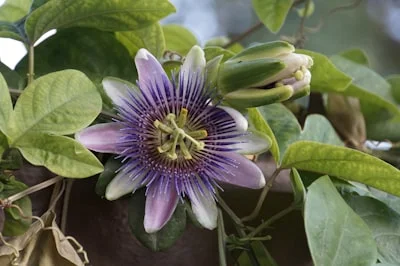
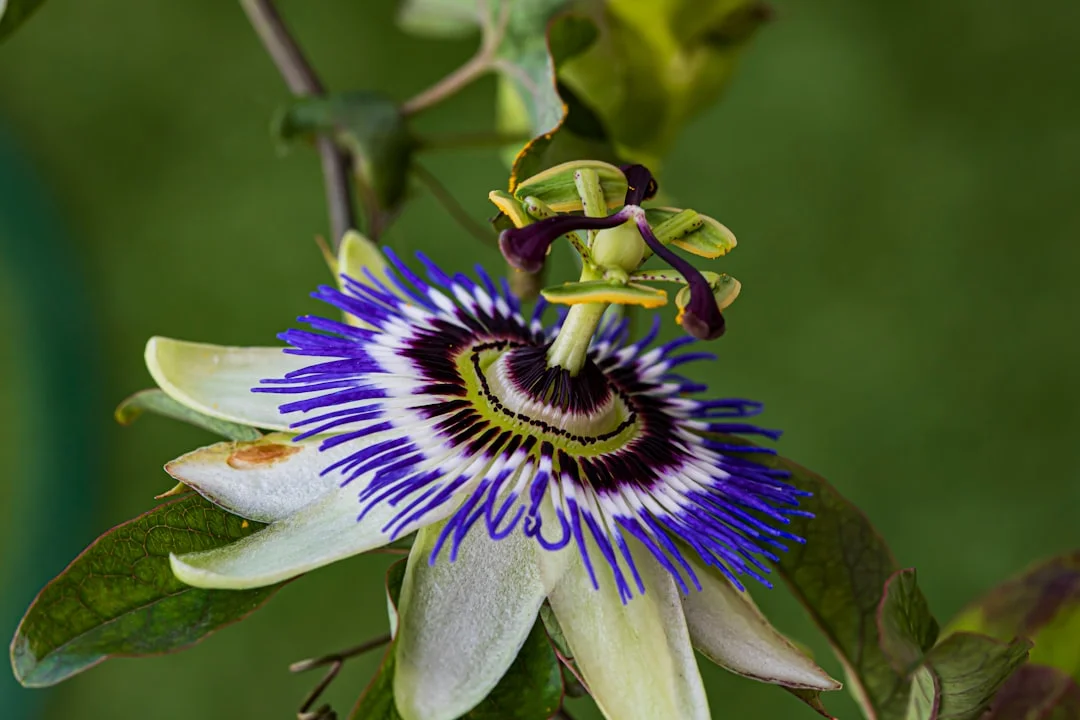
If you’ve ever seen a Krishna Kamal bloom up close, you’ll understand why it stops people in their tracks. The flower appears almost architectural — a flat ring of white petals, then a corona of purple and white filaments radiating outward like a sunburst, with a central column bearing five stamens and three stigmas. It’s one of nature’s most dramatic displays. Many gardeners who grow this plant also love to read about Water Lily Grow Pot India.
Passiflora edulis belongs to the Passifloraceae family and originates from South America — specifically Brazil, Argentina, and Paraguay. Portuguese sailors and missionaries carried it to Europe in the 1500s, where Catholic priests saw symbolic meaning in its structure: the three stigmas representing the three nails of the crucifixion, the corona symbolising the crown of thorns. That’s where the English name ‘passion flower’ comes from — not romantic passion, but the Passion of Christ. For more tips, check out our detailed article on Hibiscus Plant Care India.
In India, it became known as Krishna Kamal, connecting the flower’s blue-purple tones and complex corona to Lord Krishna’s crown. According to Kew Gardens, Passiflora is a genus of over 550 species, making it one of the most species-rich flowering vine families on earth.
Today, it’s grown across five continents — as an ornamental climber, a fruit-bearing vine, a medicinal herb, and a spiritual plant. Understanding its origins is the first step in understanding its needs.
Is Krishna Kamal the Same as Passion Fruit?
Yes — and this surprises many gardeners. Passiflora edulis is both the ornamental Krishna Kamal and the commercial passion fruit vine. The same plant that produces those stunning flowers also yields edible, aromatic fruits. There are two main varieties: Passiflora edulis f. edulis (purple passion fruit, grown in cooler subtropical climates) and Passiflora edulis f. flavicarpa (yellow passion fruit, preferred in tropical lowland regions). Both produce the characteristic corona flowers, though the yellow variety’s blooms tend to be slightly larger. So when you practice good krishna kamal flower care, you’re simultaneously cultivating a fruit-bearing plant with genuine commercial and nutritional value.
Where Does It Grow Naturally?
In the wild, Passiflora edulis grows as a vigorous scrambling vine in forest margins and clearings across Brazil, Bolivia, and Argentina — regions with warm temperatures, high humidity, and well-drained soils. It climbs using tendrils, reaching up to 9 metres (about 30 feet) in ideal conditions. This wild behaviour gives us important clues: it wants support, good drainage, and plenty of sun. It doesn’t want waterlogged roots or deep shade. Keep those original conditions in mind, and krishna kamal flower care becomes much more intuitive.
Krishna Kamal Plant Characteristics at a Glance
Before diving into detailed care advice, it helps to see the full picture in one place. The table below captures every key characteristic of Passiflora edulis — from its root system to its toxicity profile. Refer back to it whenever you need a quick answer.
One detail worth highlighting: Krishna Kamal is a fast grower. In warm climates, it can put on 3–5 metres of new growth in a single season. That vigour is both its greatest asset and its biggest care challenge. Without proper support and seasonal pruning, it becomes a tangled, unproductive mass. With the right structure in place, it’s one of the most rewarding climbers you can grow.
How Long Does It Take to Flower?
In optimal conditions — warm temperatures, full sun, and well-drained soil — Passiflora edulis typically flowers within 12 to 18 months of planting from seed. Cuttings-grown plants flower much faster, often within 6 to 12 months. Once established, a healthy vine will flower prolifically from late spring through summer in temperate zones, or almost year-round in tropical climates. In my experience, the transition from ‘nothing happening’ to ‘covered in blooms’ can seem sudden — which is exactly why patience in the early months is so important for long-term krishna kamal flower care success.
Krishna Kamal Flower Care: Sunlight Requirements
Sunlight is the single most important factor in krishna kamal flower care — and getting it wrong is the most common reason plants fail to bloom. Passiflora edulis needs a minimum of 6 hours of direct sunlight per day. Ideally, aim for 8 hours. In tropical and subtropical regions, some afternoon shade during peak summer heat (above 38°C / 100°F) can actually protect the flowers and foliage from scorching.
Here’s the thing: a Krishna Kamal planted in partial shade will grow leaves. It just won’t flower properly. The plant needs high light intensity to trigger its flowering response. If you’re growing it in the UK or the US Pacific Northwest, a south-facing wall is your best friend — the reflected heat and maximum light exposure make an enormous difference.
In Mediterranean climates like California, southern France, or coastal Australia, full sun exposure year-round is ideal. Meanwhile, gardeners in hot continental climates like the US Midwest or northern India should position the vine where it gets morning sun and is shielded from harsh afternoon radiation in July and August.
Sunlight by Climate Zone
Tropical climates (India, Southeast Asia, Brazil): Full sun with light afternoon shade during extreme heat. The USDA Plant Hardiness Zone equivalent is Zone 10–12. Temperate climates (UK, US Pacific Northwest, Germany): Maximise sun exposure. Plant against a south- or southwest-facing wall. Grow under glass if winters drop below -5°C (23°F). Mediterranean climates (California, Spain, southern Australia): Full sun, excellent drainage — this is the closest match to the plant’s native environment. Arid climates (Middle East, parts of Australia): Full sun with irrigation support and mulching to retain moisture. Early morning watering is essential in these conditions.
Can Krishna Kamal Grow Indoors?
It can — but only with significant light support. A bright south-facing window in a temperate home may not provide enough intensity for consistent flowering. In my experience, indoor Krishna Kamal plants grown without supplemental lighting tend to produce lush foliage but disappointing blooms. If you’re growing indoors in a cold climate, invest in a full-spectrum LED grow light (at least 3000 lumens) and position it 30–45 cm (12–18 inches) above the foliage. A large pot — minimum 30 litres — is non-negotiable indoors. Good krishna kamal flower care indoors is possible, but it demands more effort than outdoor growing.
Soil and Fertilizer Guide for Passiflora edulis
Soil is where most gardeners either set their plant up for success or quietly doom it. Passiflora edulis needs well-drained, moderately fertile soil with a pH between 6.0 and 7.0. It cannot tolerate waterlogged conditions — even brief periods of standing water around the roots can trigger root rot within days.
For garden beds, amend heavy clay soils with coarse sand and organic matter before planting. A ratio of 60% loam, 20% coarse sand, and 20% compost works well across most climates. For container growing, combine a quality peat-free potting mix with perlite (roughly 3:1 ratio) to ensure fast drainage while retaining enough moisture between waterings.
Fertilizer timing matters enormously. During the vegetative growth phase (spring through early summer in temperate zones), use a balanced NPK fertilizer — something like 10-10-10 — to support rapid stem and leaf development. Once flowering begins, switch to a low-nitrogen, high-potassium formula (such as a 5-10-15 ratio). Excess nitrogen after flowering starts will push leafy growth at the expense of blooms. That’s a mistake many enthusiastic gardeners make.
Organic Fertilizer Options
If you prefer organic inputs — and for a fruit-bearing vine, that’s often the wisest choice — bone meal provides excellent phosphorus for root development, while wood ash or kelp meal delivers potassium to boost flowering. Composted banana peel is a popular home remedy, rich in potassium and magnesium. In tropical regions, vermicompost (worm castings) applied monthly during the growing season is particularly effective. According to research supported by the ICAR (Indian Council of Agricultural Research), vermicompost applications significantly improve flowering frequency and fruit set in passion fruit cultivation across tropical growing zones.
pH Testing and Adjustment
Test your soil pH before planting — inexpensive test kits are available at garden centres globally. If your soil is too acidic (below 6.0), add garden lime to raise the pH gradually. If it’s too alkaline (above 7.5), incorporate sulfur or acidic compost materials like pine bark. Retest after 4–6 weeks before adjusting further. This single step — knowing and correcting your pH — can dramatically improve krishna kamal flower care outcomes, especially in regions with naturally alkaline soils like parts of the Middle East, Australia’s inland areas, and the US Southwest.
Watering Krishna Kamal: How Much Is Too Much?
The internet tells you to water passion flowers frequently. Experienced gardeners know that overwatering is the fastest way to kill them.
Passiflora edulis likes consistent moisture — not soggy roots. During the active growing season, water deeply once or twice a week, allowing the top 2–3 cm (about 1 inch) of soil to dry out slightly between waterings. In hot, dry climates like the Middle East or inland Australia, you may need to water every 2–3 days. In cool, damp climates like the UK or the US Pacific Northwest, once a week is usually sufficient.
Always water at the base of the plant, not over the foliage. Wet leaves in humid conditions invite fungal problems almost immediately. Early morning watering is ideal — it gives the roots time to absorb moisture before the heat of the day, while ensuring the foliage dries quickly.
During winter dormancy in temperate zones, reduce watering dramatically. A container plant may only need watering once every two to three weeks during this period. This seasonal adjustment is one of the most overlooked aspects of good krishna kamal flower care.
Signs of Overwatering vs. Underwatering
Have you ever noticed your plant looking limp even after you’ve just watered it? That’s often a sign of overwatering — the roots are suffocating in saturated soil and can’t deliver water to the leaves, even though water is present. Yellowing lower leaves, mushy stems at the base, and a sour smell from the soil all point to too much water. Underwatering, by contrast, produces crispy brown leaf edges, dry curling foliage, and rapid wilting in the afternoon heat. The fix is simple: check soil moisture 5 cm (2 inches) deep before watering. If it’s still damp, wait another day.
How to Grow Krishna Kamal in Any Climate
One of the great pleasures of Passiflora edulis is its adaptability. With the right setup, you can grow it successfully in a tropical garden in Thailand, a container on a London balcony, a courtyard in Dubai, or a backyard in Melbourne. The core principles of krishna kamal flower care stay consistent — what changes is how you apply them.
In tropical regions (USDA Zones 10–12), Krishna Kamal thrives outdoors year-round. Growth is vigorous, flowering is near-continuous, and the main management task is keeping the vine from overtaking its support structure. Pruning twice a year — once after the main flush of fruit, and once in late dry season — keeps the plant productive.
In temperate regions (USDA Zones 7–9 / RHS H3–H4), the plant needs winter protection. In the UK, the RHS recommends growing passion flowers against a sheltered south-facing wall and mulching the root zone with 10–15 cm of straw or bark in autumn. Many UK gardeners grow Passiflora caerulea (the hardy blue passion flower) outdoors and treat Passiflora edulis as a conservatory or greenhouse plant through winter.
In colder zones (USDA Zone 6 and below), treat it as a container plant that comes indoors from October to April. This approach works beautifully in northern Europe, Canada, and the northern United States.
Container Growing Guide
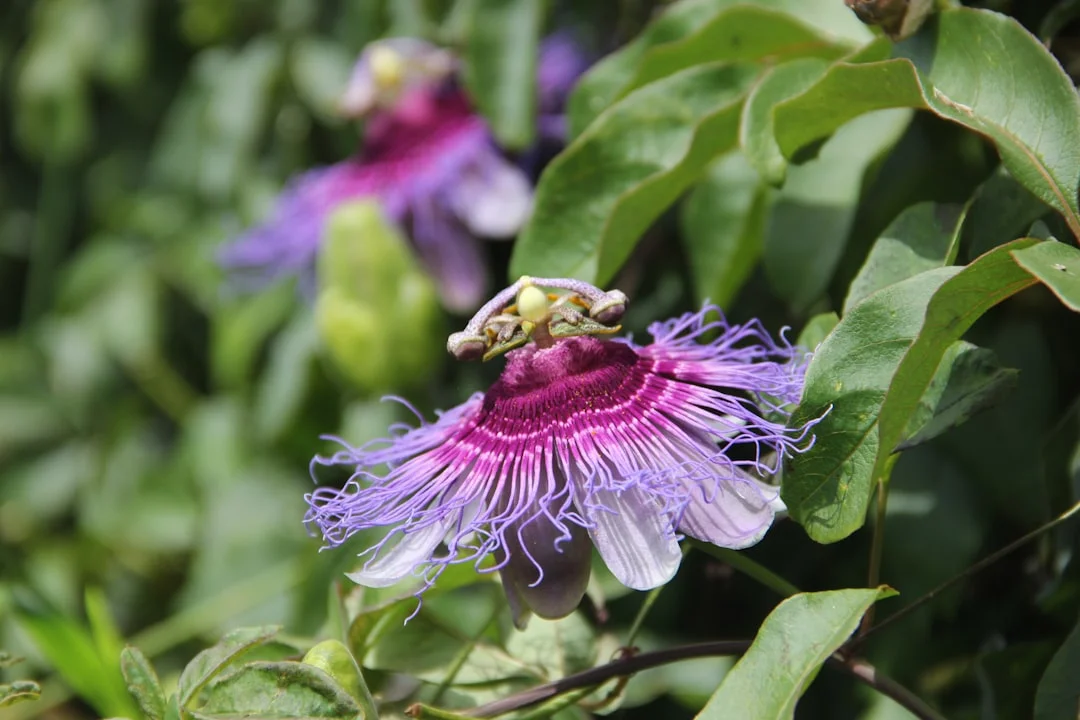
Container growing is one of the most versatile approaches to krishna kamal flower care, especially in cold or temperate climates. Choose a pot of at least 30–40 litres (8–10 gallons) with excellent drainage holes. Use a well-draining mix as described in the soil section. Install a sturdy trellis or bamboo frame — this vine will grow fast and needs support from day one. Repot every 2 years in spring, moving up one pot size. Containers heat up faster than garden soil, so in hot climates you may need to water more frequently. Place the pot in the warmest, sunniest spot available.
Support Structures and Pruning
Passiflora edulis is a vigorous climber that uses coiling tendrils to grip any available support. A robust trellis, wire fence, pergola, or chain-link structure works perfectly. Avoid wooden structures that may rot from the vine’s moisture. Pruning is essential — not optional — for long-term health. After the main flowering and fruiting season, cut back lateral shoots by about one-third. Remove dead, weak, or crossing stems entirely. This opens the canopy to light and air, reduces pest pressure, and stimulates new flowering growth the following season. Many gardeners neglect this step, wondering why their mature vine produces fewer flowers each year.
Propagation: Growing New Plants from Cuttings or Seeds
Growing new Krishna Kamal plants is one of the most rewarding parts of krishna kamal flower care. You have two main options: stem cuttings or seeds. Both work well, but they have different timelines and success rates depending on your climate and resources.
Stem cuttings are faster and more reliable. Take a cutting from a healthy, non-flowering stem in late spring or early summer — the cutting should be 15–20 cm (6–8 inches) long with at least two nodes. Remove the lower leaves, dip the cut end in rooting hormone powder (available at any garden centre globally), and insert it into a mix of equal parts coarse sand and perlite. Keep the cutting moist and in a warm, bright location — but out of direct sun until roots form. Roots typically develop within 4–6 weeks.
Seed propagation takes longer but is fascinating to watch. Fresh seeds germinate more reliably than dried ones — ideally, sow seeds within a few weeks of extracting them from ripe fruit. Soak seeds in warm water for 24 hours before sowing to soften the seed coat. Sow at a depth of 5–10 mm in a warm seedling mix, maintain a soil temperature of 20–25°C (68–77°F), and expect germination in 2–4 weeks.
Step-by-Step Cutting Propagation
First, select a healthy stem with no signs of disease or pest damage. Next, cut just below a leaf node using clean, sharp secateurs — disinfect the blade with isopropyl alcohol beforehand. Then, remove all leaves from the lower half of the cutting. After that, dip the cut end in rooting hormone and insert it 4–5 cm deep into your rooting medium. Cover the pot loosely with a clear plastic bag to retain humidity. Finally, place it in a warm spot at 20–24°C (68–75°F) and check for rooting after 4 weeks by gently tugging — resistance means roots have formed. Once rooted, gradually acclimatise to outdoor or brighter conditions over 7–10 days before transplanting.
Common Problems and How to Fix Them
Even with excellent krishna kamal flower care, problems occasionally arise. The good news is that most issues have clear, fixable causes. Here are the five most common ones — and what to do about each.
Root rot is the most serious and most common issue. It’s caused by overwatering or poor drainage. The fix: improve drainage immediately, reduce watering frequency, and if the plant is in a container, repot into fresh, well-draining mix after trimming affected roots.
Powdery mildew appears as a white, dusty coating on leaves — most common in humid conditions with poor air circulation. Spray with a diluted neem oil solution (5 ml neem oil + 1 ml dish soap per litre of water) every 7–10 days until resolved.
Jasmine mites and spider mites are common in hot, dry conditions. Look for fine webbing on the undersides of leaves and stippled, faded foliage. A strong water spray and weekly neem oil treatments usually resolve mild infestations.
Yellow leaves can signal several things: overwatering, nitrogen deficiency, or iron chlorosis (common in alkaline soils). Test your soil before applying any treatment.
Failure to flower is almost always a light problem. If your vine is lush and green but not blooming, it almost certainly needs more direct sun.
Pests: Identification and Organic Control
The most troublesome pests for Passiflora edulis globally are aphids, whiteflies, spider mites, and passion vine hopper (a sap-sucking insect common in New Zealand and Australia). For aphids and whiteflies, introduce beneficial insects like ladybirds and lacewings where possible, or apply insecticidal soap spray every 5–7 days. For spider mites in dry conditions, increase ambient humidity and apply neem oil. Importantly, avoid broad-spectrum chemical pesticides on a fruiting vine — especially if you plan to eat the passion fruits. Organic controls are both safer and sufficiently effective for most infestations in home gardens.
Disease Management
Fusarium wilt is the most serious disease affecting passion fruit cultivation commercially and in home gardens. It causes sudden wilting despite moist soil, yellowing from the base upward, and internal discolouration of the stem. Unfortunately, there’s no effective cure for established fusarium wilt — affected plants should be removed and destroyed (not composted). Prevention is the only strategy: use disease-free planting material, practice crop rotation in garden beds, and avoid injuring roots during cultivation. In regions like Australia and tropical Asia where fusarium is prevalent, grafted rootstocks resistant to the pathogen are available from specialist nurseries.
Seasonal Care Calendar for Krishna Kamal
Adapting your care routine to the seasons is one of the most sophisticated aspects of krishna kamal flower care — and one of the most rewarding. The following guidance covers both Northern Hemisphere and Southern Hemisphere gardeners, since the seasons are reversed.
Spring (March–May in the Northern Hemisphere / September–November in Australia and New Zealand): This is the most important season. Resume regular watering as temperatures rise. Apply a balanced fertilizer to kick-start growth. Check support structures and repair or extend trellising before the vine puts on its rapid spring growth. This is also the ideal time for propagation by cuttings.
Summer (June–August / December–February): Peak flowering and fruiting season in most climates. Water consistently, switch to a high-potassium fertilizer, and monitor closely for pests. In tropical regions, this may be the monsoon season — reduce irrigation accordingly and ensure drainage is excellent.
We’re currently in June — which means Northern Hemisphere gardeners should be seeing the first flush of flowers appearing right now. If your vine isn’t flowering yet, revisit the sunlight and fertilizer sections above.
Autumn (September–November / March–May): Harvest fruits as they ripen. Begin reducing fertilizer applications. After the main crop, do a light pruning of lateral shoots. In temperate zones, apply a mulch of bark or straw around the root zone before the first frosts.
Winter (December–February / June–August): In tropical zones, the plant continues growing with reduced vigour. In temperate zones, the vine may die back to the ground — this is normal. Protect roots with mulch, keep container plants frost-free, and resist the urge to water frequently.
Cold Climate Winter Protection
For gardeners in USDA Zones 7 and below (temperatures regularly dropping below -5°C / 23°F), winter protection is non-negotiable. After the first light frost, cut the vine back to about 30 cm (12 inches) above the ground. Pile 15–20 cm of straw, bark mulch, or dry leaves over the root zone. In very cold regions (Zone 6 and below), dig up container plants and move them to a cool, frost-free garage or greenhouse. They won’t need much water — just enough to keep roots from desiccating completely. New growth will emerge from the base in spring, often vigorously.
Medicinal, Culinary, and Cultural Uses
Krishna Kamal is far more than a beautiful garden climber. Across cultures and continents, Passiflora edulis and its close relatives have been valued for their medicinal properties, culinary versatility, and deep spiritual significance.
Medicinally, passion flower extracts — particularly from Passiflora incarnata, a close relative — have been extensively studied for their anxiolytic (anxiety-reducing) and sedative properties. A 2011 clinical trial published in NIH/PubMed found that passionflower extract was as effective as the pharmaceutical oxazepam for treating generalised anxiety disorder, with fewer side effects. The active compounds include flavonoids, alkaloids, and glycosides that act on GABA receptors in the brain.
In Ayurveda, passion flower is referenced under the concept of ‘medhya rasayana’ — herbs that promote mental clarity and calm. While the Charaka Samhita doesn’t directly name Passiflora (which is a New World plant), practitioners in modern integrative Ayurvedic medicine, particularly in Kerala and Maharashtra, use passion flower preparations for managing insomnia and anxiety, as documented by the Ministry of Ayush.
Culturally, the plant holds profound meaning in several traditions. In Brazil, it’s a national symbol. In Colombia, the passion fruit (maracuyá) is a central ingredient in cuisine, beverages, and celebrations. In India, the name Krishna Kamal connects the flower’s intricate beauty directly to devotional practice.
Culinary Uses of the Fruit
The passion fruit produced by Passiflora edulis is intensely aromatic — sweet, tart, and tropical. It’s eaten fresh by scooping out the pulp with a spoon, and is used globally in juices, smoothies, desserts, sauces, and cocktails. The yellow variety (f. flavicarpa) is more acidic and primarily used in commercial juice production, while the purple variety is preferred for fresh eating. Nutritionally, passion fruit is an excellent source of vitamin C, fibre, and antioxidants. It also contains small amounts of iron, magnesium, and B vitamins. In Australia and New Zealand, passion fruit is a beloved topping for the iconic pavlova dessert.
Safety, Toxicity, and Contraindications
Passion flower preparations are generally considered safe for most adults when used as directed. However, there are important cautions. Passiflora should NOT be used during pregnancy — it has historically been used as a uterine stimulant, and its safety in pregnancy has not been established. High doses of passionflower extracts may cause drowsiness — avoid combining with sedative medications or alcohol. The leaves and stems of some Passiflora species contain trace amounts of cyanogenic glycosides, though the levels found in Passiflora edulis are generally considered non-toxic at culinary quantities. Regarding pets: passion flower is listed by the ASPCA as potentially toxic to dogs and cats — keep fallen fruit and pruned stems away from pets. Always consult a healthcare provider before using medicinal preparations.
Frequently Asked Questions
What is the best way to start krishna kamal flower care for a beginner?
Start with a healthy cutting or nursery-grown plant rather than seeds — it's faster and more reliable. Plant in well-draining soil with a pH of 6.0–7.0, in the sunniest spot available. Install a trellis immediately. Water deeply but infrequently, allowing the topsoil to dry slightly between waterings. In the first season, focus on establishing strong roots and structure before expecting blooms. Good krishna kamal flower care from the start prevents the most common beginner mistakes: overwatering and insufficient light.
Can I grow Krishna Kamal indoors in a cold climate like Canada or the UK?
Yes, but it requires effort. In cold climates, grow Passiflora edulis in a large container (minimum 30 litres) placed near the brightest south-facing window available. Supplement with a full-spectrum LED grow light during winter months. Keep temperatures above 10°C (50°F) at all times. Reduce watering significantly in winter. Move the pot outdoors in late spring once frost risk has passed, and bring it back inside before the first autumn frost. With this approach, indoor krishna kamal flower care is absolutely achievable in northern climates.
Is Krishna Kamal safe for pets and children?
The fruit pulp is safe for humans, including children, in normal food quantities. However, the ASPCA lists passion flower as potentially toxic to dogs and cats — the leaves, stems, and roots contain compounds that can cause gastrointestinal upset, drowsiness, and liver issues in animals. Keep pruned stems and fallen fruit away from pets. For young children, the fruit is safe to eat but keep them away from medicinal preparations, which contain concentrated compounds not appropriate for children without medical guidance.
Why is my Krishna Kamal not flowering despite healthy growth?
The most common cause is insufficient sunlight. If the vine looks lush and green but won't bloom, it almost certainly needs more direct sun — aim for at least 6–8 hours daily. A second common cause is too much nitrogen fertilizer, which pushes leafy growth at the expense of flowers. Switch to a high-potassium, low-nitrogen feed once the vine is established. Overcrowding and poor air circulation can also inhibit flowering. A light prune to open up the canopy often triggers a new flush of blooms within 4–6 weeks.
How do I grow Krishna Kamal in a hot, arid climate like the Middle East or inland Australia?
In arid climates, focus on three things: consistent irrigation, root zone protection, and afternoon shade. Water every 2–3 days during summer heat, preferably early morning. Apply a thick mulch layer (8–10 cm) around the base to retain soil moisture and moderate root temperature. If temperatures regularly exceed 40°C (104°F), provide light afternoon shade using a shade cloth. Choose a location where the vine's roots stay cool — near a wall that shades the ground at midday. Container growing is often easier in extreme heat, as you can move the pot to manage exposure.
How long does it take for passion fruit to form after the flowers appear?
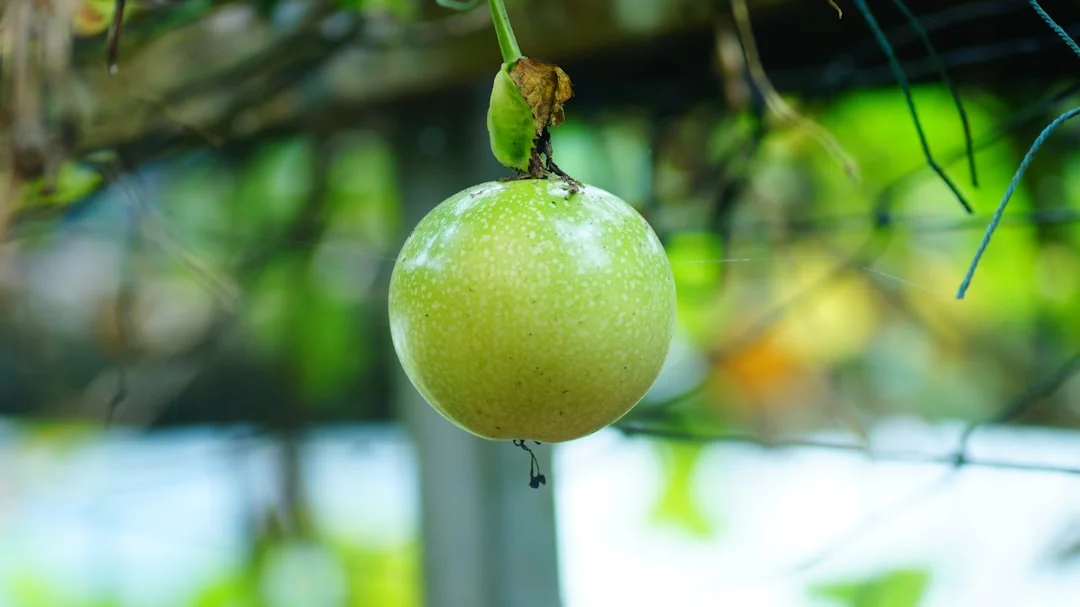
After successful pollination, passion fruit typically takes 60–80 days to ripen from flower opening. The flower is open for just one day, so pollination must happen quickly — usually by bees, carpenter bees, or hand pollination if growing indoors or in a region with low bee activity. You'll know the fruit is ripe when the skin changes colour (purple or yellow depending on the variety) and the fruit begins to wrinkle slightly. In tropical climates, you may have multiple fruiting cycles per year.
What are the key seasonal krishna kamal flower care tasks in temperate climates?
In temperate climates, the seasonal krishna kamal flower care calendar looks like this: Spring — resume watering, apply balanced fertilizer, check trellis, take cuttings. Summer — water consistently, switch to high-K fertilizer, monitor for pests, enjoy peak flowering. Autumn — harvest ripe fruits, prune laterals by one-third, reduce fertilizing, apply root mulch before first frost. Winter — drastically reduce watering, protect roots from freezing, move containers indoors if needed. Following this rhythm — rather than a single fixed routine year-round — is what separates thriving vines from struggling ones.
Can Krishna Kamal be grown in a small apartment balcony garden?
Absolutely — with the right container and support. Use a pot of at least 25–30 litres with excellent drainage. Install a compact trellis, fan-shaped support, or train the vine along balcony railings. Ensure the balcony receives at least 6 hours of direct sun daily. Water more frequently than you would in a ground bed, since containers dry out faster. Feed every 2–3 weeks during the growing season. A balcony-grown Krishna Kamal will be smaller and produce fewer fruits than a garden vine, but it will flower beautifully and create a stunning living privacy screen.
Final Thoughts
Krishna kamal flower care is one of those gardening topics that rewards anyone willing to look past the surface. This plant is not fragile. It’s not difficult. It simply has specific, non-negotiable needs — ample sunlight, sharp drainage, smart watering, and seasonal rhythm — and once you meet those needs, it gives back generously with some of the most extraordinary flowers in the plant world. Whether you’re growing Passiflora edulis in a tropical garden in Southeast Asia, a sunny courtyard in the Mediterranean, a container on a London balcony, or a backyard greenhouse in Canada, the core principles of krishna kamal flower care remain the same. Start with good drainage. Give it all the sun you can. Feed it at the right time. Prune it with confidence. And protect its roots through winter if you’re in a cold climate. Do those things consistently, and this vine will reward you with blooms that stop visitors mid-step — and passion fruits that taste like nothing else you’ve ever grown.

