
⏱ 37 min read
Table of Contents
- What Are Trailing Indoor Plants for Shelves?
- Benefits of Growing Trailing Indoor Plants on Shelves
- Best Trailing Plants to Grow on Shelves
- Soil and Fertiliser for Trailing Shelf Plants
- Watering Trailing Indoor Plants Correctly
- Sunlight and Light Requirements
- Common Problems and How to Fix Them
- Propagation: Growing More Plants for Free
- Seasonal Care Through the Year
- Creative Uses and Styling for Shelves
Trailing indoor plants for shelves are one of the most transformative things you can add to any room — and yet most people either pick the wrong plant, place it in the wrong spot, or never see it trail at all. That’s a shame, because a well-placed pothos or hoya cascading down three shelves of a bookcase is genuinely breathtaking. Trailing indoor plants for shelves work in almost every climate on earth — from humid apartments in Singapore to dry heated flats in Toronto or bright Mediterranean rooms in southern Spain. The key is understanding what each plant needs and matching it to what you can actually provide. In this guide, you’ll learn which plants trail best, how to care for them across different climates and seasons, how to fix the most common problems, and — most importantly — why your previous attempts may have failed. There’s also one propagation trick that experienced growers swear by, which I’ll save for the propagation section. By the end, you’ll know exactly how to turn any shelf into a living, cascading display. If you enjoy growing this plant, you might also find our guide on pothos care and propagation very useful.
Quick Highlights
- Discover which trailing indoor plants for shelves grow best in tropical, temperate, arid, and cold climates
- Learn the exact soil mix, watering rhythm, and light conditions each trailing plant needs to thrive
- Identify and fix the most common problems — yellowing leaves, root rot, and stunted trailing growth
- Propagate your trailing plants for free using simple stem-cutting and water-rooting methods
- Understand seasonal care adjustments that keep your plants lush through summer heat and winter dry spells
- Explore the air-purifying and biophilic benefits backed by NASA and independent horticultural research
Plant Characteristics at a Glance
| Common Name | Trailing indoor plants (Pothos, Philodendron, Hoya, Tradescantia, String of Pearls, and others) |
| Scientific Name | Various: Epipremnum aureum, Philodendron hederaceum, Hoya carnosa, Tradescantia zebrina, Curio rowleyanus, Sedum morganianum, Ceropegia woodii |
| Family | Araceae (pothos, philodendron), Apocynaceae (hoya), Commelinaceae (tradescantia), Asteraceae (string of pearls), Crassulaceae (burro's tail), Apocynaceae (string of hearts) |
| Origin | Tropical Asia (pothos, hoya), Central and South America (philodendron, tradescantia), South Africa (string of pearls), Mexico (burro's tail) |
| Habitat | Tropical forest floors, humid canopies, rocky outcrops, and semi-arid cliff faces depending on species |
| Plant Type | Perennial trailing and vining herbs or subshrubs (mostly evergreen) |
| Indoor Plant | Yes — all species listed are well-suited to indoor cultivation worldwide |
| Outdoor Plant | Yes in USDA zones 10–12 (RHS H1a–H1c); seasonal outdoor use in zones 7–9 in summer only |
| Leaves | Varies by species: heart-shaped (pothos, philodendron), oval waxy (hoya), bead-like (string of pearls), striped purple-silver (tradescantia) |
| Flowers | Pothos: rarely flowers indoors; Hoya: waxy, star-shaped clusters with honey scent; Tradescantia: small three-petalled pink or purple blooms; String of hearts: tubular purple flowers |
| Flowering Season | Hoya: late spring to summer; Tradescantia: spring through autumn; most aroids rarely flower indoors |
| Fruit | Not typically produced indoors; hoya produces seed pods on rare occasions |
| Seeds | Viable seeds possible but rarely used for propagation; most are propagated vegetatively |
| Roots | Fibrous root systems with aerial roots on many aroids; succulent trailers have fine, drought-tolerant roots |
| Height | Trailing length: 30cm–3m+ (1–10 ft) depending on species, age, and conditions |
| Growth Rate | Fast (pothos, tradescantia: 30–40cm/month in growing season); Moderate (philodendron, hoya); Slow (string of pearls, burro's tail) |
| Light Requirements | Low to bright indirect light (1,000–5,000 lux); succulent types need direct sun; aroids tolerate shade |
| Soil Requirements | Well-draining, slightly acidic to neutral (pH 6.0–7.0); 60% compost + 20% perlite + 20% orchid bark for aroids; higher grit ratio for succulents |
| Water Requirements | Aroids: water when top 2–3cm dries out (roughly weekly in summer); succulents: every 2–3 weeks in summer, monthly in winter |
| Temperature Requirements | Most tropical trailers: 15–30°C (59–86°F); succulent trailers: 10–35°C (50–95°F); avoid frost for all species |
| Humidity Requirements | Aroids prefer 50–70% relative humidity; succulents tolerate 30–50%; most adapt to average household humidity of 40–60% |
| Propagation | Stem cuttings in water or soil (aroids); stem cuttings in humid media (hoya); leaf-and-stem cuttings on dry mix (succulents) |
| Uses | Interior decoration, air purification, biophilic design, shelf and bookcase styling, hanging basket displays |
| Medicinal Properties | Pothos and philodendrons are not used medicinally. Hoya species have limited traditional use in Ayurvedic practice as poultices. No evidence-based medicinal uses for most species. |
| Toxicity | Pothos and philodendron: toxic to cats, dogs, and children (calcium oxalate crystals); string of pearls: toxic to pets and humans if ingested; burro's tail and tradescantia: mildly irritant. ASPCA lists several species as toxic to pets. |
| Cultural Significance | Pothos is widely used in Southeast Asian homes as a symbol of prosperity; trailing plants in general are central to biophilic interior design globally; hoyas are popular in traditional Taiwanese and Cantonese households |
| Common Pests | Spider mites, mealybugs, fungus gnats, scale insects, aphids (less common indoors) |
| Common Diseases | Root rot (Pythium spp.), leaf spot fungal diseases, powdery mildew (rare indoors), bacterial soft rot from overwatering |
| Special Care Tips | Wipe dusty leaves with a damp cloth monthly to maintain photosynthesis; rotate pots quarterly for even growth; prune leggy stems in spring to encourage bushier, denser trailing |
| Cultural Practices | Pinching back growing tips in early spring promotes branching and fuller trailing; training stems along a shelf edge with small hooks or clips creates neater displays |
| Vastu Direction | East or north-facing shelves are recommended in Vastu Shastra for trailing plants, promoting positive energy flow and prosperity in the home |
Trailing indoor plants for shelves Names in Different Languages
| English | Trailing plants / Trailing vines |
| Mandarin Chinese | 垂吊植物 (Chuí diào zhíwù) |
| Spanish | Plantas colgantes / Plantas trepadoras |
| Hindi | लटकने वाले पौधे (Latakne wale paudhe) |
| Gujarati | લટકતા છોડ (Latakta chhod) |
| Arabic | نباتات متدلية (Nabātāt mutadalliya) |
| Bengali | ঝুলন্ত গাছ (Jhulanto gach) |
| Portuguese | Plantas rasteiras / Plantas pendentes |
| Russian | Ампельные растения (Ampel'nyye rasteniya) |
| Japanese | つる性植物 / 垂れ下がる植物 (Tsuruse shokubutsu) |
| Punjabi | ਲਟਕਦੇ ਪੌਦੇ (Latkade paudhe) |
| German | Hängepflanzen / Rankenpflanzen |
| Javanese | Tanaman gantung / Tanaman menjalar |
| Korean | 늘어지는 식물 (Neul-eojineun sikmul) |
| French | Plantes retombantes / Plantes grimpantes |
| Telugu | వేలాడే మొక్కలు (Vēlāḍē mokkalu) |
| Marathi | लोंबणाऱ्या वनस्पती (Lombnaṛyā vanaspatī) |
| Tamil | தொங்கும் செடிகள் (Thoṅkum seṭikaḷ) |
| Urdu | لٹکنے والے پودے (Latakne wale podey) |
| Turkish | Sarkan bitkiler / Sarkık bitkiler |
| Vietnamese | Cây leo / Cây thả dài |
What Are Trailing Indoor Plants for Shelves?
Trailing indoor plants for shelves are plants whose stems naturally grow downward or outward rather than upward — creating long, cascading vines or draping foliage when placed on an elevated surface. Unlike upright houseplants, these species have evolved in environments where they sprawl across forest floors, climb tree trunks, or hang from canopy branches. When you place them on a shelf, they do exactly what they’re designed to do: they grow toward the light and let gravity pull their stems into beautiful, flowing curtains of green. For more tips, check out our detailed article on pothos care and propagation.
The most popular trailing plants for shelves include pothos (Epipremnum aureum), heartleaf philodendron (Philodendron hederaceum), hoya (Hoya carnosa), string of pearls (Senecio rowleyanus), inch plant (Tradescantia zebrina), and Boston ivy lookalikes like Swedish ivy (Plectranthus verticillatus). Each one has a different texture, growth speed, and care requirement — so there’s a trailing plant for virtually every home, every light level, and every gardening skill level. If you enjoy growing this plant, you might also find our guide on pothos care and propagation very useful.
According to Kew Gardens, many of these species belong to diverse plant families spanning tropical Asia, South America, and Africa — which explains why their care needs can differ so dramatically. Understanding trailing indoor plants for shelves starts with knowing a plant’s natural habitat, because that tells you everything about what it wants from your home.
How Are Trailing Plants Different from Climbing Plants?
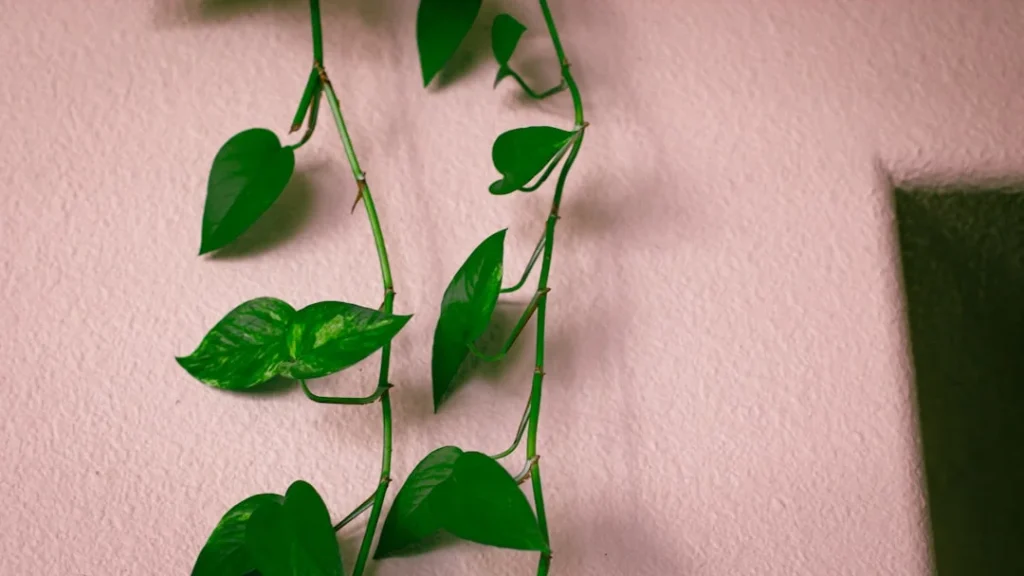
It’s a question many gardeners ask, and the answer matters for shelf styling. Climbing plants — like monstera or pothos trained on a moss pole — use aerial roots or tendrils to attach to a vertical surface and grow upward. Trailing plants, by contrast, have flexible stems that hang or sprawl naturally without needing support. That said, many trailing plants are also capable climbers. Pothos, for instance, will trail downward from a shelf AND climb upward if given a pole — it’s the same plant, just responding to different conditions. For shelf use, you want to encourage the downward trail by letting stems hang freely rather than guiding them upward. Many gardeners who grow this plant also love to read about pothos care and propagation.
Which Plant Families Dominate Trailing Shelves?
Most trailing shelf plants come from just a handful of families. The Araceae family — which includes pothos and philodendrons — dominates because these plants evolved as forest-floor scramblers in tropical regions. The Apocynaceae family gives us hoyas, which are native to tropical Asia and Australia. The Cactaceae and Asteraceae families contribute succulent trailers like string of pearls and string of hearts. Tradescantia species come from Central and South America. Knowing the family tells you roughly how much humidity, light, and warmth a plant prefers — which makes care much easier to remember. For more tips, check out our detailed article on pothos care and propagation.
Benefits of Growing Trailing Indoor Plants on Shelves
There’s a reason trailing indoor plants for shelves have exploded in popularity across Instagram, Pinterest, and interior design magazines worldwide. They offer something that almost no other décor element can: living, growing beauty that changes with the seasons.
First, there’s the air quality angle. NASA’s Clean Air Study — originally conducted in the late 1980s but still widely referenced — found that pothos and philodendrons can reduce airborne toxins including formaldehyde and benzene in enclosed spaces. More recent research published in the journal HortScience (2019) confirmed that even a small number of houseplants can meaningfully improve indoor humidity levels, which is particularly valuable in centrally heated winter homes in the UK, Canada, and northern Europe.
Furthermore, the psychological benefits are well-documented. A 2015 study by the University of Exeter found that adding plants to offices improved wellbeing by 47% and productivity by 38%. Trailing plants are especially effective here because their cascading form fills vertical space — creating a sense of lush abundance even in a small room or studio apartment. In fact, many interior designers in Tokyo, Amsterdam, and New York specifically use trailing shelf plants to make low-ceilinged rooms feel taller and more open.
Finally, trailing plants are among the most forgiving houseplants you can grow. Most of the popular species tolerate low light, irregular watering, and a wide range of temperatures — making them perfect for beginners and experienced growers alike.
Biophilic Design and Mental Wellbeing
Biophilic design — the principle of incorporating natural elements into living and working spaces — is now a mainstream concept in architecture and interior design globally. Trailing plants are one of the easiest and most affordable ways to bring this principle into a home. Their organic, asymmetric growth patterns are inherently calming to look at, in contrast to rigid furniture lines. Research from the National University of Singapore (2019) found that exposure to trailing greenery in indoor environments reduced reported stress levels by up to 37% compared to plant-free rooms. Whether you’re setting up a home office in Melbourne or a study corner in Mumbai, a trailing plant on a nearby shelf genuinely helps.
Aesthetic and Styling Benefits
Beyond wellness, trailing plants solve a very practical styling problem: what to do with the tops of bookshelves, kitchen cabinets, and bathroom wall shelves. These surfaces are notoriously difficult to decorate — too narrow for artwork, too high for objects you need to reach. Trailing plants fill this space perfectly. A single mature pothos can trail two to three metres (six to ten feet) over time, effectively creating a living wall at zero extra cost. In my experience, pairing two or three different trailing plants on the same shelf — say, a golden pothos next to a Tradescantia fluminensis — creates a layered texture effect that looks intentional and lush, without requiring any floral arrangement skills.
Best Trailing Plants to Grow on Shelves
Not all trailing plants are equal, and choosing the right one for your environment makes the difference between a plant that cascades magnificently and one that sits sulking for years. Here’s a breakdown of the most reliable trailing indoor plants for shelves, suited to different climates and light levels.
Pothos (Epipremnum aureum) is the undisputed champion for beginners. It tolerates low light, infrequent watering, and a wide temperature range of 15–30°C (59–86°F). It trails fast — often growing 30–40cm (12–16 inches) per month in good conditions — and its heart-shaped, waxy leaves come in dozens of variegated forms. The RHS recommends it as one of the top five beginner houseplants for a reason.
Heartleaf philodendron (Philodendron hederaceum) is almost as tough as pothos and produces slightly larger, velvety-soft leaves. It prefers slightly more humidity than pothos, making it ideal for bathrooms or kitchens in temperate climates.
Hoya carnosa is slower-growing but rewards patience with thick, succulent-like leaves and — if you’re lucky — clusters of waxy, star-shaped flowers that smell faintly of chocolate or vanilla.
String of pearls (Curio rowleyanus, formerly Senecio rowleyanus) is stunning but temperamental. It needs bright light and very infrequent watering — it’s far better suited to Mediterranean, arid, or bright temperate climates than to dim northern apartments.
Tradescantia zebrina is fast, colourful, and almost unkillable. Its silver-striped purple leaves look incredible trailing from a dark wooden shelf, and it’s one of the few trailing plants that actually prefers slightly lower light.
Best Trailing Plants for Low Light Shelves
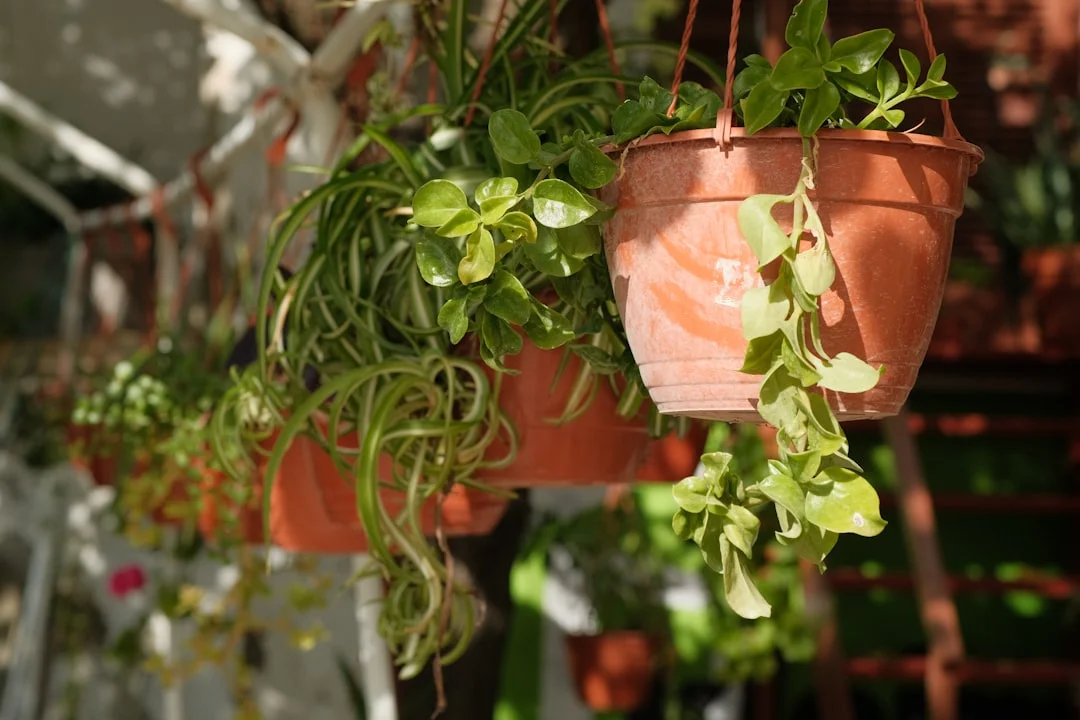
If your shelf is more than two metres from a window, your options narrow considerably — but they don’t disappear. Pothos, heartleaf philodendron, and Tradescantia zebrina are your top three choices for genuinely low-light conditions. Pothos is the most tolerant, surviving even under artificial office lighting. However, in low light, growth slows significantly and variegated varieties may revert to solid green as the plant maximises its chlorophyll. Similarly, heartleaf philodendron will trail more slowly but remain healthy as long as temperatures stay above 15°C (59°F). Avoid string of pearls, hoya, or any succulent-type trailers in low light — they’ll simply rot or stagnate.
Best Trailing Plants for Bright, Sunny Shelves
Shelves near south-facing windows (in the Northern Hemisphere) or north-facing windows (in the Southern Hemisphere) offer the brightest indirect light, and a wider range of trailing plants will thrive here. Hoya carnosa, string of hearts (Ceropegia woodii), string of pearls, and burro’s tail (Sedum morganianum) all love this kind of bright, warm position. In tropical climates like those in Southeast Asia, East Africa, or northern Australia, these plants can often go outdoors on a shaded veranda — where they’ll grow dramatically faster. That said, direct afternoon sun through glass can scorch even sun-loving trailers, so diffuse the light with a sheer curtain if needed.
Best Trailing Plants for Cold or Temperate Homes
Gardeners in the UK, northern Europe, Canada, or the US Pacific Northwest face a specific challenge: low winter light and cool ambient temperatures. In these climates, pothos and heartleaf philodendron remain the safest bet year-round. Swedish ivy (Plectranthus verticillatus) is also underrated in temperate climates — it tolerates cooler temperatures down to about 10°C (50°F) and recovers quickly from cold snaps. According to USDA plant hardiness guidelines, most popular trailing houseplants are rated for zones 10–12 outdoors, meaning they’re tropical species that need to be brought indoors for winter in most of the world. Supplementing with a grow light during short winter days makes a significant difference to both growth rate and leaf colour.
Soil and Fertiliser for Trailing Shelf Plants
Here’s where many gardeners make a critical mistake: they use standard potting compost straight from the bag and wonder why their trailing plants develop root rot or stay stubbornly small. The issue is drainage — or rather, the lack of it.
Most trailing shelf plants come from environments where soil is loose, fast-draining, and rich in organic matter. Forest floors in tropical Asia or South America don’t have the dense, moisture-retaining clay that many standard potting mixes approximate. To mimic those conditions, you need to amend your compost.
A reliable all-purpose mix for most aroids (pothos, philodendron) is: 60% good-quality potting compost, 20% perlite (a volcanic glass that improves drainage — available in garden centres worldwide for around $5–8/£4–6 per bag), and 20% orchid bark or coco coir. This creates a mix that holds just enough moisture while letting excess water drain freely.
For succulent-type trailers like string of pearls or burro’s tail, shift the ratio toward 40% compost, 40% perlite or coarse sand, and 20% grit. These plants are adapted to drought and will rot in a moisture-retentive mix.
For fertilising, a balanced liquid fertiliser (NPK 10-10-10 or similar) diluted to half-strength works well for most trailing aroids during the growing season — spring through early autumn in the Northern Hemisphere, or September through April in the Southern Hemisphere. Apply monthly, not weekly. Overfeeding causes salt buildup in the soil, which burns roots and causes brown leaf tips.
pH and Soil Nutrients: What You Need to Know
Most trailing houseplants prefer a slightly acidic to neutral pH — around 6.0 to 7.0. This range ensures that key nutrients like iron, manganese, and phosphorus remain soluble and available to roots. If your tap water is very alkaline (common in parts of the UK, the Middle East, and parts of Australia), over time it can raise soil pH and cause nutrient deficiencies that look like yellowing between leaf veins — a condition called chlorosis. The fix is simple: flush the soil occasionally with rainwater or filtered water, or add a small amount of sulphur powder to the mix at repotting time. In my experience, most trailing plants are more forgiving about soil chemistry than about drainage, so focus on drainage first.
Repotting Trailing Plants on Shelves
Trailing plants on shelves need repotting less often than you might think — typically every two years. A slightly root-bound plant actually trails more vigorously, because the energy that would go into root expansion gets redirected into stem growth. When you do repot, go up only one pot size (about 2–3cm/1 inch wider in diameter). Going too large too fast results in excess wet soil around the roots, which invites rot. The best time to repot is early spring, just as growth accelerates. After repotting, keep the plant out of direct sun for a week to reduce transplant stress.
Watering Trailing Indoor Plants Correctly
The internet tells you to water houseplants daily. Experienced gardeners know that’s often the fastest way to kill them.
Most trailing indoor plants for shelves need far less water than beginners assume. Pothos and philodendrons do best when the top 2–3cm (about an inch) of soil dries out between waterings. In practice, this means watering roughly once a week in summer and every 10–14 days in winter — though this varies enormously by climate. In a heated flat in Helsinki in January, the soil may stay moist for three weeks. In a sun-drenched apartment in Dubai or Chennai, it might dry out in four days.
The most reliable method is the finger test: push your finger into the soil up to the first knuckle. If it feels moist, wait. If it feels dry, water thoroughly until water runs out of the drainage hole, then stop.
For succulent trailers like string of pearls or burro’s tail, allow the soil to dry almost completely between waterings — typically every two to three weeks in summer and monthly in winter.
One detail many people miss: the position on the shelf matters. Plants on higher shelves, closer to heating vents or light sources, dry out faster. Always check each plant individually rather than watering everything on the same schedule.
Water quality matters too. Tap water is fine for most trailing plants, but if yours is heavily chlorinated (common in some US cities and parts of the Middle East), leaving water in an open jug overnight allows the chlorine to dissipate before use.
Signs of Overwatering vs Underwatering
These two problems are often confused because they look similar — wilted, sad-looking plants. However, the clues differ on closer inspection. Overwatered plants have soft, mushy stems at the base, yellowing lower leaves, and soil that smells slightly sour or earthy. Root rot — caused by the fungal pathogen Pythium or Phytophthora — sets in fast in waterlogged soil and can kill a plant within weeks if unchecked. Underwatered plants, on the other hand, have dry, crispy leaf edges, lightweight pots, and leaves that look wrinkled or papery. The fix for underwatering is simple: water. The fix for overwatering takes more work — repot into fresh, dry soil, trim rotted roots, and hold off watering for at least a week.
Sunlight and Light Requirements
Light is the single biggest variable when growing trailing indoor plants for shelves — and it’s the area where most placement decisions go wrong.
Pothos, heartleaf philodendron, and Tradescantia all perform well in medium indirect light — roughly 1,000–2,500 lux, which corresponds to a spot about one to two metres from a bright window. They can tolerate lower light but will grow more slowly and may lose leaf variegation.
Hoya carnosa and string of hearts prefer bright indirect light — 2,500–5,000 lux. A shelf near (but not in) a south-facing window in the Northern Hemisphere works perfectly. In tropical countries like the Philippines, Vietnam, or Sri Lanka, a shaded outdoor shelf under a roof overhang provides ideal conditions for hoyas.
String of pearls and burro’s tail need the most light of all — they’re happy with several hours of direct sun per day, making them better suited to very bright south or west-facing shelves, or outdoor positions in Mediterranean and arid climates.
A quick tip here: if your trailing plant’s stems are very long but the leaves are small and widely spaced, it’s stretching toward light — a condition called etiolation. Move the plant closer to a light source, or consider adding a simple grow light on a timer. Full-spectrum LED grow lights suitable for trailing plants are widely available online for around $15–30 (£12–24) and use minimal electricity.
North vs South Hemisphere Window Differences
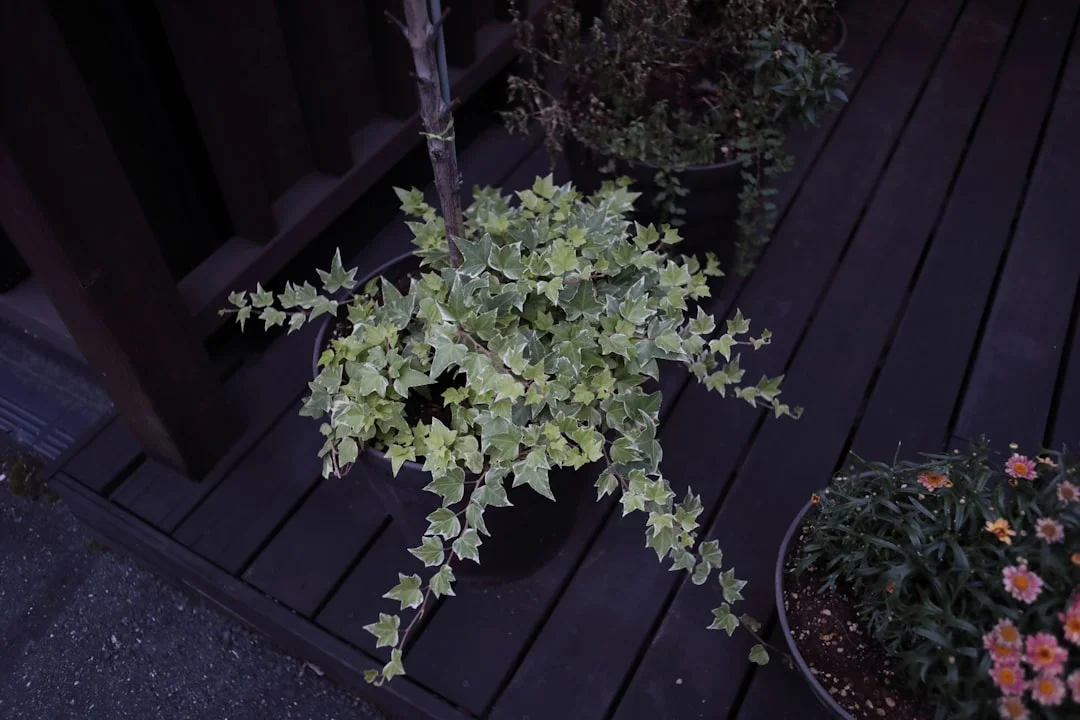
This is a surprisingly common source of confusion in global gardening communities. In the Northern Hemisphere — covering Europe, North America, most of Asia, and North Africa — south-facing windows receive the most direct sun throughout the day. North-facing windows are the dimmest. In the Southern Hemisphere — covering Australia, New Zealand, South Africa, and South America — it’s exactly the opposite: north-facing windows are the sunniest and south-facing ones are the dimmest. If you’re following a care guide written for UK or US audiences and you live in Sydney or Cape Town, remember to flip the window direction advice. This single adjustment explains many mysterious failures when following otherwise sound care instructions.
Using Artificial Grow Lights for Trailing Shelf Plants
In high-latitude cities like Edinburgh, Oslo, Helsinki, or Reykjavik, winter daylight can drop to just five or six hours — far too little for even low-light trailing plants to grow actively. Grow lights close this gap effectively. For trailing shelf plants, a strip-style LED grow light mounted underneath the shelf above works beautifully: it illuminates the leaves from above (mimicking natural skylight) and doesn’t take up shelf space. Set it on a timer for 12–14 hours per day. Many gardeners in northern Europe and Canada report that a modest grow light investment transforms their trailing plants from barely surviving in winter to actually growing. That said, many gardeners find that even a single south-facing window in a temperate climate is enough to sustain pothos and philodendrons through winter without supplemental lighting.
Common Problems and How to Fix Them
Even the most resilient trailing plants run into trouble sometimes. The good news is that most problems follow predictable patterns, and once you know what to look for, they’re usually easy to fix.
Yellowing leaves are the most common complaint. However, not all yellowing looks the same. Uniform yellowing across older lower leaves usually signals overwatering or root rot. Yellow leaves with green veins (interveinal chlorosis) suggest a nutrient deficiency — usually iron or magnesium — often caused by alkaline water or depleted soil. Yellow leaves with brown crispy tips typically mean underwatering, low humidity, or salt buildup from over-fertilising.
Leggy, sparse growth happens when trailing plants don’t get enough light. The stems grow long in search of light, but leaves stay small and widely spaced. Move the plant closer to a window, or add supplemental lighting.
Root rot is the most serious problem and is almost always caused by overwatering combined with poor drainage. You’ll notice it as soft, black, mushy roots when you unpot the plant, combined with a foul smell. To save the plant, trim all rotted roots with clean scissors, dust cuts with cinnamon (a natural antifungal), repot in fresh, well-draining mix, and reduce watering significantly for the next month.
Brown leaf tips on trailing plants are frustrating but rarely fatal. In most cases, the cause is low humidity — common in centrally heated or air-conditioned rooms. Misting the leaves occasionally, placing a pebble tray with water beneath the pot, or running a humidifier nearby all help. A simple hygrometer — available for a few dollars — lets you monitor room humidity easily.
Common Pests on Trailing Shelf Plants
Spider mites are the most feared pest for trailing shelf plants — particularly in hot, dry conditions or overly heated indoor spaces. They’re tiny, barely visible to the naked eye, but leave telltale fine webbing between leaves and on stems. Treat immediately with neem oil spray (diluted at 5ml per litre of water) or a commercial insecticidal soap. Mealybugs look like small white cotton blobs at leaf axils and stem joints. Remove them with a cotton bud dipped in isopropyl alcohol, then follow up with neem oil. Fungus gnats — small flies hovering over moist soil — are annoying rather than dangerous. Allow the top layer of soil to dry out fully between waterings to break their breeding cycle. Yellow sticky traps catch adults effectively.
Toxicity Warning: Are Trailing Plants Safe?
This is an important safety note. Several popular trailing plants are toxic to pets and children if ingested. Pothos (Epipremnum aureum) and heartleaf philodendron both contain calcium oxalate crystals, which cause oral irritation, drooling, and vomiting in cats and dogs. The ASPCA lists both as toxic to cats and dogs. String of pearls is also toxic — it can cause vomiting, diarrhoea, and lethargy in pets and children. If you have cats, dogs, or young children, choose pet-safe alternatives like Swedish ivy (Plectranthus verticillatus), lipstick plant (Aeschynanthus radicans), or baby’s tears (Soleirolia soleirolii). Always place toxic trailing plants on high shelves that pets and children cannot physically reach.
Propagation: Growing More Plants for Free
One of the great joys of trailing plants is how absurdly easy most of them are to propagate. A single mature pothos can produce dozens of new plants in a single growing season — for free, and without any special equipment.
The most reliable propagation method for trailing aroids (pothos, philodendron) is stem cuttings in water. Select a stem with at least two or three nodes — the small brown bumps or aerial root nubs you see along the stem. Cut just below a node with clean scissors or a blade, remove the lowest leaves so the node is bare, and place the cutting in a glass of water in a bright, warm spot. Roots appear within one to three weeks in warm conditions (22–28°C / 72–82°F). Once roots are 3–5cm (1–2 inches) long, pot the cutting into your standard trailing plant mix.
For hoyas, propagation is slightly slower but just as reliable. Take a stem cutting with two or three leaf pairs and at least one node, let the cut end dry for an hour (this prevents rot), then place in moist coco coir or sphagnum moss. Enclose in a clear plastic bag or humidity dome to maintain moisture. Roots typically appear in three to six weeks.
For string of pearls, the best method is leaf-and-stem cuttings laid on top of dry succulent mix. Don’t bury them — just let the stem nodes touch the soil. Keep the mix barely moist. This is genuinely one of the trickier propagation methods, and in my experience, success rate improves dramatically when done in warm conditions above 24°C (75°F) during spring or early summer.
For those keen to dive deeper into all the techniques behind healthy indoor plant growth, our comprehensive indoor plant care guide covers everything from root science to seasonal feeding schedules.
Step-by-Step: Water Propagation for Pothos and Philodendron
First, select a healthy stem with three to five leaves and at least two visible nodes. Next, use clean scissors to cut just below the lowest node — a clean cut reduces the risk of bacterial rot in water. Then, remove all leaves that would sit below the water line, since submerged leaves rot and foul the water. After that, place the cutting in a clean glass or jar filled with room-temperature water, ensuring at least one node is submerged. Position the glass in bright indirect light — a windowsill works perfectly. Finally, change the water every five to seven days to prevent bacterial buildup and add oxygen to the water. Once roots reach 3–5cm, transfer to soil. Most gardeners in warm climates achieve rooted cuttings within ten to fourteen days.
Seasonal Care Through the Year
Trailing indoor plants for shelves are often marketed as ‘low maintenance,’ and while that’s largely true, they do respond to seasonal changes — even indoors. Understanding those rhythms helps you give each plant exactly what it needs, when it needs it.
Spring (March–May in the Northern Hemisphere / September–November in the Southern Hemisphere) is the most active growth period for most trailing plants. This is the time to repot root-bound plants, start a regular feeding schedule, and take propagation cuttings. Growth accelerates noticeably as day length increases and temperatures rise.
Summer is peak growing season. In humid tropical and subtropical climates — Southeast Asia, West Africa, South Asia, Central America — many trailing plants can move to a shaded outdoor position (a verandah, balcony with afternoon shade, or under a tree) for the season. The increase in light and humidity will dramatically boost growth. In hot arid climates like the Middle East or parts of Australia, keep plants indoors in air-conditioned spaces and be vigilant about increased watering needs.
With June now upon us — peak summer in the Northern Hemisphere — this is the ideal time to feed your trailing plants monthly with a diluted balanced fertiliser and to check that they’re getting enough light without being scorched by intensified midday sun through windows.
Autumn (Northern Hemisphere: September–November) brings shorter days and cooling temperatures. Reduce feeding frequency, ease off on watering, and bring any outdoor trailing plants back inside before temperatures drop below 15°C (59°F) for tropical species.
Winter is the resting period. Most trailing plants slow or stop growing entirely. Reduce watering significantly and stop feeding until spring. Watch for low humidity damage from central heating and consider a humidifier or regular misting.
Special Considerations for Tropical Climates
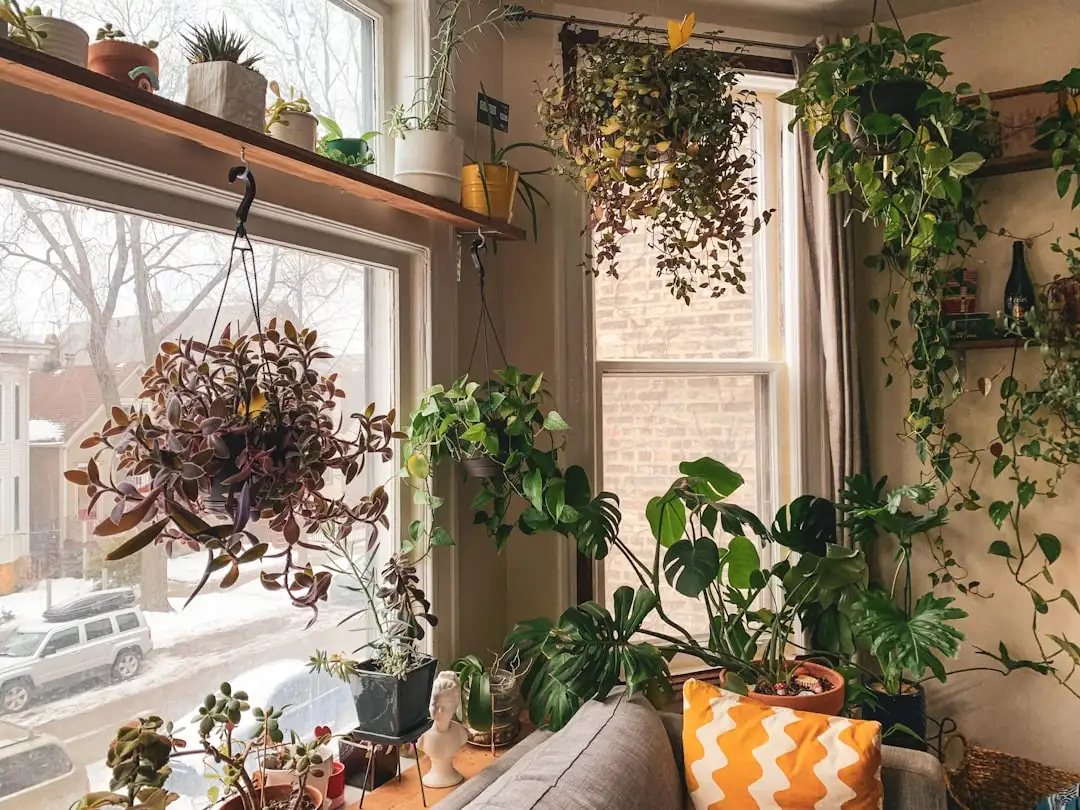
In year-round tropical climates — countries like Singapore, the Philippines, Malaysia, parts of southern India, Nigeria, and coastal Brazil — trailing plants don’t experience the same dormancy cycle as they do in temperate zones. Growth continues throughout the year, though it often slows slightly during the driest months. In these climates, the main challenge isn’t cold or low light — it’s excessive humidity combined with poor air circulation, which can encourage fungal diseases and mealybug infestations. Ensure pots have good drainage, use well-ventilated spaces, and avoid overcrowding plants on shelves. Additionally, intense tropical sun is often too strong for most trailing houseplants even indoors near west-facing windows, so diffuse light with sheer curtains or shade cloth.
Creative Uses and Styling for Shelves
Growing trailing indoor plants for shelves isn’t just about plant care — it’s about creating spaces that feel alive, layered, and intentional. The way you style trailing plants is just as important as how you grow them.
The most effective shelf displays use contrast. Pair plants with different leaf textures and growth habits: a large-leafed heartleaf philodendron next to a delicate string of pearls, or a bold golden pothos contrasted with the silver-striped leaves of Tradescantia zebrina. Vary pot heights by placing smaller pots on books or wooden blocks to create different trailing levels.
Material choice matters too. Terracotta pots are beautiful but dry out faster than plastic or ceramic — which is actually an advantage for overwater-prone plants like string of pearls, but less ideal for moisture-loving aroids. For a cohesive shelf aesthetic, matching pot colours or materials (all terracotta, all white ceramic, all dark matte black) creates a cleaner look that lets the plants themselves become the focal point.
In terms of shelf placement, trailing plants look most dramatic when they have vertical space to trail into. A shelf at eye level or above, with at least 60–90cm (2–3 feet) of clear wall below, gives trails room to develop without being crowded or trampled. Wall-mounted floating shelves work exceptionally well for this reason.
Finally, think about trailing direction. Most plants trail toward light, so the direction your trails face is partly determined by your window position. You can guide early growth by gently rotating the pot or tucking stems in a preferred direction. Once a trail is established, it’s best to leave it undisturbed — handling trailing stems frequently causes breakage.
Trailing Plants in Bathroom and Kitchen Shelves
Bathrooms and kitchens are often overlooked for plant displays, but they’re frequently ideal for trailing plants. Bathrooms tend to have higher ambient humidity from showers — perfect for pothos, philodendron, and even hoya. The challenge is light: many bathrooms have frosted or very small windows. In these rooms, pothos and heartleaf philodendron are your best options, supplemented by a small LED strip light if necessary. Kitchens offer similar humidity benefits, with better light if there’s a window above the sink or counter. Just be careful about steam from cooking, which can temporarily raise temperatures and humidity to levels that stress some delicate trailers like string of pearls.
Frequently Asked Questions
What are the best trailing indoor plants for shelves for beginners?
The best trailing indoor plants for shelves for beginners are pothos (Epipremnum aureum) and heartleaf philodendron (Philodendron hederaceum). Both tolerate low light, irregular watering, and a wide temperature range of 15–30°C (59–86°F). They grow quickly, giving beginners the satisfaction of visible progress within weeks, and they recover easily from common mistakes like overwatering or neglect. Tradescantia zebrina is another excellent beginner option with striking purple-silver foliage that trails vigorously even in moderate light conditions.
Can I grow trailing indoor plants for shelves in a cold climate?
Yes, you can grow trailing indoor plants for shelves in cold climates, as long as you grow them indoors. Most popular trailing plants are tropical species that need temperatures above 15°C (59°F) year-round. In cold climates like the UK, Canada, or northern Europe, keep them well away from draughty windows and cold windowsills in winter. Supplement with a grow light during short winter days to maintain adequate light levels. Pothos and heartleaf philodendron are the most resilient choices for cold, low-light winters in temperate regions.
Are trailing indoor plants safe for pets and children?
Several popular trailing plants are toxic to pets and children. Pothos and philodendron contain calcium oxalate crystals, which cause mouth irritation, drooling, and vomiting in cats and dogs. The ASPCA lists both as toxic. String of pearls is also toxic. If you have pets or young children, choose safe alternatives like Swedish ivy (Plectranthus verticillatus), lipstick plant (Aeschynanthus radicans), or baby's tears (Soleirolia soleirolii). Alternatively, place toxic plants on high, inaccessible shelves.
How often should I water trailing plants on shelves?
For most trailing aroids like pothos and philodendron, water when the top 2–3cm (about 1 inch) of soil feels dry — roughly once a week in summer and every 10–14 days in winter. For succulent-type trailers like string of pearls or burro's tail, allow the soil to dry almost completely before watering again, typically every two to three weeks in summer. Always adjust based on your climate: plants in hot, dry environments dry out faster than those in cool, humid conditions.
Why is my trailing plant not actually trailing?
If your trailing plant isn't trailing, there are three likely causes. First, the plant may be too young — most trailers don't start trailing noticeably until stems are at least 20–30cm (8–12 inches) long. Second, the plant may not be getting enough light, causing slow growth overall. Third, the stems may be sitting in a deep pot or behind a shelf rim that prevents them from hanging freely. Ensure the pot is placed at the shelf edge, give the plant adequate light, and be patient — trailing takes time to establish.
Can trailing plants grow in water permanently (hydroponics)?
Yes — pothos and heartleaf philodendron are among the few houseplants that can live indefinitely in water without soil, making them popular for hydroponic or water-vase displays. The key is to use a clean vessel, change the water every one to two weeks, and add a small amount of liquid houseplant fertiliser diluted to a quarter-strength every month. Growth is slower in water than in soil, but the plants remain healthy for years. Ensure no leaves are submerged, as they will rot.
How do I make my trailing plants trail longer and fuller?
To encourage longer, fuller trails, do three things consistently. First, provide adequate light — bright indirect light promotes faster, healthier stem extension. Second, fertilise monthly during the growing season with a balanced liquid feed at half strength. Third, regularly pinch back the growing tips of side stems that aren't trailing well — this seems counterintuitive, but it encourages the plant to put energy into the main trailing stems. Also, avoid disturbing established trails once they're growing, as this can cause setbacks.
What shelf height works best for trailing indoor plants for shelves?
The ideal shelf height for trailing indoor plants for shelves is between 1.2–1.8 metres (4–6 feet) from the floor, with at least 60–90cm (2–3 feet) of clear wall or space below. This gives trailing stems room to develop fully without touching the floor or furniture. Shelves mounted too low don't give trails space to cascade, while very high shelves can make watering and maintenance difficult. Floating wall shelves work particularly well because there's nothing beneath them to impede trailing growth.
Final Thoughts
Trailing indoor plants for shelves are one of the most rewarding, versatile, and genuinely accessible ways to bring life into any indoor space — whether you’re in a sun-drenched apartment in Kuala Lumpur, a cool Victorian terrace in Bristol, or a heated condo in Toronto. The key takeaways are simple: choose a plant that matches your actual light levels rather than the light you wish you had, water less than you think you need to, use a fast-draining soil mix, and give your trails room to hang freely. Start with a pothos if you’re new to this — it will forgive your mistakes while you learn. Then, as your confidence grows, add a hoya for texture, a Tradescantia for colour, and maybe a string of hearts for elegance. Propagate your favourites in spring to multiply your displays for free. With a little patience and the right placement, your shelves can become one of the most beautiful features in your home — living, breathing, and growing more impressive with every passing month.

