
⏱ 32 min read
Table of Contents
- What Is the Hens and Chicks Succulent?
- Plant Characteristics at a Glance
- Benefits of Growing Hens and Chicks Indoors
- How to Grow Hens and Chicks Succulent Indoors
- Soil and Fertilizer Requirements
- Watering: The Most Critical Factor
- Sunlight and Lighting Needs
- Propagation: Growing More Plants for Free
- Common Problems and How to Fix Them
- Seasonal Care Through the Year
- Traditional and Cultural Uses
Hens and chicks succulent care indoors is surprisingly easy — once you understand one key fact that most beginners get completely backwards. These rosette-forming beauties (Sempervivum tectorum) are built to survive drought, frost, and neglect. Yet they die fastest from one thing: too much love in the form of overwatering. Whether you’re growing them on a windowsill in London, a balcony in Singapore, or a bright apartment in New York, hens and chicks succulent care indoors follows the same core principles — but with small regional tweaks that make a huge difference. In this complete guide, you’ll learn exactly why your previous attempts may have failed, how to fix common mistakes, and how to turn a single rosette into a lush, spreading colony of healthy plants. By the end, you’ll know the one seasonal trick that makes these plants almost indestructible indoors. If you enjoy growing this plant, you might also find our guide on Echeveria care guide very useful.
Quick Highlights
- Discover why Sempervivum tectorum thrives with minimal watering and how to read your plant's thirst signals accurately
- Learn the exact soil mix ratio that prevents root rot — the number one killer of indoor hens and chicks
- Understand light requirements across different climates from tropical apartments to cold northern winters
- Master the simple offset division technique to propagate dozens of new plants from one mother rosette
- Identify the 5 most common problems at a glance and apply fast, proven fixes before damage spreads
- Follow seasonal care adjustments that keep your hens and chicks healthy through summer heat and winter dormancy
Plant Characteristics at a Glance
| Common Name | Hens and Chicks, Houseleek, Common Houseleek, Roof Houseleek |
| Scientific Name | Sempervivum tectorum |
| Family | Crassulaceae |
| Origin | Southern European mountains — Pyrenees, Alps, Carpathians, Apennines |
| Habitat | Rocky alpine slopes, cliff faces, rooftops; elevations up to 3,000 m (9,800 ft) |
| Plant Type | Hardy succulent perennial; mat-forming rosette |
| Indoor Plant | Yes — thrives on bright windowsills; needs grow light in low-light winters |
| Outdoor Plant | Yes — fully hardy outdoors in USDA Zones 3–8; RHS Hardiness Rating H7 |
| Leaves | Thick, fleshy, lance-shaped; green with reddish-purple tips; arranged in tight rosettes 5–15 cm (2–6 in) wide |
| Flowers | Star-shaped, 12-petalled; pink to reddish-purple; borne on tall 15–30 cm (6–12 in) stolons |
| Flowering Season | Summer (June–August in Northern Hemisphere); each rosette blooms once, then dies |
| Fruit | Small dry capsule containing tiny seeds; not ornamentally significant |
| Seeds | Tiny, light brown; viable but slow to germinate (2–6 weeks); seedlings take 2–3 years to mature |
| Roots | Shallow, fibrous root system; spreads laterally rather than deep; very sensitive to waterlogging |
| Height | Rosettes 2–15 cm (1–6 in) tall; flowering stalks reach 15–30 cm (6–12 in) |
| Growth Rate | Moderate — produces several offsets per year; spreads to fill available space over 2–3 years |
| Light Requirements | Full sun outdoors; brightest window available indoors (south-facing in Northern Hemisphere); 12–14 hrs grow light if natural light is insufficient |
| Soil Requirements | Fast-draining, gritty; pH 6.0–7.5; 50% compost + 40% perlite + 10% grit recommended; low organic matter |
| Water Requirements | Low; soak-and-dry method; every 10–14 days in growing season, every 3–4 weeks in winter; never allow to sit in water |
| Temperature Requirements | Tolerates -30°C to 35°C (-22°F to 95°F); ideal indoor range 15–24°C (59–75°F); benefits from cool winter rest |
| Humidity Requirements | Low to moderate; below 50% ideal; high humidity increases crown rot risk; ensure airflow in tropical climates |
| Propagation | Primarily by offsets (chicks); occasionally by seed; leaf propagation does NOT work for Sempervivum |
| Uses | Ornamental ground cover; rockeries; container gardens; green roofs; indoor windowsill displays; educational plant for children |
| Medicinal Properties | Historically used in European folk medicine topically for minor burns and insect stings; not supported by robust clinical evidence; not for internal use |
| Toxicity | Non-toxic to humans, dogs, and cats (ASPCA); safe for households with pets and children |
| Cultural Significance | Sacred to Jupiter in Roman tradition; mandated for rooftop planting by Charlemagne (812 AD); symbol of protection and longevity across European folk culture |
| Common Pests | Mealybugs, root mealybugs, vine weevils (outdoors), aphids (on flower stalks) |
| Common Diseases | Root rot (Phytophthora), crown rot, rust fungus (Endophyllum sempervivi); all linked to excessive moisture |
| Special Care Tips | Never mist; always water at soil level; remove dead outer leaves regularly; allow chicks to reach 2–3 cm before separating; callus cut ends before potting |
| Cultural Practices | Remove spent flowering stalks after hen dies; refresh top-dressing of grit annually; divide congested clumps every 3–4 years |
| Vastu Direction | East or southeast sector for growth energy; contemporary feng shui places succulents in prosperity or health corners |
Hens and chicks succulent care indoors Names in Different Languages
| English | Hens and Chicks / Common Houseleek / Roof Houseleek |
| Mandarin Chinese | 長生草 (Cháng shēng cǎo) |
| Spanish | Siempreviva / Hierba puntera |
| Hindi | Hens and Chicks (हेंस एंड चिक्स) |
| Gujarati | સેમ્પર્વિવમ (Sempervivam) |
| Arabic | حشيشة السقف (Hashishat al-Saqf) |
| Bengali | হেনস অ্যান্ড চিকস (Hens and Chicks) |
| Portuguese | Sempreviva / Barba-de-Júpiter |
| Russian | Молодило кровельное (Molodilo krovelnoye) |
| Japanese | センペルビウム / イワレンゲ (Sempervivumu) |
| Punjabi | ਹੈਂਸ ਐਂਡ ਚਿਕਸ (Hens and Chicks) |
| German | Hauswurz / Dach-Hauswurz |
| Javanese | Kembang Batu (Sempervivum) |
| Korean | 바위솔 (Bawi-sol) |
| French | Joubarbe des toits / Artichaut sauvage |
| Telugu | సెంపర్వివమ్ (Sempervivam) |
| Marathi | हेन्स अँड चिक्स (Hens and Chicks) |
| Tamil | செம்பர்விவம் (Sempervivam) |
| Urdu | گھاس چھت (Ghaas Chhat) |
| Turkish | Damkoruğu / Ev Pıtrağı |
| Vietnamese | Cây trường sinh / Sen đá núi Alp |
What Is the Hens and Chicks Succulent?
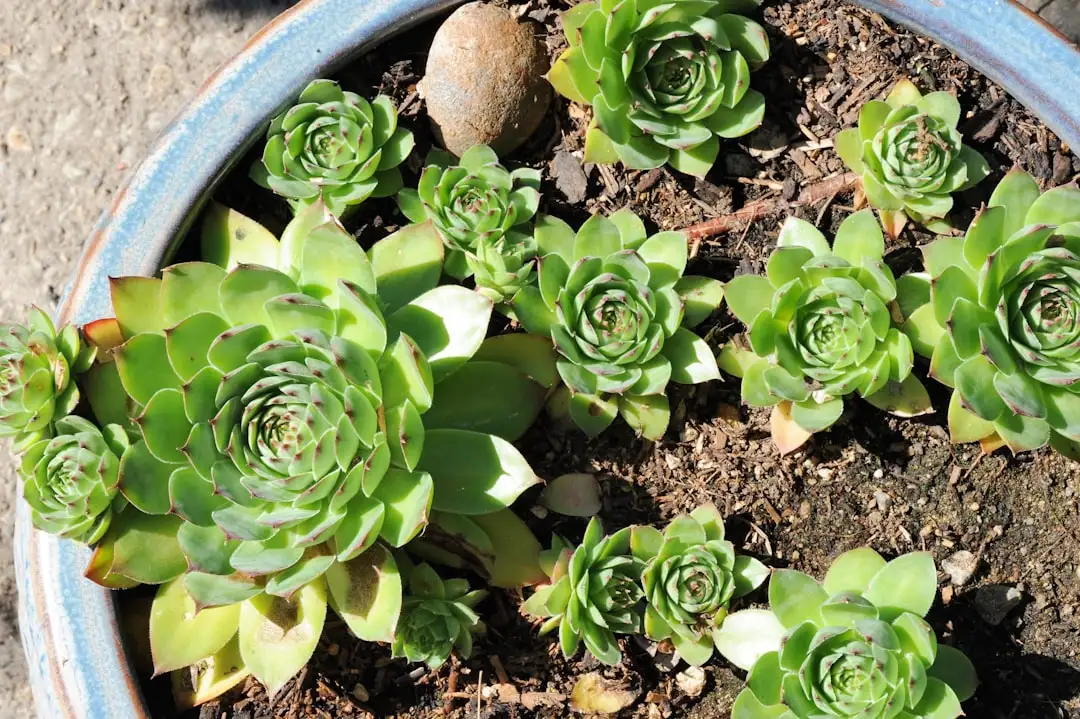
The name alone tells you the whole story. One large central rosette — the ‘hen’ — sits surrounded by a ring of smaller offsets, each one a ‘chick’ attached by a slender stolon. As the plant matures, those chicks detach naturally and root wherever they land. It’s one of the most self-sufficient plants on earth, and that’s not an exaggeration. Sempervivum tectorum, from the Latin meaning ‘always alive on the rooftop,’ was historically planted on European cottage rooftops to protect homes from lightning and fire. According to Kew Gardens, this species is native to the mountain regions of southern Europe — from the Pyrenees across the Alps to the Carpathians — where it clings to rocky ledges at altitudes up to 3,000 metres (9,800 feet). That alpine heritage is the key to understanding everything about its care. It’s wired for harsh conditions. In fact, the harder you push it — less water, gritty soil, strong light — the better it performs. Many new gardeners are shocked to discover that the plant labelled ‘almost impossible to kill outdoors’ needs special attention to survive indoors. The difference? Ventilation, light intensity, and drainage. Understanding these three factors is the entire foundation of hens and chicks succulent care indoors.
Sempervivum vs. Echeveria: Are They the Same?
This is one of the most common points of confusion in the succulent world. Both form rosettes. Both are called ‘hens and chicks’ in casual gardening conversations. However, they are completely different genera. Sempervivum is frost-hardy — it can survive temperatures as low as -30°C (-22°F) — while Echeveria is frost-tender and native to Mexico. Sempervivum blooms once and then dies (monocarpic), while Echeveria can bloom repeatedly. If you bought your plant in a cold-climate garden centre or saw it sold as ‘roof houseleek,’ it’s almost certainly Sempervivum. If you bought it in a warm-climate nursery labelled ‘hens and chicks,’ it may be Echeveria. The care advice differs significantly, so always check the label or ask for the scientific name. If you enjoy growing this plant, you might also find our guide on Echeveria care guide very useful.
How Many Varieties Exist?
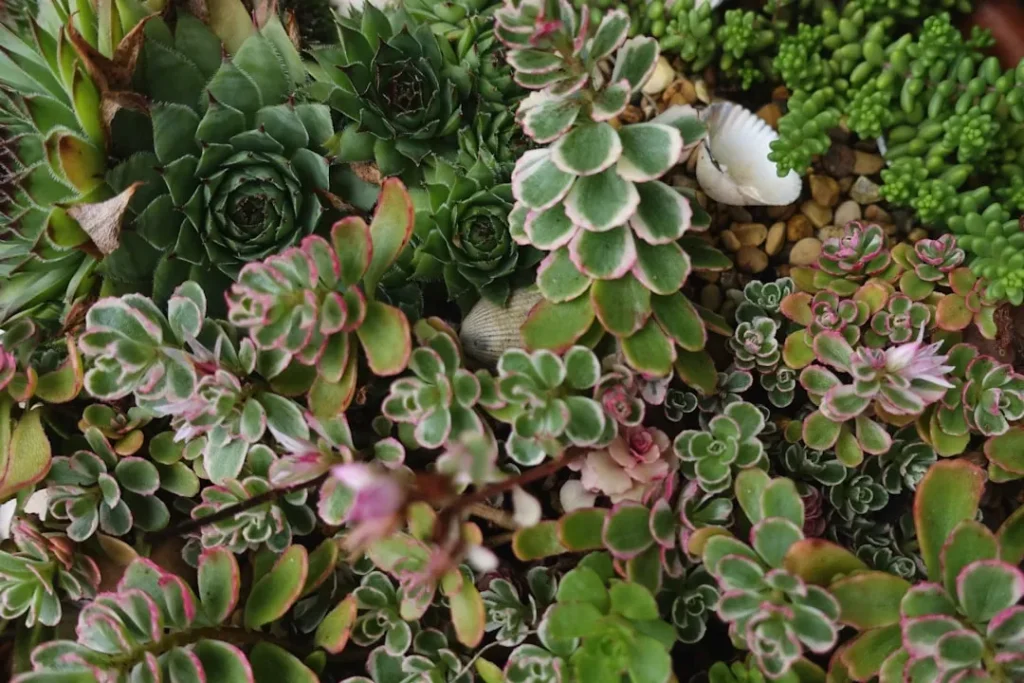
The genus Sempervivum contains over 40 recognised species and more than 3,000 named cultivars, according to Wikipedia's botanical classification. Colours range from soft green to deep burgundy, silver-tipped, and cobweb-covered (the ‘cobweb houseleek,’ S. arachnoideum). For indoor growing, compact varieties like ‘Oddity,’ ‘Pacific Plum,’ and ‘Mahogany’ are especially popular because they stay small, colour up beautifully under grow lights, and produce chicks freely.
Plant Characteristics at a Glance
Before diving into care specifics, it helps to know what you’re working with biologically. Sempervivum tectorum is a CAM (Crassulacean Acid Metabolism) plant, meaning it opens its stomata at night to absorb CO₂ — a water-conservation strategy common to all true succulents. This explains why these plants need such excellent drainage and tolerate dry indoor air far better than tropical houseplants. The characteristics table below gives you every key detail at a glance, from USDA hardiness zones to toxicity. Whether you’re a seasoned collector or a complete beginner, these numbers will guide every decision you make about pot size, soil mix, and placement. Notably, Sempervivum is rated H7 by the RHS — their highest frost hardiness rating — making it one of very few succulents that thrives outdoors year-round in the UK, Canada, and northern Europe.
Benefits of Growing Hens and Chicks Indoors
Why choose this particular succulent for indoor growing? There are several compelling reasons beyond its striking appearance. First, Sempervivum is genuinely low-maintenance — not in the dishonest way that marketing copy uses that phrase, but measurably so. It requires watering roughly once every 10–21 days indoors, depending on the season and your climate. That’s a schedule almost anyone can manage. Furthermore, the plant produces offsets freely, meaning one purchased plant can become dozens within a year or two. That makes it one of the most cost-effective plants you can buy. In addition, hens and chicks are non-toxic to humans and pets (more on that in the FAQs), which is a genuine advantage for households with cats, dogs, or young children. Meanwhile, the rosette form is architecturally beautiful — it photographs beautifully, pairs well with rock arrangements, driftwood, and terracotta, and suits both minimalist and maximalist interiors. Many gardeners find that the meditative quality of arranging a tray of mixed Sempervivum cultivars rivals the calming effect of a zen garden. If you enjoy growing this plant, you might also find our guide on Echeveria care guide very useful.
Air Quality and Wellbeing
While Sempervivum is not typically cited in air-purification studies the way Pothos or Spider Plant are, its role in biophilic design — the practice of bringing natural elements indoors to support mental wellbeing — is well established. A 2015 review published in the Journal of Physiological Anthropology confirmed that interaction with indoor plants measurably reduces cortisol levels and self-reported stress. Succulents, with their geometric precision and calm colour palettes, are specifically recommended for desk environments. Moreover, because Sempervivum uses CAM photosynthesis and releases oxygen at night, it’s a pleasant addition to bedrooms — unlike most flowering plants that compete for CO₂ in the dark. For more tips, check out our detailed article on Broken Heart Plant Care Guide.
Educational Value for Children and Schools
Here’s something most people overlook: Sempervivum is one of the best plants for teaching children about plant propagation. The visible, touchable connection between hen and chick makes the concept of vegetative reproduction instantly understandable. Schools across the UK and US regularly use Sempervivum in science lessons precisely because the process is so visually obvious. In my experience, giving a child one ‘chick’ to pot up themselves creates a sense of ownership and responsibility that builds lasting interest in gardening.
How to Grow Hens and Chicks Succulent Indoors
Growing hens and chicks succulent care indoors successfully comes down to mimicking their natural mountain habitat as closely as possible. That habitat is bright, dry, well-ventilated, and has fast-draining, nutrient-poor rocky soil. The moment you replicate those conditions indoors, the plant thrives. Start with the right container — always choose one with drainage holes. Terracotta is ideal because it wicks excess moisture away from the roots. Avoid glazed ceramic or plastic for beginners, as these hold moisture longer and leave less room for error. Place your pot near the brightest window available — a south-facing window in the Northern Hemisphere, or a north-facing window in Australia and New Zealand. However, if natural light is limited (common in northern European winters or basement apartments), a full-spectrum LED grow light positioned 15–30 cm (6–12 inches) above the plant for 12–14 hours per day works excellently. The plant responds well to artificial light, often producing intense colour under grow lights. Next, resist the urge to use regular potting compost alone — it retains far too much water. Instead, mix it 50:50 with perlite or coarse horticultural sand. For more tips, check out our detailed article on Echeveria care guide.
Choosing the Right Container and Potting Mix
The container decision is genuinely important. Terracotta pots allow the soil to dry out faster — critical for a plant evolved on rocky alpine slopes. A pot that’s too large holds excess moisture around the roots, which can lead to rot even before you water again. Choose a pot roughly 2.5 cm (1 inch) wider than the plant’s diameter. For group plantings (a popular indoor display style), shallow terracotta trays or hypertufa troughs work beautifully. The ideal potting mix is: 50% standard potting compost + 40% coarse perlite + 10% fine horticultural grit. Alternatively, ready-made cactus and succulent mixes from brands like Miracle-Gro or Westland (available globally) are a convenient shortcut — though adding 20–30% extra perlite still improves drainage noticeably.
Temperature and Humidity for Indoor Growing
One of the genuinely surprising aspects of hens and chicks succulent care indoors is the plant’s cold tolerance. Unlike most tropical houseplants, Sempervivum can handle indoor temperatures as low as 5°C (41°F) without damage — and actually benefits from a cool winter rest period. Ideal indoor temperatures are 15–24°C (59–75°F) during the growing season. Humidity should be low to moderate — below 50% is ideal. Gardeners in humid tropical climates (Singapore, Mumbai, coastal Australia) should ensure strong airflow around the plant, as high ambient humidity combined with wet soil is the fastest route to crown rot. A small desk fan running nearby is an easy, inexpensive fix in these regions.
Repotting Guidelines
Repot every 2–3 years, or when you notice roots emerging from the drainage holes. Spring (March–May in the Northern Hemisphere, September–November in the Southern Hemisphere) is the best time to repot. When repotting, gently remove the plant, shake off the old soil, check roots for rot (healthy roots are white to tan; rotted roots are brown and mushy), trim any damaged sections with sterile scissors, and allow the roots to air-dry for 24 hours before placing in fresh mix. This drying period, called ‘callusing,’ is a step that most beginners skip — and it significantly reduces post-repot rot risk.
Soil and Fertilizer Requirements
Soil is where most indoor hens and chicks fail. The plant’s roots evolved in thin, rocky alpine soil with almost no organic matter. Standard potting compost, which retains moisture to support thirsty tropical plants, is essentially the opposite of what Sempervivum needs. The ideal soil for hens and chicks succulent care indoors is fast-draining, low in nutrients, and slightly gritty in texture. As mentioned above, a 50:50 blend of compost and perlite is a reliable starting point. For readers in regions where perlite is hard to source, coarse river sand or crushed granite chips are functional alternatives — though perlite, available at most garden centres globally for around $5–8 USD per bag, is the most consistent option. On the topic of fertilizer: Sempervivum needs very little. In its native habitat, it thrives in almost pure rock. Overfertilizing causes rapid, weak, stretched growth (called etiolation) and increased susceptibility to pests. If you do fertilize, use a balanced, diluted liquid fertilizer (such as a 10-10-10 NPK formula diluted to quarter-strength) once in spring and once in early summer — and never in autumn or winter.
pH Level and Soil Amendments
Sempervivum tectorum prefers a slightly acidic to neutral soil pH — ideally between 6.0 and 7.5. Most commercially available succulent mixes fall within this range. If you’re making your own mix and want to verify the pH, inexpensive test strips (available on Amazon globally for under $10 USD) give a reliable reading. In areas with naturally alkaline water (common in parts of the Middle East, hard-water regions of the UK, and limestone-heavy areas of the US Midwest), occasional flushing with rainwater or filtered water helps prevent salt and mineral buildup around the roots.
Watering: The Most Critical Factor
If there’s one message to take away from this entire guide, it’s this: water less than you think you need to. Overwatering kills more hens and chicks than any pest, disease, or environmental stress combined. The USDA Plant Guide notes that Sempervivum species are classified as xeric (drought-adapted) plants, designed physiologically to extract every drop of value from infrequent rainfall. Indoors, the watering rhythm depends on your climate and season. During the active growing season (spring through early autumn), water when the top 2–3 cm (1 inch) of soil is completely dry — typically every 10–14 days in temperate climates, and every 7–10 days in hotter, drier conditions like the US Southwest, Middle East, or Australian summer. During winter dormancy, reduce to once every 3–4 weeks — or even less if the plant is in a cool room. Always water deeply, allowing the water to drain fully from the pot’s base. Then wait. Do not water again until the soil is completely dry. This ‘soak and dry’ method, as it’s known in the succulent community, closely mimics natural rainfall patterns in the plant’s mountain habitat.
Signs of Overwatering vs. Underwatering
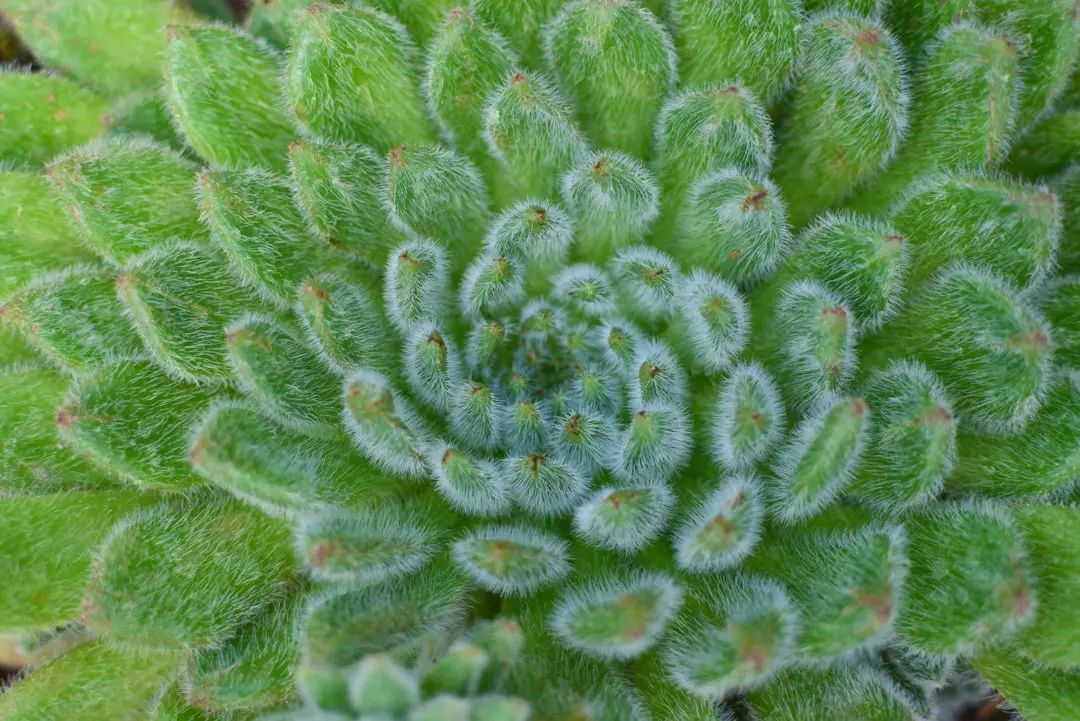
Knowing which problem you’re facing is critical because the symptoms can look surprisingly similar at first. Overwatered plants show soft, translucent, mushy leaves — often starting at the base of the rosette. The leaves may turn yellowish or brownish and feel almost wet to the touch. Underwatered plants, by contrast, show thin, slightly wrinkled or shrivelled leaves that feel dry and papery. The leaves may curl inward slightly. Here’s the key test: press a leaf gently. Firm and plump means healthy. Soft and mushy means too much water. Thin and wrinkled means too little. When in doubt, always err on the side of underwatering — Sempervivum recovers from drought far more easily than from root rot.
Sunlight and Lighting Needs
Hens and chicks succulent care indoors depends heavily on getting the light right — and this is where tropical and high-rise apartment gardeners often struggle most. Outdoors, Sempervivum thrives in full sun: 6–8 hours of direct sunlight daily. Indoors, the intensity of natural light through glass is reduced by 50% or more, even on a bright day. This means placement matters enormously. A south-facing window (Northern Hemisphere) or north-facing window (Southern Hemisphere) provides the most light. East or west-facing windows work for 4–6 months of the year but may cause stretching during winter months. The technical term for light-starved stretching is ‘etiolation’ — the plant elongates toward its light source, losing its tight rosette shape and becoming leggy and pale. Once etiolated, the plant cannot revert to its compact form. Prevention is the only cure. For gardeners in Northern Europe (UK, Germany, Scandinavia) or northern US states and Canada, where winter daylight drops to 6–8 hours or less, a full-spectrum LED grow light is genuinely necessary to maintain compact, healthy rosettes through the darker months.
Using Grow Lights for Indoor Hens and Chicks
Full-spectrum LED grow lights have transformed indoor succulent growing over the past decade. For Sempervivum, position your grow light 15–30 cm (6–12 inches) above the plant and run it for 12–14 hours per day using a simple plug-in timer. Look for lights with a colour temperature of 5000–6500K (cool white/daylight spectrum) — this range best mimics outdoor sunlight. Brands like Barrina, MARS Hydro, and Soltech Solutions offer effective options at various price points ($20–150 USD). An interesting side effect of grow lights: many Sempervivum cultivars develop more intense colour — deeper reds, richer purples, and brighter silvers — under artificial full-spectrum light than they do on a windowsill.
Propagation: Growing More Plants for Free
One of the most joyful aspects of owning Sempervivum is how eagerly it multiplies. Propagating hens and chicks succulent care indoors requires almost no skill — the plant essentially does it for you. The primary method is offset division, and it’s beautifully straightforward. Each chick grows attached to the mother hen by a thin, thread-like stolon. Once the chick has developed a few leaves of its own and is roughly 2–3 cm (about 1 inch) in diameter, it’s ready to be separated and planted independently. In spring and early summer, you’ll often notice chicks that have already partially detached themselves — nature’s way of telling you it’s propagation season. Simply twist or gently pull the chick free from the stolon. If it resists, use clean scissors to cut the stolon close to the chick. Allow the cut end to callus (dry and seal) for 24–48 hours, then place it on top of — not buried in — a tray of barely moist succulent mix. Within 2–4 weeks, new roots emerge and anchor the chick in place. At this stage, begin your normal watering routine.
Leaf Propagation: Does It Work?
Here’s a fact that surprises many succulent enthusiasts: Sempervivum cannot be propagated from individual leaves. This sets it apart from Echeveria, which readily sprouts new rosettes from single leaves laid on soil. Sempervivum must be propagated via offsets (chicks) or, very rarely, seeds. Seeds are available from specialist suppliers and are a fascinating project, but germination is slow (2–6 weeks) and the resulting seedlings take 2–3 years to reach a display-worthy size. For practical purposes, offset division is always the preferred method.
What Happens When a Hen Blooms?
After several years of growth, the mother rosette sends up a tall flowering stalk — typically in summer — covered in star-shaped pink or reddish flowers. This is a once-in-a-lifetime event for each rosette. After flowering, the hen dies. This sounds alarming, but it’s completely normal and not a sign of failure. The surrounding chicks, now well established, simply fill the gap. In fact, experienced Sempervivum growers often describe the flowering and death of the hen as one of the plant’s most interesting biological events. Remove the spent flowering stalk by cutting it at the base once it has dried fully.
Common Problems and How to Fix Them
Even with ideal hens and chicks succulent care indoors, problems can occasionally appear. The good news is that most issues are easy to diagnose and faster to fix than with more demanding houseplants. The five most common problems are: root rot, etiolation, mealybugs, crown rot, and rust fungus. Root rot is by far the most serious and the most common. It occurs when wet soil sits around roots too long, particularly in low-light winter conditions when the plant’s metabolism slows dramatically. If you spot soft, discoloured lower leaves and a foul smell from the soil, act immediately. Remove the plant, trim all rotted roots, dust the healthy roots with powdered cinnamon (a natural antifungal), and repot in completely fresh, dry soil. Withhold water for two weeks. In many cases, caught early, the plant makes a full recovery. Many gardeners make the mistake of seeing brown leaf tips and immediately increasing watering — when in fact, brown tips on Sempervivum are usually a sign of too much water, not too little.
Pests: Mealybugs and Root Mealybugs
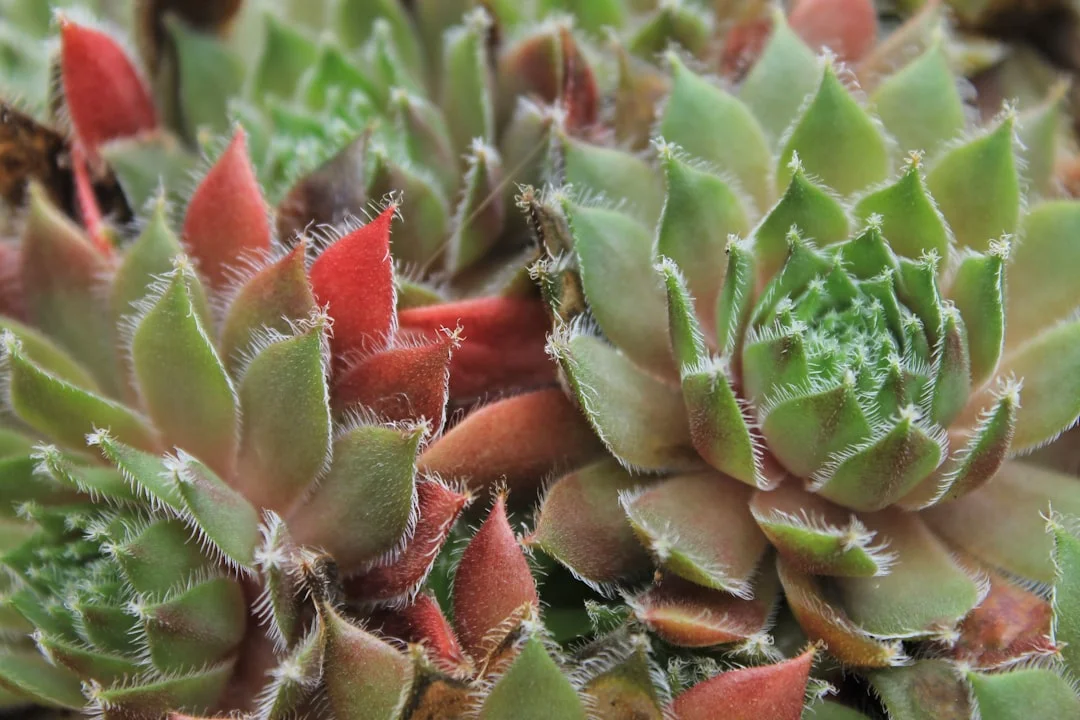
Mealybugs are the most common pest on indoor Sempervivum. They appear as small white, cottony clusters — often hiding between leaves at the base of the rosette. Treat promptly with a cotton swab dipped in 70% isopropyl alcohol, touching each bug directly. For larger infestations, spray the plant with a solution of 1 part 70% rubbing alcohol + 4 parts water + a drop of dish soap. Repeat weekly for 3–4 weeks. Root mealybugs are harder to detect — they live in the soil and attack roots directly. If your plant seems to stop growing and wilts despite normal watering, unpot it and inspect the roots carefully for white, woolly clusters. Treat by washing the roots thoroughly under running water, soaking briefly in a diluted neem oil solution, and repotting in fresh soil.
Rust and Fungal Issues
Rust fungus appears as orange or reddish-brown powdery spots on the leaves — more common in humid climates or when plants are misted (which Sempervivum should never be). The RHS recommends removing affected leaves immediately and improving air circulation around the plant. A copper-based fungicide spray applied according to label directions can arrest mild rust infections. Prevention is straightforward: never mist, always water at soil level, and ensure the plant has good airflow — especially important in Southeast Asian and equatorial climates where ambient humidity regularly exceeds 70%.
Seasonal Care Through the Year
Understanding the seasonal rhythm of Sempervivum transforms your success rate with hens and chicks succulent care indoors. Unlike tropical houseplants that grow year-round, Sempervivum follows the natural cycle of its alpine origins: active growth in spring and summer, a slow-down in autumn, and near-dormancy in winter. In June — which is peak summer in the Northern Hemisphere — your indoor hens and chicks are at their most active. This is the ideal time for repotting, separating chicks, and introducing a single diluted feed. In tropical regions (India, Southeast Asia, Central America), June often brings monsoon rains and high humidity — move indoor plants away from open windows that may expose them to prolonged moisture and reduced airflow. For gardeners in the Southern Hemisphere, June marks the beginning of winter. This means reducing water significantly, cutting fertilizer entirely, and moving plants to the brightest available window to compensate for shorter days. The plant may look slightly less vibrant through these months — smaller rosettes may even pull inward slightly. This is normal and expected. Don’t panic and don’t overwater.
Spring Care (March–May, Northern Hemisphere)
Spring is the most important season for Sempervivum. As temperatures warm and day length increases, the plant wakes from dormancy with visible energy — new leaves unfurl, chicks enlarge visibly, and colour often intensifies. This is the best time to repot if needed, divide and pot up offsets, apply your first diluted feed of the year, and move plants outdoors if you want to (they handle outdoor conditions beautifully once night temperatures stay above 0°C / 32°F). Increase watering gradually as the soil begins to dry out faster in the warmer, brighter conditions.
Winter Care (November–February, Northern Hemisphere)
Winter is the most dangerous season for indoor hens and chicks — not because of cold, but because of the combination of reduced light and the human tendency to overcompensate with extra watering. Reduce watering to once every 3–4 weeks. Stop fertilizing entirely. Keep the plant in the brightest spot available or supplement with a grow light. If your indoor space stays above 10°C (50°F), the plant will coast through winter with minimal fuss. Avoid placing the pot near a radiator or heating vent — the dry, hot air dehydrates leaves without actually drying the soil, creating a confusing mixed signal for the plant.
Traditional and Cultural Uses
The cultural history of Sempervivum tectorum is rich and spans at least two millennia across Europe. The Romans planted it on rooftops and dedicated it to Jupiter, believing it protected homes from lightning strikes — which is where the folk name ‘Jovesbarbe’ (beard of Jove) originates in southern European tradition. Charlemagne, the medieval Frankish emperor, reportedly issued an imperial decree in 812 AD — the Capitulare de Villis — ordering Sempervivum to be planted on every farmhouse roof in his empire. This decree is one of the earliest documented examples of a plant being mandated for cultivation across an entire region. In European folk herbalism, the leaf juice of Sempervivum has historically been used topically to soothe minor burns, insect stings, and skin irritations — applications documented in Nicholas Culpeper’s 17th-century herbal guide. However, it’s important to note that Sempervivum is not mentioned in Ayurvedic texts (Charaka Samhita or Sushruta Samhita), as the plant is not native to South Asia. Its traditional use is distinctly European. The USDA PLANTS Database lists Sempervivum tectorum as an introduced species in North America with no documented indigenous medicinal history on that continent. Modern phytochemical studies have identified flavonoids and tannins in Sempervivum extracts, but clinical evidence for medicinal applications remains limited and it should not be used as a substitute for professional medical treatment.
Vastu and Feng Shui Considerations
In Vastu Shastra, succulent plants with symmetrical, rounded rosette forms are generally considered auspicious when placed in the east or southeast sector of a home — associated with growth, health, and positive energy flow. However, it’s worth noting that Sempervivum is not a plant traditionally referenced in Vastu texts, which originate in a South Asian context where this European plant wasn’t historically present. In contemporary feng shui practice, succulents are welcomed as symbols of resilience and longevity — qualities Sempervivum embodies more literally than almost any other plant. The name ‘always alive’ is not poetic exaggeration; it’s botanical fact.
Frequently Asked Questions
Can I grow hens and chicks succulent indoors if I live in a cold climate?
Yes — hens and chicks succulent care indoors in cold climates is actually quite manageable. Sempervivum tolerates indoor temperatures as low as 5°C (41°F) without damage. The main challenge in cold, dark climates (UK, Canada, northern US) is insufficient light in winter. A full-spectrum LED grow light running 12–14 hours per day solves this effectively. Reduce watering significantly in winter, as the plant's metabolism slows and wet soil in cool conditions is the primary cause of root rot.
Is the hens and chicks succulent safe for pets and children?
Yes. Sempervivum tectorum is listed as non-toxic to dogs and cats by the ASPCA, and it poses no known toxicity risk to humans. This makes it one of the safer succulent choices for households with curious pets or young children. However, the leaf tips can be slightly sharp on some cultivars, so positioning the pot out of reach of toddlers is still sensible. As always, ingestion of any non-food plant in large quantities is inadvisable — but incidental contact or minor nibbling is not a concern with Sempervivum.
How often should I water hens and chicks succulent indoors?
During the active growing season (spring to early autumn), water your indoor hens and chicks every 10–14 days in temperate climates and every 7–10 days in hot, dry conditions. In winter, reduce to once every 3–4 weeks. Always use the 'soak and dry' method: water thoroughly until it drains from the pot's base, then wait until the top 2–3 cm (1 inch) of soil is completely dry before watering again. Overwatering — not underwatering — is the most common cause of indoor plant death.
Why are my hens and chicks stretching and losing their rosette shape indoors?
This is called etiolation — the plant is reaching toward a light source it cannot get enough of. It's the most common complaint about hens and chicks succulent care indoors, and it happens when light levels drop below the plant's needs. Move the plant to your brightest window immediately, or introduce a full-spectrum LED grow light (5000–6500K colour temperature) positioned 15–30 cm above the plant for 12–14 hours per day. Unfortunately, stretched growth cannot revert to compact form, but new growth will be normal once light levels improve.
How do I propagate hens and chicks succulent indoors?
Propagation is straightforward and free. Wait until the chick (offset) is at least 2–3 cm (1 inch) wide and has developed its own small leaves. Gently twist or cut it free from the stolon connecting it to the mother plant. Allow the cut end to callus (air-dry) for 24–48 hours. Then place the chick on top of barely moist succulent mix — don't bury it. Within 2–4 weeks, roots will anchor it into the soil. Begin normal watering once you feel gentle resistance when you tug the chick lightly. Note: Sempervivum cannot be propagated from individual leaves.
Can I grow hens and chicks succulent indoors in a tropical climate like Southeast Asia or India?
Yes, but it requires extra attention to two factors: airflow and drainage. High ambient humidity (above 70%) combined with poor ventilation is the main challenge in tropical regions. Use fast-draining gritty soil, terracotta pots, and place a small fan nearby to keep air moving. Water less frequently than you might assume, as humidity slows soil-drying significantly. Position in your brightest, most ventilated spot. Hens and chicks succulent care indoors in tropical climates rewards careful attention to drainage above all else.
What happens when my hens and chicks plant flowers?
When a mature rosette (the 'hen') flowers, it sends up a tall stalk covered in small star-shaped pink or reddish flowers — usually in summer. This is a once-in-a-lifetime event for that rosette. After flowering is complete, the hen dies naturally. This is perfectly normal and not a sign of a problem. The chicks surrounding the dead hen quickly fill the gap and continue growing. Simply remove the spent stalk by cutting it cleanly at the base once it has dried out completely. The colony as a whole remains healthy and continues to expand.
Do hens and chicks succulents need fertilizer indoors?
Very little. Sempervivum evolved in nutrient-poor rocky soil and doesn't need rich feeding. Over-fertilizing causes weak, stretched growth and increases pest vulnerability. If you want to feed your plant, apply a balanced liquid fertilizer (10-10-10 NPK formula) diluted to quarter-strength just once in spring and once in early summer. Never fertilize in autumn or winter when the plant is in its rest period. In most cases, fresh potting mix refreshed every 2–3 years provides all the nutrients these plants genuinely need.
Final Thoughts
Hens and chicks succulent care indoors comes down to three simple principles: bright light, minimal water, and fast-draining soil. Get those three things right, and Sempervivum tectorum will reward you with years of architectural beauty, effortless propagation, and the quiet satisfaction of a plant that genuinely thrives on a little healthy neglect. Whether you’re nurturing a single rosette on a cold windowsill in Edinburgh, a bright shelf in Toronto, or a tropical apartment in Singapore, the same core approach applies — with small regional tweaks for humidity and light that we’ve covered throughout this guide. Start with one plant, separate your first chick, and watch the colony grow. There’s something deeply satisfying about a plant named ‘always alive’ — and in the right conditions indoors, that name holds completely true. For more inspiration, explore companion planting ideas for succulents and discover how to create a stunning indoor rock garden with mixed Sempervivum varieties.

