
⏱ 36 min read
Table of Contents
- What Is the Bear Paw Succulent?
- Bear Paw Succulent Characteristics at a Glance
- Bear Paw Succulent Care: Light Requirements
- Soil and Fertilizer for Bear Paw Succulents
- Watering Your Bear Paw Succulent the Right Way
- Temperature, Humidity, and Climate Considerations
- How to Propagate Bear Paw Succulents
- Common Problems and How to Fix Them
- Seasonal Care Throughout the Year
- Bear Paw Succulent Indoors vs. Outdoors
- Uses and Benefits of Growing Bear Paw Succulent
Bear paw succulent care is surprisingly straightforward — once you understand what this plant is actually asking for. Cotyledon tomentosa, with its chubby, velvet-tipped leaves that look uncannily like tiny bear paws, is one of the most charming succulents you can grow. But here’s the thing: most gardeners kill it by being too kind. Overwatering is the number one culprit, and it’s almost always the reason those adorable fuzzy leaves start turning mushy and falling off. Bear paw succulent care starts with one golden rule — less water, more light. Whether you’re growing it on a sunny windowsill in London, a balcony in Mumbai, or a backyard in California, the fundamentals stay the same. By the end of this guide, you’ll know exactly why your previous attempts may have failed — and precisely what to do differently. There’s also one seasonal trick most gardeners never use that can trigger spectacular orange-red blooms. We’ll get to that. For more tips, check out our detailed article on Hens and Chicks Succulent Care.
Quick Highlights
- Discover the exact watering schedule that prevents root rot — the most common bear paw killer
- Learn which soil mix keeps Cotyledon tomentosa thriving across tropical, temperate, and arid climates
- Understand the light requirements that trigger stunning tubular orange flowers
- Follow step-by-step propagation methods using leaves and stem cuttings
- Identify the 5 most common pests and diseases and stop them before they spread
- Adapt seasonal care routines whether you garden in the UK, Southeast Asia, or the US
Plant Characteristics at a Glance
| Common Name | Bear Paw Succulent, Bear's Paw |
| Scientific Name | Cotyledon tomentosa |
| Family | Crassulaceae |
| Origin | Eastern Cape Province, South Africa |
| Habitat | Rocky, semi-arid hillsides and scrublands with well-drained, sandy or gravelly soils |
| Plant Type | Perennial shrubby succulent; evergreen |
| Indoor Plant | Yes — ideal on bright windowsills; grow lights recommended in low-light climates |
| Outdoor Plant | Yes — in USDA zones 9b–11 (RHS H2); bring indoors before frost in cooler climates |
| Leaves | Thick, oval, fleshy leaves covered in fine white hairs; reddish-brown toothed tips resembling claws |
| Flowers | Pendulous, tubular bells in orange-red shades; held on long stalks above the foliage |
| Flowering Season | Late spring to early summer (Northern Hemisphere: April–June; Southern Hemisphere: October–December) |
| Fruit | Small dry capsules containing tiny seeds; rarely significant in cultivation |
| Seeds | Fine, dust-like; best sown fresh in spring at 21°C (70°F); slow germination (2–4 weeks) |
| Roots | Shallow, fibrous root system; susceptible to rot in waterlogged conditions |
| Height | 30–45 cm (12–18 inches) in containers; up to 60 cm (24 inches) in ground in ideal climates |
| Growth Rate | Slow — typically 5–10 cm (2–4 inches) per year |
| Light Requirements | Bright indirect light with 2–3 hours of direct morning sun daily; avoid harsh midday sun |
| Soil Requirements | Fast-draining gritty mix: 50% succulent compost + 50% perlite or coarse sand; pH 6.0–7.0 |
| Water Requirements | Soak-and-dry method; every 10–14 days in summer, every 3–4 weeks in winter |
| Temperature Requirements | Ideal: 18–25°C (65–77°F); tolerates 10–32°C (50–90°F); frost-tender below 4°C (39°F) |
| Humidity Requirements | Prefers low to moderate humidity (30–50%); ensure good airflow in humid climates |
| Propagation | Stem cuttings (most reliable); seeds (slow); leaf propagation (low success rate — not recommended) |
| Uses | Ornamental houseplant, container garden specimen, interior design accent; no established culinary or medicinal uses |
| Medicinal Properties | None established; NOT used in Ayurveda, TCM, or Western herbalism — purely ornamental |
| Toxicity | TOXIC to pets (cats, dogs) and livestock; contains bufadienolides (cardiac glycosides); keep away from children and animals |
| Cultural Significance | Popular globally in succulent collecting communities; featured in Japandi and minimalist interior design trends |
| Common Pests | Mealybugs (most common), spider mites, scale insects, fungus gnats (in overwatered soil) |
| Common Diseases | Root rot (Pythium/Phytophthora spp.), fungal leaf spots, powdery mildew in humid conditions |
| Special Care Tips | Never water leaves; allow soil to dry completely between waterings; use terracotta pots; rotate quarterly for even growth |
| Cultural Practices | Repot every 2–3 years in spring; feed lightly in spring–early summer only; protect from frost and monsoon rain |
| Vastu Direction | East or southeast placement recommended to invite positive energy and support health; avoid north-facing dark corners |
Bear paw succulent care Names in Different Languages
| English | Bear Paw Succulent / Bear's Paw |
| Mandarin Chinese | 熊掌景天 (Xióng zhǎng jǐng tiān) |
| Spanish | Pata de oso / Suculenta pata de oso |
| Hindi | भालू का पंजा (Bhalu ka panja) |
| Gujarati | રીંછ પંજો (Rīncha paṃjo) |
| Arabic | نبات خف الدب (Nabat khuff al-dubb) |
| Bengali | ভালুকের থাবা গাছ (Bhalukera thaba gach) |
| Portuguese | Pata de urso / Suculenta pata de urso |
| Russian | Котиледон войлочный / Медвежья лапа (Medvezhya lapa) |
| Japanese | 熊の手 / クマノテ (Kuma no te) |
| Punjabi | ਰਿੱਛ ਦਾ ਪੰਜਾ (Richh da panjā) |
| German | Bärenpfoten-Sukkulente / Bärenpfote |
| Javanese | Kaktus cakar beruang |
| Korean | 곰발 선인장 (Gom-bal seoninjang) |
| French | Patte d'ours / Succulente patte d'ours |
| Telugu | ఎలుగుబంటి పంజా మొక్క (Elugubanti panjā mokka) |
| Marathi | अस्वलाचा पंजा (Asvalāca pañjā) |
| Tamil | கரடி பாதம் (Karaṭi pātam) |
| Urdu | ریچھ کا پنجہ (Rīchh kā panjah) |
| Turkish | Ayı pençesi sukkülenti |
| Vietnamese | Cây chân gấu / Sen đá chân gấu |
What Is the Bear Paw Succulent?
Picture a plant whose leaves look like they were designed by someone who couldn’t decide between a cactus and a stuffed animal. That’s Cotyledon tomentosa — the bear paw succulent. Native to the Eastern Cape of South Africa, this slow-growing perennial succulent belongs to the Crassulaceae family, the same clan as jade plants and echeverias. It grows in rocky, semi-arid landscapes where rainfall is scarce and sunlight is intense. Those conditions have shaped everything about how it looks and behaves. Many gardeners who grow this plant also love to read about Broken Heart Plant Care Guide.
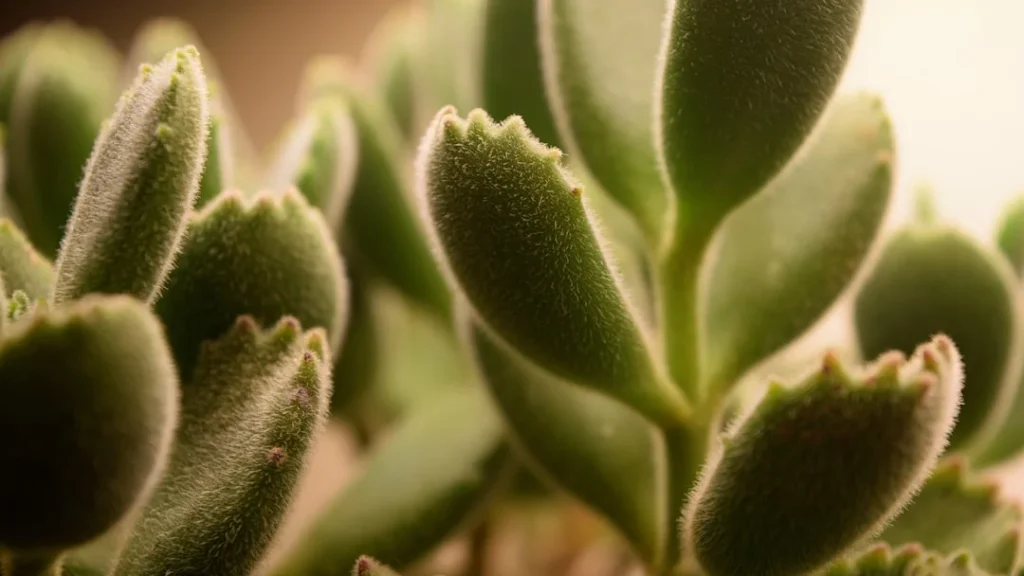
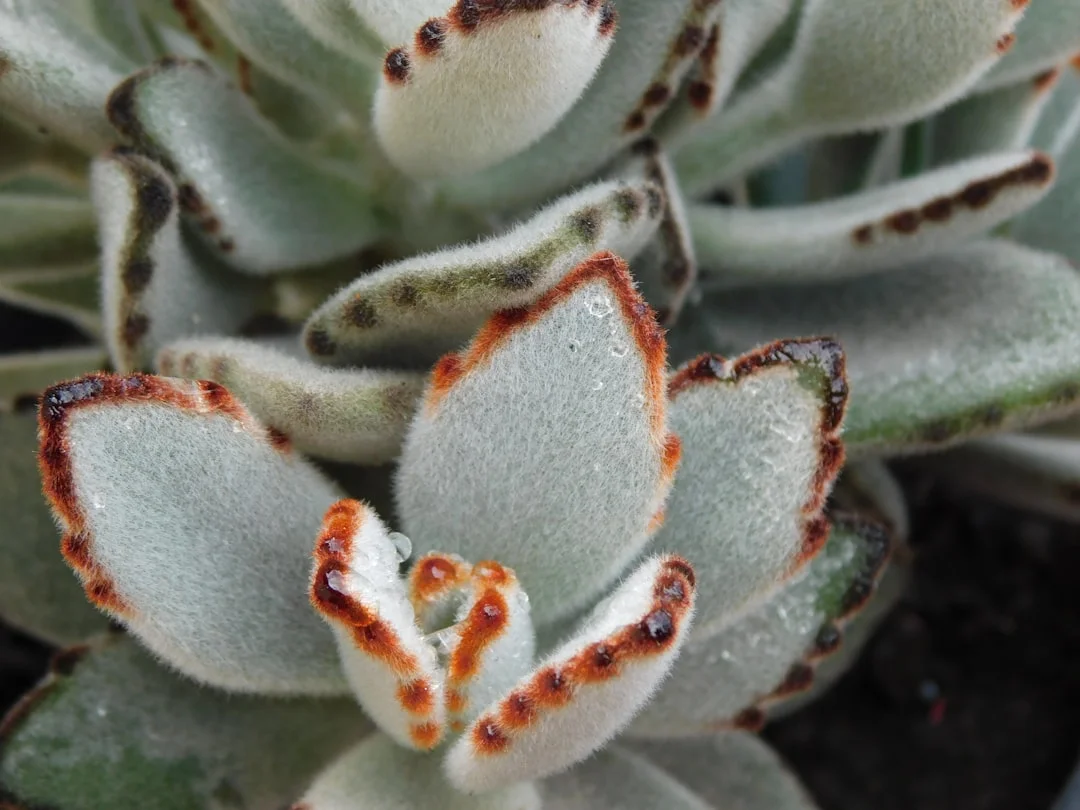
The leaves are its most iconic feature. They’re thick, oval, and covered in fine white hairs — like felt — that give them a soft, velvety texture. At the tips, you’ll see distinctive reddish-brown teeth, usually three to ten per leaf, that look unmistakably like claws. Hence the name. In spring and early summer, mature plants produce hanging, bell-shaped flowers in vivid shades of orange and red — a dramatic contrast against the silver-green foliage.
According to Kew Gardens, Cotyledon tomentosa is classified under the broader Cotyledon genus, which contains around 35 recognised species, most native to southern and eastern Africa. The plant typically reaches 30–45 cm (12–18 inches) in height when grown in containers, though specimens in the ground can grow taller in warm climates. It’s not just a pretty face — its resilience, compact size, and low-maintenance personality make it a favourite for both beginner and experienced gardeners worldwide.
Is Bear Paw Succulent a True Succulent?
Yes, absolutely. Cotyledon tomentosa stores water in its thick, fleshy leaves — the classic hallmark of true succulents. However, it’s worth noting that it belongs to a genus that sits somewhere between a shrubby perennial and a traditional rosette-forming succulent. Unlike echeverias, which grow flat and low, bear paw succulents develop upright, branching stems with age. This gives mature plants a more shrub-like appearance. The fine hairs covering the leaves also serve a biological purpose: they reduce water loss by creating a boundary layer of still air around the leaf surface, a clever adaptation to hot, dry environments. If you enjoy growing this plant, you might also find our guide on best succulents for indoor growing very useful.
Two Varieties You Should Know
There are two main varieties of Cotyledon tomentosa that gardeners commonly grow. The standard species has the grey-green, densely hairy leaves with dark reddish claws at the tips. Then there’s Cotyledon tomentosa subsp. ladismithiensis — sometimes sold as ‘Cat’s Paw’ — which has narrower leaves and slightly fewer teeth. Both are equally forgiving in cultivation. A third cultivar, ‘Variegata’, displays creamy yellow-and-green variegated leaves and is particularly sought after by collectors. All three share the same basic care needs, so everything in this guide applies across the board. Many gardeners who grow this plant also love to read about Baby Toes Succulent Care.
Bear Paw Succulent Characteristics at a Glance
Before diving deep into bear paw succulent care, it helps to understand exactly what kind of plant you’re working with. The table below summarises the key botanical and cultivation characteristics of Cotyledon tomentosa. Use it as your quick-reference checklist when making decisions about potting, placement, and feeding. If you enjoy growing this plant, you might also find our guide on Peperomia Plant Care Tips very useful.
Bear Paw Succulent Care: Light Requirements
Light is where bear paw succulent care either succeeds or fails first. This plant comes from the sun-drenched Eastern Cape of South Africa, so it craves bright light. However — and this is where many gardeners go wrong — it does NOT want harsh midday sun blasting onto it for six hours straight, especially when the temperature climbs above 38°C (100°F). That kind of intensity causes leaf scorch, turning those beautiful velvety edges brown and crispy.
The sweet spot is bright, indirect light for most of the day with a few hours of direct morning sun. An east-facing windowsill is almost perfect for indoor growers in the Northern Hemisphere. South-facing windowsills in the UK and Canada work beautifully in autumn and winter but may need a sheer curtain in peak summer. In tropical climates like Singapore, Malaysia, or coastal India, outdoors in dappled shade — under a tree canopy or a 30–40% shade cloth — gives excellent results.
In my experience, the biggest mistake I see is placing bear paw succulents in low-light corners because they look decorative there. Within weeks, the stems etiolate — they stretch toward the light, becoming leggy and weak, and the iconic compact shape is lost. Once that happens, it’s hard to reverse.
For indoor growers in darker climates — think the UK, Canada, Scandinavia, or the US Pacific Northwest — a full-spectrum grow light placed 15–20 cm (6–8 inches) above the plant for 12–14 hours daily is a genuine game-changer. The RHS recommends supplemental lighting for succulents grown indoors in regions with fewer than four hours of natural bright light per day.
Signs Your Bear Paw Succulent Isn't Getting Enough Light
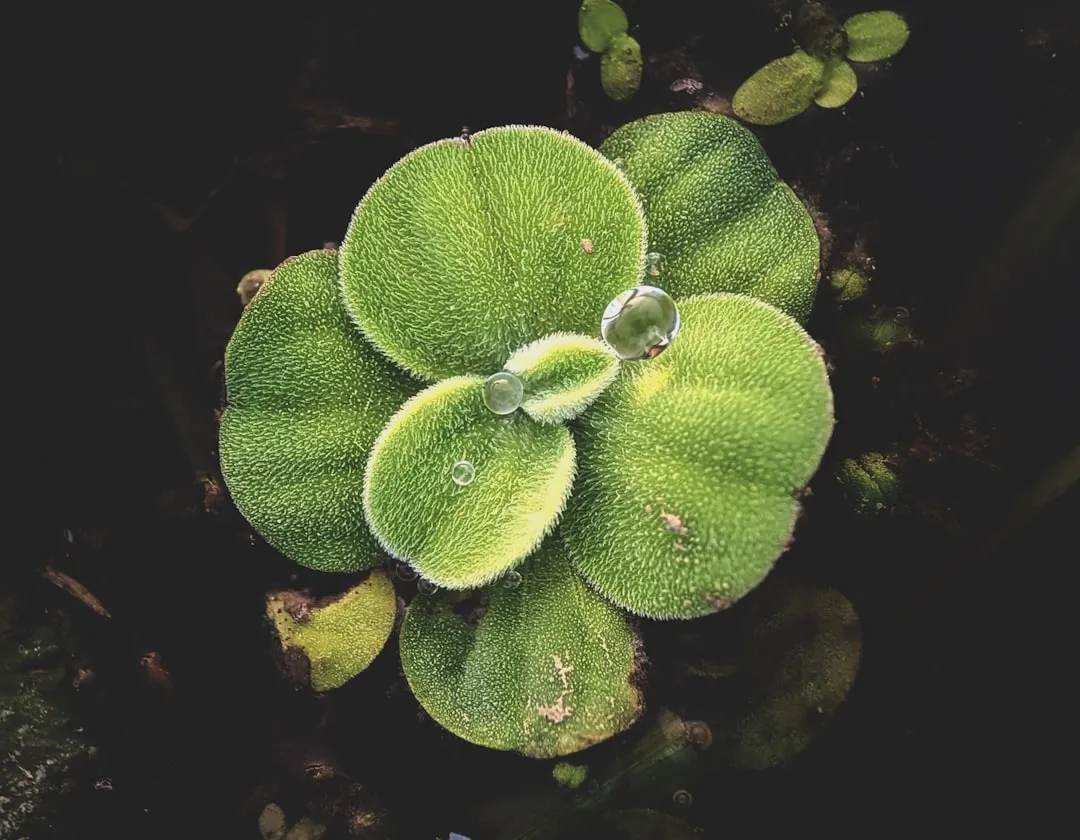
Etiolation is the most obvious signal — when stems stretch and leaves spread far apart instead of staying compact and tightly packed. The leaves may also fade to a paler, washed-out green instead of maintaining their silver-green richness. On the other hand, too much harsh sun causes bleaching, where the leaves turn a dull, chalky yellow before eventually going brown at the tips. If you notice either of these signs, move the plant gradually — never shift it directly from deep shade into full sun, as the shock can cause sunburn. Transition over one to two weeks by increasing light exposure slowly each day.
Seasonal Light Adjustments
Furthermore, light needs change with the seasons even inside your home. In the Northern Hemisphere, the sun’s angle drops significantly in winter, meaning your south-facing windowsill in December delivers far less intensity than it did in June. Rotate the pot a quarter-turn every two weeks to prevent the plant from leaning persistently toward the light source. In the Southern Hemisphere — Australia, South Africa, New Zealand — the same logic applies in reverse: winter sun comes from the north. Gardeners in the tropics have relatively consistent light year-round but should watch for the extra intensity during dry-season months when cloud cover disappears entirely.
Soil and Fertilizer for Bear Paw Succulents
Get the soil right, and you’ve solved half the challenges of bear paw succulent care in one move. Cotyledon tomentosa demands fast-draining, gritty soil that mimics its native rocky habitat. Standard potting compost holds far too much moisture and will lead to root rot within weeks. Instead, you want a mix that drains completely within 30–60 seconds of watering.
The classic recipe that works across all climates: mix 50% succulent or cactus compost with 50% inorganic grit. For the inorganic component, use perlite, coarse horticultural sand, or pumice — all are available globally at most garden centres and online. Pumice is the gold standard if you can find it; it improves drainage and aeration simultaneously without compacting over time. In South Asia, crushed brick grit or river sand can substitute effectively.
For containers, always choose terracotta pots over plastic ones. Terracotta is porous and allows the soil to dry out much faster between waterings — which is exactly what this plant wants. Make sure the pot has at least one large drainage hole. No drainage hole means no bear paw succulent care done right.
Fertilizing is minimal. Feed once in early spring and once in early summer using a balanced, low-nitrogen liquid fertilizer diluted to half strength. High-nitrogen feeds push soft, water-heavy leaf growth that’s prone to pests and rot. In autumn and winter, stop feeding entirely — the plant slows down and extra nutrients accumulate as salts in the soil, damaging the roots.
DIY Soil Mix Recipe for Bear Paw Succulents
Here’s a simple recipe you can make at home with materials found globally. Combine two parts cactus compost, one part perlite, and one part coarse horticultural sand. If you want to go further, add a small amount of horticultural charcoal — about 10% of the total volume — which helps prevent bacterial buildup in the soil over time. Mix thoroughly before use. This blend achieves a pH of approximately 6.0–7.0, which is the ideal range for Cotyledon tomentosa. The USDA classifies this species as best suited to well-drained loam or sandy soils in its outdoor growing zones.
Repotting: When and How
Bear paw succulents grow slowly, so they don’t need frequent repotting. In my experience, repotting every two to three years is usually sufficient. The right time to repot is early spring, just as the plant begins its active growing season. Signs that it’s time include roots emerging from drainage holes, soil that dries out abnormally fast, or a plant that looks visibly cramped. Choose a new pot only one size larger — about 2.5–5 cm (1–2 inches) wider in diameter. Too large a pot holds excess moisture around the roots, which increases rot risk. Let the plant sit dry in its new pot for three to four days before watering to allow any damaged roots to callous.
Watering Your Bear Paw Succulent the Right Way
Here’s the truth most gardening blogs skip: overwatering kills bear paw succulents far more often than underwatering does. This plant evolved to survive droughts. Its thick leaves are essentially water tanks. When you water too frequently, those roots sit in damp soil, oxygen can’t reach them, and root rot sets in — often silently, before you see any visible symptoms above the soil.
The correct method is the soak-and-dry technique. Water thoroughly — really thoroughly, until water runs freely from the drainage holes — then wait until the top 3–5 cm (1–2 inches) of soil is completely dry before watering again. In summer, this typically means watering every 10–14 days. In winter, you can stretch this to once a month or even less.
Water temperature matters too. Always use room-temperature water. Cold water from the tap can shock the roots of heat-loving succulents, especially in winter. If you’re in an area with heavily chlorinated tap water — as many gardeners in urban UK, Australia, and the US are — let the water sit uncovered overnight before use, or use filtered water. This allows chlorine to dissipate and brings the temperature closer to ambient.
One more thing: never water the leaves. The fine hairs on bear paw succulent leaves trap moisture, and water sitting in those hairs can lead to fungal spotting or rot, especially in humid climates. Always water at soil level, directing the flow toward the base of the plant.
Seasonal Watering Adjustments
Watering frequency must change with the seasons, and this is where many gardeners get caught out. During the active growing season — broadly spring and early summer in temperate zones, and the cooler months in tropical regions — the plant uses water more quickly, so you can water more regularly. However, in winter, Cotyledon tomentosa enters a semi-dormant state. Its metabolism slows, root activity decreases, and it simply doesn’t need or want much water. Overwatering in winter is especially dangerous because cool temperatures mean the soil takes much longer to dry out, prolonging the danger period for roots. In December and January across the Northern Hemisphere, once every three to four weeks is often more than enough.
How to Tell If Your Bear Paw Needs Water
The simplest test: press your finger 2–3 cm (about an inch) into the soil. If it feels even slightly damp, wait. If it’s completely dry and the pot feels light when you lift it, it’s time to water. Additionally, look at the leaves — when the plant is slightly thirsty, the leaves will feel slightly less firm and may show very faint wrinkling. This is normal and not a cause for alarm. It’s the plant drawing on its internal reserves, exactly as it evolved to do. Once you water, they plump back up within 24 hours. That slight wrinkling is actually your best natural watering cue.
Temperature, Humidity, and Climate Considerations
One of the joys of bear paw succulent care is how adaptable this plant is across different climates — as long as you respect its few firm limits. Cotyledon tomentosa prefers temperatures between 10°C and 32°C (50°F and 90°F). It’s happiest in the 18–25°C (65–77°F) range, which conveniently describes a comfortable indoor room temperature in most parts of the world.
Frost is the main danger. This plant is not cold-hardy — it will sustain cellular damage below 4°C (39°F) and will likely not survive a hard freeze. In USDA hardiness zones 9b–11, it can grow outdoors year-round. In RHS hardiness zone H2 (UK classification), it needs frost protection between October and April. Gardeners in Canada, northern Europe, and mountainous regions should treat it as a strictly indoor plant or a summer-outdoor-only specimen.
Humidity is less critical but still worth noting. Bear paw succulents prefer low to moderate humidity — ideally 30–50% relative humidity. In naturally humid climates like Singapore, coastal India, or Florida in summer, the plant needs especially good airflow to prevent fungal problems. Place it where a breeze reaches it, or run a fan nearby in enclosed spaces.
Interestingly, a gardener in a community garden in Bristol, UK, shared that she overwinters her bear paw succulent successfully in an unheated greenhouse where temperatures dip to around 6–7°C (43–45°F) — just above the danger threshold — and the plant has thrived for four consecutive winters. That tells us the plant has a little more cold tolerance than many sources suggest, provided it stays dry.
Growing Bear Paw Succulents in Tropical Climates
In tropical regions — India, Sri Lanka, Southeast Asia, the Caribbean, and equatorial Africa — the main challenge isn’t cold, it’s humidity and intense monsoon rainfall. During rainy seasons, outdoor bear paw succulents must be moved under cover or protected with a waterproof roof structure, because prolonged wet conditions saturate even gritty soil and promote root rot. Many tropical gardeners find success growing this plant exclusively in containers on covered balconies, where they control water exposure entirely. The year-round warmth actually suits Cotyledon tomentosa beautifully — growth stays active across most months, and with the right shelter from rains, these plants can be some of the most vigorous specimens you’ll see.
Growing in Arid and Mediterranean Climates
For gardeners in arid and Mediterranean climates — California, parts of Australia, the Middle East, southern Spain, and South Africa — bear paw succulents feel almost at home outdoors. However, even here, the extreme heat of summer deserves attention. When temperatures regularly exceed 38°C (100°F), move container plants to filtered afternoon shade. In these regions, the main growing season often shifts to autumn and spring, with a summer semi-dormancy that mirrors winter dormancy in temperate zones. Adjust your watering schedule accordingly: water more in the cooler months and back off significantly during peak summer heat.
How to Propagate Bear Paw Succulents
Propagation is one of the most rewarding parts of growing Cotyledon tomentosa — and one of the trickiest. Unlike many other succulents, bear paw does not propagate reliably from individual leaves. This surprises many gardeners who’ve successfully leaf-propagated echeverias or sedums. With bear paw, leaf propagation has a low success rate because the leaves don’t form roots and new plantlets the same way. Stem cuttings are your best bet.
Here’s the step-by-step process that works consistently across climates.
First, select a healthy stem — ideally one that’s at least 7–10 cm (3–4 inches) long with several pairs of healthy leaves. Use a clean, sharp blade or scissors sterilised with isopropyl alcohol. Cut just below a leaf node — the point where leaves attach to the stem. Remove the lower leaves from the bottom 2–3 cm (about an inch) of the cutting. Then, critically, let the cut end dry out and callous over for two to five days. This callous layer prevents rot when the cutting makes contact with soil.
Next, prepare a small pot with your gritty, well-draining soil mix. Insert the calloused end about 1.5–2 cm (about half an inch) into the soil. Don’t water yet. Place the pot in bright indirect light at a temperature between 18°C and 25°C (65–77°F). After five to seven days, give the soil a very light mist. Within three to six weeks, you should feel gentle resistance when you tug the cutting lightly — that means roots have formed.
Propagating from Seeds
Seed propagation is possible but slow and rarely done outside specialist collections. Seeds need to be sown in spring on the surface of a fine-grit seed-starting mix and kept at around 21°C (70°F) with a propagator lid or cling film to maintain humidity. Germination can take two to four weeks, and seedlings grow extremely slowly in the first year. For most home gardeners, stem cuttings are far more practical and rewarding. If you do want to experiment with seeds, the Royal Botanic Gardens Kew maintains comprehensive germination records for Cotyledon species that may help guide your approach.
Common Propagation Mistakes to Avoid
The most common mistake is skipping the callous step. Pushing a fresh cut directly into damp soil almost always leads to rot at the cut end before roots can form. Similarly, many gardeners water propagation cuttings too eagerly, wanting to encourage root growth, but excess moisture actually prevents the cutting from generating the water-stress signal that triggers root development. Another mistake is propagating in mid-winter when the plant is dormant — cuttings taken in this period take far longer to root and have higher failure rates. Stick to spring and early summer for the most reliable results.
Common Problems and How to Fix Them
Even with excellent bear paw succulent care, problems occasionally appear. Knowing what to look for — and acting quickly — makes all the difference between losing a plant and saving it.
Root rot is the most serious issue and is almost always caused by overwatering or poor drainage. Symptoms include yellowing leaves, a mushy base, and a foul smell from the soil. If you catch it early, remove the plant from its pot, trim away all dark and mushy roots with sterilised scissors, dust the healthy root tissue with powdered cinnamon or a sulphur-based fungicide, and repot in fresh, dry gritty mix. Don’t water for a week. If the rot has reached the main stem, you may only be able to save the plant through stem cuttings taken from healthy upper growth.
Leaf drop is another common complaint, particularly in plants that have recently been moved or repotted. Bear paw succulents are sensitive to sudden environmental changes. Moving a plant from one light level to another too quickly, or temperature fluctuations near a cold window or air-conditioning vent, can trigger leaf drop. Stabilise the environment and the plant will recover.
Mealybugs are the most frequent pest. They appear as white, cotton-like clusters in leaf joints and along stems. They suck plant sap, weaken growth, and excrete a sticky honeydew that promotes fungal mould. Treat immediately with 70% isopropyl alcohol applied directly to the bugs using a cotton swab, then spray the entire plant with a neem oil solution (2–3 ml neem oil per litre of water with a drop of dish soap). Repeat every seven days for three weeks.
Why Are My Bear Paw Leaves Falling Off?
The leaves on Cotyledon tomentosa are attached somewhat loosely at the base — more so than many other succulents — which makes them prone to dropping when the plant is stressed. The most common triggers are: overwatering, underwatering that’s gone on too long, sudden temperature drops, repotting shock, or physical bumping and rough handling. The fuzzy leaves also tend to drop if you touch them frequently. In my experience, the simplest advice is to find a stable spot where the plant isn’t disturbed, water it correctly, and give it time. Consistent care prevents the majority of leaf-drop episodes.
Dealing with Fungal Spots and Powdery Mildew
In humid climates, bear paw succulents can develop small brown or black fungal spots on the leaf surface, particularly if water sits on the leaves or if airflow is poor. Powdery mildew — a white powdery coating — occasionally appears in conditions of high humidity and low light. Both are manageable. Improve ventilation first. Then remove affected leaves and treat the plant with a diluted neem oil spray or a copper-based fungicide available at most garden centres globally. Prevent recurrence by always watering at soil level and ensuring the plant has adequate air circulation.
Seasonal Care Throughout the Year
Bear paw succulent care changes meaningfully across the seasons, even though this plant grows year-round in ideal conditions. Understanding these seasonal rhythms helps you support the plant at each stage rather than applying the same routine all year.
In spring (March–May in the Northern Hemisphere; September–November in the Southern Hemisphere), the plant exits its winter rest and enters its most active growth phase. This is the time to repot if needed, begin feeding with diluted liquid fertilizer, and increase watering frequency slightly as temperatures rise. It’s also the best window for taking stem cuttings for propagation.
In early summer (June–July in the Northern Hemisphere), growth continues strongly and you may see flower buds forming on mature plants. The tubular orange-red flowers — one of the most spectacular things about this species — typically appear in late spring to early summer. Keep up with watering as temperatures rise, but watch for signs of heat stress if you’re in a region experiencing temperatures above 35°C (95°F).
In June specifically, which is where we are now in the seasonal calendar, gardeners in temperate Northern Hemisphere regions should be watchful of the strongest midday sun hours. Meanwhile, gardeners in the Southern Hemisphere entering their winter months should begin reducing watering and stop feeding entirely.
In autumn and winter, the plant significantly slows down. Reduce watering to once every three to four weeks, stop all fertilizing, and make sure the plant is protected from temperatures below 5°C (41°F). Don’t be alarmed if growth appears to stall completely — this is normal and healthy.
How to Encourage Bear Paw Succulent to Flower
Most gardeners never see their bear paw succulent flower indoors — and the reason is nearly always insufficient light combined with no seasonal temperature variation. To trigger blooming, the plant needs a period of cooler temperatures at night, around 10–13°C (50–55°F), during late autumn and winter. This temperature differential between night and day mimics the plant’s native South African habitat, where cold nights follow warm days. Combine this with bright light exposure and a dry winter rest period, and you significantly increase the chances of seeing those gorgeous hanging orange bells appear in spring. It’s one of those rewards that feels magical the first time it happens.
Bear Paw Succulent Indoors vs. Outdoors
One of the most common questions about bear paw succulent care is whether this plant does better inside or outside. The honest answer is: it depends entirely on where you live.
In regions where temperatures stay reliably above 5°C (41°F) year-round — USDA zones 9b and above, which include coastal California, southern Florida, the Mediterranean coast, South Africa, and much of Southeast Asia — outdoor growing is ideal. The plant gets genuine sunlight, better airflow, and more natural temperature variation, all of which promote stronger growth and flowering.
In cooler climates — the UK, Canada, northern Europe, Japan’s northern regions, and high-altitude zones globally — bear paw succulents need to be treated as indoor plants for at least part of the year. Outdoors in summer is wonderful; outdoors in winter is fatal. Many gardeners in these regions keep the plant on an outdoor patio or balcony from late spring through early autumn, then bring it indoors before the first frost.
Indoors, the main challenge is always light. Most homes, even with well-placed windows, provide significantly less light intensity than outdoor conditions. This is why grow lights are so valuable for indoor bear paw succulent care in darker climates. Additionally, indoor environments tend to have consistent temperatures with no cold-night stimulus, which is why indoor plants rarely flower.
Container Growing Tips for Balconies and Small Spaces
Bear paw succulents are superb container plants, which is great news for urban gardeners with limited space. A 15–20 cm (6–8 inch) terracotta pot is ideal for a single mature specimen. Group it with other drought-tolerant succulents — echeverias, haworthias, or aloes — for a striking low-maintenance display. On balconies, position the container where it receives morning sun and is shielded from strong afternoon wind, which can dry out the soil too rapidly and cause physical leaf damage. In regions with heavy rainfall, even briefly moving a balcony container under an overhang during downpours can prevent the waterlogging that leads to root rot.
Uses and Benefits of Growing Bear Paw Succulent
Beyond pure aesthetics, there are several good reasons to welcome Cotyledon tomentosa into your home or garden. As a specimen plant, it’s genuinely eye-catching — few plants generate as many ‘what is that?’ reactions from visitors. Its compact size makes it versatile for windowsills, shelves, terrariums (open-top style), and succulent gardens.
In terms of air quality, while the scientific evidence for houseplants significantly improving indoor air quality is more nuanced than popular media suggests, succulents do perform CAM photosynthesis — releasing oxygen at night rather than during the day. This makes them a pleasant choice for bedrooms from a traditional perspective, though you shouldn’t expect dramatic air-purification effects.
It’s important to note one critical safety point: Cotyledon tomentosa is toxic to pets and livestock. According to Wikipedia's botanical record for Cotyledon tomentosa, the plant contains bufadienolides — cardiac glycosides that can cause a condition called ‘krimpsiekte’ (Afrikaans for ‘shrinking disease’) in goats, sheep, and cattle in South Africa. In household pets — cats and dogs — ingestion can cause vomiting, lethargy, and in significant quantities, cardiac effects. Keep this plant out of reach of pets and small children. There are no established medicinal uses for Cotyledon tomentosa in Ayurveda, TCM, or Western herbalism — it’s cultivated purely for ornamental purposes.
From a horticultural therapy perspective, many gardeners find that the slow, predictable pace of caring for succulents like bear paw — with its forgiving nature and low daily demands — makes it an excellent plant for those managing anxiety or looking for a calming green hobby.
Bear Paw Succulent in Interior Design
In recent years, Cotyledon tomentosa has become a darling of interior designers and plant stylists globally, particularly in Japandi-style (Japanese-Scandinavian) interiors where the emphasis is on natural textures and minimal care. Its sculptural, architectural form pairs beautifully with raw ceramics, concrete pots, and wooden surfaces. A mature specimen in a terracotta pot on a well-lit shelf creates a living sculptural element that changes subtly through the seasons — especially when it flowers. In interior design contexts, bear paw succulent care is often cited as one of its biggest selling points: it asks little and delivers a great deal of visual impact in return.
Frequently Asked Questions
How often should I water my bear paw succulent?
Use the soak-and-dry method for bear paw succulent care: water thoroughly until it drains from the holes, then wait until the top 3–5 cm (1–2 inches) of soil is completely dry. In warm growing seasons, this typically means watering every 10–14 days. In winter or cooler months, stretch this to every three to four weeks. The exact frequency depends on your climate, pot size, and how much light the plant receives — smaller pots and brighter conditions mean faster drying and more frequent watering.
Can I grow bear paw succulent indoors in a cold climate?
Absolutely. Bear paw succulent care indoors in cold climates — including the UK, Canada, Scandinavia, and northern US states — is very achievable with the right setup. Place the plant in your brightest window, ideally south or east-facing. In winter, when natural light is limited, supplement with a full-spectrum LED grow light for 12–14 hours daily. Keep the plant away from cold draughts near windows and radiators that cause dramatic temperature swings. Stop watering and feeding in winter, and the plant will happily wait out the cold months with minimal fuss.
Is bear paw succulent safe for pets?
No — bear paw succulent (Cotyledon tomentosa) is toxic to pets. It contains bufadienolides, a type of cardiac glycoside that can cause vomiting, lethargy, weakness, and in larger quantities, cardiac issues in cats and dogs. It's also toxic to livestock including goats and sheep. Keep this plant on high shelves or in rooms that pets and small children cannot access. If you suspect your pet has ingested any part of the plant, contact your veterinarian or a pet poison helpline immediately.
Why are my bear paw succulent leaves falling off?
Leaf drop in Cotyledon tomentosa is usually triggered by overwatering, sudden environmental changes, repotting shock, or rough physical handling. The leaves are naturally loosely attached and drop easily when the plant is stressed. Review your watering schedule first — this is the most common cause. Then check that the plant hasn't been moved to a dramatically different light level recently or exposed to temperature fluctuations from air conditioning or cold draughts. Once the stressor is removed and care stabilises, the plant typically recovers well.
How do I grow bear paw succulent in containers?
Container growing is actually ideal for bear paw succulent care because it gives you full control over soil, drainage, and watering. Choose a terracotta pot 15–20 cm (6–8 inches) in diameter with at least one large drainage hole. Fill it with a 50/50 mix of cactus compost and perlite or coarse sand. Place the container in bright indirect light with some morning sun. Water using the soak-and-dry method, and avoid leaving the pot sitting in a saucer of water. Repot every two to three years in spring when the roots outgrow the container.
How do I get my bear paw succulent to flower?
Triggering flowering in Cotyledon tomentosa requires two things: plenty of bright light and a cool, dry winter rest. Allow nighttime temperatures to drop to around 10–13°C (50–55°F) during autumn and winter while keeping the plant relatively dry. This mimics the plant's natural South African habitat where cold nights follow warm days. After this rest period, as temperatures warm in spring, increase watering gradually and move the plant to its brightest position. Mature plants that have experienced this seasonal shift regularly will produce their spectacular tubular orange-red flowers in late spring.
What is the difference between bear paw succulent and cat's paw succulent?
Bear paw succulent (Cotyledon tomentosa) and cat's paw (Cotyledon tomentosa subsp. ladismithiensis) are closely related — the cat's paw is actually a subspecies of the bear paw. The main differences are subtle: cat's paw typically has narrower, slightly less densely hairy leaves and fewer teeth at the leaf tips. Bear paw leaves tend to be broader and more rounded with more prominent claw-like teeth. Both share identical care needs, so this guide applies fully to both. A third cultivar, 'Variegata', adds creamy yellow-and-green colouring to the mix and is especially prized by collectors.
Is bear paw succulent suitable for beginners?
Yes — with one caveat. Bear paw succulent care is beginner-friendly as long as you resist the urge to overwater. If you can commit to the soak-and-dry watering method and provide bright light, this plant is very forgiving of occasional neglect. It grows slowly, doesn't need frequent repotting, and doesn't require complex feeding routines. Many experienced gardeners actually consider it easier than more popular succulents like echeverias, which can be pickier about humidity and temperature swings. It's a great confidence-building plant for anyone starting their succulent journey.
Final Thoughts
Bear paw succulent care is really about understanding and respecting one beautiful contradiction: this plant looks delicate — with its soft, velvety leaves and tiny claws — but it’s built to survive. It comes from one of the toughest landscapes on earth, and it carries that resilience into your home or garden. Give it bright light, well-draining soil, and restrained watering, and it will reward you for years. Neglect its core needs — especially overwatering — and it will quietly decline before you notice. The good news is that once you’ve internalised the soak-and-dry method and found the right sunny spot, bear paw succulent care essentially runs itself. Whether you’re growing it on a windowsill in Toronto, a balcony in Bangalore, or a patio in Sydney, the fundamentals don’t change. Start with the right soil mix, respect the seasonal rhythms, keep it away from pets, and you’ll have one of the most visually striking succulents in your collection. And if you’re patient enough to give it a cool, dry winter rest — those tubular orange flowers might just be your reward in spring.

