
⏱ 32 min read
Table of Contents
- What Are Lithops (Living Stones)?
- Lithops Characteristics at a Glance
- Benefits of Growing Lithops Indoors
- How to Grow Lithops Indoors: Getting Started
- Soil and Fertilizer for Indoor Lithops
- Watering Lithops Indoors: The Most Critical Skill
- Sunlight and Temperature Requirements
- Common Problems and How to Fix Them
- Propagation: Growing Lithops from Seed
- Seasonal Care Calendar for Lithops
- Uses and Cultural Significance of Lithops
Lithops care indoors is easier than most people think — once you understand one counterintuitive rule that almost every beginner breaks. These extraordinary little succulents, nicknamed ‘living stones,’ have evolved to look exactly like the pebbles and rocks they grow among in the wild. They fool predators. They fool rainfall. And, honestly, they fool gardeners too. Most people kill lithops not by neglect, but by caring too much — especially by watering them at entirely the wrong time of year. In this complete guide, you’ll learn exactly how lithops care indoors works across every climate zone, from a sunny windowsill in Singapore to a heated apartment in Toronto or a south-facing flat in London. By the end, you’ll know precisely why your previous attempts may have failed — and what to do radically differently. Whether you’re a seasoned succulent collector or a curious beginner, understanding lithops care indoors starts with one surprising truth: these plants survive by going almost completely dormant twice a year. Let’s unpack everything. Many gardeners who grow this plant also love to read about using grow lights for indoor plants.
Quick Highlights
- Discover the single biggest watering mistake that kills most indoor lithops — and how to avoid it completely
- Learn climate-specific care tips for tropical, temperate, arid, and cold-continental growing environments
- Understand the two annual dormancy cycles that govern every aspect of lithops health and growth
- Master the ideal soil mix, light exposure, and container choice for thriving living stones indoors
- Follow a clear seasonal care calendar so your lithops flowers, splits, and never rots
- Propagate your collection from seeds with a proven step-by-step process used by collectors worldwide
Plant Characteristics at a Glance
| Common Name | Lithops, Living Stones, Pebble Plants |
| Scientific Name | Lithops (genus with ~145 species) |
| Family | Aizoaceae |
| Origin | Southern Africa — primarily South Africa and Namibia |
| Habitat | Arid quartz gravel plains, rocky desert flats; rainfall 50–100 mm/year |
| Plant Type | Succulent perennial; mimicry plant |
| Indoor Plant | Yes — excellent windowsill and shelf plant with adequate light |
| Outdoor Plant | Yes (frost-free climates); bring indoors below 5°C (41°F) |
| Leaves | Two fused succulent leaves forming a single body; patterned tops act as light-transmitting 'windows' |
| Flowers | Daisy-like, white or yellow; emerge from central leaf fissure; faintly scented (coconut/honey) |
| Flowering Season | Autumn (Sept–Nov Northern Hemisphere; March–May Southern Hemisphere) |
| Fruit | Small dry capsule containing numerous fine seeds; opens when wet (hygroscopic) |
| Seeds | Extremely fine; viability 2–3 years; surface-sow only |
| Roots | Moderate taproot; sensitive to overwatering and compacted substrate |
| Height | 2–4 cm (0.8–1.5 inches) above soil level; body mostly underground |
| Growth Rate | Very slow; one new leaf pair per year |
| Light Requirements | 4–5 hours direct sunlight daily; south-facing window (N. Hemisphere); grow lights in low-light climates |
| Soil Requirements | Extremely well-draining gritty mix: 80% inorganic grit, 20% cactus compost; pH 6.0–7.0 |
| Water Requirements | Very low; water only during active growth phases; none during dormancy (summer & winter) |
| Temperature Requirements | Optimal 15–30°C (59–86°F); tolerates 5–38°C (41–100°F); no frost tolerance |
| Humidity Requirements | Low humidity preferred (30–50%); avoid high humidity environments without excellent airflow |
| Propagation | Primarily by seed; clump division only in mature multi-headed specimens |
| Uses | Ornamental houseplant; succulent collecting; minimalist and biophilic interior design; historical survival use (moisture source) by indigenous San people |
| Medicinal Properties | No established medicinal use in Ayurveda, TCM, or Western herbalism |
| Toxicity | Generally considered non-toxic to humans; mild stomach upset possible if ingested in quantity; low risk to pets — still avoid ingestion |
| Cultural Significance | Globally collected; major societies in Germany, UK, US, Japan, South Africa; rising popularity in East Asian urban plant culture |
| Common Pests | Root mealybugs (Rhizoecus spp.), above-ground mealybugs; relatively pest-resistant overall |
| Common Diseases | Root rot (overwatering); fungal lesions from surface moisture; etiolation from insufficient light |
| Special Care Tips | Never water during the split phase; use terracotta pots; surface top-dress with fine gravel; never mist leaves |
| Cultural Practices | Bottom-watering for seedlings; seasonal watering calendar; annual repotting inspection but pot rarely changed |
| Vastu Direction | East or South-facing window (maximises morning/afternoon sun); no specific Vastu tradition established for this non-native plant |
Lithops care indoors Names in Different Languages
| English | Lithops / Living Stones / Pebble Plants |
| Mandarin Chinese | 生石花 (Shēng shí huā — 'living stone flower') |
| Spanish | Litops / Piedras vivientes |
| Hindi | लिथॉप्स / जीवित पत्थर (Jīvit patthar) |
| Gujarati | જીવંત પથ્થર (Jīvant pathar) |
| Arabic | الحجارة الحية (Al-hijara al-hayya — 'living stones') |
| Bengali | জীবন্ত পাথর (Jibanta pathor) |
| Portuguese | Litóps / Pedras vivas |
| Russian | Живые камни (Zhivye kamni — 'living stones') |
| Japanese | リトープス / 石の花 (Ishi no hana — 'stone flower') |
| Punjabi | ਜਿਉਂਦੇ ਪੱਥਰ (Ji-unday pattar) |
| German | Lebende Steine ('living stones') |
| Javanese | Watu urip ('living stone') |
| Korean | 리톱스 / 살아있는 돌 (Sal-a-inneun dol) |
| French | Plantes cailloux / Pierre vivante |
| Telugu | జీవించే రాళ్ళు (Jīvinche rāḷḷu) |
| Marathi | जिवंत दगड (Jivant dagad) |
| Tamil | உயிர்க்கல் (Uyirkkal — 'living stone') |
| Urdu | زندہ پتھر (Zinda patthar) |
| Turkish | Canlı taşlar ('living stones') |
| Vietnamese | Đá sống ('living stone') |
What Are Lithops (Living Stones)?
Imagine reaching down to pick up a smooth pebble from a gravel path — and it’s actually a plant. That’s the experience that gave lithops their nickname: living stones. These are not a single species but a genus of around 145 recognised species in the family Aizoaceae, all native to the arid regions of southern Africa, primarily South Africa and Namibia. According to Kew Gardens, lithops are among the most extraordinary examples of plant mimicry on Earth, having evolved their stone-like appearance over millions of years to avoid being eaten by herbivores in their extremely harsh desert habitat.
Each plant consists of just two fused, succulent leaves — called a leaf pair — with a small slit or fissure running between them. Nutrients and water are stored in these thick leaves, which can survive months without rainfall. Flowers emerge from the central fissure in late summer and autumn (in the Northern Hemisphere), and they’re surprisingly beautiful — white or bright yellow, daisy-like blooms that look almost comically large for such a tiny plant.
Here’s the thing most people don’t realise: lithops actively die back and regrow from within themselves. Once a year, a new leaf pair develops inside the old one, which then shrivels as it transfers its moisture and nutrients to the new growth. This process is called ‘the split,’ and it’s the most critical period in the lithops lifecycle — and the one where watering can do the most damage. For more tips, check out our detailed article on using grow lights for indoor plants.
Natural Habitat and Why It Matters for Indoor Care
Lithops grow in one of the harshest environments on the planet: rocky quartz fields and desert gravel flats in South Africa’s Karoo and Namaqualand regions, and Namibia’s Namib Desert. Annual rainfall in these areas can be as low as 50–100 mm (2–4 inches) per year, falling mostly in specific seasons. Understanding this habitat is the foundation of successful lithops care indoors. You’re not just growing a plant — you’re recreating the rhythms of a southern African desert inside your home. That means bright light, fast-draining gritty soil, and a strict watering schedule tied to the plant’s growth cycle, not to how dry the compost feels. If you enjoy growing this plant, you might also find our guide on using grow lights for indoor plants very useful.
How Lithops Got Their Name
The name ‘lithops’ comes from the ancient Greek words lithos (stone) and ops (face or appearance) — quite literally, ‘stone face.’ They were first formally described by the British botanist William John Burchell in 1811 after he collected specimens near the Orange River in South Africa. He initially mistook them for a discoloured stone. Even botanists were fooled. In German, they’re often called Lebende Steine (living stones); in French, plantes cailloux (pebble plants); and in Japanese, 石の花 (Ishi no hana), meaning ‘stone flower.’ Each name tells the same story of a plant that mastered disguise long before humans started collecting it. For more tips, check out our detailed article on using grow lights for indoor plants.
Lithops Characteristics at a Glance
Before diving deeper into care, here’s a quick overview of what you’re working with. Lithops are slow-growing, extremely drought-tolerant, and long-lived — with some specimens in collections reportedly surviving for 50 years or more with correct care. They stay compact (rarely exceeding 3–4 cm / 1–1.5 inches above soil level), making them ideal for windowsills, shelves, and small spaces. They’re non-toxic to humans and generally considered low-risk around pets, though ingestion isn’t recommended. See the full characteristics table and names table below for all essential details. Many gardeners who grow this plant also love to read about using grow lights for indoor plants.
Benefits of Growing Lithops Indoors
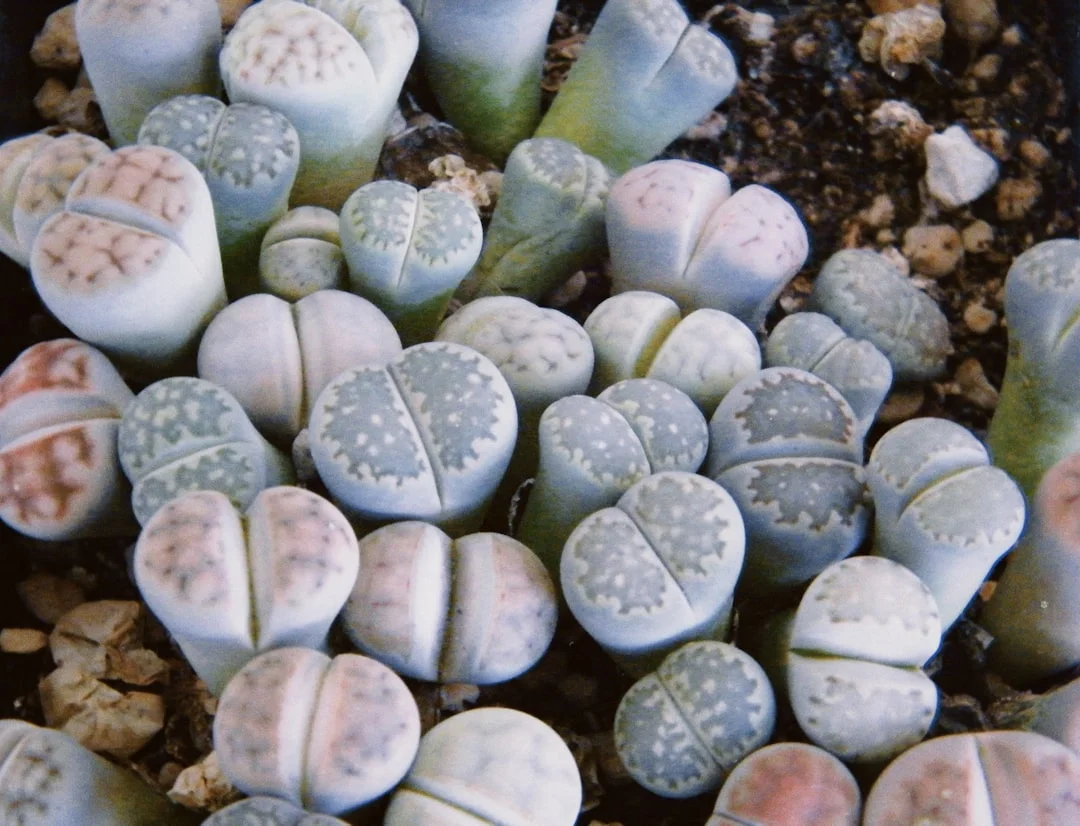
Why are succulent collectors around the world obsessed with lithops? It’s not just their alien beauty — it’s the whole package. First, they’re genuinely low-maintenance once you understand their rhythm. No daily watering. No frequent repotting. No complicated pruning. In fact, lithops thrive on something most plants can’t tolerate: neglect during dormancy. Second, they’re space-efficient. A dozen different species can sit comfortably on a single windowsill, offering tremendous variety in a tiny footprint. Third, they flower — reliably and beautifully — every autumn, rewarding patient growers with blooms that smell faintly of coconut or honey.
In my experience, lithops also do something powerful for beginner succulent gardeners: they teach restraint. The number-one lesson — don’t overwater — is a lesson that improves how you care for every other plant you own. Furthermore, lithops are genuinely long-lived houseplants. Unlike annuals that need replacing each season, a well-cared-for lithops can be a decade-long companion. Many collectors in the UK, US, and Germany report plants that have been in their families for 15–20 years. That’s a plant with a story.
Air Quality and Mindfulness Benefits
While lithops aren’t studied as air purifiers the way some tropical plants are, they contribute meaningfully to the practice of mindful plant care. Their extremely slow growth encourages observation over intervention — a valuable counterpoint to our instinct to ‘do something’ when we see a plant sitting quietly. Many collectors find lithops-watching meditative. There’s also the joy of the annual flowering and split cycles, which turn plant care into a slow-burn seasonal ritual rather than a daily chore. For apartment dwellers in dense cities like Tokyo, London, or New York, that ritual connection to natural cycles has genuine well-being value.
How to Grow Lithops Indoors: Getting Started
Starting lithops care indoors on the right foot is mostly about choosing the right container and position before you even plant anything. Get these two decisions right, and everything else becomes dramatically easier.
For containers, drainage is everything. Lithops must never sit in water. Choose a pot with at least one large drainage hole — terracotta pots are ideal because they’re porous and allow moisture to escape through the walls as well as the base. Shallow pots work well since lithops have a modest taproot, though some collectors prefer deeper pots (10–12 cm / 4–5 inches) that hold a thicker layer of gritty mineral mix. Avoid glass terrariums without drainage — they trap moisture and cause rot almost inevitably.
For position, a south-facing windowsill (in the Northern Hemisphere) or a north-facing windowsill (in Australia and New Zealand) is ideal, offering the most hours of direct sun. East- or west-facing windows work, but you’ll need supplemental grow lighting in winter in most temperate climates. Lithops care indoors really hinges on getting 4–5 hours of direct sunlight daily. Without it, plants etiolate — they stretch thin and pale, losing their compact stone shape entirely.
Choosing the Right Pot and Placement
Terracotta is the gold standard for lithops containers — it breathes, it wicks, and it dries out faster than plastic or glazed ceramic. If you’re growing in a humid climate (Singapore, coastal Queensland, Mumbai during monsoon), terracotta is especially important because humidity alone can keep the soil damp longer than lithops can tolerate. In dry climates like Arizona or Rajasthan, you have slightly more flexibility with ceramic pots, but drainage holes remain non-negotiable. Group multiple lithops together in a wide, shallow tray-style pot — they look spectacular as a miniature stone landscape and their combined minimal water needs make management simple.
Sourcing Healthy Lithops Plants
When buying lithops, look for plants that are firm and compact — never soft, wrinkled, or mushy. Some wrinkling during the split phase (when the new leaf pair is emerging) is completely normal. However, a plant that feels hollow or squishy has likely been overwatered and may be rotting internally. A healthy lithops should feel solid, like a small smooth pebble, exactly as nature intended. The RHS advises purchasing from reputable succulent nurseries rather than general garden centres, where lithops are often displayed in incorrect soil mixes and overwatered before sale.
Soil and Fertilizer for Indoor Lithops
If there’s one technical decision that governs lithops care indoors more than any other, it’s the soil mix. Standard potting compost — the kind sold everywhere for general houseplants — is almost always fatal for lithops. It holds too much water, compacts over time, and lacks the mineral grit that lithops roots need. In the wild, lithops grow in almost pure quartz gravel with a thin dusting of organic matter. Your indoor mix should mimic this as closely as possible.
The most widely used formula among experienced lithops growers is an 80/20 mix: 80% inorganic grit (coarse perlite, horticultural grit, or crushed granite) to 20% organic matter (good-quality cactus compost or fine-grade coconut coir). Some growers go as far as 90/10 for species from the driest habitats. The key is that water should drain completely within 60 seconds of watering — if it pools, puddles, or drains slowly, add more grit.
Fertilizer needs are minimal. Lithops evolved in nutrient-poor soils. Over-fertilizing causes rapid, unsustainable growth — and ironically, it’s a leading cause of lithops splitting at the wrong time of year, which stresses the plant badly. If you fertilize at all, use a quarter-strength cactus fertilizer once in spring and once in early autumn — never during dormancy, never during the split phase.
DIY Soil Mix Recipe
Here’s a proven soil recipe used by lithops collectors from the UK to Japan. Combine 3 parts coarse perlite (available globally in garden centres and online), 1 part horticultural sharp sand or crushed granite, and 1 part quality cactus compost. Mix thoroughly before use. Top-dress the surface of the pot with a thin layer of fine gravel or aquarium grit — this prevents moisture from sitting against the base of the plant’s leaves, which causes the most common form of rot. This mix replicates the mineral substrate of the Karoo far better than any commercial ‘cactus and succulent’ premix you’ll find on a supermarket shelf.
Watering Lithops Indoors: The Most Critical Skill
Here’s the single most important truth in all of lithops care indoors: you will almost certainly water them too often, too generously, and at entirely the wrong times. It’s not your fault — every instinct we’ve built as plant carers tells us to water when soil is dry. With lithops, that instinct will kill them.
Lithops follow a strict growth cycle with two defined dormancy periods — one in summer (June–August in the Northern Hemisphere) and one in winter (November–February). During both periods, you should water little to nothing. During active growth phases — spring and autumn — watering increases, but still only when the leaves show the faintest sign of wrinkling.
The safe watering rule: water thoroughly (until it drains freely from the bottom), then wait until the leaves very slightly wrinkle before watering again. In practice, this means watering perhaps once every 3–4 weeks during active growing seasons, and not at all during dormancy. In a humid climate like coastal Southeast Asia or the UK in winter, outdoor humidity can mean you water even less than this.
Many gardeners find the ‘soak and dry’ method most reliable: pour water slowly around the base of the plant (not on the leaves), allow the pot to drain completely, and then don’t water again until the signs of slight wrinkling appear. Never mist lithops — the fine water droplets sit in the leaf fissure and can cause rot or fungal infection.
The Annual Watering Calendar
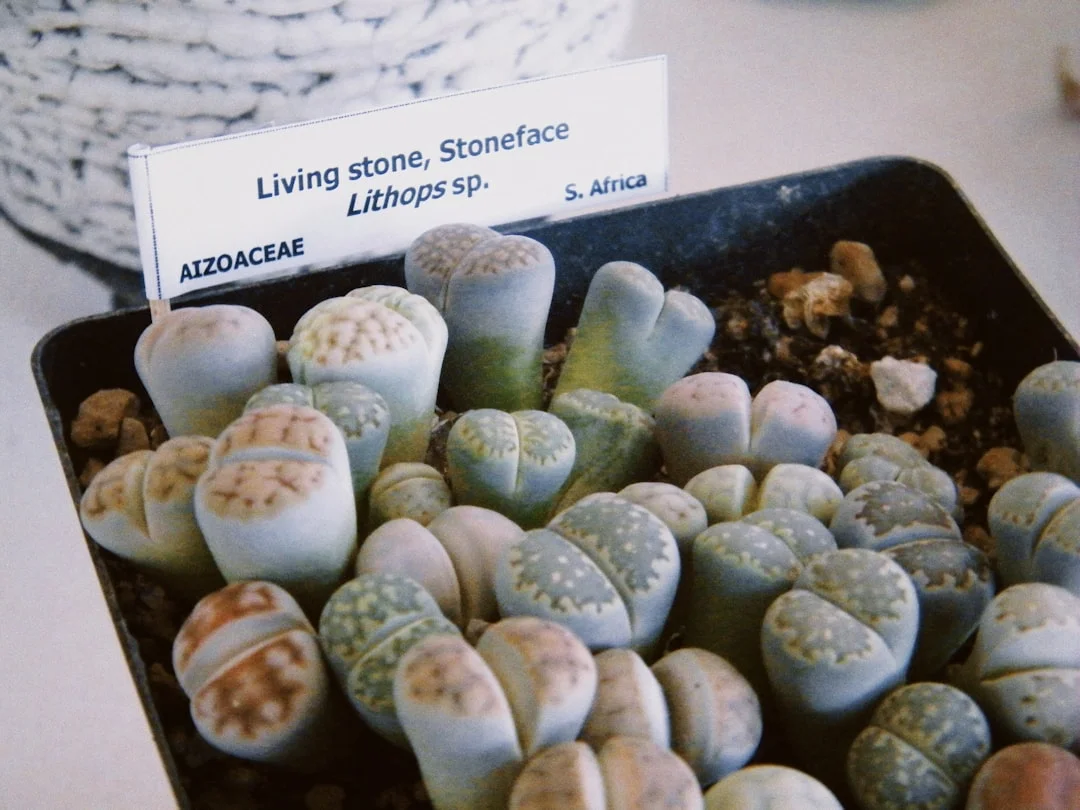
This is the watering timeline that works for most growers in the Northern Hemisphere. From January through March, do not water — the plant is dormant and the new leaf pair is developing inside. From April through May, begin light watering as the old leaves shrivel and the new pair emerges. From June through August, reduce to almost no water — summer dormancy. From September through October, water moderately to support flowering. From November through December, stop watering entirely again. In the Southern Hemisphere (Australia, South Africa, South America), simply shift this calendar by six months. Gardeners in tropical climates near the equator should follow the growth stages visually rather than by calendar month, since seasons are less defined.
Reading Your Lithops: Visual Water Cues
Learning to read your lithops is more reliable than any schedule. A well-hydrated lithops is firm, smooth, and slightly convex on top — domed like a smooth pebble. A thirsty lithops develops subtle lateral wrinkles across the sides of the leaf pair. Those wrinkles are your signal: water now. But here’s the critical nuance — during the split phase (when the new leaf pair is actively emerging), wrinkled outer leaves are normal and expected. The outer leaves are deliberately transferring moisture to the new growth inside. Watering during this phase adds moisture the plant cannot use and causes the old leaves to remain swollen, which physically prevents the new pair from emerging cleanly.
Sunlight and Temperature Requirements
Lithops care indoors lives or dies on light. These plants evolved at low latitudes in southern Africa, receiving intense, direct sun for much of the year. In the wild, only the very top surface of each leaf pair is exposed above ground — and that exposed surface functions as a transparent ‘window’ that lets light deep into the plant’s body for photosynthesis. Indoors, without sufficient light, lithops etiolate quickly: they stretch upward, lose their colour intensity, and become far more susceptible to rot.
Target a minimum of 4–5 hours of direct sunlight daily. A south-facing windowsill (Northern Hemisphere) is best. If your home can’t provide this — common in north-facing apartments or high-latitude cities like Glasgow, Stockholm, or Vancouver — supplement with a dedicated grow light. Full-spectrum LED grow lights placed 15–20 cm (6–8 inches) above the plants for 12–14 hours daily work excellently and are now widely available online for under $30 USD (approximately £24 GBP / ₹2,500 INR / AUD $45).
Temperature-wise, lithops are tolerant of a wide range. They grow comfortably between 10°C and 35°C (50°F and 95°F). They can survive brief dips to around 5°C (41°F) but should not be exposed to frost. In temperate climates like the UK or the US Pacific Northwest, bring any outdoor lithops inside before the first frost. In tropical climates, the main concern is excess heat and humidity — ensure good air circulation and avoid placing plants in unventilated spots above 38°C (100°F).
Grow Lights for Low-Light Environments
For gardeners in cloudy or high-latitude climates — think the UK, Canada, northern Europe, or Japan’s Tohoku region — grow lights aren’t optional, they’re essential for lithops care indoors through winter. Look for full-spectrum LED panels or bars with a colour temperature of 5000–6500K, which mimics midday sunlight. Run them on a timer set to 12–14 hours daily. Place the light close enough that you can feel gentle warmth on the back of your hand at plant level — too far away and the light intensity drops below what lithops need for compact, healthy growth. The USDA notes that photosynthetically active radiation (PAR) at the plant surface is far more important than wattage alone when selecting grow lights.
Common Problems and How to Fix Them
Most problems with lithops care indoors come down to three root causes: too much water, too little light, or watering at the wrong growth stage. Once you identify which issue you’re dealing with, the fix is usually straightforward — though it requires patience, since lithops recover slowly.
Root rot is the most common killer. It shows as a soft, mushy base, dark discolouration at soil level, and a plant that feels hollow when gently squeezed. If you catch it early, remove the plant, let the roots air-dry for 48 hours, cut away any black or brown mushy tissue with a sterile blade, dust with powdered cinnamon (a natural antifungal), and repot into fresh dry grit mix. Do not water for two weeks minimum.
Etiolation (stretching) means your plant isn’t getting enough light. The leaves grow tall and pale rather than staying compact and richly coloured. Unfortunately, you can’t un-stretch a lithops — but you can prevent further etiolation by immediately moving it to a brighter position or adding a grow light. New growth that appears after the next split will be compact if light levels are correct.
A lithops that stays wrinkled even after watering may be suffering from root damage — often caused by root mealybugs. Unpot the plant, inspect roots carefully, wash off any white waxy deposits with diluted isopropyl alcohol (70%), and repot into fresh substrate.
Pests That Affect Indoor Lithops
Lithops have relatively few pest problems compared to tropical houseplants — their thick succulent leaves and lack of soft new growth make them unappealing to most insects. However, root mealybugs (Rhizoecus spp.) are the main threat and are insidious precisely because they’re invisible above soil level. Signs include persistent wrinkling despite watering, stunted growth, and white waxy powder visible when you unpot the plant. Treat by washing roots in a diluted neem oil solution or systemic insecticide drench. Above-ground mealybugs occasionally appear in the fissure between leaf pairs — remove manually with a cotton swab dipped in 70% isopropyl alcohol.
Why Is My Lithops Splitting at the Wrong Time?
Unexpected splitting — where the leaf pair splits open outside the normal autumn-to-spring cycle — usually signals overwatering or excessive fertilizing. When the plant receives more water or nutrients than it can metabolise during dormancy, it produces new growth prematurely. This premature split stresses the plant and disrupts the natural growth rhythm that lithops depend on. The fix is simple but requires discipline: stop watering entirely and reduce fertilizer to zero. Allow the plant to dry completely. The premature growth will likely be weaker than normal, but the plant can recover its rhythm over the following season if you stick to the correct watering calendar.
Propagation: Growing Lithops from Seed
Propagating lithops by division is rarely possible — unlike many succulents, lithops can’t simply be pulled apart and rooted. Each plant grows as a single unit, and dividing a leaf pair damages or kills it. However, mature clumps that have produced multiple heads over many years can be carefully separated if the individual plants have formed their own distinct root systems — a process requiring a very steady hand and a sterile blade.
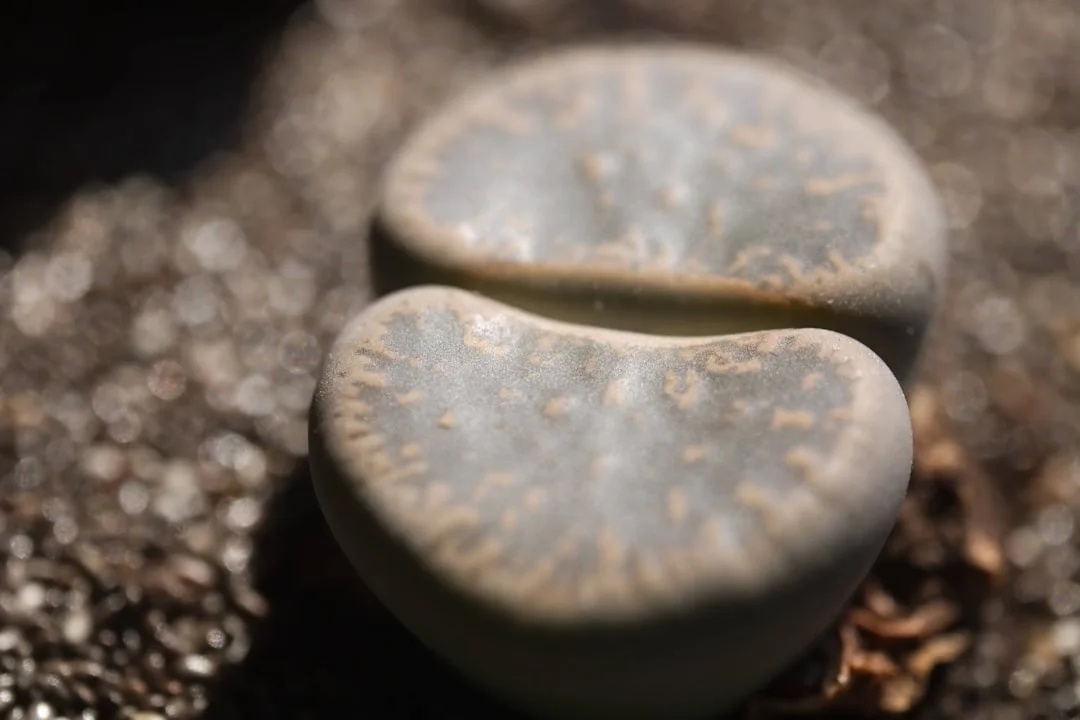
Seed propagation is the standard method, and it’s surprisingly rewarding — though slow. Lithops seeds are tiny (the size of fine sand grains), but they germinate reliably under the right conditions. The best time to sow is in late spring or early summer in the Northern Hemisphere (April–June), when temperatures are warm and stable. According to Wikipedia's entry on Lithops, seed viability decreases significantly after 2–3 years, so always source fresh seeds from reputable specialist suppliers.
Step-by-Step Seed Germination Process
Fill a shallow tray or small pot with your gritty mineral mix. Surface-sow seeds — don’t bury them, just press them gently onto the surface. Cover the tray loosely with a piece of clear plastic wrap or place it inside a clear plastic bag to maintain humidity. Place in a warm spot at 21–27°C (70–80°F) with bright indirect light. Germination typically occurs within 7–14 days. Once seedlings appear (they look like tiny green beads), gradually remove the plastic cover over 1–2 weeks to acclimatise them to lower humidity. Water by bottom-watering: place the tray in a shallow dish of water and allow it to absorb moisture from below, then remove after 20 minutes. Continue bottom-watering for the first year — tiny seedlings are extremely sensitive to surface moisture.
Seasonal Care Calendar for Lithops
Understanding seasonal rhythms is the backbone of lithops care indoors. Unlike most houseplants, which simply slow down in winter, lithops go through two distinct dormancy periods and two active growth phases annually. Your care changes dramatically between these phases.
Here’s the core principle: match your watering and feeding to what the plant is actually doing biologically — not to the season outside your window. In a heated apartment in Helsinki or Montreal, your lithops doesn’t ‘know’ it’s winter through temperature cues the way an outdoor plant does. It follows its internal clock based primarily on light duration and its own growth cycle. However, following the Northern Hemisphere seasonal calendar is a reliable proxy for most growers, and it aligns with the natural light changes even in heated indoor environments.
Spring Care (March–May, Northern Hemisphere)
Spring is when the previous year’s outer leaves finish shrivelling and the new leaf pair fully emerges. Do not remove the old leaves — let them shrivel completely on their own. They’re transferring the last of their stored nutrients to the new growth. Begin light watering once the new leaves are fully formed and the old pair has become thin and papery. This is also the time to repot if necessary — though lithops rarely need it more than once every 3–5 years. Use fresh gritty mix and handle roots gently. After repotting, wait two weeks before watering.
Autumn Care (September–November, Northern Hemisphere)
Autumn is the most exciting season for lithops growers. This is flowering time. Resume moderate watering in September — once every 2–3 weeks when slight wrinkling appears. Flowers emerge from the central fissure, typically in October in the Northern Hemisphere. They open in bright afternoon light and close each evening. Individual flowers last 5–7 days. After flowering, the plant enters its winter dormancy — reduce watering sharply through November and stop entirely by December. For Southern Hemisphere growers in South Africa, Australia, or South America, this active flowering period falls in March–May — autumn in the Southern Hemisphere.
Uses and Cultural Significance of Lithops
Lithops have no significant history in Ayurveda, Traditional Chinese Medicine, or Western herbalism — they aren’t a medicinal plant in any established tradition. They’re also not edible in any culinary sense. Their cultural significance is entirely horticultural and aesthetic, but that’s a meaningful category in itself.
In southern Africa, indigenous San people of the Kalahari are reported by ethnobotanists to have chewed lithops leaves as a moisture source during long desert journeys — a practical survival use documented in several field reports from the late 20th century. However, this isn’t a therapeutic use and shouldn’t be replicated without expert guidance, as lithops can contain alkaloids that may cause mild stomach upset if consumed in quantity.
Horticulturally, lithops have become a global phenomenon. They’re among the most collected succulent genera worldwide, with dedicated hobbyist societies in Germany (the Deutsche Kakteen-Gesellschaft), the UK (the British Cactus and Succulent Society), the US (the Cactus and Succulent Society of America), Japan, and South Africa. In Japan particularly, lithops culture has developed into a refined art form, with collectors growing rare colour forms and exhibiting them at specialist shows. In South Korea and Taiwan, lithops have exploded in popularity over the past decade as part of a broader succulent collecting trend among urban millennials.
Lithops in Contemporary Design and Culture
Beyond plant collecting, lithops have found a growing role in contemporary interior design. Their stone-like appearance fits perfectly with the minimalist, biophilic design trend dominating interior spaces from Scandinavian apartments to Japanese-inspired homes in California. A tray of lithops styled with complementary quartz pebbles and fine desert sand creates a living artwork that requires almost zero maintenance — a perfect fit for design-conscious plant lovers who travel frequently or live very busy lives. Furthermore, lithops are increasingly featured in terrarium design, though they need open-top setups with maximum airflow rather than closed glass containers, which trap moisture and kill them quickly.
Frequently Asked Questions
How often should I water lithops indoors?
Water lithops only during their two active growth phases — spring (as old leaves shrivel) and autumn (around flowering time). During summer dormancy and winter dormancy, water little to nothing. In practice, this means watering roughly once every 3–4 weeks during active phases, only when leaves show faint wrinkling. Never water during the split phase when the new leaf pair is emerging. Overwatering is by far the most common cause of lithops death indoors.
Can I grow lithops indoors in a cold climate like Canada or northern Europe?
Yes — lithops are actually well-suited to indoor growing in cold climates, since they stay inside year-round and don't require tropical heat. The main challenge is light. In high-latitude cities like Toronto, Helsinki, or Edinburgh, winter daylight is insufficient for compact lithops growth. Supplement with a full-spectrum LED grow light (5000–6500K) running 12–14 hours daily from October through March. Keep them away from cold windowsill draughts in deep winter, and maintain temperatures above 10°C (50°F) at all times.
Are lithops safe for pets and children?
Lithops are generally considered non-toxic and are not listed on the ASPCA's toxic plant database for cats and dogs. However, ingestion of any plant material can cause mild gastrointestinal upset in pets or young children, and lithops are not meant to be eaten. Keep them out of reach of curious pets and children as a precaution. If ingestion occurs, contact your local poison control centre or vet for advice. The risk is low, but caution is always sensible.
Why is my lithops stretching and losing its compact shape?
Stretching — called etiolation — is caused by insufficient light. When lithops don't receive at least 4–5 hours of direct sunlight daily, they grow upward searching for more. Etiolated plants become pale, tall, and unstable. Unfortunately, you can't reverse existing stretch, but you can prevent further damage by immediately moving the plant to a brighter spot or adding a grow light. Compact, healthy new growth will appear after the next split cycle if light levels are corrected promptly.
How do I grow lithops in containers or small spaces?
Lithops are ideal for container growing and small spaces. Choose a terracotta pot with excellent drainage — even a 10 cm (4-inch) wide pot can hold 3–5 plants comfortably. Use an 80:20 gritty mineral mix. Group multiple species together in a wide shallow tray for a striking miniature landscape effect. Place on a south-facing windowsill (Northern Hemisphere) and follow the strict seasonal watering calendar. Lithops rarely need repotting more than once every 3–5 years, making them very low-maintenance container plants.
When and how do lithops flower indoors?
Lithops flower in autumn — typically October–November in the Northern Hemisphere and April–May in the Southern Hemisphere. Flowers emerge from the central fissure between the two leaf lobes and are daisy-like, either white or bright yellow, sometimes with a faint coconut or honey scent. They open in direct afternoon sunlight and close each evening. To encourage flowering, ensure the plant has received adequate light through the growing season and resume watering in September after summer dormancy. Plants typically need to be at least 3–5 years old to flower reliably.
What soil mix is best for lithops care indoors?
The best soil for lithops care indoors is an extremely gritty, fast-draining mineral mix: 80% inorganic material (coarse perlite, horticultural grit, or crushed granite) combined with 20% organic matter (fine cactus compost or coconut coir). Standard potting compost is too moisture-retentive and will cause root rot. Water should drain completely within 60 seconds of application. Top-dress the pot surface with fine gravel to prevent moisture sitting against the base of the leaf pair, which is a common cause of fungal rot.
How long do lithops live indoors?
With correct care, lithops are remarkably long-lived. Specimens in private collections in Germany, the UK, and the US have been documented living for 40–50 years. The key factors are correct watering discipline, sufficient light, appropriate soil, and avoiding disturbance during dormancy and the split phase. In my experience, plants that have survived their first two years indoors — when most mistakes are made — tend to become increasingly robust and reliable over time. They are truly lifetime companion plants for committed growers.
Final Thoughts
Lithops care indoors is one of the most rewarding challenges in the world of succulent growing — not because it’s complicated, but because it demands a completely different mindset from conventional plant care. The plants that thrive aren’t the ones that get the most attention. They’re the ones whose owners learn when to step back, stop watering, and trust the process. Get the gritty soil mix right. Find your brightest windowsill or invest in a good grow light. Follow the seasonal watering calendar with discipline. And resist — every time — the urge to water ‘just a little’ during dormancy. Do those things, and your living stones will reward you with decades of silent, extraordinary beauty, and a golden daisy flower every autumn that feels like a small miracle. Whether you’re growing on a windowsill in Mumbai, a shelf in Melbourne, or a heated flat in Oslo, lithops care indoors is entirely achievable. Start with one plant. Learn its rhythm. Then add another. Before long, you’ll have a miniature desert landscape that stops every visitor in their tracks — and they’ll never believe it’s actually alive.

