

Broken heart plant (Monstera adansonii) is a tropical indoor climber with heart-shaped leaves and natural holes. It’s easy to grow and fits small spaces. This guide covers broken heart plant benefits, identification, care, propagation, safety, and cultural notes for readers worldwide. With bright, indirect light and a light, airy potting mix, the vine trails from shelves or climbs a pole for larger, more fenestrated leaves.
Highlights
- Bold heart leaves with neat holes; instant décor upgrade
- Simple routine: bright-indirect light, airy mix, moderate watering
- Propagates quickly from one-node cuttings
- Works as a trailing or climbing indoor vine
- Mildly toxic if chewed; keep away from pets and kids
- Linked with connection and steady growth in many cultures
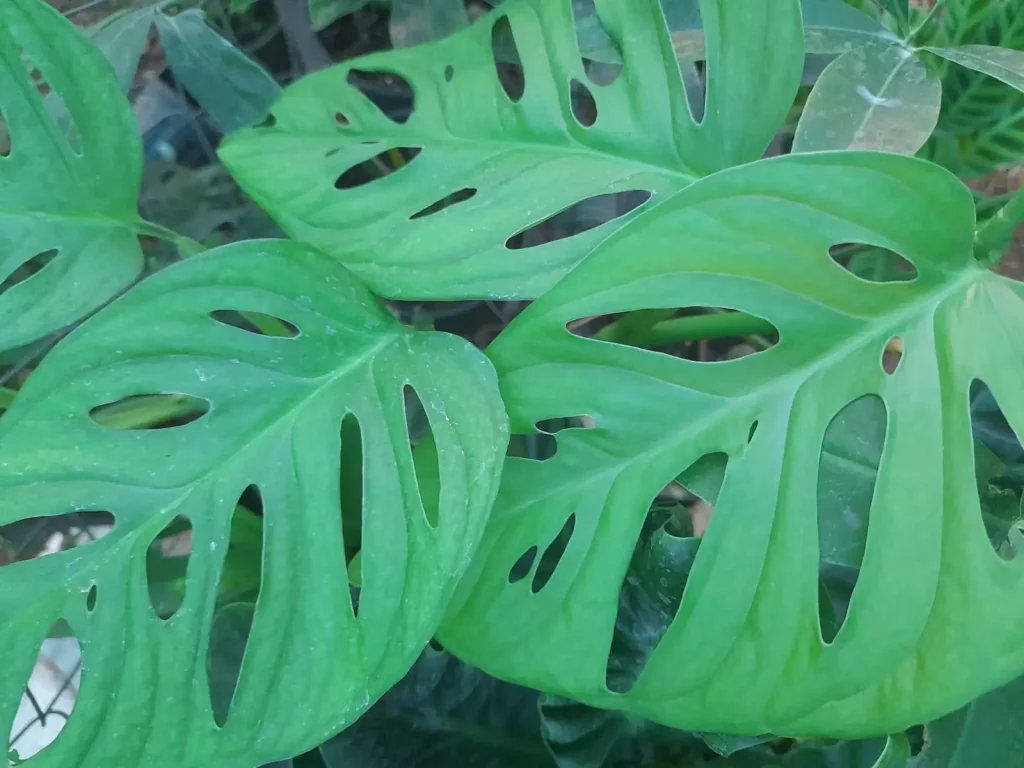
Table of contents
- What is the Broken Heart Plant?
- Key Benefits of Broken Heart Plant
- Names of Broken Heart Plant in Different Languages
- How to Tell It from Similar Plants
- Light & Water: Quick Schedule
- Soil & Potting
- Fertilizer Plan
- Pruning, Training & Styling
- Common Problems & Fixes
- Pests & Organic Remedies
- Safety & Toxicity
- Propagation
- Vastu & Cultural Significance
- Problems & Quick Fixes
- Plant Characteristics
- Conclusion
- FAQs
What is the Broken Heart Plant?
The broken heart plant is commonly used for Monstera adansonii, a rainforest aroid native to Central and South America. It climbs trees with aerial roots in nature and grows as a compact trailer indoors. Juvenile leaves are often solid; mature leaves develop distinctive oval holes called fenestrations.
Quick ID checks
- Thin, heart-to-oval leaves with neat holes
- Green vining stems with aerial roots at nodes
- Trails in baskets or climbs a moss pole or ladder
- Rarely flowers indoors (aroid spadix + spathe)
Key Benefits of Broken Heart Plant
1) Decorative Impact with Minimal Effort
The heart shape and holes create texture and movement, softening shelves, desks, and hallways.
2) Fresher Indoor Vibe
Normal plant processes (photosynthesis and light transpiration) can freshen room air and add a gentle humidity feel. It is not a medical device.
3) Beginner-Friendly Success
It forgives a missed watering, roots easily from cuttings, and bounces back after pruning—great for new plant parents.
4) Space-Saving Styling
Trail from a hanging basket or train vertically on a moss pole to keep floors free and leaves larger.
5) Biophilic Calm
Greenery near work or study areas can support focus and visual rest. Place within view but away from harsh noon sun.
6) Cultural Meaning
The heart-like leaves often symbolise connection and steady growth. Many display it to invite a peaceful, positive tone at home.

Names of Broken Heart Plant in Different Languages
| Language | Common Name Used |
|---|---|
| English | Broken Heart Plant / Swiss Cheese Vine / Monstera adansonii |
| Mandarin Chinese | 小龟背竹 / 姬龟背竹(Monstera adansonii) |
| Spanish | Monstera adansonii / Enredadera queso suizo |
| Hindi | ब्रोकन हार्ट प्लांट / मॉन्स्टेरा एडनसोनी |
| Gujarati | બ્રોકન હાર્ટ પ્લાન્ટ / મોન્સ્ટેરા એડાન્સોની |
| Arabic | مونستيرا أدانسوني / نبات القلب المكسور (شائع) |
| Bengali | ব্রোকেন হার্ট প্ল্যান্ট / মনস্টেরা অ্যাডানসোনি |
| Portuguese | Monstera adansonii / Trepadeira queijo suíço |
| Russian | Монстера адансони / лиана «швейцарский сыр» |
| Japanese | モンステラ・アダンソニー |
| Punjabi | ਬ੍ਰੋਕਨ ਹਾਰਟ ਪੌਦਾ / ਮੋਂਸਟੇਰਾ ਅਡਾਂਸੋਨੀ |
| German | Monstera adansonii / Fensterblatt (Ranke) |
| Javanese | Monstera adansonii (sebutan umum) |
| Korean | 몬스테라 아단소니 |
| French | Monstera adansonii / Liane fromage suisse |
| Telugu | మాన్స్టెరా అడాన్సోనీ |
| Marathi | मॉन्स्टेरा एडनसोनी |
| Tamil | மான்ஸ்டெரா அடான்சோனி |
| Urdu | مونسٹیرا ادانسونی / ٹوٹا دل پودا (عام) |
| Turkish | Monstera adansonii |
| Vietnamese | Monstera adansonii / Dây pho-mát Thụy Sĩ |
How to Tell It from Similar Plants
- Monstera adansonii vs Monstera deliciosa: Adansonii has thinner leaves with many oval holes; deliciosa grows thicker, lobed leaves with splits and holes and can be huge.
- Adansonii vs Rhaphidophora tetrasperma (mini monstera): Rhaphidophora shows deep splits, not oval holes.
- Adansonii vs “Bleeding heart” (Dicentra spectabilis): A cold-climate outdoor perennial with heart flowers—very different.
Light & Water: Quick Schedule
Light: Bright, indirect light for 8–10 hours. Morning sun is fine; avoid harsh afternoon sun. Keep 1–2 m (3–6 ft) from bright windows or diffuse with a sheer curtain.
Water:
- Water when top 2–3 cm (≈1 inch) of mix feels dry.
- Warm months: about every 5–7 days. Cooler months: 7–12 days.
- Drain the saucer; never leave roots in water.
Humidity: 50–70% is ideal. Use grouping, a pebble tray, or a small humidifier in very dry rooms.
Soil & Potting
- Airy mix: 40% coco peat/peat-free base + 30% bark + 20% perlite + 10% compost.
- pH: 6.0–7.0.
- Pot: Good drainage holes; size up only when roots circle or poke out (12–18 months).
- After repot: Shade from direct sun for a week and water evenly.
Fertilizer Plan
- Feed during active growth (spring to early autumn).
- Use a balanced liquid at ¼ strength every 3–4 weeks.
- Pause in low-light winters.
- Organic option: a small layer of mature vermicompost monthly.
Pruning, Training & Styling
- Pinch tips to encourage bushy growth.
- Moss pole: keep lightly moist; climbing encourages bigger leaves.
- Rotate pot fortnightly for even growth.
- Wipe leaves with a damp cloth to remove dust.
Common Problems & Fixes
- Yellow leaves + wet soil: Overwatering → let mix dry, improve drainage, check holes.
- Crispy edges/brown tips: Low humidity or underwatering → raise humidity; water fully when top inch dries.
- No holes/small leaves: Low light or no support → move brighter; add a pole.
- Leggy growth: Prune and replant cuttings; increase light hours.
- Post-repot droop: Temporary shock → steady conditions; recover in 1–2 weeks.
Pests & Organic Remedies
- Spider mites: Fine webbing → rinse leaves, then neem spray (1–2 ml/L) weekly × 3.
- Mealybugs: Cottony clusters → dab with isopropyl alcohol; follow with neem.
- Scale/Thrips: Sticky leaves or silvery scars → insecticidal soap every 5–7 days × 3–4.
- Root rot: Mushy, foul roots → trim, repot in fresh airy mix, correct watering.
Safety & Toxicity
Like many aroids, Monstera adansonii contains calcium oxalate crystals. Chewing can irritate the mouth. Keep away from pets and young children. This is general information, not medical advice.
Propagation
Cuttings (Fast-Root Method)
- Select a healthy vine section with one node and one leaf.
- Cut just below the node with sterile pruners.
- Root in water, LECA, or moist airy mix. Refresh water weekly.
- Pot rooted cuttings; plant 3–5 per pot for fullness.
Tip: A cutting with a small aerial root nub roots faster.
Seeds (Rare for Home Growers)
Sow warm (24–28°C / 75–82°F) in sterile medium. Keep evenly moist. Germination can take weeks.

Vastu & Cultural Significance
Many place the plant where it receives gentle, bright light and does not block entryways. It is seen as a symbol of growth and connection. Choose positions based on light first, then preference. Cultural beliefs vary.
Problems & Quick Fixes
- Pale leaves: Mild nutrient gap or excessive sun → light feed; shift out of direct sun.
- No growth for months: Cold or low light → move warmer/brighter; repot only if root-bound.
- Brown spots: Irregular watering or fungal leaf spot → even moisture; remove worst leaves; improve airflow.
- Leaves curling: Underwatering or low humidity → water well; raise humidity.
- Sticky residue: Likely pests (scale/aphids) → wipe, then soap or neem routine.
Plant Characteristics
| Field | Details |
|---|---|
| Common Name | Broken Heart Plant / Swiss Cheese Vine |
| Scientific Name | Monstera adansonii |
| Family | Araceae (Aroid family) |
| Origin | Central & South America |
| Habitat | Tropical rainforest understory; epiphytic/climbing |
| Plant Type | Evergreen vine |
| Indoor Plant | Yes (popular houseplant) |
| Outdoor Plant | Yes, in warm, shaded patios (frost-free) |
| Leaves | Heart-to-oval, thin, fenestrated (oval holes) |
| Flowers | Rare indoors; spadix with spathe |
| Flowering Season | Warm season in habitat; uncommon in homes |
| Fruit | Rare indoors |
| Seeds | Rarely available to home growers |
| Roots | Adventitious with aerial roots at nodes |
| Height | 30–250 cm (1–8 ft) depending on support |
| Growth Rate | Fast in warm, bright conditions |
| Light Requirements | Bright, indirect light; brief morning sun okay |
| Soil Requirements | Airy, well-drained mix; pH 6.0–7.0 |
| Water Requirements | Moderate; water when top 2–3 cm dry |
| Temperature Requirements | 18–30°C (65–86°F); avoid below 12°C (54°F) |
| Humidity Requirements | 50–70% preferred |
| Propagation | Stem cuttings (one node); seeds rare |
| Uses | Decorative indoor vine; space-saving vertical green |
| Medicinal Properties | None verified for home use; ornamental only |
| Toxicity | Mildly toxic if chewed (calcium oxalate) |
| Cultural Significance | Heart form linked with connection and growth |
| Common Pests | Spider mites, mealybugs, scale, thrips |
| Common Diseases | Root rot, fungal leaf spots |
| Special Care Tips | Provide support, rotate pot, wipe leaves |
| Cultural Practices | Group humidity lovers; prune to keep full |
| Vastu Direction | Place where bright-indirect light is available; beliefs vary |
Conclusion
The broken heart plant is a cheerful, adaptable vine. Keep it in bright-indirect light, water when the top inch dries, and use an airy mix. Train it on a pole for larger leaves or let it trail for a soft cascade. With these simple steps—and the broken heart plant benefits of décor uplift, easy care, and calm visual presence—any home can enjoy a touch of the rainforest.
FAQs
Striking foliage, easy routine, space-saving styling, quick propagation, and a calming, biophilic presence.
Near bright windows with filtered light, about 1–2 m (3–6 ft) away from harsh sun.
Whenever the top 2–3 cm (about 1 inch) feels dry; frequency changes with season and pot size.
Usually low light or lack of support. Move brighter and train on a moss pole.
No. It’s mildly toxic if chewed. Keep away from pets and small children.
Decor boost, beginner-friendly care, space-saving styling, quick propagation, calming indoor presence.
Yes—if the spot gets bright, indirect light and is free from harsh sun or cold drafts.
It freshens rooms like most foliage plants but is not a medical purifier.
Heart-like leaves symbolise connection and steady growth—ideal for housewarmings.
Provide brighter (not direct) light, steady watering, and a moss pole for climbing.

