

“Every vine has a story to tell…”
When I took a tiny money plant cutting from an old pot at home, I never imagined it would eventually grow into a beautiful two-foot-long vine. Growing money plant from cutting was not just gardening; instead, it gradually turned into a lesson in patience, love, and care. As days passed, the cutting developed roots and leaves, and therefore it reminded me that growth always comes with time and consistency. Moreover, watching it grow felt like watching a dream slowly take shape, leaf by leaf, and in fact, every new leaf became a symbol of hope.
This simple journey of money plant propagation can be repeated by anyone, even without gardening experience. In fact, all you need is a small cutting, some water, and a bit of dedication. Moreover, with consistent care, the plant responds quickly and starts showing signs of growth. Within a few months, you can therefore enjoy a lush vine that not only adds beauty but also brings freshness to your space. Eventually, this little effort turns into a rewarding green story of its own.
What is a Money Plant?
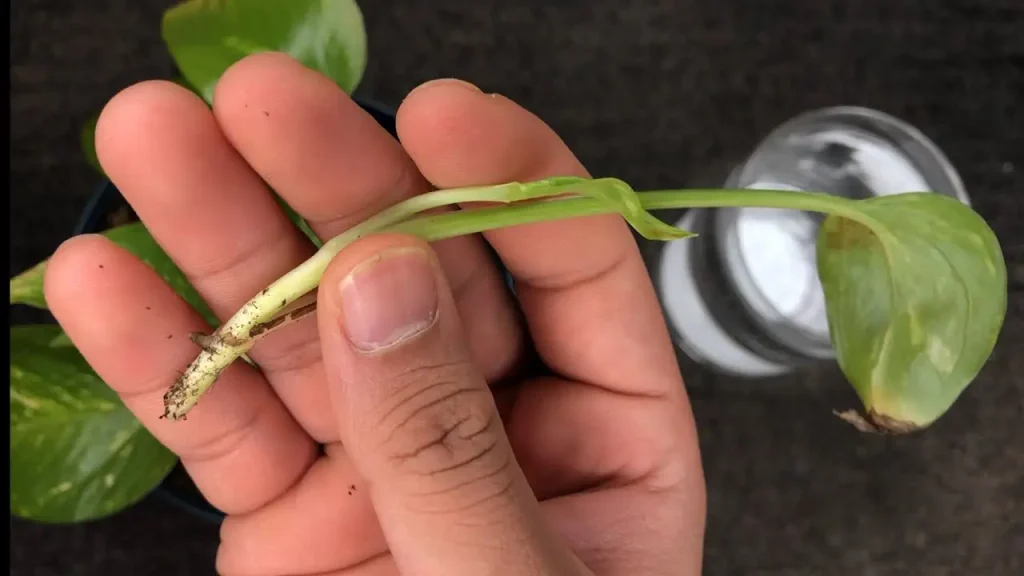
A money plant is a popular ornamental vine, widely admired for its glossy green leaves and easy maintenance. In India, it is believed to bring wealth and positivity; moreover, in Feng Shui, it symbolises prosperity and harmony. In fact, many households keep it not only for beauty but also for good luck.
Commonly, the term “money plant” refers to Epipremnum aureum (also called pothos or devil’s ivy). It is an evergreen climber that grows both indoors and outdoors, and with the right care, it can thrive in soil as well as in water. Therefore, whether you live in an apartment or a house with a garden, this plant adapts beautifully.
Why Grow Money Plant from a Cutting?
Growing a money plant from cutting is:
- Cost-Effective – No need to buy a plant; start from an existing vine.
- Fast-Growing – Cuttings root quickly, giving visible results in weeks.
- Beginner-Friendly – Minimal tools and skills required.
- Satisfying – Watching roots and leaves form is deeply rewarding.
Step-by-Step Guide to Growing Money Plant from Cutting
- Selecting the Perfect Cutting
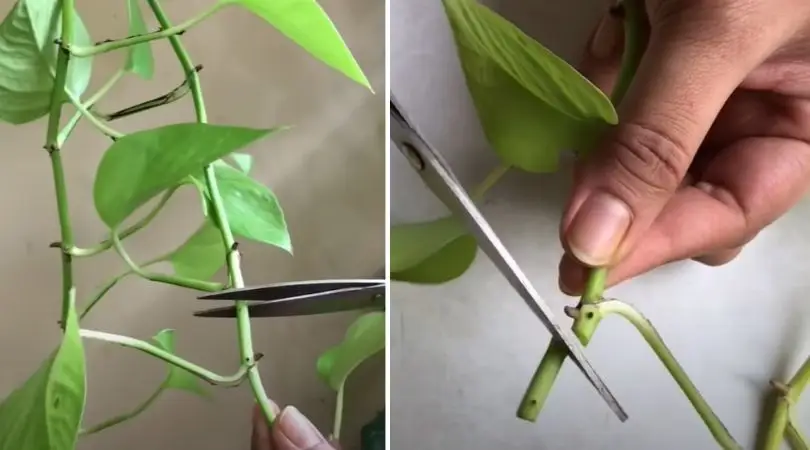
Choose a healthy vine with at least 4–5 leaves.
Cut just below a node (where leaves meet the stem).
Ensure the cutting is 6–8 inches long. - Water Propagation Method
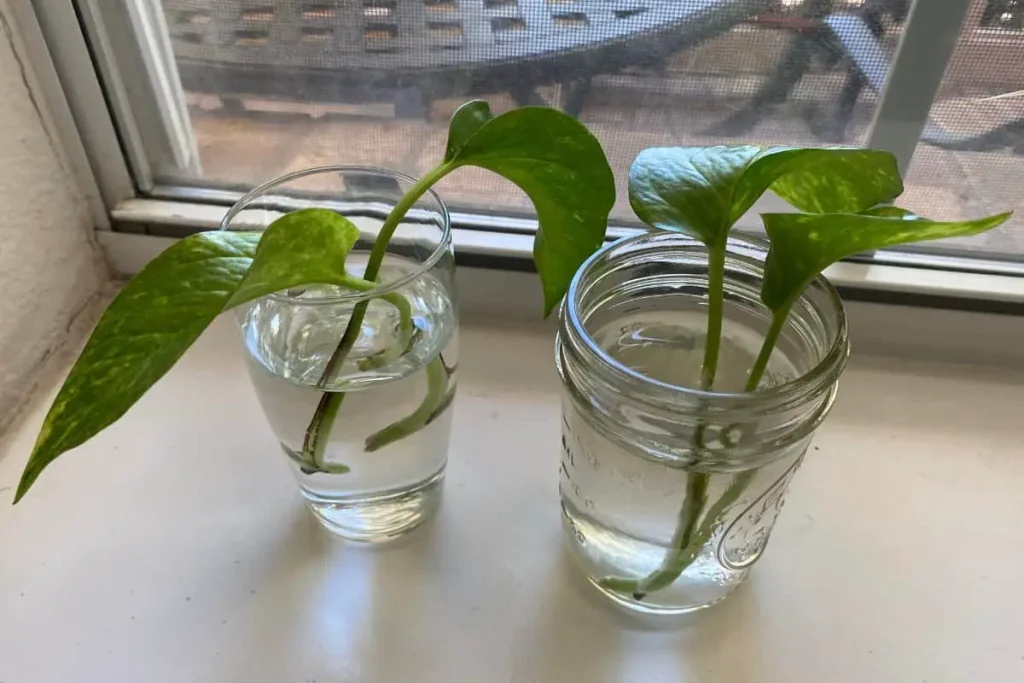
First, place the cutting in a clean glass jar filled with water.
Next, make sure only the nodes are submerged, while the leaves stay above water.
After that, change the water every 4–5 days to keep it fresh.
Finally, keep the jar in bright, indirect sunlight so the roots can grow strong. - Soil Propagation Method
Fill a pot with a mix of garden soil, sand, and compost.
Plant the cutting so that at least 2 nodes are inside the soil.
Water lightly but regularly to keep soil moist. - Potting & Repotting Tips
After 4–6 weeks in water, move the cutting to soil.
Repot when the vine outgrows the container.
Use well-draining pots to prevent root rot.
Caring for Your Money Plant
Watering Routine
- Water when the topsoil feels dry.
- Reduce watering in winter to avoid root damage.
Light & Temperature Needs
- Best in bright, indirect sunlight.
- Temperature: 18–30°C.
Fertilizing for Growth
- Use liquid fertilizer once a month during growth season.
Common Problems & Solutions
- Yellow Leaves – Overwatering.
- Slow Growth – Low light or poor soil.
- Pests – Use neem oil spray.
Money Plant Vastu Tips
According to Vastu Shastra:
- Best Direction: Southeast corner of your home.
- Avoid placing in the northeast.
- Keep in healthy condition to attract positivity and prosperity.
Benefits of Growing Money Plant
- Purifies indoor air.
- Reduces stress levels.
- Brings positivity and good luck (as per Vastu/Feng Shui).
- Enhances home décor with lush greenery.
Plant Details Table
| Attribute | Details |
|---|---|
| Common Name | Money Plant / Devil’s Ivy |
| Scientific Name | Epipremnum aureum |
| Family | Araceae |
| Origin | Southeast Asia |
| Habitat | Tropical forests |
| Plant Type | Evergreen vine |
| Indoor Plant | Yes |
| Outdoor Plant | Yes |
| Leaves | Heart-shaped, green/yellow variegation |
| Flowers | Rare indoors |
| Flowering Season | Summer (outdoors) |
| Fruit | None |
| Seeds | Rarely produced |
| Roots | Fibrous |
| Height | 6–10 feet indoors, longer outdoors |
| Growth Rate | Fast |
| Light Requirements | Bright, indirect sunlight |
| Soil Requirements | Well-drained, fertile soil |
| Water Requirements | Moderate |
| Temperature Requirements | 18–30°C |
| Humidity Requirements | Moderate to high |
| Propagation | Stem cuttings |
| Uses | Ornamental, air purification |
| Medicinal Properties | None significant |
| Toxicity | Mildly toxic to pets |
| Cultural Significance | Prosperity symbol in Vastu/Feng Shui |
| Common Pests | Mealybugs, aphids |
| Common Diseases | Root rot |
| Special Care Tips | Avoid overwatering, prune for shape |
| Cultural Practices | Regular cleaning of leaves |
| Vastu Direction | Southeast corner of home |
Money Plant Names in Different Languages
| Language | Name |
|---|---|
| English | Money Plant |
| Mandarin Chinese | 发财树 (Fācái shù) |
| Spanish | Planta del dinero |
| Hindi | मनी प्लांट |
| Gujarati | પૈસા છોડ |
| Arabic | شجرة المال |
| Bengali | মানি প্ল্যান্ট |
| Portuguese | Planta-do-dinheiro |
| Russian | Денежное дерево |
| Japanese | マネープラント |
| Punjabi | ਪੈਸਾ ਪੌਧਾ |
| German | Geldpflanze |
| Javanese | Tanduran Dhuwit |
| Korean | 머니 플랜트 |
| French | Plante à argent |
| Telugu | మనీ ప్లాంట్ |
| Marathi | मनी प्लांट |
| Tamil | மணி தாவரம் |
| Urdu | منی پلانٹ |
| Turkish | Para Bitkisi |
| Vietnamese | Cây tiền |
Conclusion – Your Turn to Start the Green Story
Growing a money plant from cutting is simple, affordable, and incredibly rewarding. Moreover, with just a little care, you can enjoy a beautiful vine that not only decorates your space but also brings positive energy. In fact, starting today can make you realise how plants grow alongside your happiness; therefore, your green journey becomes more meaningful. Eventually, every new leaf will remind you that patience and love always bring results.
FAQs
Usually 4–6 weeks for roots to form in water, longer in soil.
Yes, but growth may be slower than in soil.
Spring and early summer are ideal.
Give bright indirect light, monthly fertiliser, and regular watering.
Yes, money plant is considered lucky; moreover, when placed in the southeast direction, it is believed to bring prosperity. In fact, many people follow this practice because, according to Vastu, the southeast corner attracts wealth and positive energy. Therefore, keeping the plant healthy in that spot is thought to enhance good fortune.

