

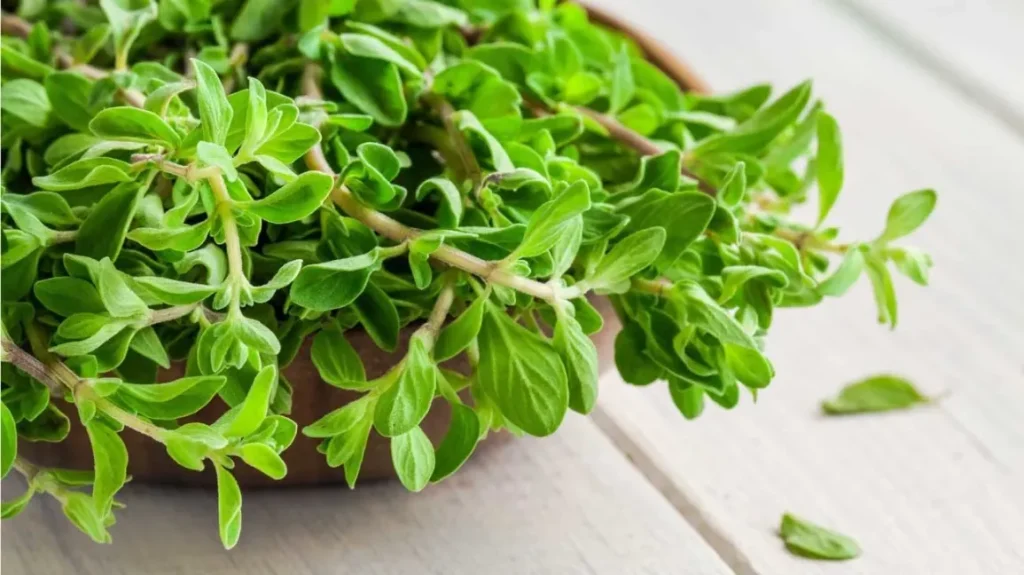
Marua (Marjoram) is a soft, fragrant herb in the basil family grown for its soothing aroma, gentle wellness support, and versatile kitchen uses. Also called Manjerik/Marubak/Marut, it forms a compact bush with oval, aromatic leaves and small pale flowers. In home gardens, Marua leaves, tea, and oil see daily use for flavour, comfort, and ritual decor—making this herb both practical and beloved.
Highlights (quick takeaways)
- Easy herb for balconies and small pots.
- Leaves and tea support digestion and seasonal comfort.
- Works fresh or dried in dal, soups, salads, and herbal blends.
- Grows well in bright light with light, well-drained soil.
- Propagates quickly from soft cuttings.
- Treats are gentle; use sensible, food-like amounts.
Table of contents
What is Marua (Marjoram)?

Marua (Origanum majorana) is a tender perennial herb from the Lamiaceae (mint/basil) family. It stays 30–60 cm tall, forms neat, branching stems, and carries grey-green, velvety leaves packed with essential oils. Flowers are small and pale, clustered at the tips, and set tiny dark nutlets (seeds). Traditionally, Marua is used in garlands, worship, and home remedies. In the kitchen, it adds a warm, sweet-herbal note similar to oregano, but gentler and more floral.
Note: In cooler regions, gardeners grow Marua as an annual; in warm zones it stays evergreen and flowers lightly in cooler months.
Key Benefits of Marua Leaves
Digestive Support
Marua is widely used as a mild carminative herb. A warm infusion after meals may help ease gas, bloating, and a sluggish appetite. Because it tastes gentle and aromatic, many people prefer it over stronger bitters. Add a few fresh leaves to soups or kadhi so digestion feels light yet satisfied.
Cold & Cough Comfort
A simple cup of Marua tea can be soothing when the weather turns. The steam and warm sip offer comfort for a scratchy throat and stuffy nose. For extra relief, combine with ginger or tulsi in small amounts and inhale the cup’s aroma before drinking.
Antioxidants & General Wellness
Marua leaves carry natural aromatic compounds and polyphenols. Used routinely in food-like quantities, they can be part of a balanced lifestyle focused on everyday wellness, good sleep, and calm breathing. Think of it as a gentle herb that complements rest, hydration, and wholesome meals.
Culinary Uses
Marua pairs beautifully with:
- Light dals, khichdi, soups, and rasam (add at the end).
- Roasted veggies, paneer stir-fries, and millet bowls.
- Herb blends for salad dressings, chutneys, and marinades.
- Bread toppings, pizza-style flatbreads, and baked savouries.
Tip: Add fresh Marua at the very end to keep its floral sweetness. Use dried Marua earlier in cooking for deeper infusion.
How to Use Marua Safely
Tea/Infusion (Steps + ratios)
- Ratio: 1–2 tsp fresh leaves (or ½–1 tsp dried) per 200 ml water.
- Method:
- Boil water and turn off the heat.
- Add leaves; cover for 5–7 minutes.
- Strain, sweeten lightly with honey or jaggery (optional).
- Sip warm after meals or before bed.
- Blend ideas: Marua + ginger (warming), Marua + tulsi (seasonal comfort), Marua + lemongrass (refreshing).
Fresh vs Dried (When to use which)
- Fresh leaves: Softer, floral notes; best for finishing dishes, salads, and quick stir-fries.
- Dried leaves: Deeper, savory tone; ideal for slow cooking, soups, and herb blends.
- Conversion: 1 tsp dried ≈ 3 tsp fresh (approx.).
Dosage Notes & Safety/Side Effects
- Use culinary amounts (like other kitchen herbs).
- Large or concentrated amounts may feel warming and may not suit everyone.
- Pregnant or nursing people, children, and those on regular medication should stick to food-level quantities and consult a professional before medicinal use.
- Stop if any irritation or allergy appears.
This article shares general information, not medical advice.
Plant Characteristics
| Attribute | Details |
|---|---|
| Common Name | Marua / Marjoram |
| Scientific Name | Origanum majorana |
| Family | Lamiaceae (Mint/Basil) |
| Origin | Mediterranean & Southwest Asia |
| Habitat | Dry, sunny slopes; well-drained ground |
| Plant Type | Tender perennial (grown as annual in cool climates) |
| Indoor Plant | Yes — bright window or grow light |
| Outdoor Plant | Yes — balcony/terrace/kitchen garden |
| Leaves | Oval, grey-green, velvety, strongly aromatic |
| Flowers | Small, pale whitish-pink clusters at tips |
| Flowering Season | Late summer to winter (region-dependent) |
| Fruit | Dry nutlets |
| Seeds | Tiny, dark brown |
| Roots | Fibrous |
| Height | 30–60 cm (1–2 ft) |
| Growth Rate | Moderate |
| Light Requirements | Full sun to bright light (4–6+ hours) |
| Soil Requirements | Light, well-drained; pH ~6.5–7.5 |
| Water Requirements | Moderate; let top 2–3 cm dry between waterings |
| Temperature Requirements | 15–30 °C; frost-sensitive |
| Humidity Requirements | Moderate; good airflow preferred |
| Propagation | Seeds and soft tip cuttings |
| Uses | Culinary herb, tea, aromatics, garlands |
| Medicinal Properties | Mild carminative & soothing (traditional use) |
| Toxicity | Generally non-toxic; avoid excess in pregnancy |
| Cultural Significance | Used in garlands, worship, and herb traditions |
| Common Pests | Aphids, whiteflies, spider mites |
| Common Diseases | Powdery mildew, root rot |
| Special Care Tips | Pinch tips, avoid waterlogging, harvest pre-bloom |
| Cultural Practices | Companion with tomatoes/peppers; shade-dry leaves |
| Vastu Direction | East or North-East (traditional belief) |
How to Grow Marua
(Works for warm, frost-free regions globally; in cool climates, grow as a summer annual or indoors by a sunny window.)
Climate & Light
- Thrives in warm weather (15–30 °C).
- Loves bright light: 4–6+ hours of gentle sun or filtered sun.
- Protect from frost and harsh afternoon scorch.
Potting Mix & Container
- Container: 8–10 inch pot (with drainage); fabric grow bags work well.
- Mix: Light and quick-draining—40% garden soil, 30% compost/vermicompost, 30% coarse sand/perlite/coco-chips.
- pH: Slightly neutral (≈6.5–7.5).
Watering & Fertilizer Plan
- Water when the top 2–3 cm feels dry; avoid constantly wet soil.
- Feed every 3–4 weeks in the growing season with mild organic fertilizer or diluted seaweed.
- Avoid heavy nitrogen; it can reduce aroma and make plants leggy.
Pruning & Harvest
- Pinch tips regularly to keep the plant compact.
- Harvest leaves in the morning after dew dries.
- For drying, air-dry small bunches in shade, then store in airtight jars.
Common Pests/Diseases (organic fixes)
- Aphids/whiteflies/spider mites: Spray soap water (1 tsp mild liquid soap in 1 L water) or neem oil (2–3 ml/L) weekly until clear.
- Powdery mildew: Improve airflow, avoid overhead watering, and remove affected leaves.
- Root rot: Ensure drainage; never leave the pot sitting in a saucer of water.
Propagation

Cuttings (fast-root method)
- Take 8–10 cm soft tip cuttings below a node.
- Remove lower leaves; keep 2–3 leaves on top.
- Dip the node end in honey or rooting gel (optional).
- Plant in a moist, airy mix (cocopeat + perlite).
- Keep in bright shade; mist lightly. Roots form in 10–14 days.
- Shift to final pot after 3–4 weeks of strong growth.
Seeds (germination tips)
- Fill a shallow tray with fine, well-drained seed mix.
- Sprinkle seeds thinly; press gently (do not bury deep).
- Mist and cover with a see-through lid to hold humidity.
- Keep warm (20–25 °C) with bright, indirect light.
- Germination: ~7–14 days. Prick out seedlings at 3–4 true leaves.
Vastu & Cultural Significance
Marua often features in garlands and is associated with freshness and calm. Many place fragrant herbs towards the east or north-east for an uplifting start to the day. Treat Vastu as cultural guidance—prioritise the plant’s light, airflow, and care needs first.
Problems & Quick Fixes (FAQ-style bullets)
- Leggy, stretched stems: Not enough light → move to brighter spot; pinch tips.
- Leaves losing aroma: Overfeeding or low light → reduce nitrogen; increase sun.
- Yellowing leaves: Waterlogged soil → improve drainage; water only when topsoil dries.
- Tiny insects on shoots: Likely aphids → neem spray weekly till clear.
- White powder on leaves: Powdery mildew → better airflow; avoid overhead watering.
- Wilting despite wet soil: Root rot → repot into fresh, airy mix; trim damaged roots.
Names of Marua in Different Languages
| Language | Common Name for Marua (Marjoram) |
|---|---|
| English | Marjoram |
| Mandarin Chinese | 甜马郁兰 (tián mǎ yù lán) |
| Spanish | Mejorana |
| Hindi | मरुआ / मरुवा |
| Gujarati | મરુવા |
| Arabic | مردقوش |
| Bengali | মার্জোরাম |
| Portuguese | Manjerona |
| Russian | Майоран |
| Japanese | マジョラム |
| Punjabi | ਮਰੂਵਾ |
| German | Majoran |
| Javanese | Marjoram |
| Korean | 마조람 |
| French | Marjolaine |
| Telugu | మరువం |
| Marathi | मरवा |
| Tamil | மருவம் |
| Urdu | مردقوش |
| Turkish | Mercanköşk |
| Vietnamese | Kinh giới tây (marjoram) |
Conclusion (short, actionable summary)
Marua (Marjoram) is a compact, fragrant herb that lifts both food and mood. Grow it in bright light, keep the soil airy, and pinch often for lush foliage. Use fresh or dried leaves in daily cooking and gentle teas. Start with small, sensible amounts, observe how your body feels, and enjoy a calm, green ritual—right at home.
FAQs (5 concise Q&As)
They’re close relatives with similar flavours. Marua (marjoram) is sweeter and more floral; oregano is stronger and sharper.
Yes. Place it by a sunny window (4–6+ hours light), use a well-drained mix, and water only when the topsoil dries.
Lightly every week. Pinch soft tips to keep the plant bushy and flavourful.
Both. Fresh for delicate finish; dried for long simmering and spice blends. Use dried in smaller amounts.
Stick to culinary amounts. People who are pregnant, nursing, or on regular medication should consult a professional before medicinal use.


