

Tulip (Tulipa) is a spring-blooming bulbous plant known for vivid, cup-shaped flowers and simple care. It is a classic garden favourite and a top cut flower worldwide. The tulip plant thrives in cool seasons, grows from a bulb, and rewards with bright blooms after winter chill.
Table of contents
- Tulip Plant Care & Growing Guide (Tulipa)
Tulip Plant Care & Growing Guide (Tulipa)
Tulip (Tulipa) is a spring-blooming bulbous plant known for vivid, cup-shaped flowers and simple care. It is a classic garden favourite and a top cut flower worldwide. The tulip plant thrives in cool seasons, grows from a bulb, and rewards with bright blooms after winter chill.
Highlights
- Plant bulbs in autumn; blooms appear in spring.
- Needs full sun and well-drained soil; avoid waterlogging.
- Ideal depth: 2–3× bulb height; space 10–12 cm apart.
- Leave leaves to yellow naturally after flowering.
- Pre-chill bulbs in warm regions for reliable blooms.
- Tulip bulbs are toxic to pets; handle with gloves.
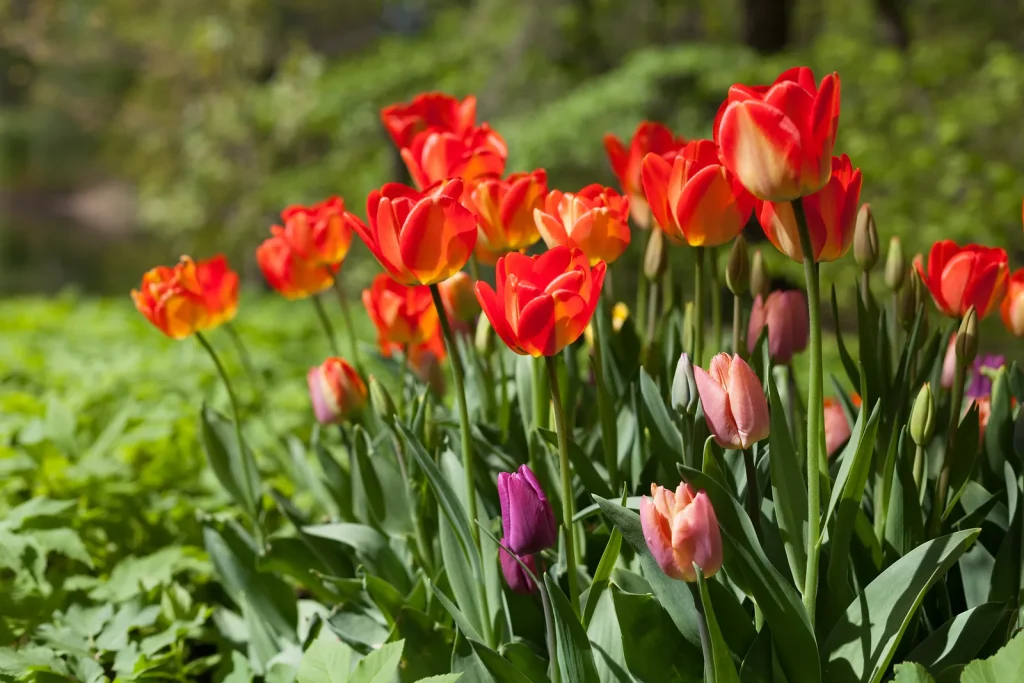
What is Tulip (Tulipa)?
Tulip (Tulipa) is a spring-blooming, bulbous perennial in the lily family (Liliaceae).
Originally, it comes from Central Asia and parts of the Middle East. Over time, it spread worldwide and became a classic garden flower. Structurally, tulip plants grow from a tunicate bulb, send up strap-shaped leaves, and produce neat, cup-shaped blooms.
Typically, tulips prefer cold winters and dry summers, so they bloom after a cool period and rest in summer. Because of this, they thrive where soil drains well and winters are cool. In appearance, heights range from 10–70 cm, and colours span almost every shade except true blue.
Moreover, thousands of cultivars exist—single, double, fringed, parrot, Darwin hybrid, and Triumph types. As a result,you can plan displays that flower from early to late spring. Practically, tulips suit beds, borders, containers, and window boxes. Likewise, they make excellent cut flowers for simple, modern arrangements.
Importantly, the look is clean and architectural: straight stems, tidy foliage, and bold colour blocks. Therefore, even small plantings create strong visual impact. Overall, tulip is a compact, reliable ornamental that delivers bright spring colour with minimal fuss.
Key Benefits of Tulip Flowers
Garden Aesthetics & Landscape Impact
Tulips supply bold, uniform colour early in the year. Plant in drifts or colour blocks for a professional spring display. They pair beautifully with pansies, forget-me-nots, grape hyacinths, and wallflowers.
Cut Flower Joy & Home Décor
Tulips last 5–10 days in a vase. They keep “growing” after cutting, creating a lively, modern look. They suit minimal arrangements and mix well with ranunculus and daffodils.
Pollinators & Spring Biodiversity
Species and open-form varieties allow early pollinator access to nectar and pollen. Mix with other spring bulbs to extend forage.
Cultural & Gifting Uses
Tulips symbolise love, renewal, elegance, and cheer. They are popular for personal gifting and seasonal events.

How to Use Tulip Safely
Cut Flower Care (Steps + simple vase solution)
- Harvest early morning when buds are coloured but not fully open.
- Recut stems at a slant; remove lower leaves.
- Place in cool water with a DIY solution: 1 tsp sugar + a few drops lemon/lime juice per litre (optional).
- Keep away from heat and direct sun; change water every 2 days.
- Support tall stems with a clean vase; rotate display daily.
Fresh Bulbs vs Forced Bulbs (When to use which)
- Fresh garden bulbs: For beds/containers; best for mass spring displays.
- Forced bulbs: Pre-chilled and grown indoors for winter/early-spring bloom; perfect when outdoor chill is limited.
Safety Notes & Side Effects (balanced, cautionary)
Tulip bulbs and sap may irritate skin (“tulip dermatitis”). Toxic to pets (cats/dogs) if ingested. Wear gloves when planting, keep bulbs away from children and pets, and avoid ingestion of any plant parts.
How to Grow Tulip in Containers and Gardens
Climate & Light
- Requires winter chill (approx. 12–14 weeks at 2–10°C) for strong flowering.
- Full sun (6–8 hours) gives sturdier stems and brighter colours; light afternoon shade helps in warmer regions.
Potting Mix & Container
- Use sharp-draining mix: 50% quality potting soil + 30–40% coarse sand/perlite + 10–20% compost.
- Containers must have drainage holes; minimum 20–25 cm depth.
- Plant bulbs with the point up, 10–15 cm deep (2–3× bulb height).
Watering & Fertilizer Plan
- Water well after planting to settle soil, then keep just moist during winter.
- In spring growth, water moderately; stop watering once foliage dies back.
- Mix slow-release, low-nitrogen bulb fertilizer at planting; avoid heavy feeding later.
Pruning & Harvest
- Deadhead spent flowers to stop seed formation.
- Keep foliage until it turns yellow; this replenishes the bulb.
- Lift, dry, and store bulbs if summers are wet/humid; otherwise leave in well-drained beds.
Common Pests/Diseases (organic fixes)
- Aphids → spray with water jet or insecticidal soap; encourage ladybirds.
- Slugs/Snails → iron-phosphate baits; beer traps; copper tape around pots.
- Botrytis (tulip fire), bulb rot → plant only healthy bulbs, ensure airflow, avoid overhead watering; remove infected plants; rotate beds yearly; use clean tools.

Propagation
Offsets (fast-root method)
Bulbs produce bulblets. Lift clumps after leaves yellow, separate offsets, cure in a dry airy place 1–2 weeks, then plant in autumn. Offsets typically flower in 1–2 seasons.
Seeds (germination tips)
Best for species breeding and patient growers. Sow fresh seed in trays outdoors for natural winter stratification; seedlings take 3–5+ years to flower.
Vastu & Cultural Significance
To begin with, in Vastu, bright flowers are placed in the east or north-east to invite cheer and freshness. Additionally,tulips are global icons of spring—especially celebrated in Turkey and the Netherlands during seasonal festivals. However, treat Vastu as a cultural guideline, not a strict rule. Instead, choose placements that suit light and airflow. Ultimately, balance belief with plant needs for the best results.
Problems & Quick Fixes (FAQ-style)
- No blooms? Bulbs lacked chill or were planted shallow; pre-chill and plant deeper.
- Floppy stems? Low light or warmth; move to brighter, cooler spot.
- Leaves but tiny flowers? Old, exhausted bulbs; feed lightly at planting and replace every 2–3 years.
- Rotting bulbs? Poor drainage; amend soil with grit/sand and avoid overwatering.
- Short vase life? Warm room or dirty water; keep cool and refresh water often.
Names of Tulip in Different Languages (Table)
| Language | Common Name |
|---|---|
| English | Tulip |
| Mandarin Chinese | 郁金香 |
| Spanish | Tulipán |
| Hindi | ट्यूलिप |
| Gujarati | ટ્યુલિપ |
| Arabic | توليب |
| Bengali | টিউলিপ |
| Portuguese | Tulipa |
| Russian | Тюльпан |
| Japanese | チューリップ |
| Punjabi | ਟਿਊਲਿਪ |
| German | Tulpe |
| Javanese | Kembang tulip |
| Korean | 튤립 |
| French | Tulipe |
| Telugu | ట్యూలిప్ |
| Marathi | ट्युलिप |
| Tamil | ட்யூலிப் |
| Urdu | ٹیولپ |
| Turkish | Lale |
| Vietnamese | Hoa tulip |
Plant Characteristics
| Attribute | Details |
|---|---|
| Common Name | Tulip |
| Scientific Name | Tulipa spp. |
| Family | Liliaceae |
| Origin | Central Asia & Middle East |
| Habitat | Steppe, rocky slopes |
| Plant Type | Bulbous perennial |
| Indoor Plant | Possible as forced bulbs (short-term) |
| Outdoor Plant | Yes |
| Leaves | Strap-shaped, bluish-green |
| Flowers | Cup/peony/parrot/fringed forms; many colours |
| Flowering Season | Spring (varies by cultivar) |
| Fruit | Dry capsule |
| Seeds | Small, flat |
| Roots | Fibrous roots from bulb base |
| Height | 10–70 cm |
| Growth Rate | Moderate |
| Light Requirements | Full sun to light shade |
| Soil Requirements | Well-drained sandy/loam; pH ~6–7.5 |
| Water Requirements | Moderate during growth; dry in dormancy |
| Temperature Requirements | Needs winter chill; ideal 2–10 °C during chilling |
| Humidity Requirements | Low–moderate |
| Propagation | Offsets (bulblets), seeds |
| Uses | Ornamental beds, containers, cut flowers, forcing |
| Medicinal Properties | Not commonly used medicinally |
| Toxicity | Toxic if ingested; sap may irritate skin; harmful to pets |
| Cultural Significance | Symbol of spring; strong links to Turkey & Netherlands; festival favourite |
| Common Pests | Aphids, slugs, snails, bulb mites |
| Common Diseases | Botrytis (tulip fire), bulb rot |
| Special Care Tips | Pre-chill in warm areas; plant 2–3× bulb height; avoid waterlogging; let foliage die back |
| Cultural Practices | Rotate beds; sanitize tools; fall planting |
| Vastu Direction | East or North-East (belief-based placement) |
FAQs
Plant in autumn before hard frost so roots form while soil is cool.
Plant 10–15 cm deep—about 2–3× the bulb height.
Mix a low-nitrogen bulb fertilizer at planting; avoid heavy feeding later.
Yes, if bulbs are pre-chilled for 12–14 weeks, then planted.
No. Bulbs are toxic to pets if eaten; keep them out of reach.
Conclusion
Overall, tulip is a low-effort, high-impact spring bulb. First, plant healthy bulbs in autumn. Next, ensure good drainage and plenty of sun. Then, after bloom, let the foliage die back so the bulb stores energy. Finally, with a little planning—especially pre-chilling in warm regions—you’ll enjoy reliable, vibrant flowers every spring.

