
⏱ 32 min read
Table of Contents
- What Is Donkey's Tail Succulent?
- Donkey's Tail Succulent Plant Characteristics
- Names Around the World
- Light Requirements: Getting Sun Exposure Right
- Soil and Fertilizer: The Foundation of Healthy Growth
- Watering Guide: Less Is Almost Always More
- How to Grow Donkey's Tail Succulent: Step-by-Step
- Propagation: Growing New Plants from Leaves and Stems
- Common Problems, Pests, and Diseases
- Seasonal Care Guide
- Uses and Benefits of Sedum morganianum
Donkey’s tail succulent care is surprisingly forgiving — but only once you understand one counterintuitive rule that trips up almost every beginner. Most people overwater it. That single mistake is responsible for more dead Sedum morganianum plants than anything else combined. Here’s the good news: once you get the basics right, this trailing gem practically takes care of itself. Donkey’s tail succulent care comes down to mastering light, knowing when NOT to water, and understanding how those plump, bead-like leaves store everything the plant needs to survive. Whether you’re growing it on a sunny balcony in Singapore, a windowsill in London, or a patio in California, this guide covers everything — soil, propagation, seasonal adjustments, and the pest problems nobody warns you about. By the end, you’ll know exactly why your previous attempts may have failed, and what to do differently this time. Many gardeners who grow this plant also love to read about how to propagate succulents from leaves.
Quick Highlights
- Discover the exact watering schedule that keeps Sedum morganianum thriving across tropical, temperate, and arid climates
- Learn which soil mix prevents root rot — the number one killer of this succulent
- Understand how to propagate new plants from a single fallen leaf with zero special equipment
- Identify the three most common pests before they cause irreversible damage
- Apply seasonal care adjustments for summer, winter, and monsoon growing conditions worldwide
- Grow donkey's tail successfully indoors and outdoors using globally available materials
Plant Characteristics at a Glance
| Common Name | Donkey's Tail, Burro's Tail, Lamb's Tail |
| Scientific Name | Sedum morganianum |
| Family | Crassulaceae |
| Origin | Southern Mexico (Veracruz state) and Honduras |
| Habitat | Semi-arid rocky slopes, cliffs, and canyon walls in subtropical highland regions |
| Plant Type | Perennial succulent; trailing/cascading growth habit |
| Indoor Plant | Yes — excellent windowsill and hanging basket plant; needs bright light indoors |
| Outdoor Plant | Yes — suitable for frost-free climates (USDA zones 10–11); bring indoors below 5°C (41°F) |
| Leaves | Fleshy, bead-like, blue-green to grey-green; arranged spirally on trailing stems; covered in powdery farina coating |
| Flowers | Small, star-shaped, pink to red; produced at stem tips; rare on indoor plants without high light |
| Flowering Season | Late spring to early summer (May–June in Northern Hemisphere); rare indoors |
| Fruit | Small, inconspicuous dry capsule containing tiny seeds; rarely produced in cultivation |
| Seeds | Tiny, brown; viable but slow to germinate; propagation via leaves or cuttings is far more practical |
| Roots | Shallow, fibrous root system; highly sensitive to overwatering and waterlogged conditions |
| Height | Stems trail 30–60 cm (12–24 inches); upright growth minimal; spread limited by container size |
| Growth Rate | Slow to moderate; most active growth in spring and summer |
| Light Requirements | Bright indirect to direct light; 4–6 hours of sun daily; east or south-facing window ideal indoors |
| Soil Requirements | Fast-draining succulent or cactus mix; 50% perlite or pumice recommended; pH 6.0–7.0 |
| Water Requirements | Low; soak-and-dry method; every 10–14 days in growing season, every 3–4 weeks in dormancy |
| Temperature Requirements | Ideal: 18–24°C (65–75°F); minimum: 5°C (41°F); avoid frost; tolerates up to 35°C (95°F) with shade |
| Humidity Requirements | Low to moderate; average indoor humidity (30–50%) is fine; avoid high humidity combined with poor air circulation |
| Propagation | Leaf propagation (twist and place on dry soil); stem cuttings (callous then pot); both work well in spring |
| Uses | Ornamental hanging basket plant; drought-tolerant landscaping; green walls; indoor décor; succulent collections |
| Medicinal Properties | Not a traditional medicinal plant; no significant Ayurvedic, TCM, or Western herbal medicine applications documented |
| Toxicity | Mildly toxic to cats and dogs (ASPCA); may cause gastrointestinal upset if ingested; keep away from pets and children |
| Cultural Significance | Originating in Mexico; popular in wabi-sabi Japanese interiors; used in Mediterranean drought-tolerant garden design worldwide |
| Common Pests | Mealybugs (most common), spider mites, scale insects; treat with 70% isopropyl alcohol or neem oil spray |
| Common Diseases | Root rot (overwatering); fungal leaf rot (water sitting on leaves); stem rot at crown; all preventable with proper watering |
| Special Care Tips | Handle stems not leaves; never touch the farina coating; always use pots with drainage holes; avoid repotting unnecessarily |
| Cultural Practices | Display in hanging baskets to showcase trailing form; rotate quarterly for even growth; trim leggy stems to encourage bushiness |
| Vastu Direction | East or north-east placement recommended for hanging succulents; associated with positive energy flow in Vastu Shastra |
Donkey's tail succulent care Names in Different Languages
| English | Donkey's Tail / Burro's Tail |
| Mandarin Chinese | 玉珠帘 (Yù zhū lián) |
| Spanish | Cola de Burro |
| Hindi | गधे की पूंछ (Gadhe ki Poonch) |
| Gujarati | ગધેડાની પૂંછ (Gadheda ni Poonch) |
| Arabic | ذيل الحمار (Dhayl al-Himar) |
| Bengali | গাধার লেজ গাছ (Gadhār Lej Gach) |
| Portuguese | Rabo de Burro |
| Russian | Седум Моргана (Sedum Morgana) |
| Japanese | グリーンネックレス類 / 玉連 (Tama-ren) |
| Punjabi | ਖੋਤੇ ਦੀ ਪੂਛ (Khote Di Pooch) |
| German | Eselsschwanz |
| Javanese | Ekor Keledai |
| Korean | 당나귀 꼬리 선인장 (Dangnagwi Kkori Seoninjang) |
| French | Queue d'Âne |
| Telugu | గాడిద తోక మొక్క (Gadida Toka Mokka) |
| Marathi | गाढवाची शेपटी (Gadhavachi Shepati) |
| Tamil | கழுதை வால் செடி (Kazhudai Vaal Sedi) |
| Urdu | گدھے کی دم (Gadhe Ki Dum) |
| Turkish | Eşek Kuyruğu Sukülenti |
| Vietnamese | Cây Đuôi Lừa |
What Is Donkey's Tail Succulent?
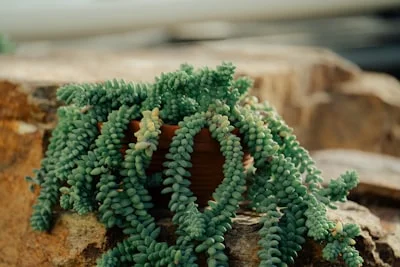
Sedum morganianum — commonly known as donkey’s tail or burro’s tail — is a trailing succulent native to the semi-arid regions of southern Mexico and Honduras. It belongs to the Crassulaceae family, a group that includes many of the world’s most popular succulents. The plant gets its vivid common name from its long, rope-like stems covered in tightly packed, fleshy blue-green leaves. Each stem can grow up to 60 cm (about 24 inches) long when mature, dangling elegantly from hanging baskets or cascading over the edges of raised containers. For more tips, check out our detailed article on Peperomia Plant Care.
What makes this plant remarkable is its survival mechanism. Those plump, overlapping leaves are essentially water tanks — they store moisture during dry periods and release it slowly to keep the plant alive. This is why, counterintuitively, watering too often does far more damage than forgetting to water for a week or two.
According to Kew Gardens, Sedum morganianum was first formally described by Eric Walther in 1938 after specimens were collected in Veracruz, Mexico. Since then, it has become one of the most widely grown indoor succulents across Europe, North America, Asia, and Australia. Its low maintenance needs and dramatic trailing habit make it a favourite for both beginner plant lovers and experienced collectors alike.
In my experience, the gardeners who struggle most with this plant are those who treat it like a tropical houseplant — giving it too much water and not enough direct sun. Correct those two things, and you’ll find donkey’s tail succulent care becomes genuinely effortless. Many gardeners who grow this plant also love to read about succulent soil mix guide.
Sedum morganianum vs. Sedum burrito: What's the Difference?
Many gardeners confuse Sedum morganianum with its close cousin Sedum burrito, sometimes called ‘baby donkey’s tail.’ The distinction matters for care. Sedum burrito has slightly rounder, more compact leaves and shorter stems. Sedum morganianum has more pointed, elongated leaves with a subtle powdery bloom (called farina) on the surface. Both plants share similar care requirements, but Sedum morganianum is more sensitive to leaf drop when touched or disturbed. If your plant sheds leaves at the slightest brush, you almost certainly have the true Sedum morganianum. Either way, the core principles of donkey’s tail succulent care apply equally to both. If you enjoy growing this plant, you might also find our guide on how to propagate succulents from leaves very useful.
Donkey's Tail Succulent Plant Characteristics
Understanding the physical characteristics of Sedum morganianum helps you anticipate its needs and spot problems early. The table below captures everything you need to know at a glance — from its botanical family to its preferred climate zones. Whether you’re a first-time grower in Toronto or an experienced gardener in Dubai, these characteristics give you the baseline for confident donkey’s tail succulent care. If you enjoy growing this plant, you might also find our guide on how to propagate succulents from leaves very useful.
One detail worth highlighting: the powdery coating on the leaves (farina) is a natural UV protectant. Touching it repeatedly removes this coating and can stress the plant. Always handle stems rather than individual leaves when repositioning your plant.
Growth Habit and Appearance
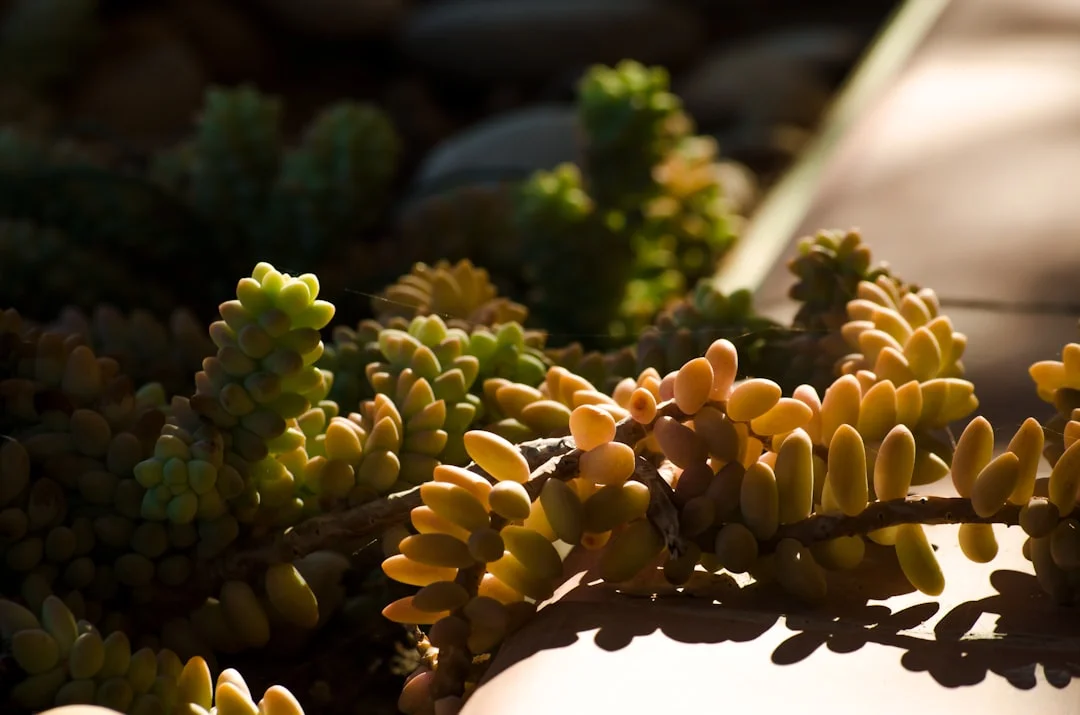
Donkey’s tail produces dense, overlapping leaves arranged in a spiral pattern around each stem. The leaves are typically blue-green to grey-green, with a slightly waxy texture. In optimal conditions — particularly when exposed to strong light with a slight temperature stress — the tips may blush pink or purple. This colour change is completely normal and actually signals a healthy, thriving plant. Mature plants in ideal conditions occasionally produce small, star-shaped pink or red flowers at the stem tips in late spring to early summer, though indoor plants rarely flower unless given very bright light.
Names Around the World
Sedum morganianum is grown and loved across every continent, and it carries many names depending on the language and local tradition. In English-speaking countries, ‘donkey’s tail’ and ‘burro’s tail’ are both widely used. Spanish-speaking gardeners typically call it ‘cola de burro’ — literally ‘donkey’s tail’ — reflecting its geographic origins in Mexico. The names table below gives you the local name used by gardeners and botanists in 21 language communities around the world.
This global reach is worth noting because it reflects just how adaptable this plant really is. It grows on windowsills in rainy Manchester, rooftop gardens in Mumbai, and desert patios in Phoenix, Arizona — adjusting to each climate with minimal intervention from the gardener.
Cultural and Historical Context
While Sedum morganianum doesn’t carry the deep Ayurvedic or traditional Chinese medicine history of plants like tulsi or ginseng, it has become woven into contemporary horticultural culture worldwide. In Mexico, its country of origin, it’s used decoratively in courtyard gardens and considered a symbol of resilience. In Japan, it’s popular in the wabi-sabi aesthetic of minimalist interior design — placed in simple ceramic pots where its trailing form is allowed to drape naturally. The Royal Horticultural Society (RHS) has given it an Award of Garden Merit, recognising its reliable performance in cultivation.
Light Requirements: Getting Sun Exposure Right
Light is the single most important variable in donkey’s tail succulent care. Get this right, and almost everything else becomes easier. Sedum morganianum needs bright light — ideally 4 to 6 hours of direct sun per day. However, there’s an important nuance that climate makes a big difference to.
In temperate regions like the UK, northern Europe, and Canada, placing your plant on a south-facing windowsill is ideal. During winter months, when daylight hours drop below 8 hours per day, the plant may slow its growth significantly — that’s completely normal. In these cooler climates, a grow light positioned 15–20 cm (6–8 inches) above the plant for 12 hours per day can supplement natural light beautifully between October and March.
In tropical and subtropical climates — think Singapore, Mumbai, Lagos, or Miami — intense midday sun (between 11am and 3pm) can scorch the leaves and cause bleaching. In these regions, bright indirect light in the morning with some afternoon shade gives the best results. East-facing spots work particularly well.
In arid climates like Phoenix, Dubai, or Perth, the plant can handle more direct sun, but watch for signs of heat stress above 38°C (100°F). Dappled shade in the hottest months prevents sun bleaching.
Indoor Light vs. Outdoor Light
Many gardeners assume their indoor bright spot offers the same light as outdoors. It doesn’t. A window that feels sunny to you may deliver only 10–20% of the light intensity the plant receives outside. If your donkey’s tail is indoors and producing etiolated (stretched, pale) stems, it’s almost always a light deficiency. Move it closer to the brightest window available, or invest in a full-spectrum LED grow light. Outdoors, hanging baskets under a pergola or patio cover that receives morning sun and afternoon dappled light are perfect. The USDA Plant Guide classifies Sedum morganianum as hardy to USDA zones 10–11, meaning outdoor year-round growing is viable in frost-free climates only.
Signs Your Plant Needs More or Less Light
Too little light: stems grow long and spindly between leaf nodes, leaves are pale or yellowish-green, new growth is weak. Too much light in hot climates: leaves develop white or papery patches, tips turn brown or translucent. Just right: compact growth, tightly packed leaves, rich blue-green colour, and — if you’re lucky — occasional pink blush at the tips. Adjusting light exposure is one of the fastest ways to improve your donkey’s tail succulent care routine.
Soil and Fertilizer: The Foundation of Healthy Growth
Here’s where most indoor gardeners make their first mistake. Standard potting mix holds too much moisture for Sedum morganianum. That retained water sits around the roots and causes rot — often within days in a warm, humid climate. The fix is simple: use a fast-draining succulent mix.
The ideal soil for donkey’s tail succulent care is a blend of 50% coarse perlite or pumice and 50% cactus mix. This ratio ensures water moves through quickly, oxygen reaches the roots, and the plant never sits in soggy soil. Perlite and pumice are available globally at most garden centres and online retailers under various brands. If you can’t find commercial cactus mix, a DIY blend works just as well: mix regular potting compost with coarse horticultural sand (not builder’s sand, which is too fine) in a 1:1 ratio.
Pot choice matters just as much as soil. Always use a pot with drainage holes. Terracotta pots are particularly good for this plant because their porous walls allow excess moisture to evaporate — a major advantage in humid tropical climates. Plastic pots retain moisture longer, which can work in very dry, arid climates but requires more careful watering discipline elsewhere.
Fertilizing Sedum morganianum
Donkey’s tail doesn’t need heavy feeding. In fact, over-fertilizing causes soft, weak growth that’s more prone to rot and pest damage. During the active growing season — spring and summer in the Northern Hemisphere — apply a diluted liquid fertilizer formulated for succulents or cacti once every 4–6 weeks. Dilute it to half the recommended strength. Look for a balanced NPK ratio around 2-7-7 or a low-nitrogen option, since high nitrogen causes excessive leaf growth at the expense of the plant’s natural compact form. Do not fertilize in autumn and winter, when the plant is in its rest phase. Many gardeners find a single spring feed is sufficient for healthy growth without compromising the plant’s naturally tidy form.
Repotting: When and How
Repot donkey’s tail only when roots are visibly escaping from drainage holes or the plant has clearly outgrown its container — usually every 2–3 years. Choose spring as your repotting window. Handle stems very gently to avoid excessive leaf drop. Allow freshly repotted plants to settle for 1 week before resuming your regular watering routine, giving any damaged roots time to heal before moisture exposure.
Watering Guide: Less Is Almost Always More
If there’s a single golden rule in donkey’s tail succulent care, it’s this: when in doubt, don’t water. Those fat, bead-like leaves store weeks’ worth of moisture. The plant evolved in semi-arid conditions where rain is seasonal and unpredictable — it is physiologically designed for drought.
A practical watering schedule for most climates is once every 10–14 days in the growing season (spring and summer) and once every 3–4 weeks in autumn and winter. However, climate and pot size affect this significantly. In a hot, dry environment like Phoenix or Dubai, you may need to water weekly during peak summer. In a cool, humid climate like London or Vancouver in winter, once a month may be more than enough.
The best watering technique is the soak-and-dry method. Water thoroughly until it drains freely from the bottom of the pot, then wait until the top 2–3 cm (1 inch) of soil is completely dry before watering again. Never let the plant sit in a saucer of standing water. This single practice prevents more root rot than any other change you can make.
A quick tip here: always water the soil, not the leaves or crown of the plant. Moisture trapped between the tightly packed leaves creates ideal conditions for fungal infections. Water at the base, and you’ll dramatically reduce the risk of rot.
Signs of Overwatering vs. Underwatering
Overwatered plants: leaves appear translucent, mushy, or yellowing from the base upward. Stems may feel soft. In severe cases, you’ll notice the potting mix smells sour or musty — a clear sign of root rot. Underwatered plants: leaves look shrivelled, slightly wrinkled, or feel less firm than usual. The plant may look a little dull. Importantly, an underwatered donkey’s tail recovers quickly after a thorough watering. An overwatered one may not recover at all. So when you’re unsure — always err toward dry.
How to Grow Donkey's Tail Succulent: Step-by-Step
Growing Sedum morganianum successfully from scratch is straightforward when you follow a logical sequence. The steps below cover starting from a cutting or young plant through to a mature, trailing specimen. Whether you’re setting up a hanging basket on a balcony in Bangkok or a windowsill display in Berlin, this process applies across climates with minor adjustments noted where relevant.
Many gardeners find the first 4–6 weeks are the most critical — this is when the plant’s root system establishes and when it’s most vulnerable to overwatering and physical disturbance. After that, the plant becomes remarkably self-sufficient.
Choosing the Right Container
Hanging baskets and wide, shallow pots suit donkey’s tail best because they allow the stems to trail naturally. A terracotta or clay hanging pot 20–25 cm (8–10 inches) in diameter is ideal for a young plant with 3–5 stems. As the plant matures, its trailing stems can reach 60 cm or more, so make sure the hanging hook or bracket is rated for the combined weight of pot, soil, and plant — which can be heavier than expected.
First 30 Days: Establishing Your Plant
Once potted in well-draining soil, place the plant in bright indirect light for the first week. This reduces transplant stress. After 7 days, move it to its permanent location with 4–6 hours of direct sun. Water sparingly during this establishment phase — just enough to moisten the top layer. Resist the temptation to check the roots by pulling the plant out; this disrupts forming root connections. After 4 weeks, the plant should show signs of new growth at the stem tips, signalling a successful establishment.
Propagation: Growing New Plants from Leaves and Stems
One of the most rewarding aspects of donkey’s tail succulent care is how easily this plant propagates. A single fallen leaf — and you’ll have plenty of those, since the plant drops leaves readily when touched — can grow into a whole new plant. No special tools or expertise are required.
There are two main propagation methods: leaf propagation and stem cutting propagation. Stem cuttings are faster and more reliable, producing a new trailing plant within a single growing season. Leaf propagation is slower but works well if you have fallen leaves and patience to spare. Both methods work best in spring and early summer, when the plant’s growth hormones are most active.
According to the RHS, succulent propagation success rates improve significantly when cuttings are allowed to callous over before being placed in soil — a step many beginners skip, and then wonder why their cuttings rot.
Leaf Propagation Method
Gently remove a healthy, plump leaf by twisting it cleanly from the stem — make sure the entire base of the leaf comes away, with no part left attached to the stem. Place the leaf on top of dry, well-draining succulent mix in a shallow tray. Do NOT push it into the soil. Leave it in bright indirect light. Within 2–3 weeks, tiny pink roots will emerge from the base, followed by a miniature rosette of new leaves. Once the original leaf has shrivelled and the new plant has several leaves of its own, you can gently transfer it to a small pot.
Stem Cutting Propagation Method
Using clean, sharp scissors or pruning shears, cut a healthy stem 7–10 cm (3–4 inches) long from the tip of an established plant. Remove the lower 2–3 cm of leaves to expose the bare stem. Allow the cut end to dry in a warm, shaded spot for 2–5 days until a dry callous forms over the cut. Then, place the calloused end into slightly moistened succulent mix, burying just the bare stem portion. Keep in bright indirect light, water very lightly every 5–7 days, and wait. Roots typically establish within 3–4 weeks. After that, treat it as a mature plant.
Common Problems, Pests, and Diseases
Even with excellent donkey’s tail succulent care, problems occasionally arise. The good news is that most issues are predictable, easy to diagnose, and fixable once you know what you’re looking for. The three most common problems are root rot, mealybugs, and leaf drop — and two of those three are caused by the gardener, not by nature.
Root rot is almost always the result of overwatering or poorly draining soil. If you catch it early — when only a few stems are affected — you can save the plant by removing the rotted sections, allowing the healthy parts to callous, and repotting in fresh, dry mix. If the rot has reached the crown of the plant, recovery is unlikely. Take stem cuttings from any healthy sections and propagate them.
Leaf drop is perhaps the most disheartening issue for new growers. Those plump leaves seem to fall off at the slightest provocation. In fact, Sedum morganianum is one of the most leaf-sensitive succulents in existence. Moving the pot, brushing against it, repotting, or even a sudden change in temperature can cause significant leaf fall. The silver lining: every dropped leaf is a potential new plant.
Mealybugs and Other Pests
Mealybugs are the most common pest on Sedum morganianum. They appear as small, white cottony clusters, usually hiding in the joints between leaves and stems. Left untreated, they weaken the plant and can spread to other nearby succulents. Treatment is straightforward: dip a cotton swab in 70% isopropyl alcohol and apply directly to each mealybug cluster. For larger infestations, spray the entire plant with a solution of water and neem oil (5 ml per litre of water). Repeat every 5–7 days for 3 weeks. Spider mites occasionally appear in hot, dry conditions — look for fine webbing on stems and tiny moving dots. Increase humidity slightly and apply the same neem oil treatment.
Yellowing Leaves and Other Warning Signs
Yellow leaves near the base of stems are usually a sign of overwatering — address the watering schedule first. Yellow leaves throughout the plant, accompanied by stretched growth, suggest insufficient light. Brown, papery leaf tips typically indicate sun scorch in hot climates or very low humidity in heated indoor spaces. Pale, washed-out colouring usually points to light deficiency or root damage. Importantly, a few yellowing or dried leaves near the very base of each stem is completely normal — this is simply the plant shedding its oldest growth as new leaves emerge at the tips.
Seasonal Care Guide
One of the most overlooked aspects of donkey’s tail succulent care is adjusting your routine with the seasons. This plant doesn’t grow at the same pace year-round, and treating every month identically is a recipe for problems.
In June specifically — whether you’re in the Northern Hemisphere heading into peak summer or the Southern Hemisphere moving into mid-winter — your approach should shift accordingly. Northern Hemisphere gardeners in June should be in active growing mode: watering every 10–14 days, feeding lightly once this month, and ensuring the plant gets maximum morning sun. Southern Hemisphere gardeners in June are entering the rest period: reduce watering to once every 3–4 weeks, skip fertilizer entirely, and move the plant to the warmest available indoor spot if temperatures are dropping below 5°C (41°F).
Spring Care (March–May, Northern Hemisphere)
Spring is the most important season for Sedum morganianum. This is when the plant breaks dormancy and begins its fastest growth phase. Resume regular watering as temperatures rise above 15°C (59°F). Apply the first diluted fertilizer feed of the year in late March or April. This is also the best time for repotting, taking stem cuttings for propagation, and moving outdoor plants back to their summer positions. Watch carefully for the first signs of pest activity — mealybugs are particularly active in early spring.
Summer Care (June–August, Northern Hemisphere)
During peak summer, water more frequently — weekly in hot, dry climates, every 10 days in moderate climates. Protect outdoor plants from intense afternoon sun above 35°C (95°F) by providing shade cloth or moving hanging baskets to a spot with morning sun only. Indoor plants in air-conditioned spaces may actually need less water than expected, since cool, dry air slows soil moisture evaporation. Apply a second diluted fertilizer feed in July if the plant is growing vigorously.
Autumn and Winter Care (September–February, Northern Hemisphere)
Reduce watering dramatically as temperatures fall and daylight hours shorten. The plant enters semi-dormancy and its water needs drop sharply. Stop fertilizing entirely from September onwards. If outdoor temperatures in your region drop below 5°C (41°F), bring the plant indoors to a bright, cool windowsill. Cold drafts from open windows are harmful — frost will kill the plant outright. In tropical and subtropical climates where winters are mild, the plant may continue growing slowly through this period, requiring only modest watering reductions.
Uses and Benefits of Sedum morganianum
While Sedum morganianum isn’t a medicinal plant in the traditional sense — it doesn’t feature prominently in Ayurvedic texts like the Charaka Samhita or in Traditional Chinese Medicine formularies — it offers several real, documented benefits that make it genuinely valuable beyond its visual appeal.
From an air quality standpoint, all succulents, including Sedum morganianum, perform Crassulacean Acid Metabolism (CAM) photosynthesis — a process where they absorb carbon dioxide at night rather than during the day. This makes them uniquely suitable as bedroom plants, where they quietly contribute to overnight air freshening, though the effect on large room volumes is modest.
In terms of wellbeing, a growing body of horticultural therapy research supports the psychological benefits of keeping plants — particularly low-maintenance ones. A 2019 study published in the Journal of Physiological Anthropology found that active interaction with indoor plants reduced physiological and psychological stress compared to computer tasks. For busy gardeners who need an easy win, a thriving donkey’s tail on a windowsill delivers visible, rewarding results without demanding constant attention.
Furthermore, its value as a garden design element is considerable. Landscape architects in Mediterranean climates — southern California, coastal Spain, parts of Australia — increasingly use Sedum morganianum in drought-tolerant garden designs. Its trailing habit makes it perfect for green walls, raised planters, and hanging displays that need minimal irrigation.
Toxicity and Pet Safety
This is important. According to the ASPCA, Sedum morganianum is considered mildly toxic to cats and dogs. Ingestion can cause mild gastrointestinal upset — vomiting or diarrhoea — but it is not considered severely toxic. That said, it’s best practice to keep the plant out of reach of pets and young children. If your cat or dog chews on the plant and shows signs of distress, contact your veterinarian. For households with curious pets, hanging baskets placed high out of reach are the safest display option.
Decorative and Landscape Uses
Donkey’s tail is one of the most versatile trailing plants in container gardening. It works beautifully in hanging baskets, wall-mounted planters, and as a cascading element in mixed succulent arrangements. In dry Mediterranean and arid garden designs, it’s used as ground cover on slopes and rocky outcrops where water-efficient planting is a priority. Indoors, its sculptural trailing stems make it a statement piece in minimalist, Scandinavian, and Japanese-inspired interiors. A mature specimen with stems draping 40–60 cm (16–24 inches) is genuinely eye-catching — the kind of plant that draws questions from every visitor.
Frequently Asked Questions
How often should I water my donkey's tail succulent?
Water your donkey's tail every 10–14 days during the active growing season (spring and summer) and every 3–4 weeks in autumn and winter. Always use the soak-and-dry method — water thoroughly, then wait until the top 2–3 cm of soil is completely dry before watering again. In hot, dry climates like Dubai or Phoenix, you may need to water slightly more often. In cool, humid climates like the UK, less frequent watering is better. Overwatering is the leading cause of death in donkey's tail succulent care.
Can I grow donkey's tail succulent indoors in a cold climate?
Absolutely. Donkey's tail grows well indoors in cold climates like Canada, the UK, or northern Europe, as long as it receives at least 4–6 hours of bright light daily. Place it on a south-facing windowsill for the best light exposure. In winter, when natural light is limited, supplement with a full-spectrum LED grow light set 15–20 cm above the plant for 12 hours per day. Keep it away from cold drafts from windows and doors. The plant handles indoor heating well but prefers temperatures above 10°C (50°F).
Is donkey's tail succulent safe for pets?
Donkey's tail is mildly toxic to cats and dogs according to the ASPCA. Ingesting the leaves can cause mild vomiting or diarrhoea, but it is not considered severely toxic. It is not known to be dangerous to humans in normal decorative use. To be safe, display your plant in a hanging basket or on a high shelf where pets and young children cannot reach it. If your pet ingests any part of the plant and shows signs of distress, contact your veterinarian promptly.
Why do the leaves keep falling off my donkey's tail?
Leaf drop is almost always caused by physical disturbance or stress. Sedum morganianum is one of the most touch-sensitive succulents — even brushing against it can dislodge dozens of leaves. Other causes include sudden changes in temperature or light, repotting, moving the pot to a new location, or overwatering. The good news is that fallen leaves can be used for propagation — simply place them on dry succulent mix and wait for new plants to sprout. Going forward, find a permanent spot for your plant and disturb it as little as possible.
How do I grow donkey's tail succulent in a container or hanging basket?
Choose a terracotta or ceramic pot with drainage holes — at least 20–25 cm (8–10 inches) wide. Fill it with a 50/50 mix of cactus potting mix and coarse perlite. Plant cuttings or young plants with the stems able to trail naturally over the pot edge. Hanging baskets are ideal because they let stems cascade freely and improve air circulation around the plant. Position the basket where it receives morning sun and afternoon shade in hot climates, or maximum sun in temperate regions. Water the soil base carefully, keeping water away from the leaves.
What is the difference between donkey's tail and burro's tail?
The names are often used interchangeably, but they can refer to two related plants. Sedum morganianum (true donkey's tail) has longer, more pointed leaves and is extremely sensitive to leaf drop. Sedum burrito (burro's tail or baby donkey's tail) has shorter, rounder, more compact leaves and is slightly more robust. Both have nearly identical care requirements. If your plant drops leaves at the slightest touch, it is almost certainly Sedum morganianum. Both plants thrive with the same donkey's tail succulent care approach covered in this guide.
When does donkey's tail succulent flower, and how do I encourage it?
Sedum morganianum produces small, star-shaped pink to red flowers at the tips of mature stems, typically in late spring to early summer. Flowering is most common on plants grown outdoors or in very bright indoor spots with at least 6 hours of direct sun. To encourage blooming, expose the plant to slightly cooler temperatures in winter (around 10–13°C / 50–55°F), reduce watering during the rest period, then increase light and resume watering in spring. Indoor plants in low-light conditions rarely flower. Flowering is a sign of a very healthy, well-cared-for plant.
Can donkey's tail succulent survive outdoors year-round?
In frost-free climates — USDA hardiness zones 10 and 11 — donkey's tail can stay outdoors year-round. This includes coastal California, southern Florida, Hawaii, coastal Australia, parts of South Africa, the Canary Islands, and most of Southeast Asia. In cooler climates (zones 9 and below), bring it indoors when temperatures drop below 5°C (41°F). A single frost event will damage or kill the plant. In temperate climates like the UK (RHS hardiness rating H1C), treat it as a seasonal outdoor plant from May to September, then move it to a bright, warm indoor spot through winter.
Final Thoughts
Donkey’s tail succulent care is one of those rewarding gardening skills that seems tricky at first but quickly becomes second nature. The most important lessons are simple: bright light, fast-draining soil, infrequent watering, and minimal physical disturbance. Get those four things right, and Sedum morganianum will reward you with lush, trailing stems that grow more spectacular with every passing season. Whether you’re growing this plant on a sunny balcony in Sydney, a north-facing apartment in Stockholm, or a humid garden in Chennai, the fundamentals of donkey’s tail succulent care remain the same across every climate. Start with one small cutting, apply the soak-and-dry watering method, protect those delicate leaves from unnecessary contact, and let the plant do what it does best — grow slowly, beautifully, and almost entirely on its own terms. If leaves fall, propagate them. If stems stretch, it needs more light. This plant forgives experimentation and rewards observation. Give it a permanent home, the right soil, and just enough sun — and it will thrive for years.

