
⏱ 26 min read
Table of Contents
- What Is the Ghost Plant Succulent?
- Benefits of Growing Ghost Plant Succulent
- How to Grow Ghost Plant Succulent
- Best Soil and Fertilizer
- Watering Your Ghost Plant Succulent
- Sunlight and Temperature Needs
- Common Problems and Fixes
- How to Propagate Ghost Plant Succulent
- Seasonal Care Through the Year
- Uses and Cultural Notes
A gardener in Phoenix, Arizona once told me she’d nearly thrown out her Ghost Plant Succulent — it looked grey, leggy, and half-dead. Six months later, it cascaded over her balcony in pearly pink rosettes. That turnaround is the whole point of good ghost plant succulent care. The short answer? This plant (Graptopetalum paraguayense) wants bright light, gritty soil, and far less water than you think. Get those three right, and it almost grows itself. Get them wrong, and it sulks. Here’s the thing — ghost plant succulent care is genuinely one of the most forgiving routines in the succulent world, which makes it perfect for beginners and busy folks alike. Whether you live in tropical Singapore, temperate London, or arid Dubai, this guide walks you through every step. By the end, you’ll know exactly why your past attempts may have failed — and the one watering mistake that quietly kills more of these plants than anything else. Let’s dig in. If you enjoy growing this plant, you might also find our guide on how to propagate succulents from leaves very useful.
Quick Highlights
- Discover why this beginner-friendly succulent survives neglect better than almost any other houseplant
- Master the exact watering rhythm that prevents root rot in any climate
- Learn the fast, free propagation trick that turns one plant into dozens
- Find out the ideal light levels for indoor and outdoor growing worldwide
- Avoid the three most common mistakes that turn healthy rosettes leggy and pale
- Understand seasonal care shifts from tropical summers to frosty temperate winters
Plant Characteristics at a Glance
| Common Name | Ghost Plant Succulent (also Mother of Pearl Plant) |
| Scientific Name | Graptopetalum paraguayense |
| Family | Crassulaceae |
| Origin | Mexico (despite the species name 'paraguayense') |
| Habitat | Rocky cliffs, arid slopes, well-drained terrain |
| Plant Type | Evergreen perennial succulent |
| Indoor Plant | Yes — thrives near bright windows or under grow lights |
| Outdoor Plant | Yes — ideal in USDA zones 9–11, frost-free climates |
| Leaves | Fleshy, grey-pink rosettes with powdery farina coating |
| Flowers | Small, star-shaped, white to pale yellow with red flecks |
| Flowering Season | Spring to early summer |
| Fruit | Tiny dry follicles (rarely significant indoors) |
| Seeds | Small; propagation by leaf/cutting is far easier |
| Roots | Shallow, fibrous, fast to establish |
| Height | 10–30 cm tall; stems can trail 30 cm or more |
| Growth Rate | Moderate to fast in warm, bright conditions |
| Light Requirements | Bright light to full sun; 4–6+ hours daily |
| Soil Requirements | Gritty, fast-draining cactus mix; pH 6.0–6.5 |
| Water Requirements | Low; soak-and-dry method, let soil fully dry |
| Temperature Requirements | 18–27°C (65–80°F); protect below 1°C (34°F) |
| Humidity Requirements | Low to moderate; dislikes constant high humidity |
| Propagation | Leaves, stem cuttings, and offsets |
| Uses | Ornamental, ground cover, hanging baskets, dish gardens |
| Medicinal Properties | Folk use for minor skin irritation; evidence limited |
| Toxicity | Generally low toxicity; not edible; keep away from pets |
| Cultural Significance | Symbol of resilience; used in Vastu/feng shui displays |
| Common Pests | Mealybugs, aphids, spider mites |
| Common Diseases | Root rot, fungal leaf spots from overwatering |
| Special Care Tips | Don't wipe off the protective farina; water at soil level |
| Cultural Practices | Rotate for even growth; harden off before full sun |
| Vastu Direction | Southeast or east for positive energy |
Ghost plant succulent care Names in Different Languages
| English | Ghost Plant / Mother of Pearl Plant |
| Mandarin Chinese | 朧月 (Lóng yuè) |
| Spanish | Planta fantasma / Sedum gris |
| Hindi | Ghost Plant Succulent |
| Gujarati | ઘોસ્ટ પ્લાન્ટ સક્યુલન્ટ |
| Arabic | نبات الشبح العصاري |
| Bengali | ঘোস্ট প্ল্যান্ট সাকুলেন্ট |
| Portuguese | Planta fantasma |
| Russian | Граптопеталум парагвайский |
| Japanese | 朧月 (Oborozuki) |
| Punjabi | ਘੋਸਟ ਪਲਾਂਟ ਸਕੁਲੈਂਟ |
| German | Geisterpflanze / Mondsteinpflanze |
| Javanese | Tanduran hantu |
| Korean | 오보로즈키 (Oborojeuki) |
| French | Plante fantôme |
| Telugu | ఘోస్ట్ ప్లాంట్ సక్యులెంట్ |
| Marathi | घोस्ट प्लांट सक्युलंट |
| Tamil | கோஸ்ட் பிளாண்ட் சக்குலண்ட் |
| Urdu | گھوسٹ پلانٹ سکیولینٹ |
| Turkish | Hayalet bitki |
| Vietnamese | Cây sen đá ma |
What Is the Ghost Plant Succulent?
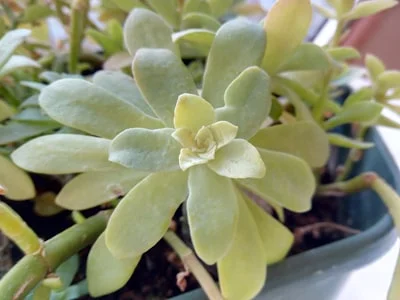
The Ghost Plant Succulent, known to botanists as Graptopetalum paraguayense, is a low-growing succulent famous for its ghostly grey-pink rosettes. The leaves wear a powdery white coating called farina, which protects them from sun and water loss. Touch it, and the bloom rubs off — so handle gently. Despite the name ‘paraguayense’, it’s actually native to Mexico, not Paraguay. That naming mix-up is one of horticulture’s odd little jokes. According to Kew Gardens, the genus Graptopetalum belongs to the Crassulaceae family, the same group that gives us jade plants and echeverias. In fact, this plant hybridises so easily that you’ll often see it crossed with echeveria to make ‘Graptoveria’. Here’s something many people don’t know. Stressed plants — those given strong light and lean conditions — turn the most stunning shades of pink, blue, and lavender. A pampered plant stays plain green. So a little tough love actually makes it prettier. But knowing what it is only scratches the surface — the real magic is in why so many gardeners swear by it. Let’s look at the benefits next.
Why It's Called a 'Ghost' Plant
The name comes from that pale, waxy farina that gives leaves a frosted, almost translucent look — like a ghost caught in daylight. In bright sun, the rosettes can glow silvery-blue. Move them to shade, and they fade to a soft green. This colour-shifting trick makes the plant a favourite for living walls and hanging baskets. Mature plants trail downward on woody stems, dropping leaves that root themselves wherever they land. That’s why you’ll sometimes find baby plants growing in cracks in a patio — they’re remarkably independent. Many gardeners who grow this plant also love to read about how to propagate succulents from leaves.
Benefits of Growing Ghost Plant Succulent
Why bother with this plant at all? Because it gives back far more than it asks. First, it’s almost impossible to kill through neglect — a huge plus for travellers and forgetful waterers. Second, it propagates for free. A single dropped leaf becomes a whole new plant within weeks. Many gardeners find one starter plant turns into a generous gift collection within a year. Furthermore, it works in nearly any setting. Hang it in a basket, edge a rockery, or perch it on a sunny windowsill. In arid regions like Australia’s interior or the American Southwest, it thrives outdoors year-round with zero fuss. In fact, the RHS lists Graptopetalum as an easy-care succulent for greenhouse and conservatory growing in cooler temperate zones. There’s also a quiet air-purifying bonus, like most Crassulaceae succulents. They perform CAM photosynthesis, meaning they release oxygen at night — handy for bedrooms. We’ll touch on that more later. But the biggest benefit is confidence. This is the plant that teaches nervous beginners they really can grow succulents. That confidence is the gateway drug to a whole greenhouse. Now, let’s get your hands dirty and actually plant one.
Is It Good for Beginners?
Absolutely — and that’s not just marketing talk. In my experience teaching first-time growers, the Ghost Plant Succulent has the highest survival rate of any plant I hand out. It forgives missed waterings, recovers from sunburn, and re-roots even when knocked off a shelf. The leaves act as water tanks, so the plant coasts through dry spells. As long as you avoid soggy soil and total darkness, you’ll likely succeed. That low-risk learning curve is exactly why it appears on so many ‘best beginner succulent’ lists worldwide. For more tips, check out our detailed article on how to propagate succulents from leaves.
How to Grow Ghost Plant Succulent
Good ghost plant succulent care starts the moment you choose a pot. Pick a container with drainage holes — this is non-negotiable. Terracotta works beautifully because it breathes and wicks away excess moisture. Plastic pots hold water longer, so use them only if you tend to underwater. Next, position matters. Indoors, place the plant near a bright south or west-facing window (north-facing in the Southern Hemisphere). Outdoors, give it morning sun and light afternoon shade in hot climates. Here’s a quick tip: don’t bury the stem deep. These succulents like to sit shallow, with their roots near the surface. Plant too deep, and the stem may rot. Whether you’re growing in a tropical garden in Kerala or a cool greenhouse in Manchester, the core needs stay the same — light, drainage, and restraint with the watering can. The internet often tells you succulents need ‘special’ setups. They don’t. They need the right soil and a bright spot. That said, getting the soil mix right is where many people stumble. Let’s fix that in the next section. Many gardeners who grow this plant also love to read about how to propagate succulents from leaves.
Choosing the Right Pot and Spot
Size up gently — a pot just slightly wider than the root ball is ideal. Oversized pots hold too much damp soil and invite rot. For trailing displays, a hanging basket or a tall pot lets the woody stems cascade naturally. Indoors, rotate the pot a quarter-turn weekly so the rosette grows evenly toward the light. If your plant stretches and leans, it’s begging for brighter conditions. Move it closer to the window or add a grow light during dark winter months in places like Canada or northern Europe. If you enjoy growing this plant, you might also find our guide on how to propagate succulents from leaves very useful.
Container Growing Tips
Container growing suits balconies, patios, and small spaces everywhere. Use a wide, shallow bowl for a clustered rosette look, or a deep pot for trailing stems. Always add a drainage layer of grit or small stones at the base. Group several rosettes for a fuller display — they’ll knit together over time. In monsoon regions like Mumbai, move containers under cover so they don’t drown in heavy rain. A simple windowsill tray protects roots from sitting in standing water.
Best Soil and Fertilizer
Soil is where ghost plant succulent care quietly succeeds or fails. This plant hates wet feet. So you want a gritty, fast-draining mix that dries out quickly. A simple recipe: two parts cactus or succulent compost to one part perlite, pumice, or coarse sand. In India, coarse river sand and cocopeat work well; in the US and UK, perlite and horticultural grit are easy to find. The goal is the same — water should run straight through, never pool. Feeding is light work. These plants evolved in lean, rocky Mexican soils, so they don’t need much. Here’s the thing — overfeeding causes soft, floppy growth that loses its pretty colour. Less is genuinely more. Use a balanced, diluted succulent fertilizer (half strength) just once or twice during the active growing season — spring through early autumn. Skip feeding entirely in winter when the plant rests. A common mistake is treating succulents like leafy houseplants. They’re not. They want a lean diet and sharp drainage. Get the soil right, and you’ve won half the battle. But the other half — watering — trips up even experienced growers. Let’s get into that now.
Ideal Soil pH and Mix
The Ghost Plant Succulent prefers slightly acidic to neutral soil, roughly pH 6.0 to 6.5. Most commercial cactus mixes already sit in this range, so you rarely need to test. What matters far more is texture. The mix should feel gritty and loose, not dense or peaty. If you only have regular potting soil, cut it 50/50 with perlite or sand. A handy test: squeeze a damp handful. If it holds a tight ball, add more grit. If it crumbles apart, you’re good to go.
Watering Your Ghost Plant Succulent
If you remember one thing about ghost plant succulent care, make it this: when in doubt, don’t water. Overwatering kills far more of these plants than drought ever will. The leaves store plenty of moisture, so the plant happily waits. Use the ‘soak and dry’ method. Water deeply until it runs from the drainage holes, then wait until the soil is completely dry before watering again. In hot, dry climates like Arizona or central Australia, that might mean every 7 to 10 days in summer. In humid or cool regions like the UK, it could stretch to two or three weeks. Have you ever noticed wrinkly, soft leaves? That’s the plant telling you it’s thirsty. Plump, firm leaves mean it’s well hydrated. This visual signal is your best guide — better than any fixed schedule. Importantly, water the soil, not the leaves. Water sitting in the rosette can cause rot and wash away that pretty farina coating. In winter, cut watering right back. A dormant plant barely drinks at all. Master this rhythm, and you’ve mastered the trickiest part. Next, let’s talk light — because even perfect watering can’t save a plant kept in the dark.
Signs of Overwatering vs Underwatering
Overwatered plants show translucent, yellow, mushy leaves that fall off at a touch. The stem may blacken — a sign of rot. Underwatered plants, by contrast, get thin, wrinkled, and slightly shrivelled, but stay firm-ish. The good news? Underwatering is easy to fix — just water and watch the leaves plump up within a day or two. Overwatering is harder. If you spot rot, stop watering, let the soil dry fully, and consider repotting into fresh dry mix. Salvage healthy leaves for propagation if the base is too far gone.
Sunlight and Temperature Needs
Light is the secret behind those gorgeous colours. The Ghost Plant Succulent loves bright light — at least four to six hours daily. Give it plenty, and the rosettes blush pink, lavender, and blue. Starve it of light, and it turns plain green and stretches out, reaching desperately for the window. That stretching is called etiolation, which simply means leggy growth from too little light. Outdoors in mild climates, full sun to part shade is perfect. In scorching regions like the Middle East or northern Australia, give afternoon shade so the leaves don’t scorch. Indoors, a sunny windowsill or a grow light keeps it happy through dark winters in places like Canada and Scandinavia. On temperature, this plant is tougher than it looks. It thrives between 18°C and 27°C (65°F to 80°F) but tolerates a wide range. According to USDA hardiness data, it grows outdoors year-round in zones 9 to 11. The RHS rates it H2, meaning it needs protection below 1°C to 5°C (34°F to 41°F). A few frosts won’t always kill it, but prolonged freezing will. Bring it indoors before winter in cold regions. Get light and temperature right, and your plant practically glows. But even glowing plants face pests and problems — so let’s troubleshoot.
Indoor vs Outdoor Light
Outdoors, this succulent gets all the light it needs naturally — just ease it into full sun gradually to prevent sunburn. Indoors is trickier. Window glass cuts light intensity, so place the plant as close to the brightest window as possible. In darker homes or short winter days, a simple LED grow light for 10 to 12 hours daily keeps colours vivid and growth compact. If new leaves grow small and spaced far apart on a long stem, that’s your cue — more light, please.
Common Problems and Fixes
Even the easiest plants hit snags. The most common issue, by far, is root rot from overwatering — we’ve covered that. But pests show up too. Mealybugs are the usual villains. They look like tiny white cotton bits tucked into leaf joints. Wipe them off with a cotton bud dipped in rubbing alcohol, or spray with diluted neem oil. Many gardeners find neem works wonders and is gentle on the plant. Aphids and spider mites appear occasionally, especially on stressed indoor plants. A blast of water and good airflow usually sorts them out. Then there’s etiolation — that leggy, pale stretching from low light. The fix is simple: more light. You can also behead a leggy plant, let the cut dry, and replant the top while the base resprouts. Fungal spots can form if water sits on the leaves. So always water at soil level and keep good airflow. A pattern interrupt worth remembering: most ‘problems’ with this plant trace back to just two causes — too much water or too little light. Solve those, and you’ve solved nearly everything. Now for the fun part everyone loves — making free plants. Let’s propagate.
Dealing with Leggy, Stretched Growth
Leggy growth is the plant’s polite complaint about dim light. First, move it somewhere brighter. To fix the look, snip off the stretched rosette, leaving a couple of centimetres of stem. Let the cut callus over for two or three days. Then replant it in dry, gritty soil. Meanwhile, the original base will often sprout new baby rosettes along the bare stem. So one leggy plant becomes several compact ones. It’s a tidy way to refresh an overgrown specimen and multiply your collection at the same time.
How to Propagate Ghost Plant Succulent
Here’s where this plant truly shines. Propagation is so easy it almost feels like cheating. You can use leaves, cuttings, or offsets. Leaf propagation is the most magical. A single dropped leaf will sprout roots and a tiny new plant — sometimes with no effort from you at all. In fact, mature plants self-propagate, scattering rooted babies around their base. Below is the step-by-step method that works in any climate, from humid Bengaluru to dry Las Vegas. The key throughout is patience and dry conditions. Propagating succulents rewards the relaxed gardener. Don’t fuss, don’t overwater, and don’t disturb the new roots. Within four to eight weeks, you’ll have rooted babies ready to pot. This is the part that hooks people for life. Once you watch a single leaf turn into a plant, you’ll never stop. Next, we’ll fine-tune your routine across the seasons, because care needs shift as the year turns.
Leaf and Cutting Methods
Leaf propagation: gently twist a healthy leaf off the stem — get a clean break with no torn bits. Lay it on dry soil and ignore it for a few days. Once roots appear, mist lightly. Stem cuttings: snip a rosette with a short stem, let it callus for two to three days, then plant in dry gritty mix. Both methods love bright, indirect light and warmth. Offsets — baby plants at the base — can simply be lifted and potted once they’ve grown roots of their own.
Seasonal Care Through the Year
Great ghost plant succulent care means adjusting with the seasons. In spring and summer — the active growing months — the plant drinks more and grows fast. This is the time to feed lightly and propagate. Right now in June, Northern Hemisphere growers should water a touch more often and watch for sun scorch during heatwaves. Meanwhile, gardeners in the Southern Hemisphere are heading into winter and should ease right back. In autumn, growth slows. Start reducing water and stop feeding. This is also the time to bring outdoor plants indoors in cold regions before the first frost. Winter is rest time. The plant goes semi-dormant. Water sparingly — maybe once a month — and keep it in a bright, cool, frost-free spot. Don’t worry if it looks a little still; it’s just sleeping. Then in spring, ramp things back up gradually as new growth appears. This seasonal rhythm matters far more in temperate and cold climates than in the steady warmth of the tropics, where care stays fairly even year-round. Match your care to your season and your region, and your plant will reward you. Finally, let’s explore the surprising uses and cultural side of this charming succulent.
Winter Protection in Cold Climates
In zones colder than USDA 9 — much of the UK, northern US, Canada, and northern Europe — frost is the enemy. Bring containers indoors well before temperatures drop near freezing. Place them on a bright windowsill or under a grow light. Keep the soil mostly dry through winter to prevent rot in cool conditions. A cold, wet root ball is a death sentence. If you must overwinter in an unheated greenhouse, ensure it stays above 1°C (34°F). Come spring, harden the plant back to outdoor sun slowly over a week or two.
Uses and Cultural Notes
Beyond looks, this succulent has a few practical sides. In folk traditions across parts of Mexico and Central America, mashed Graptopetalum leaves have been applied to minor skin irritations and burns — a use loosely echoing how aloe vera is used worldwide. However, scientific evidence is limited, so treat this as traditional lore, not medical advice. As a CAM plant, it releases oxygen at night, which is why succulents like this are popular bedroom choices. The air-purifying claims are modest, though — one small plant won’t transform your air quality, despite what some posts suggest. In Vastu and feng shui circles, succulents are often placed in the southeast or east for positive energy, valued for their resilience and lush look. Mostly, though, this plant earns its keep as a beautiful, fuss-free ornamental. It crowns living walls, spills from hanging baskets, and starts countless gardening journeys. Is it edible? No — don’t eat it. While not highly toxic, it isn’t a food plant, and the farina shouldn’t be ingested. We’ll cover pet safety in the FAQs below. That’s the full picture of ghost plant succulent care, from soil to symbolism. Let’s wrap up with your most-asked questions.
Decorative and Landscape Uses
Designers love this plant for texture and colour. In dry gardens and rockeries across California, Spain, and Australia, it forms silvery carpets that shimmer in sunlight. Indoors, it suits minimalist shelves, terrariums (with great drainage), and dish gardens. Pair it with echeverias and sedums for a layered succulent bowl. Its trailing habit makes it a star in hanging displays. Best of all, dropped leaves root themselves, so the planting slowly fills out on its own — a living, self-renewing decoration that asks almost nothing in return.
Frequently Asked Questions
Can I grow Ghost Plant Succulent indoors in a cold climate?
Yes, you can. In cold climates like Canada, the UK, or northern Europe, indoor growing is the safest choice. Place the plant near your brightest window — south-facing in the Northern Hemisphere. During short, dark winter days, add an LED grow light for 10 to 12 hours so the rosette stays compact and colourful. Keep it in a frost-free room above 1°C (34°F) and water sparingly in winter. The biggest indoor risk is low light, which causes leggy stretching. Good ghost plant succulent care indoors simply means maximising brightness and easing back on water.
Is Ghost Plant Succulent safe for pets and children?
This succulent is considered to have low toxicity and isn't listed among the most dangerous plants for cats and dogs. That said, it's not a food plant, and ingestion can still cause mild stomach upset in pets or kids. The powdery farina coating shouldn't be eaten either. As a sensible precaution, keep it out of reach of curious nibblers, the same way you would with most ornamental plants. If a pet eats a large amount and shows distress, contact your vet. When in doubt, treat ghost plant succulent care with the same mild caution you'd give any decorative houseplant.
How often should I water my Ghost Plant Succulent?
Water only when the soil is completely dry — never on a fixed schedule. In hot, dry climates like Arizona or central Australia, that may mean every 7 to 10 days in summer. In cool or humid regions like the UK or Singapore, it could stretch to two or three weeks. In winter, water just once a month or even less. The plant tells you what it needs: plump, firm leaves mean it's happy; wrinkled, soft leaves mean it's thirsty. Remember, overwatering is the number one killer, so always err on the dry side.
Why is my Ghost Plant Succulent turning green and stretching?
Both signs point to one cause: not enough light. When light is too low, the plant loses its pretty pink-grey colour and stretches out, growing tall with widely spaced leaves. This is called etiolation. The fix is simple — move it somewhere much brighter, ideally near a sunny window or under a grow light. To restore a tidy shape, snip the stretched rosette, let the cut dry for a few days, then replant it. The bare base will often sprout new compact babies. More light is the cornerstone of healthy ghost plant succulent care.
How do I propagate Ghost Plant Succulent from a single leaf?
It's wonderfully easy. Gently twist a healthy leaf off the stem, making sure you get a clean break with no torn bits. Lay the leaf on top of dry, gritty soil and leave it in bright, indirect light. Don't water at first. Within one to three weeks, tiny roots and a baby rosette will appear at the base. Once roots form, mist lightly now and then. After a few weeks, the new plant is ready to pot. The original leaf shrivels as it feeds the baby — that's perfectly normal and expected.
Does the Ghost Plant Succulent flower, and what should I do?
Yes, mature plants produce small, star-shaped flowers in spring to early summer — usually white or pale yellow with delicate red flecks. They appear on slender stalks rising from the rosette. There's nothing special you need to do. Just keep up your normal routine of bright light and minimal water. After flowering finishes, you can snip off the spent stalk to tidy up the plant. Flowering is a good sign that your ghost plant succulent care is on track and the plant feels settled and healthy in its spot.
Can Ghost Plant Succulent survive frost or freezing temperatures?
Not for long. While the plant tolerates a light, brief frost, prolonged freezing damages or kills it. The RHS rates it H2, meaning it needs protection below roughly 1°C to 5°C (34°F to 41°F). In USDA zones 9 to 11, it survives outdoors year-round. In colder zones — much of the UK, northern US, and Canada — bring it indoors before the first autumn frost. Keep it dry and bright through winter. A cold, wet root ball causes rot fast, so winter watering should be very minimal in chilly conditions.
Final Thoughts
Here’s the honest truth: ghost plant succulent care is far simpler than most beginners fear. Give it bright light, gritty fast-draining soil, and water only when bone dry — that’s the whole recipe. Avoid the two classic mistakes (too much water, too little light), and this plant will reward you with shimmering pink-grey rosettes that practically multiply themselves. Whether you garden on a sunny Sydney balcony, a snowy Toronto windowsill, or a steamy Mumbai terrace, the same principles apply — just adjust your watering rhythm to your climate. Remember that pink-tinged plant from Phoenix at the start? That dramatic comeback wasn’t luck. It was simply the plant getting what it needed at last. You can do exactly the same. Start with one healthy leaf or cutting, follow the soak-and-dry method, and watch your confidence grow alongside your collection. Master ghost plant succulent care once, and you’ll have a self-renewing, gift-ready plant for life. So grab a pot, find your brightest spot, and let this charming little ghost surprise you.

