
⏱ 29 min read
Table of Contents
- What Is Kalanchoe? A Plant That Rewrites the Rules
- Kalanchoe Plant Benefits: More Than Just Good Looks
- How to Grow Kalanchoe Plant Indoor Outdoor: Getting Started Right
- Soil and Fertilizer: The Foundation of Healthy Kalanchoe
- Watering Kalanchoe: Less Is Almost Always More
- Sunlight Requirements for Kalanchoe Indoors and Outdoors
- Common Problems: Pests, Diseases, and Quick Fixes
- Propagation: How to Multiply Your Kalanchoe for Free
- Seasonal Care: Keeping Kalanchoe Thriving All Year
- Traditional and Medicinal Uses of Kalanchoe
The kalanchoe plant indoor outdoor is one of gardening’s best-kept secrets — a succulent that blooms for weeks, forgives beginner mistakes, and thrives from tropical Mumbai to chilly Manchester. Here’s something most people don’t know: kalanchoe is one of the very few flowering succulents that performs equally well on a sunny windowsill in a Toronto apartment and in a subtropical garden bed in Singapore. Most flowering houseplants demand precise humidity, exact temperatures, and a strict watering routine. Kalanchoe laughs at all that. Whether you’re growing a kalanchoe plant indoor outdoor in a terracotta pot on your balcony or directly in garden soil, this guide covers everything — watering schedules, light requirements, propagation tricks, and the one pruning mistake that stops your plant from ever reblooming. By the end, you’ll know exactly why your previous attempts may have faltered, and what to do decisively differently this time. If you enjoy growing this plant, you might also find our guide on propagating succulents from cuttings very useful.
Quick Highlights
- Discover how to grow kalanchoe plant indoor outdoor successfully across tropical, temperate, arid, and cold climates
- Learn the exact watering rhythm that prevents root rot — the number one killer of kalanchoe worldwide
- Understand the light trick that forces kalanchoe into stunning repeat blooms year after year
- Identify the top pests and diseases before they take hold, with organic and conventional solutions
- Master propagation from stem cuttings and leaf offsets — create dozens of new plants for free
- Explore the medicinal folklore and traditional uses of kalanchoe across Africa, Asia, and South America
Plant Characteristics at a Glance
| Common Name | Kalanchoe, Flaming Katy, Florist's Kalanchoe, Christmas Kalanchoe |
| Scientific Name | Kalanchoe blossfeldiana |
| Family | Crassulaceae |
| Origin | Madagascar (eastern highlands); now cultivated globally |
| Habitat | Semi-arid rocky highlands; tropical and subtropical gardens worldwide; indoor spaces globally |
| Plant Type | Tender perennial succulent; grown as annual in frost-prone climates |
| Indoor Plant | Yes — excellent houseplant; thrives on bright windowsills year-round |
| Outdoor Plant | Yes — in frost-free zones (USDA Zones 10–12); seasonal outdoor use in Zones 6–9 |
| Leaves | Thick, waxy, scallop-edged, deep green; 3–8 cm long; succulent and moisture-retaining |
| Flowers | Small, four-petalled clusters (cymes); colours include red, orange, yellow, pink, white, coral, bicolour |
| Flowering Season | Winter to spring naturally; can be triggered year-round with artificial dark treatment |
| Fruit | Small capsule-type fruit; rarely produced in cultivated plants |
| Seeds | Tiny, dust-like seeds; rarely used for propagation; stem cuttings preferred |
| Roots | Shallow, fibrous root system; highly susceptible to waterlogging and root rot |
| Height | 20–45 cm (8–18 inches) typical; compact and bushy habit |
| Growth Rate | Moderate; most vigorous in spring and summer with adequate light |
| Light Requirements | Bright indirect light; 6–8 hours daily; morning direct sun tolerated; avoid harsh afternoon sun |
| Soil Requirements | Well-draining succulent or cactus mix; pH 6.0–7.0; 50% potting mix + 50% perlite or coarse sand ideal |
| Water Requirements | Low; water every 7–14 days in summer; every 14–21 days in winter; allow soil to dry between waterings |
| Temperature Requirements | Optimal 15–29°C (59–84°F); minimum 10°C (50°F); avoid frost; tolerates brief heat up to 40°C (104°F) with shade |
| Humidity Requirements | Low to moderate; 40–60% RH ideal; tolerates dry indoor air; avoid high humidity combined with poor airflow |
| Propagation | Stem cuttings (fastest), leaf cuttings, natural offsets/plantlets; rarely by seed |
| Uses | Ornamental houseplant; garden bedding plant in warm climates; gift plant; pots, balconies, office spaces |
| Medicinal Properties | Folk use for wound healing, anti-inflammation (traditional; not clinically verified for internal use in K. blossfeldiana) |
| Toxicity | Toxic to cats and dogs (ASPCA listed); bufadienolide compounds can cause vomiting and heart irregularities in pets |
| Cultural Significance | Popular gift plant in Europe, East Asia, and North America; symbolises endurance and prosperity in some traditions |
| Common Pests | Mealybugs, aphids, spider mites, scale insects |
| Common Diseases | Root rot (overwatering), powdery mildew, botrytis (grey mould), stem rot |
| Special Care Tips | Deadhead spent flowers promptly; apply 14-hour dark treatment for 4–6 weeks to trigger reblooming |
| Cultural Practices | Widely sold as a seasonal gift plant in Europe and North America during winter holiday periods |
| Vastu Direction | East or north-east for indoor placement; symbolises positive energy and brightness in home spaces |
Kalanchoe plant indoor outdoor Names in Different Languages
| English | Kalanchoe / Flaming Katy / Florist's Kalanchoe |
| Mandarin Chinese | 长寿花 (Chángshòu huā) — Longevity Flower |
| Spanish | Calancoe / Kalanchoe |
| Hindi | कलान्चो (Kalanchoe) |
| Gujarati | કલાન્ચો (Kalanchoe) |
| Arabic | كالانكوي (Kālānkūy) |
| Bengali | কালান্কো (Kalanchoe) |
| Portuguese | Calanchoê / Flor da Fortuna |
| Russian | Каланхоэ (Kalankhoye) |
| Japanese | カランコエ (Karankoe) |
| Punjabi | ਕਲਾਂਚੋਏ (Kalanchoe) |
| German | Kalanchoe / Flammendes Käthchen (Flaming Katie) |
| Javanese | Kalanchoe |
| Korean | 칼랑코에 (Kalangkoe) |
| French | Kalanchoé / Calandiva |
| Telugu | కలాంచో (Kalanchoe) |
| Marathi | कलांचो (Kalanchoe) |
| Tamil | கலஞ்சோ (Kalanchoe) |
| Urdu | کلنچو (Kalanchoe) |
| Turkish | Kalankoe |
| Vietnamese | Hoa Trường Thọ / Kalanchoe |
What Is Kalanchoe? A Plant That Rewrites the Rules
A gardener in Bristol once told me her kalanchoe sat untouched on a windowsill for six weeks while she was travelling — no water, no attention — and still produced a flush of cheerful red flowers when she returned. That story doesn’t surprise me at all. Kalanchoe blossfeldiana, commonly called the flaming Katy or florist’s kalanchoe, belongs to the Crassulaceae family and originates from the highlands of Madagascar. It’s a succulent perennial that stores water in its thick, waxy leaves, making it extraordinarily drought-tolerant. Many gardeners who grow this plant also love to read about Peperomia Plant Care Tips.
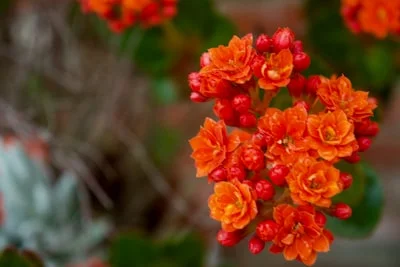
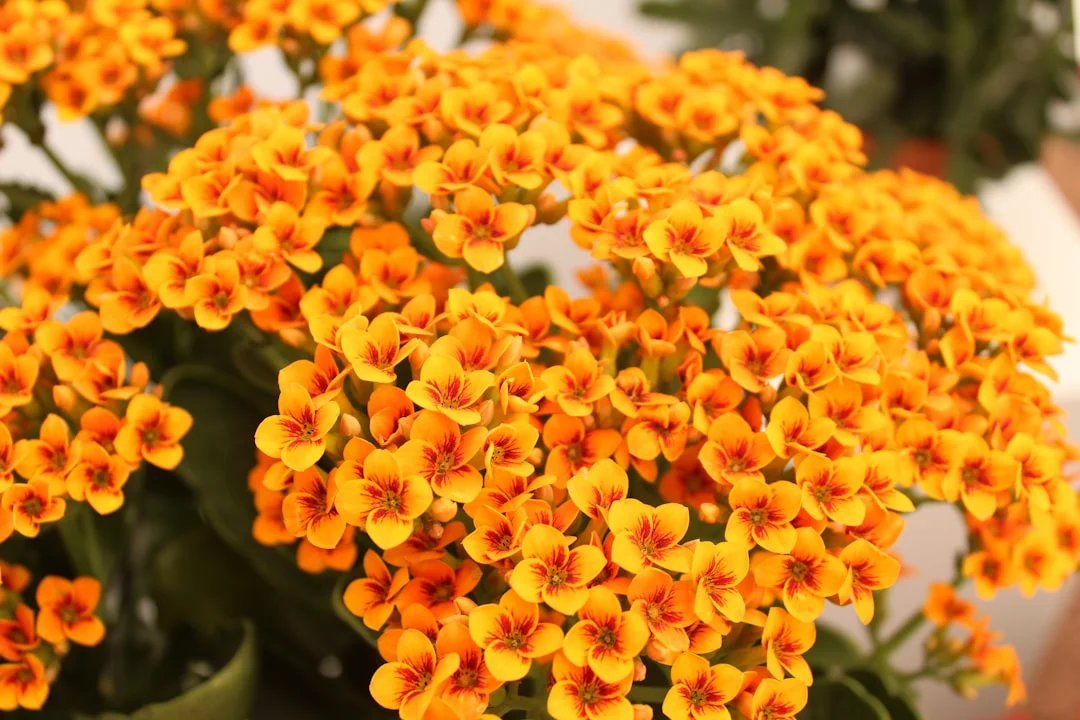
According to Kew Gardens, the genus Kalanchoe contains over 120 species distributed across Africa, Asia, and South America. The blossfeldiana species — the one you’ll find in most garden centres globally — was first described botanically in 1928 and has been commercially cultivated ever since. It reaches 20–45 cm (8–18 inches) tall and produces clusters of tiny four-petalled flowers in red, orange, yellow, pink, white, and bicolour varieties.
Here’s the thing that makes kalanchoe genuinely remarkable: it’s a short-day plant, meaning flowering is triggered by long nights rather than temperature. This gives gardeners in every climate zone — from USDA Zone 10 (tropical) to Zone 6 (cool temperate) — the same ability to control and encourage blooming. That’s an unusual gift in the plant world. For more tips, check out our detailed article on propagating succulents from cuttings.
Kalanchoe at a Glance: Key Botanical Facts
Kalanchoe blossfeldiana is classified as a tender perennial succulent, hardy to about 10°C (50°F). The RHS assigns it an H1b hardiness rating, meaning it’s suitable for frost-free conditions outdoors or year-round indoor cultivation in cooler climates. Outdoors in frost-free regions like coastal California, southern Spain, or northern Australia, it grows as a perennial garden plant. In the UK, Canada, or northern US, it thrives as a houseplant with optional summer outdoor placement. In tropical countries like India, Thailand, or Nigeria, it grows happily outside all year with minimal fuss.
Why Kalanchoe Is Loved Worldwide
Few flowering plants are this adaptable. Kalanchoe sits comfortably in a German kitchen window at 18°C (64°F), on a Dubai balcony at 38°C (100°F) if given afternoon shade, and in a Sydney garden bed receiving Mediterranean-style sun. Its compact size makes it ideal for small-space gardening — a growing concern for apartment dwellers from Seoul to São Paulo. Furthermore, its long bloom period (8–12 weeks per flush) makes it exceptional value compared to seasonal flowering plants that last just a few weeks. If you enjoy growing this plant, you might also find our guide on propagating succulents from cuttings very useful.
Kalanchoe Plant Benefits: More Than Just Good Looks
Most people buy kalanchoe for its flowers. That’s fair — the blooms are genuinely stunning. But there’s a deeper layer here that many gardeners never discover, and it makes this plant even more worth growing. Many gardeners who grow this plant also love to read about propagating succulents from cuttings.
First, kalanchoe is a proven air-quality contributor. A 1989 NASA Clean Air Study identified several succulent-type plants as effective at removing trace volatile organic compounds (VOCs) from indoor spaces. While kalanchoe wasn’t the primary focus, subsequent research published on NIH/PubMed has confirmed that many crassulaceae family members perform meaningful gas exchange even during nighttime — a trait called CAM photosynthesis (Crassulacean Acid Metabolism). This means kalanchoe releases oxygen at night, making it a genuinely useful bedroom plant.
Second, because it’s non-toxic to humans (though mildly toxic to pets — more on that later), kalanchoe is one of the safer flowering houseplants to grow around children. Third, its low-maintenance nature makes it genuinely stress-reducing. Many gardeners, particularly in urban environments, report that keeping a plant they can’t easily kill builds confidence and encourages them to try more challenging species over time.
In my experience, kalanchoe is often the plant that turns a ‘I’m hopeless with plants’ person into a passionate gardener. That’s not a small thing.
Mood, Colour Therapy, and Interior Benefits
Colour psychology research consistently links bright warm colours — the reds, oranges, and yellows kalanchoe produces — with elevated mood and reduced cortisol levels. Interior designers across Scandinavia and Japan increasingly specify kalanchoe in low-light office spaces precisely because of this effect. Furthermore, its compact form means it fits on desks, shelves, and windowsills without demanding floor space. For those in studio apartments in Hong Kong, New York, or London, that practicality matters enormously.
Environmental Benefits in Hot and Dry Climates
In arid regions — parts of Australia, the Middle East, and southern Africa — kalanchoe’s water efficiency is a genuine environmental benefit. Its CAM photosynthesis system means it opens leaf pores only at night, dramatically reducing water loss compared to standard plants. As a result, a single established kalanchoe plant outdoors in a Perth or Riyadh garden may need watering only once every 10–14 days in summer. That kind of efficiency matters where water conservation is both an ethical and legal concern.
How to Grow Kalanchoe Plant Indoor Outdoor: Getting Started Right
Understanding how to grow a kalanchoe plant indoor outdoor starts with one decision: where exactly will it live? That single choice shapes everything — pot size, soil type, watering frequency, and even fertilizer schedule. Fortunately, kalanchoe is forgiving enough that neither choice is wrong.
For indoor growing, choose a spot with bright indirect light — east or west-facing windowsills are ideal. South-facing windows (in the Northern Hemisphere) work well in winter when sun angle is lower, but may need a sheer curtain in summer to prevent leaf scorch. North-facing windows rarely provide enough light for consistent blooming.
For outdoor growing, the rules vary by climate. In tropical zones (USDA Zones 10–12), kalanchoe thrives in a spot receiving morning sun and afternoon shade. In temperate zones (Zones 6–9), it can go outside from late spring through early autumn — roughly May to September in the Northern Hemisphere or October to March in Australia. Always bring it indoors before nighttime temperatures drop below 10°C (50°F).
A quick tip here: many gardeners treat their kalanchoe as a purely indoor plant because they received it as a gift in a decorative pot. Don’t let that limit you. Moving it outdoors during warm months almost always rewards you with stronger growth and more prolific blooming.
Choosing the Right Pot and Container
Kalanchoe’s roots are relatively shallow, so it doesn’t need a deep pot. A container 10–15 cm (4–6 inches) in diameter is perfect for a single plant. Drainage is non-negotiable — use a pot with at least one drainage hole. Terracotta pots are excellent because they allow soil to breathe and dry more quickly, reducing root rot risk. Plastic pots retain moisture longer, so water less frequently if you use them. In hot, dry climates like those in the UAE or Arizona, plastic pots may actually help by retaining moisture a little longer between waterings.
Repotting: When and How
Repot your kalanchoe every 1–2 years, or when you see roots emerging from the drainage holes. Spring is the ideal time — just as the plant exits its flowering phase. Move up only one pot size at a time; an oversized pot holds too much water and encourages root rot. Use fresh succulent or cactus mix, gently shake off old soil, trim any dead or mushy roots, and let the plant settle for 48 hours before watering. In my experience, freshly repotted kalanchoe bounces back within 2 weeks and often produces new growth within a month.
Soil and Fertilizer: The Foundation of Healthy Kalanchoe
Get the soil wrong and almost nothing else you do will save your kalanchoe. This plant has one absolute requirement: excellent drainage. Its succulent roots will rot within days in waterlogged soil, and root rot is largely invisible until the plant suddenly collapses.
The ideal soil mix for kalanchoe is a 50:50 blend of standard potting mix and either coarse sand, perlite, or pumice. Commercially available cactus and succulent mixes — found in garden centres across the US, UK, Europe, and Australia — work perfectly straight from the bag. If you’re in a region where specialist mixes are hard to find (parts of rural India, Southeast Asia, or Africa), mix standard garden soil with 30–40% coarse river sand. Avoid fine beach sand — it compacts and actually worsens drainage.
Soil pH should sit between 6.0 and 7.0 — slightly acidic to neutral. Most standard potting mixes fall naturally in this range.
Fertilizing is straightforward. During the active growing season (spring and summer in temperate climates; year-round in tropical zones), feed every 2–4 weeks with a balanced liquid fertilizer diluted to half strength. A formula with roughly equal NPK ratios (10-10-10 or similar) works well during leaf growth. When flower buds appear, switch to a low-nitrogen, higher-phosphorus formula (like a 5-10-10 or any bloom booster) to support flower development. Stop fertilizing entirely during the plant’s rest period after blooming ends.
Organic Fertilizer Options for Kalanchoe
Many gardeners prefer organic feeding, and kalanchoe responds well to it. Worm castings mixed into the top layer of soil provide gentle, slow-release nutrition without burn risk. Diluted compost tea (steeped for 24 hours) applied every three weeks is an excellent global option — compost is available everywhere. In parts of South Asia and Africa, dried neem cake worked into the soil serves a dual purpose: it adds nutrients while deterring soil-borne pests. However, avoid fresh manure — it’s too nitrogen-rich and can encourage soft, floppy growth at the expense of flowers.
Watering Kalanchoe: Less Is Almost Always More
Here’s where most gardeners go wrong — not from neglect, but from too much care. Kalanchoe is a succulent. Its thick leaves store water. It evolved in the semi-arid highlands of Madagascar where rainfall is seasonal and soils drain fast. Treating it like a tropical houseplant that needs frequent watering is the single fastest way to kill it.
The correct approach: water thoroughly, then wait until the top 2–3 cm (about an inch) of soil is completely dry before watering again. In most indoor conditions — 20–24°C (68–75°F), moderate humidity — this means watering every 7–14 days in summer and every 14–21 days in winter. In humid tropical climates like coastal Kerala or Bangkok, you may water even less frequently because ambient humidity slows soil drying.
Always water at the base, not overhead. Wetting the leaves and flowers encourages fungal disease. Let excess water drain fully — never leave the pot sitting in a saucer of water.
Don’t worry if you forget to water for a week or two. Your kalanchoe will be fine. In fact, occasional mild drought stress can actually trigger more prolific flowering — a response rooted in the plant’s evolutionary survival instincts.
Seasonal Watering Adjustments by Climate
Gardeners in the UK and northern US should reduce watering significantly from November through February, when indoor heating drops humidity and plants enter a natural slow-growth period. Those in Mediterranean climates — California, southern France, parts of Chile — should watch for summer drought stress if kalanchoe is grown outdoors, providing water every 5–7 days during peak heat. In monsoon-prone tropical regions like Bangladesh, Sri Lanka, or West Africa, outdoor kalanchoe may receive more than enough water from rain alone — ensure pots or beds have excellent drainage to prevent waterlogging during heavy rains.
Sunlight Requirements for Kalanchoe Indoors and Outdoors
Sunlight is where the kalanchoe plant indoor outdoor story gets genuinely interesting — because this plant needs different things from light depending on what you want it to do.
For healthy leaf growth and general vigour, kalanchoe needs 6–8 hours of bright, indirect light daily. Direct outdoor sun in the morning (before 10am) is ideal. Harsh afternoon sun — especially in summer in Australia, the Middle East, or southern Asia — causes leaf scorch, bleaching the foliage from deep green to pale yellow.
For triggering and encouraging flowering, the situation flips entirely. Kalanchoe is a short-day plant. It needs 14 consecutive hours of darkness per day for 4–6 weeks to set flower buds. This happens naturally in autumn and winter in temperate zones. But if you’re in a region with stable day length year-round — near the equator — or if indoor lights disrupt the natural dark cycle, you’ll need to help artificially. Place the plant in a closet or cover it with a cardboard box from 6pm to 8am for 4–6 weeks. Then return it to bright light. Flowering will follow within 4–8 weeks.
Many gardeners in cities where streetlights or indoor lighting stays on late often struggle to rebloom their kalanchoe. This light interruption is almost always the reason.
Grow Lights for Indoor Kalanchoe in Low-Light Climates
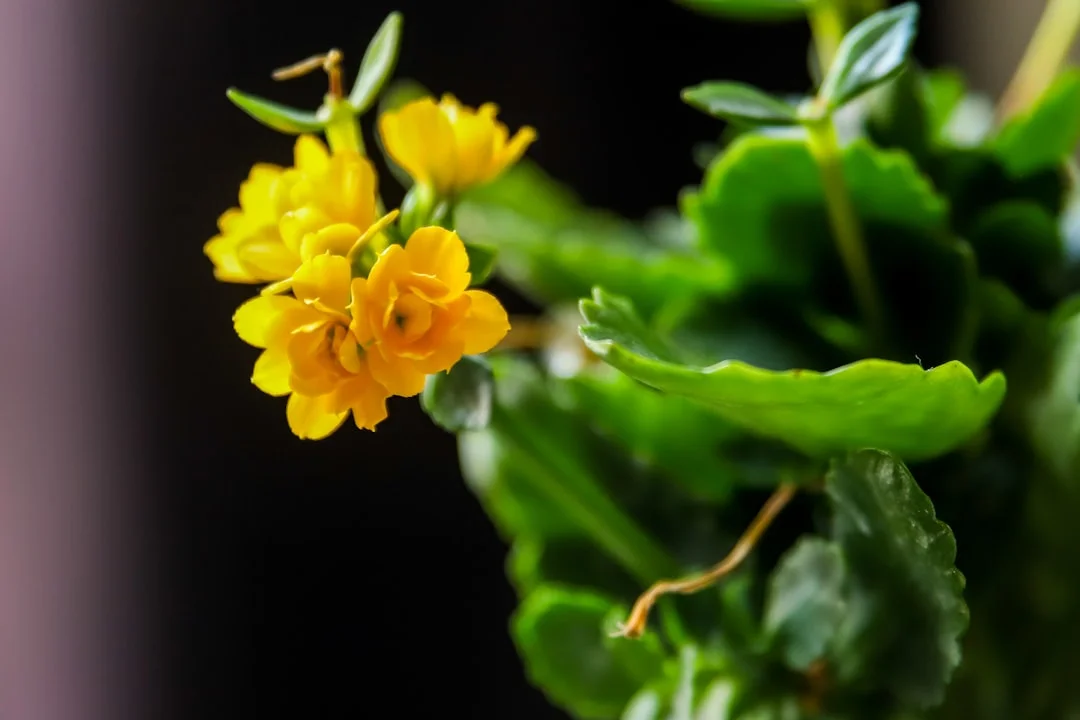
Readers in northern countries — Scotland, Canada, Scandinavia, northern Japan — face real challenges giving kalanchoe enough light during winter months when days can be as short as 6–7 hours. A full-spectrum LED grow light positioned 20–30 cm (8–12 inches) above the plant for 8 hours daily solves this completely. LED grow lights have dropped sharply in price and are available globally from Amazon, eBay, and local electronics retailers for under $25 (approximately £20, ₹2,100, AUD 40). Set them on a timer to maintain consistency — kalanchoe responds better to a reliable schedule than to erratic light changes.
Common Problems: Pests, Diseases, and Quick Fixes
Even a tough plant like kalanchoe faces threats. The good news is that most problems are predictable, easy to spot early, and straightforward to treat — as long as you catch them before they escalate.
The most common pest globally is the mealybug — a cottony white insect that hides in leaf joints and stem forks. Mealybugs are found on kalanchoe plants from Nairobi to Newcastle. Remove them immediately with a cotton swab dipped in 70% isopropyl alcohol. For larger infestations, spray with insecticidal soap or neem oil solution (2–3ml neem oil per litre of water with a few drops of dish soap). Repeat every 5–7 days for 3 weeks.
Aphids appear on new growth, especially in spring in temperate climates. A strong jet of water knocks most off; follow up with neem oil spray.
Fungal issues — powdery mildew and botrytis (grey mould) — occur when humidity is high and air circulation is poor. This is particularly common in tropical climates during monsoon season. Improve ventilation, reduce overhead watering, and treat with a dilute baking soda spray (1 teaspoon per litre of water) or a commercial fungicide.
Root rot is the silent killer. If your plant suddenly wilts despite moist soil, gently unpot it and check the roots. Healthy roots are white or light tan; rotten roots are brown, mushy, and smell unpleasant. Cut all rotten sections with sterilized scissors, let the roots air-dry for 24 hours, and repot in fresh, dry succulent mix.
Why Are My Kalanchoe Leaves Turning Yellow?
Yellow leaves are the most common kalanchoe complaint worldwide. There are three main causes: overwatering (the most likely culprit), insufficient light, and nutrient deficiency. Check the soil first — if it’s consistently damp, reduce watering immediately. If the plant is in a dark corner, move it to a brighter spot. If soil is dry and light is adequate, try a diluted balanced fertilizer. Yellowing of lower leaves specifically, while upper leaves stay green, often signals natural ageing and isn’t cause for alarm.
Why Won't My Kalanchoe Bloom Again?
This is the number-one question I receive from gardeners globally. The answer is almost always one of two things: insufficient darkness during the bud-initiation period, or failure to deadhead and prune after the first bloom. Once flowers fade, cut stems back to just above a leaf node. Then give the plant 4–6 weeks of 14-hour nightly darkness to set new buds. Additionally, make sure you’ve stopped heavy fertilizing — too much nitrogen keeps the plant in vegetative mode rather than flowering mode.
Propagation: How to Multiply Your Kalanchoe for Free
One of the most satisfying things about growing kalanchoe plant indoor outdoor is how easily it multiplies. You can create dozens of new plants from a single parent — at zero cost — using three methods: stem cuttings, leaf cuttings, and offsets.
Stem cuttings are the fastest and most reliable method. Here’s the step-by-step process:
1. Select a healthy, non-flowering stem 8–10 cm (3–4 inches) long. 2. Cut cleanly just below a leaf node using sterilized scissors or a blade. 3. Remove lower leaves to expose 2–3 cm of bare stem. 4. Allow the cutting to callous (air-dry) for 24–48 hours in a shaded spot. 5. Insert into moist succulent mix or a 50:50 perlite-and-sand blend. 6. Place in bright indirect light at 20–25°C (68–77°F). 7. Water sparingly — just enough to keep the medium barely moist. 8. Roots typically develop in 2–4 weeks; new growth confirms rooting.
Leaf propagation works but is slower. Gently twist a healthy leaf off at the base (it must come away cleanly, with no torn end), lay it on moist succulent mix, and mist lightly every 2–3 days. Tiny plantlets emerge from the leaf base in 4–6 weeks. This method is popular among hobbyists in South Korea and Japan, where plant collectors trade leaf cuttings online.
Offsets (also called plantlets or pups) sometimes appear naturally at the base of mature plants. Simply separate them once they’re 3–4 cm tall and pot individually.
Propagation Success Rates by Climate
In warm tropical climates — India, Indonesia, Brazil, Nigeria — stem cuttings root in as little as 10–14 days due to high ambient temperatures. In cooler temperate climates — the UK, Germany, Canada — rooting takes 3–5 weeks and benefits from bottom heat. A seedling heat mat set to 22°C (72°F) dramatically improves success rates in cold climates and is widely available online for around $15–20 (£12–16). Avoid propagating during winter in temperate zones — cool temperatures and low light stall the process significantly.
Seasonal Care: Keeping Kalanchoe Thriving All Year
The beauty of caring for a kalanchoe plant indoor outdoor across all seasons is that this plant essentially tells you what it needs — if you know how to read it. Seasonal care differs noticeably between climate zones, so let’s break it down clearly.
In temperate climates (UK, northern US, Canada, northern Europe): Spring is the time to repot, increase watering, and resume fertilizing. Move outdoor plants outside once nighttime temperatures stay consistently above 10°C (50°F). Summer is peak growing season — enjoy vigorous growth and consider deadheading spent blooms to encourage a second flush. Autumn signals the start of the bud-initiation dark period — reduce light exposure naturally or artificially. Winter brings dormancy; cut watering back sharply and stop feeding.
In tropical and subtropical climates (India, Southeast Asia, West Africa, northern Australia): Kalanchoe grows year-round with minimal seasonality. The main challenge is monsoon season — manage drainage carefully and watch for fungal issues. The cooler dry season (December–February in South Asia) often triggers natural blooming without any intervention, since nights are longer. In peak summer heat above 38°C (100°F), move the plant to shade — it will pause growth temporarily but recover quickly when temperatures moderate.
In Mediterranean climates (California, southern France, coastal Chile, parts of South Africa): Kalanchoe thrives outdoors from spring through autumn. Dry summer heat suits it well as long as watering is maintained. Bring indoors or provide frost protection during brief winter cold snaps.
June Care Tips: What to Do Right Now
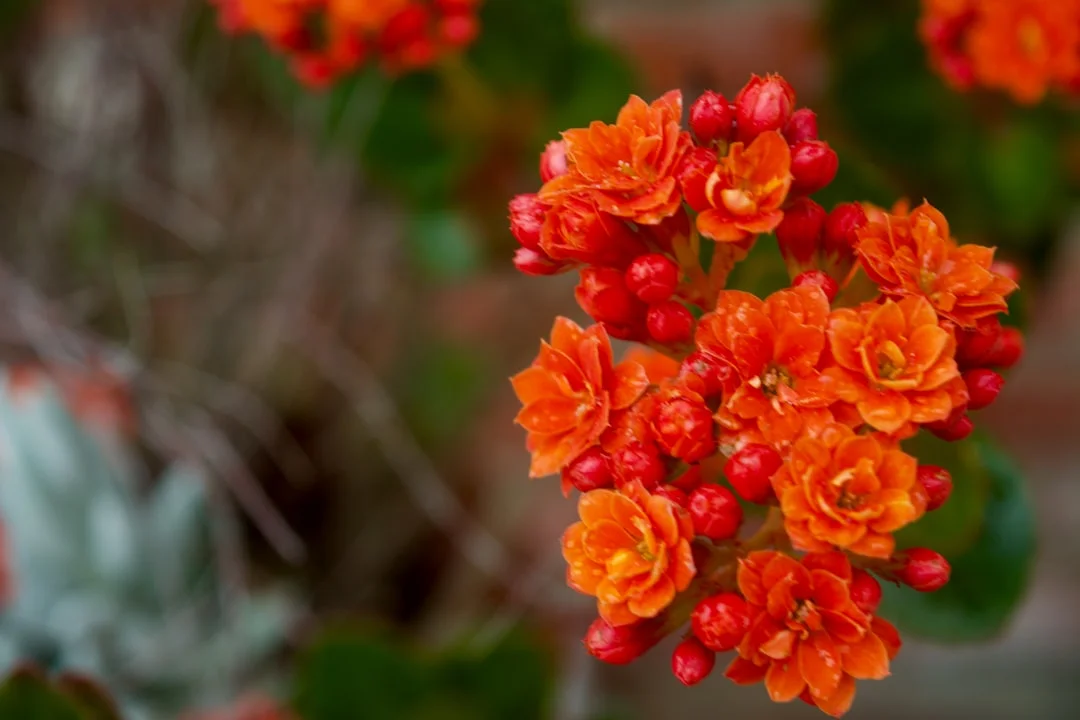
June falls in different seasons depending on where you are. In the Northern Hemisphere, it’s early summer — peak growing time. Increase watering slightly, feed with a balanced fertilizer, and move outdoor plants to a spot with morning sun and afternoon shade. In the Southern Hemisphere, June is early winter. Reduce watering, stop fertilizing, and bring outdoor kalanchoe inside if frost is possible. In tropical regions near the equator, June may mark the monsoon season — check drainage daily and watch for fungal issues during wet spells.
Traditional and Medicinal Uses of Kalanchoe
This is a part of the kalanchoe story that most care guides overlook entirely — and it’s genuinely fascinating.
Kalanchoe species have been used in folk medicine across three continents for centuries. In Brazil, Kalanchoe pinnata (locally called ‘corama’ or ‘folha-da-fortuna’) has been used by traditional healers for wound healing, inflammation, and respiratory conditions. A 2019 review published on PubMed identified bufadienolide compounds in several kalanchoe species — secondary metabolites with documented anti-inflammatory and antimicrobial properties in laboratory settings.
In sub-Saharan Africa, particularly in Zimbabwe and Madagascar, Kalanchoe species have been used in traditional medicine to treat hypertension, joint pain, and skin infections. Ethnobotanical records at Kew Gardens document over 40 traditional medicinal uses of kalanchoe across African communities.
In traditional Chinese medicine (TCM), Kalanchoe laciniata — known as 灯笼草 (dēnglóng cǎo) — has been used for its cooling and anti-inflammatory properties, particularly for treating burns and insect bites.
Important safety note: while traditional uses are well-documented, modern clinical evidence for internal medicinal use remains limited. Do NOT consume kalanchoe internally without professional medical guidance. The bufadienolide compounds found in some species can be cardiotoxic in significant doses, particularly for people with heart conditions. Always treat kalanchoe as an ornamental plant unless under the supervision of a qualified traditional medicine practitioner.
Kalanchoe blossfeldiana itself has no significant documented Ayurvedic use, but its close relatives within the Crassulaceae family appear in regional folk traditions across South Asia for topical wound and burn treatment.
Toxicity to Pets: An Important Warning
Kalanchoe blossfeldiana is listed as toxic to cats and dogs by the American Society for the Prevention of Cruelty to Animals (ASPCA). The bufadienolide compounds can cause vomiting, diarrhoea, and in serious cases, abnormal heart rhythms if ingested by pets. Keep kalanchoe out of reach of cats and dogs. If you suspect your pet has ingested any part of the plant, contact your veterinarian immediately. For households with curious pets, consider displaying kalanchoe on high shelves or in rooms pets don’t access.
Frequently Asked Questions
Can I grow a kalanchoe plant indoor outdoor in a cold climate like Canada or the UK?
Yes, absolutely. In cold climates, grow kalanchoe as a year-round houseplant, placing it on a bright south or west-facing windowsill. Move it outside during summer (late May through September) when nighttime temperatures stay above 10°C (50°F). Bring it indoors before the first autumn frost. With a grow light supplementing winter daylight, UK and Canadian gardeners can keep kalanchoe thriving and blooming in any season without a greenhouse.
Is kalanchoe safe for pets?
No — kalanchoe is listed as toxic to cats and dogs by the ASPCA. The plant contains bufadienolide compounds that can cause vomiting, diarrhoea, lethargy, and in severe cases, heart arrhythmias if ingested. Keep plants out of reach of pets. It is not significantly toxic to humans in ornamental quantities, but internal consumption is not advised. If your pet chews on kalanchoe, contact your veterinarian immediately.
Why won't my kalanchoe bloom again after the first flowers?
Kalanchoe is a short-day plant — it needs 14 consecutive hours of darkness per night for 4–6 weeks to set new flower buds. After blooms fade, deadhead spent flowers, reduce fertilizing, and start the dark treatment by placing the plant in a dark room or covering it from 6pm to 8am. Return it to bright light after 6 weeks. Flowering should follow within 4–8 weeks. Skipping this step is the most common reason kalanchoe never reblooms.
How often should I water my kalanchoe plant indoor outdoor?
Water thoroughly, then allow the top 2–3 cm (about 1 inch) of soil to dry completely before watering again. Indoors, this typically means every 7–14 days in summer and every 14–21 days in winter. Outdoors in hot, dry climates, you may water every 5–7 days in peak summer. Always check the soil with your finger rather than following a rigid schedule — climate, pot size, and season all affect drying time.
Can I grow kalanchoe outdoors in a tropical country like India, Nigeria, or Thailand?
Yes — tropical climates are actually ideal for outdoor kalanchoe year-round. Place it in a spot with morning sun and afternoon shade, which prevents leaf scorch during peak heat. Ensure excellent soil drainage, especially during monsoon or rainy seasons, as waterlogged soil causes root rot quickly. In cooler dry-season months, natural long nights will often trigger spontaneous blooming without any extra effort.
What is the best soil mix for growing kalanchoe in containers?
Use a well-draining mix that prevents waterlogging. The simplest approach is a commercial cactus or succulent potting mix, available globally in garden centres. Alternatively, blend 50% standard potting compost with 50% perlite, coarse sand, or pumice. Avoid heavy clay soils or dense potting mixes designed for moisture-loving plants. Target a soil pH of 6.0–7.0. Always use a pot with drainage holes — this is non-negotiable for healthy kalanchoe roots.
How long do kalanchoe flowers last?
Each individual flowering period typically lasts 8–12 weeks, making kalanchoe one of the longest-blooming houseplants available. With proper deadheading, dark-period treatment, and care, you can achieve 2–3 bloom cycles per year. Some gardeners in consistently warm, frost-free climates report near-continuous blooming outdoors, with brief rest periods between flushes rather than distinct seasons.
What does a kalanchoe plant look like when it's dying?
Key warning signs include mushy stems at the base (root rot), consistently yellow or translucent leaves (overwatering), shrivelled and wrinkled leaves (underwatering or excessive heat), white cottony patches (mealybugs), and sudden total wilting despite moist soil (severe root rot). Act quickly at the first sign — root rot is the most serious and can be fatal within days. Repot immediately, remove damaged roots, and reduce watering. Most other problems are treatable with proper intervention.
Final Thoughts
The kalanchoe plant indoor outdoor is one of those rare plants that genuinely rewards gardeners of every level — from complete beginners growing their first succulent in a London flat to experienced horticulturists managing diverse garden collections in tropical climates. It asks for very little: bright light, well-draining soil, infrequent watering, and one sustained period of darkness to trigger its spectacular blooms. Give it those things consistently, and it will repay you with weeks of colour, year after year.
Whether you’re in a cool northern climate growing kalanchoe indoors under a grow light, or in a warm subtropical garden where it thrives outdoors all year, the fundamentals remain the same. Respect its drought tolerance. Don’t overwater. Help it experience long nights before you want it to flower. And remember to deadhead promptly — that single step dramatically increases your chances of multiple bloom cycles each year.
This truly is a plant for all seasons and all corners of the world. Start with one plant, apply the techniques in this guide, and you’ll likely find yourself propagating more within the year. I’d love to hear how your kalanchoe grows — drop your experience in the comments below.

