
⏱ 21 min read
Table of Contents
- What Are Lithops (Living Stones)?
- Why Grow Lithops? Benefits and Appeal
- How to Grow Lithops Successfully
- Soil and Fertilizer Needs
- Watering Lithops the Right Way
- Sunlight and Temperature Requirements
- Common Problems and How to Fix Them
- How to Propagate Lithops
- Seasonal Care Through the Year
- Uses and Cultural Notes
Picture a plant that looks exactly like a pebble — until it splits open and pushes out a daisy-bright flower. That’s Lithops, and this Lithops Care Guide will show you exactly how to keep these tiny living stones thriving. Here’s the quick answer: Lithops need bright light, gritty fast-draining soil, and shockingly little water. In fact, more of these plants die from kindness than neglect. A reader in Phoenix once told me she watered hers every week, just like her other succulents. Within a month, it had melted into mush. That single mistake is the heart of why most people fail. Throughout this lithops care guide, you’ll learn the watering rhythm tied to their natural growth cycle, the soil mix that mimics African deserts, and the one seasonal rule that almost nobody follows. By the end, you’ll understand exactly why your past attempts went wrong — and how to grow a living stone that could outlive your houseplants by decades.
Quick Highlights
- Discover the exact watering rhythm that prevents fatal rot
- Mix the perfect gritty soil that mimics African desert conditions
- Learn why overwatering kills more lithops than drought ever could
- Master the seasonal leaf-swap cycle unique to living stones
- Grow lithops indoors even in cold temperate climates
- Propagate new plants from seeds and division safely
Plant Characteristics at a Glance
| Common Name | Lithops, Living Stones, Pebble Plants, Flowering Stones |
| Scientific Name | Lithops spp. |
| Family | Aizoaceae |
| Origin | Southern Africa (Namibia, South Africa, Botswana) |
| Habitat | Arid deserts, rocky plains, gravel beds |
| Plant Type | Succulent perennial |
| Indoor Plant | Yes — excellent for bright windowsills |
| Outdoor Plant | Yes — in frost-free, arid climates (USDA zones 9–11) |
| Leaves | Two fused, fleshy leaves with a translucent window; mimic stones |
| Flowers | Daisy-like yellow or white blooms from the central slit |
| Flowering Season | Late summer to autumn |
| Fruit | Small dry capsule that opens when wet |
| Seeds | Tiny, dust-like; released by rain via hygrochastic capsules |
| Roots | Long taproot pulling plant deeper in drought |
| Height | 2–5 cm (1–2 inches) |
| Growth Rate | Very slow |
| Light Requirements | Bright direct sun, 4–5 hours daily |
| Soil Requirements | Gritty, fast-draining; pH 6.0–7.0 |
| Water Requirements | Very low; only during active growth seasons |
| Temperature Requirements | 18–27°C (65–80°F); frost-sensitive below 5°C (41°F) |
| Humidity Requirements | Low; dislikes damp, humid air |
| Propagation | Seeds (slow) or division of clumps |
| Uses | Ornamental, decorative, collector's plant |
| Medicinal Properties | None scientifically recognised |
| Toxicity | Non-toxic to cats, dogs, and humans |
| Cultural Significance | Prized by global succulent collectors; native desert curiosity |
| Common Pests | Mealybugs, spider mites, root mealybugs |
| Common Diseases | Fungal root rot (from overwatering) |
| Special Care Tips | Never water during the leaf-swap cycle |
| Cultural Practices | Water by growth cycle, not calendar; use deep gritty pots |
| Vastu Direction | South or south-east for bright light and positive energy |
Lithops care guide Names in Different Languages
| English | Lithops / Living Stones |
| Mandarin Chinese | 生石花 (Shēng shí huā) |
| Spanish | Piedras vivas / Lithops |
| Hindi | Lithops (लिथॉप्स) |
| Gujarati | લિથોપ્સ (Lithops) |
| Arabic | نبات الحجر (Nabat al-hajar) |
| Bengali | লিথপস (Lithops) |
| Portuguese | Pedras vivas / Lithops |
| Russian | Литопсы (Litopsy) |
| Japanese | リトープス (Ritōpusu) |
| Punjabi | ਲਿਥੋਪਸ (Lithops) |
| German | Lebende Steine / Lithops |
| Javanese | Lithops |
| Korean | 리톱스 (Ritopseu) |
| French | Plantes-cailloux / Lithops |
| Telugu | లిథాప్స్ (Lithops) |
| Marathi | लिथॉप्स (Lithops) |
| Tamil | லித்தாப்ஸ் (Lithops) |
| Urdu | لیتھوپس (Lithops) |
| Turkish | Yaşayan taşlar / Lithops |
| Vietnamese | Cây sen đá hình sỏi / Lithops |
What Are Lithops (Living Stones)?
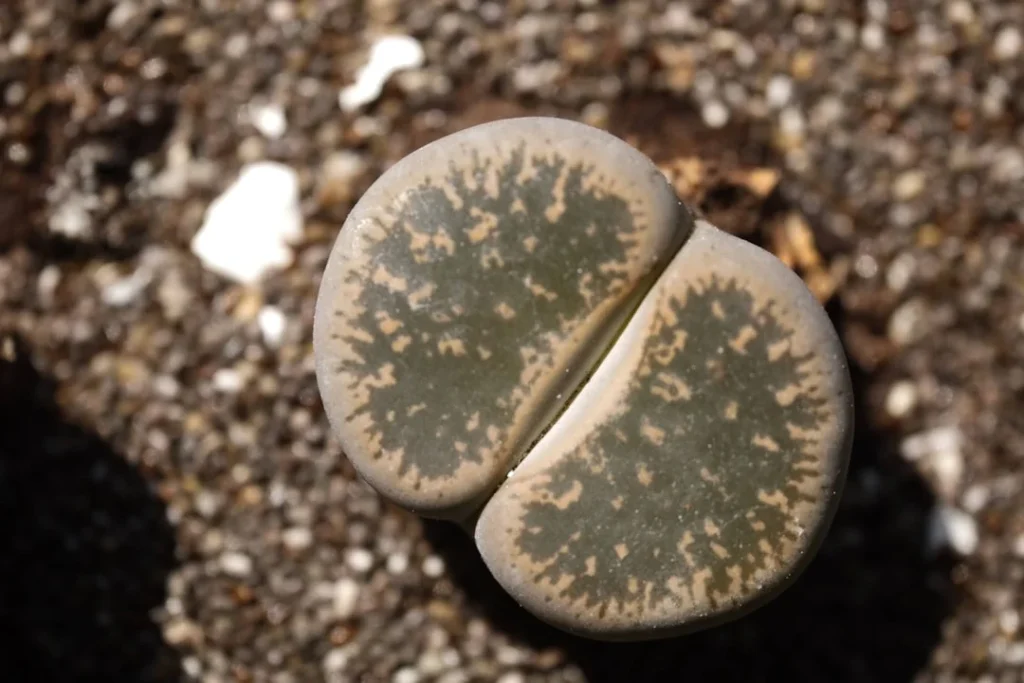
Lithops are some of the strangest plants you’ll ever meet. Native to the dry deserts of southern Africa, they evolved to look like the rocks around them. This clever disguise hides them from hungry animals. Each plant is mostly just two fat, fused leaves with a slit down the middle. That’s it. No stem, no branches — just a living pebble sitting in the sand. Many gardeners who grow this plant also love to read about best succulent soil mix recipe.
The name comes from Greek: lithos means stone, and ops means face. So, literally, “stone face.” According to Kew Gardens, there are around 37 recognised species, each with its own colour and pattern. Some look like granite, others like marbled cream.
Here’s the thing most people don’t know. Lithops have a translucent “window” on top of each leaf. Light passes through this window down into the plant body, where photosynthesis happens below the soil line. It’s a survival trick for blistering deserts. For more tips, check out our detailed article on best succulent soil mix recipe.
But their disguise is only half the story. Their growth cycle is even weirder — and it explains the single biggest watering mistake. We’ll get to that soon.
Why Grow Lithops? Benefits and Appeal
Why would anyone want a plant that looks like a stone? Plenty of reasons, actually. First, they’re nearly indestructible if you understand them. Many gardeners find lithops perfect for busy lives because they need watering only a handful of times a year. For more tips, check out our detailed article on Marble Queen Pothos Care.
Furthermore, they’re tiny. A whole collection fits on a sunny windowsill. For apartment dwellers in London, Singapore, or New York, that’s a huge plus. You don’t need a garden — just a bright window.
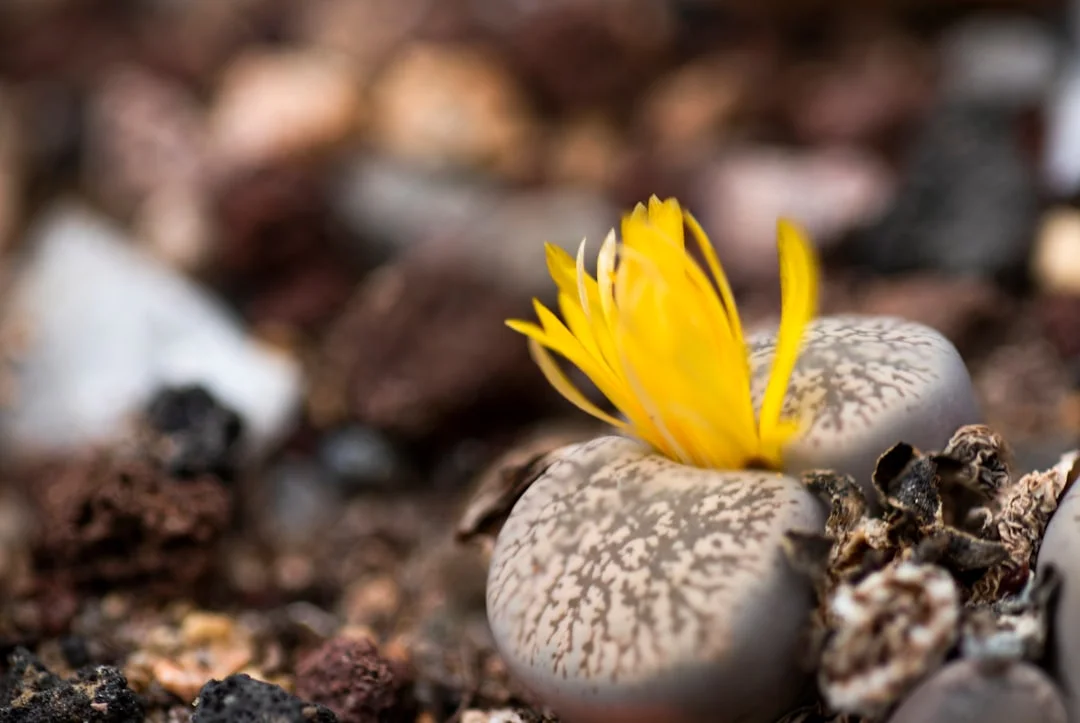
They’re also fantastic conversation starters. Guests always ask, “Wait, that’s alive?” The flowers, when they appear in autumn, are a delightful surprise — bright yellow or white blooms that seem to pop out of solid rock.
A Plant That Teaches Patience
In my experience, lithops teach a kind of mindful gardening. You can’t rush them. You can’t fuss over them. They grow slowly and reward restraint. For anyone who tends to overwater (and that’s most of us), a good lithops care guide retrains your instincts. Once you learn their rhythm, you’ll likely apply that patience to your other succulents too. Importantly, a healthy lithops can live 40 to 50 years. That’s longer than many pets and some marriages. You’re not buying a plant — you’re adopting a tiny desert companion for decades. Many gardeners who grow this plant also love to read about best succulent soil mix recipe.
How to Grow Lithops Successfully
Growing living stones isn’t hard, but it is different. This lithops care guide section breaks it down step by step. The golden rule? Mimic the desert. These plants thrive on neglect, harsh light, and gritty ground.
First, choose the right container. A small pot with a drainage hole is essential. Terracotta works well because it dries fast. Plastic holds moisture longer, so be careful if you choose it.
Next, pick a deep enough pot. Lithops have surprisingly long taproots that pull them deeper into soil during dry spells. Aim for at least 10 cm (4 inches) of depth.
Then, place them in the brightest spot you have. A south-facing window in the Northern Hemisphere is ideal. Gardeners in Australia or South Africa should use a north-facing window instead.
Indoor vs Outdoor Growing
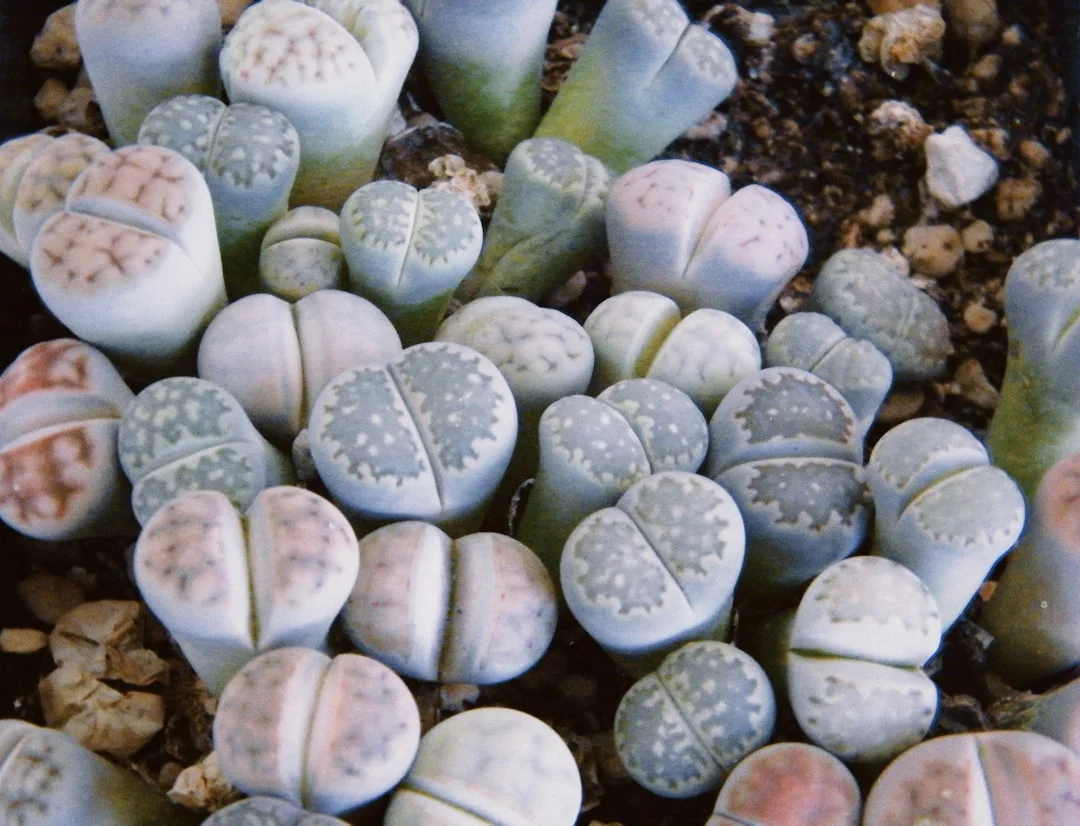
Whether you’re growing in a tropical garden or a cool temperate flat, lithops adapt — with caveats. In hot, dry climates like Arizona, Dubai, or central Australia, you can grow them outdoors year-round in part shade. However, in humid tropical zones like Mumbai or Kuala Lumpur, indoor growing under a fan is safer because damp air invites rot.
In cold regions like Canada, the UK, or the US Midwest, treat lithops as indoor plants. They can’t survive frost. Bring them in well before temperatures drop below 5°C (41°F). A bright windowsill or a grow light keeps them happy through dark winters.
Choosing Healthy Plants
When buying, pick plants that feel firm, not squishy or wrinkled. Avoid any with brown mushy spots — that’s rot, and it spreads. A slightly wrinkled lithops just needs water; a mushy one is usually doomed. Look for plump, evenly coloured bodies. If you can, buy in spring or summer so the plant has time to settle before its tricky autumn cycle begins.
Soil and Fertilizer Needs
Soil is where most beginners go wrong. Regular potting mix holds far too much water and will rot your lithops fast. These plants need gritty, fast-draining soil that mimics desert ground.
Here’s a simple recipe I trust: mix two parts mineral grit (like pumice, perlite, or coarse sand) with one part potting soil. Some growers go even grittier, using up to 70% mineral content. The RHS recommends adding horticultural grit to all succulent mixes for sharp drainage.
Globallly, you can find pumice, perlite, or coco coir almost anywhere. In India, river sand and cocopeat work well. In the US and UK, perlite and pumice are easy to buy. The key isn’t the exact material — it’s the drainage.
As for fertilizer, less is more. Lithops barely need feeding. A weak, diluted low-nitrogen succulent feed once a year, in late spring, is plenty. Too much nitrogen makes them bloated and weak.
Getting the pH Right
Lithops prefer slightly acidic to neutral soil, around pH 6.0 to 7.0. Most commercial succulent mixes already sit in this range, so don’t stress over it. If your tap water is very hard (high in lime), the soil can slowly turn alkaline. To counter this, flush the pot occasionally with rainwater or filtered water. This small step keeps roots healthy over the years.
Watering Lithops the Right Way
This is the heart of any lithops care guide — and the part everyone gets wrong. The internet tells you to water when soil is dry. Experienced growers know it’s far more nuanced than that. With lithops, watering follows the plant’s growth cycle, not the calendar.
Here’s the rule: water during active growth (spring and autumn), and stop almost completely during dormancy (summer and winter). When you do water, soak the soil fully, then let it dry out bone-dry before the next drink. That might mean two to three weeks between waterings during growth.
Have you ever noticed your lithops looking slightly wrinkled? Don’t panic. That’s often normal, especially in summer. A wrinkled lithops is thirsty but fine. A mushy, swollen one is overwatered and rotting.
The Summer and Winter Rest
During peak summer heat and deep winter cold, lithops go dormant. They essentially shut down. During these rest periods, stop watering entirely — or give just a tiny sip if the plant looks dangerously shrivelled. This is the single hardest rule for new growers to follow. Your instinct screams to water a wrinkled plant. Resist it. Watering a dormant lithops is the fastest way to kill it. Mark your calendar so you know which season you’re in.
The Leaf-Swap Watering Trap
Each year, lithops grow a new pair of leaves from inside the old pair. The old leaves shrivel and feed the new ones. This usually happens in late winter to spring. Crucial point: do not water during this leaf swap. The new leaves draw water and nutrients from the old ones. If you water now, the old leaves won’t dry up properly, and you risk a tangled, rotting mess. Wait until the old leaves are paper-thin husks before watering again.
Sunlight and Temperature Requirements
Light makes or breaks a lithops. These desert plants crave bright, direct sun — far more than typical houseplants. Without enough light, they stretch, fade, and lose their lovely patterns.
Aim for four to five hours of direct sun daily. A south-facing window (north-facing in the Southern Hemisphere) is best. If your home is dark, a simple LED grow light works wonders. Gardeners in cloudy regions like the UK or the US Pacific Northwest often rely on grow lights through winter.
That said, watch for scorching. In extreme desert heat — think Dubai or Arizona summers — midday sun can burn even these tough plants. A sheer curtain or light shade during the hottest hours protects them.
Temperature Tolerance Across Climates
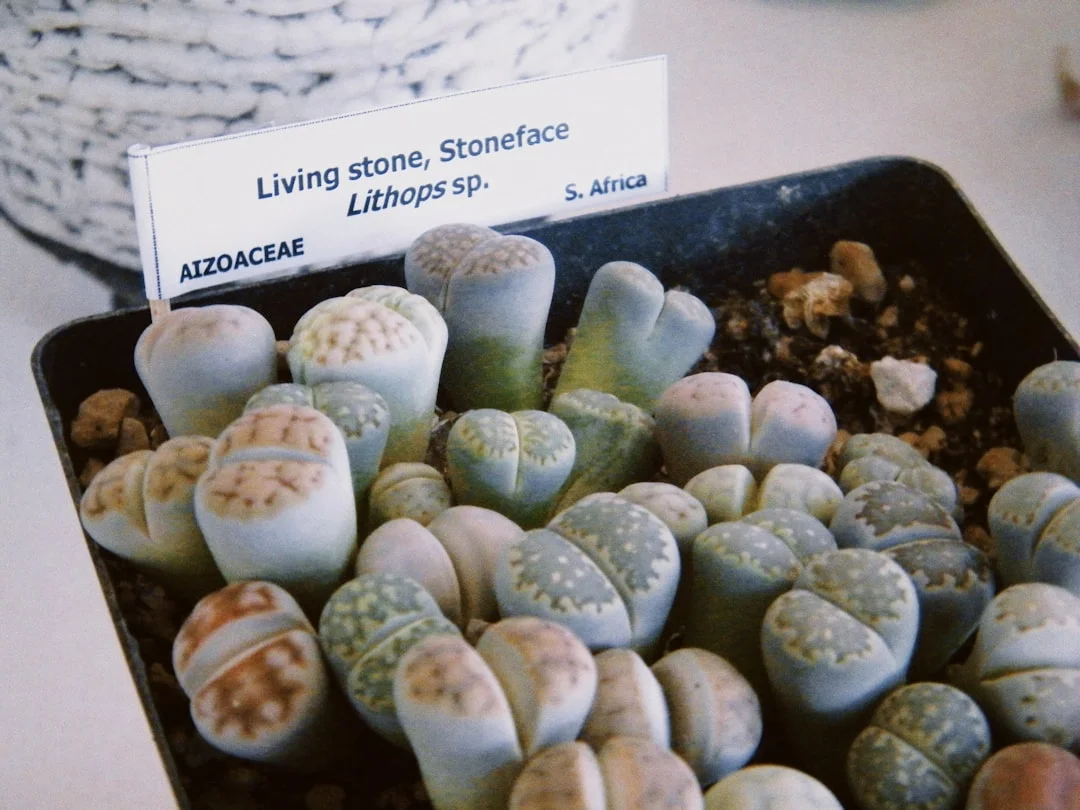
Lithops handle a wide range. They thrive between 18°C and 27°C (65°F to 80°F). They tolerate heat up to around 40°C (104°F) if kept dry. On the cold side, they survive brief dips near 5°C (41°F) but hate frost. For USDA zone reference, lithops grow outdoors year-round in zones 9 to 11. In cooler RHS zones (H3 and below), grow them indoors. The simple takeaway: keep them warm, bright, and frost-free.
Common Problems and How to Fix Them
Even with the best lithops care guide, problems pop up. The good news is that most are easy to spot and fix early. Here are the three signs your plant is in trouble — and one of them is counterintuitive.
First, mushy, translucent bodies mean rot from overwatering. Stop watering immediately, move to brighter light, and hope the roots recover. Often, sadly, it’s too late.
Second, stretched, tall, pale plants (called etiolation) mean too little light. Move them somewhere brighter or add a grow light. The stretch won’t reverse, but new growth will improve.
Third — and here’s the counterintuitive one — a wrinkled plant in summer is usually fine, not dying. It’s simply resting and slightly dehydrated. Leave it alone.
Pests and Diseases
Lithops rarely attract pests, but a few can sneak in. Mealybugs sometimes hide in the leaf slit — look for white, cottony fluff. Wipe them off with a cotton bud dipped in diluted rubbing alcohol. Spider mites and root mealybugs are less common but possible. As for disease, fungal rot is the main threat, and it almost always traces back to overwatering or poor drainage. Prevention beats cure: keep soil gritty, water sparingly, and ensure good airflow around the plant.
How to Propagate Lithops
Want more living stones? You’ve got two routes: seeds or division. This part of the lithops care guide covers both, though I’ll be honest — propagation tests your patience.
Seeds are the most common method but the slowest. Lithops seedlings grow incredibly slowly, taking years to reach full size. Division works only for clumping plants that have produced multiple heads over time.
Many gardeners find seed-growing oddly rewarding, like a slow science project. Just don’t expect quick results.
Growing Lithops from Seed
First, sow fresh seeds on top of gritty, slightly damp soil in spring or early autumn. Then, sprinkle a thin layer of fine sand over them. Next, cover the pot with clear plastic to keep humidity high, and place it in bright but indirect light. Keep the surface lightly moist — not soaked — until germination, which takes one to three weeks. After that, remove the cover gradually. Finally, be patient: seedlings need a full year before their first leaf swap. It’s a long game, but worth it.
Seasonal Care Through the Year
Lithops follow a clear yearly rhythm, and matching your care to it is the secret to success. Since this guide works for all seasons, here’s how to handle each one. Remember that Northern and Southern Hemisphere seasons are flipped.
In spring (March–May up north, September–November down south), lithops wake up. Resume watering as old leaves finish drying. This is active growth time.
During summer, most lithops go dormant. Cut watering right back. Provide shade in extreme heat. June, the current month for many readers up north, is a good time to ease off the watering can.
In autumn, they grow again and may flower. Water moderately. Then in winter, they rest and begin the leaf-swap cycle. Stop watering through the coldest months.
Quick Seasonal Reference
Think of it as two growth bursts (spring and autumn) split by two rest periods (summer and winter). Water during the bursts, rest during the breaks. For example, a grower in Toronto waters in April and October, then leaves the plant dry in July and January. Meanwhile, a grower in Sydney flips this entirely. Once you internalise this rhythm, your lithops care becomes almost effortless year after year.
Uses and Cultural Notes
Unlike many succulents, lithops aren’t used in traditional medicine. There’s no Ayurvedic or TCM record of them as a remedy, mainly because they’re rare outside southern Africa and grow too slowly to harvest. So don’t believe any site claiming medicinal powers — there’s no scientific backing for that.
Their real value is ornamental. According to botanical records via Wikipedia, indigenous peoples of southern Africa, including the San, reportedly knew these plants and may have used the moisture from some species during droughts. Today, they’re prized worldwide by collectors for their beauty and bizarre charm.
In the home, lithops bring a sculptural, modern look. They suit minimalist decor beautifully. Many people display them in shallow bowls arranged to look like a natural pebble bed.
Safety and Toxicity
Here’s reassuring news for pet owners and parents. Lithops are considered non-toxic to cats, dogs, and humans. They’re not listed as poisonous by major animal safety organisations. That said, no plant should be eaten, and their tough, fibrous bodies could cause mild stomach upset if a curious pet chews one. Keep them out of reach of small children and nibbling pets, mostly to protect the plant rather than the chewer. As always, if you’re worried after ingestion, contact a vet or doctor.
Frequently Asked Questions
Can I grow lithops indoors in a cold climate?
Yes, you can. In cold regions like Canada, the UK, or the US Midwest, lithops make excellent indoor plants. Place them on your brightest windowsill, ideally south-facing in the Northern Hemisphere. If natural light is weak through winter, add an LED grow light. The key is keeping them frost-free and dry during their winter rest. Never let temperatures drop below 5°C (41°F). Following a solid lithops care guide indoors is very doable, even in snowy climates, as long as you give them enough light and resist overwatering.
Is lithops safe for pets like cats and dogs?
Good news — lithops are considered non-toxic to cats, dogs, and humans. They're not listed as poisonous plants by major pet safety bodies. However, no plant should be eaten. If a curious pet chews on one, it might cause mild tummy upset due to the plant's fibrous texture. To be safe, keep lithops out of reach of nibbling pets and small children. This protects the slow-growing plant too, since a single bite can ruin it. If your pet eats a large amount and seems unwell, contact your vet.
How do I grow lithops in containers?
Growing lithops in containers is simple. First, choose a small pot with a drainage hole — terracotta is ideal because it dries fast. Next, make sure it's at least 10 cm (4 inches) deep to fit their long taproot. Then, fill it with gritty, fast-draining soil (two parts grit to one part potting mix). Place the pot in bright direct sun. Finally, water only during active growth in spring and autumn, letting the soil dry fully between drinks. This container approach suits balconies and windowsills worldwide.
Why is my lithops shrivelling or wrinkling?
Don't panic — wrinkling is often normal. During summer dormancy, lithops naturally shrink and wrinkle as they conserve water. This is healthy and expected. A slightly thirsty plant looks like a deflated pebble, but it bounces back once you resume watering in autumn. However, if the plant feels mushy, soft, or translucent instead of just wrinkled, that's overwatering and rot — a serious problem. The simple test: wrinkled and firm means thirsty and fine; mushy and squishy means trouble. Always check the texture before reaching for water.
How often should I water lithops?
Far less than you'd think. A core part of any lithops care guide is matching water to the growth cycle, not a fixed schedule. Water only during active growth (spring and autumn), giving a deep soak then letting soil dry completely — often two to three weeks apart. Stop watering almost entirely during summer and winter dormancy. Crucially, never water during the late-winter leaf-swap, when new leaves draw moisture from old ones. Overwatering is the number one killer of these plants, so when in doubt, wait longer.
When and why do lithops flower?
Lithops usually flower in late summer to autumn, once they're mature — typically three to five years old. A bright yellow or white daisy-like bloom emerges from the central slit, often as wide as the plant itself. Flowering happens after their main growth period, triggered by shorter days and cooler nights. To encourage blooms, give them plenty of direct sun and proper seasonal watering. Many flowers open in the afternoon and close at night. It's a stunning reward and proof your plant is healthy and well cared for.
Why are my lithops growing tall and stretched?
Tall, stretched, pale lithops suffer from etiolation — a fancy word for too little light. In their search for sun, the plant grows upward and loses its compact pebble shape and lovely markings. The fix is simple: move it to a much brighter spot or add a grow light. Sadly, the stretched part won't shrink back, but future growth will look healthier and more compact. This is common in cloudy regions or dim rooms, so bright light is essential for keeping these desert plants looking their best.
Final Thoughts
Lithops reward patience like few other plants. Once you stop treating them like ordinary houseplants and start following this lithops care guide, they become almost foolproof. Remember the golden rules: bright direct light, gritty fast-draining soil, and water tied to their growth cycle — never the calendar. Water in spring and autumn, rest them in summer and winter, and absolutely never water during the leaf swap. Most failures come from too much love, not too little. So when you’re tempted to reach for the watering can, wait. A wrinkled lithops is usually just resting, not dying. Whether you garden in tropical Singapore, temperate London, or arid Phoenix, these living stones can thrive on your windowsill for decades. Start with one healthy plant, learn its rhythm through a full year, and you’ll soon be hooked. Trust me — once that first stone-shaped flower opens, you’ll understand exactly why collectors around the world adore these tiny desert wonders.

