
⏱ 27 min read
Table of Contents
- What is Marble Queen Pothos?
- Why Grow Marble Queen Pothos: Benefits at a Glance
- How to Grow Marble Queen Pothos: Step-by-Step
- Soil and Fertilizer Requirements
- Watering Marble Queen Pothos the Right Way
- Sunlight and Placement Secrets
- Common Problems and Quick Fixes
- How to Propagate Marble Queen Pothos
- Seasonal Care Across Global Climates
- Uses, Safety, and Cultural Notes
A gardener in Singapore once messaged me in a panic — her Marble Queen Pothos had lost all its creamy variegation in just six weeks. The leaves had turned solid green, and she swore she hadn’t changed a thing. Here’s the twist: she’d moved it just two feet further from her window. That tiny shift tells you everything about marble queen pothos care — this plant rewards the smallest details and punishes neglect quietly. Marble queen pothos care isn’t hard, but it’s specific. Get the light right, water with intention, and you’ll have a cascading curtain of marbled leaves within a year. Get it wrong, and you’ll end up with a leggy, plain-green vine that looks nothing like the photos that made you buy it. In this guide, I’ll walk you through everything — from soil mixes used by growers in Florida and Mumbai, to the one watering trick that saved my own plant during a London winter. By the end, you’ll know exactly why your previous attempts may have failed. For more tips, check out our detailed article on Burro’s Tail Succulent Care.
Quick Highlights
- Discover the exact light level that keeps creamy white variegation bright and bold
- Learn the simple watering rhythm that prevents root rot across tropical and temperate climates
- Master soil mixes using globally available materials like perlite, coco coir, and peat moss
- Propagate new plants in water or sphagnum moss with a 90%+ success rate
- Spot early signs of pests, yellowing, and reverting leaves before they cause damage
- Adapt your care routine across summer, monsoon, autumn, and winter conditions worldwide
Plant Characteristics at a Glance
| Common Name | Marble Queen Pothos, Devil's Ivy, Money Plant |
| Scientific Name | Epipremnum pinnatum 'Marble Queen' (syn. Epipremnum aureum 'Marble Queen') |
| Family | Araceae |
| Origin | Cultivar developed from species native to Solomon Islands and Southeast Asia |
| Habitat | Tropical rainforests; epiphytic and ground climber |
| Plant Type | Evergreen tropical climbing/trailing vine |
| Indoor Plant | Yes — excellent for indoor cultivation |
| Outdoor Plant | Yes, only in USDA zones 10-12 / RHS H1c (frost-free climates) |
| Leaves | Heart-shaped, 7-15 cm long, marbled cream-white and green variegation |
| Flowers | Rare in cultivation; spathe-and-spadix typical of Araceae family |
| Flowering Season | Almost never flowers indoors |
| Fruit | Not produced in indoor cultivation |
| Seeds | Not commonly available; propagation is via cuttings |
| Roots | Fibrous roots in soil; produces aerial roots along nodes |
| Height | Trails 6-10 feet (1.8-3 m) indoors; climbs 20+ feet (6+ m) outdoors |
| Growth Rate | Moderate to slow due to white variegation reducing photosynthesis |
| Light Requirements | Bright, indirect light 6-8 hours daily; avoid direct sun |
| Soil Requirements | Well-draining, chunky mix; pH 6.1-6.8 |
| Water Requirements | Water when top 2-3 cm of soil is dry; allow partial drying between waterings |
| Temperature Requirements | 18-29°C (65-85°F); minimum 13°C (55°F) |
| Humidity Requirements | 40-60% ideal; tolerates lower; mist in dry climates |
| Propagation | Stem cuttings in water, sphagnum moss, or soil |
| Uses | Ornamental houseplant; air quality improvement; vertical decor |
| Medicinal Properties | None recognised in mainstream medicine or Ayurveda |
| Toxicity | Mildly toxic to humans and pets; contains calcium oxalate crystals |
| Cultural Significance | Symbol of prosperity in Feng Shui and Vastu traditions |
| Common Pests | Spider mites, mealybugs, scale, fungus gnats |
| Common Diseases | Root rot, bacterial leaf spot, southern blight |
| Special Care Tips | Provide brighter light than green pothos to maintain variegation |
| Cultural Practices | Prune leggy vines, wipe leaves monthly, rotate weekly for even growth |
| Vastu Direction | Southeast corner for wealth and positive energy flow |
Marble queen pothos care Names in Different Languages
| English | Marble Queen Pothos / Devil's Ivy |
| Mandarin Chinese | 大理石皇后黄金葛 (Dàlǐshí Huánghòu Huángjīngé) |
| Spanish | Potos Reina de Mármol |
| Hindi | मार्बल क्वीन मनी प्लांट (Marble Queen Money Plant) |
| Gujarati | માર્બલ ક્વીન મની પ્લાન્ટ |
| Arabic | البوتس ملكة الرخام (Al-Pothos Malikat Al-Rukham) |
| Bengali | মার্বেল কুইন মানি প্ল্যান্ট |
| Portuguese | Jiboia Marble Queen |
| Russian | Эпипремнум Мраморная Королева |
| Japanese | マーブルクイーン ポトス (Māburu Kuīn Potosu) |
| Punjabi | ਮਾਰਬਲ ਕਵੀਨ ਮਨੀ ਪਲਾਂਟ |
| German | Marble Queen Efeutute |
| Javanese | Sirih Gading Marble Queen |
| Korean | 마블퀸 스킨답서스 (Mabeul Kwin Seukindapseuseu) |
| French | Pothos Marble Queen / Lierre du Diable |
| Telugu | మార్బుల్ క్వీన్ మనీ ప్లాంట్ |
| Marathi | मार्बल क्वीन मनी प्लांट |
| Tamil | மார்பிள் குயின் மணி பிளாண்ட் |
| Urdu | ماربل کوئین منی پلانٹ |
| Turkish | Mermer Kraliçesi Salon Sarmaşığı |
| Vietnamese | Trầu Bà Cẩm Thạch |
What is Marble Queen Pothos?
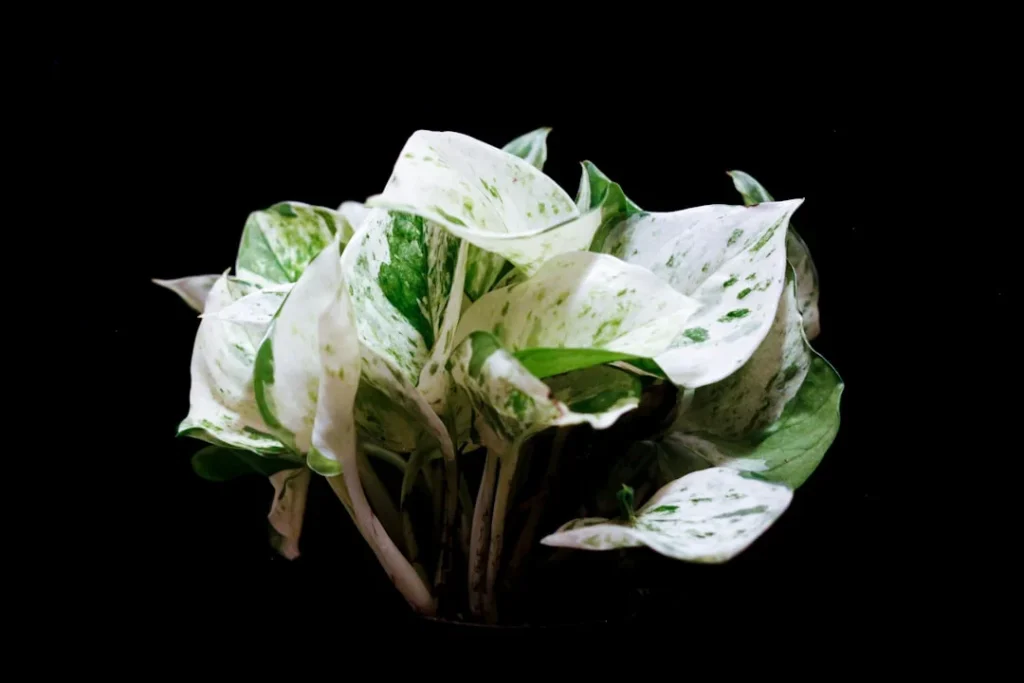
Marble Queen Pothos (Epipremnum pinnatum ‘Marble Queen’) is a trailing tropical vine famous for its heart-shaped leaves splashed with creamy white, ivory, and pale green. It’s a cultivar of the species native to the Solomon Islands and parts of Southeast Asia, where wild relatives climb forest trees up to 20 metres tall. Indoors, though, it usually trails 6 to 10 feet from a hanging basket or climbs a moss pole. Here’s the thing most people don’t realise — those striking marbled leaves aren’t random. The white patches contain no chlorophyll at all, which means each leaf is doing roughly half the photosynthesis work of a plain green pothos. That single fact shapes every aspect of marble queen pothos care, from how much light it needs to how slowly it grows. According to Kew Gardens botanical records, the genus Epipremnum belongs to the Araceae family, sharing relatives with monstera and philodendron. But there’s one detail about this plant’s leaf development that I’ll cover later — and it explains why your new leaves might be coming in greener than the old ones.
Origin and Botanical Background
The parent species, Epipremnum pinnatum, grows wild from northern Australia through the Philippines, Malaysia, and the Solomon Islands. The Marble Queen cultivar was developed through selective breeding in commercial nurseries in the mid-20th century, prized for its high white variegation. In its native rainforests, the vine climbs by anchoring aerial roots into tree bark, slowly maturing into a plant with massive fenestrated leaves — though indoor specimens almost never reach this stage. The plant is sometimes confused with golden pothos (Epipremnum aureum), but the Marble Queen has far more white and grows noticeably slower because of it. If you enjoy growing this plant, you might also find our guide on ZZ Plant Care Guide very useful.
How to Identify a True Marble Queen
True Marble Queen leaves show roughly 50% white-to-cream variegation, with sharp marbling rather than blocky patches. The petioles (leaf stems) are often striped white as well. Don’t confuse it with ‘Snow Queen’, which has nearly 80% white and grows even slower, or with ‘N’Joy’, which has cleaner, painted-on patches. A quick tip here: if your plant’s new leaves are coming in mostly green, it’s a sign it needs more light — not less. But before you move it, there’s a placement mistake almost everyone makes, and I’ll get to that in the sunlight section. Many gardeners who grow this plant also love to read about Vastu plants for home wealth.
Why Grow Marble Queen Pothos: Benefits at a Glance
Beyond looking like a living watercolour, Marble Queen Pothos earns its place on windowsills from Toronto to Bangkok for some seriously practical reasons. NASA’s well-known 1989 Clean Air Study placed pothos species among the top houseplants for filtering formaldehyde, benzene, and xylene from indoor air. Later research, summarised by the NIH, has nuanced those claims — you’d need a small forest of pothos to truly purify a room — but even modest improvements in humidity and CO2 absorption make a difference in sealed apartments. Furthermore, this plant is famously forgiving. Many gardeners find it the first houseplant they ever kept alive, which is no small feat. It tolerates inconsistent watering, low light, dry winter air, and the occasional missed feeding. In my experience teaching beginner workshops in both Mumbai and London, the Marble Queen has the highest survival rate of any variegated plant I recommend. That said, the real benefit might be psychological — watching new marbled leaves unfurl every few weeks gives even cluttered urban homes a sense of life. Now let’s talk about how to actually grow one properly.
Air Quality and Wellbeing
While no houseplant replaces a proper air purifier, studies from the University of Technology Sydney (2019) found that grouping 3-6 pothos plants per 10 square metres measurably reduced volatile organic compounds in offices. The plant also raises humidity by 5-10% in dry rooms through transpiration — a small but useful effect for anyone running heating in a UK winter or air conditioning in a Dubai summer. For more tips, check out our detailed article on common houseplant pests and treatments.
Low-Effort, High-Reward Greenery
Unlike calatheas or fiddle leaf figs that punish small mistakes with dramatic leaf loss, the Marble Queen recovers gracefully. Forgot to water for two weeks? It’ll droop, drink, and bounce back within hours. This forgiveness makes it ideal for renters, students, frequent travellers, and anyone new to houseplants. For more tips, check out our detailed article on Fiddle Leaf Fig Care Tips.
How to Grow Marble Queen Pothos: Step-by-Step
Successful marble queen pothos care starts with the basics done right. Whether you bought a tiny 4-inch pot from a garden centre in Sydney or rescued a leggy specimen from a friend in Chicago, the setup process is the same. The goal in the first month is simple: help the plant settle, encourage root development, and avoid the classic new-owner mistake of overwatering out of enthusiasm. Here’s what I tell every first-time grower — don’t repot immediately. Most nursery plants come in a soil mix that’s been tuned for their growth. Wait at least 2-3 weeks before transplanting unless the roots are circling the bottom of the pot. Use this settling time to observe how your specific home environment affects the plant. Does it dry out in 5 days or 10? Do the leaves twist toward the window? These small data points shape every decision you’ll make later.
Choosing the Right Pot and Position
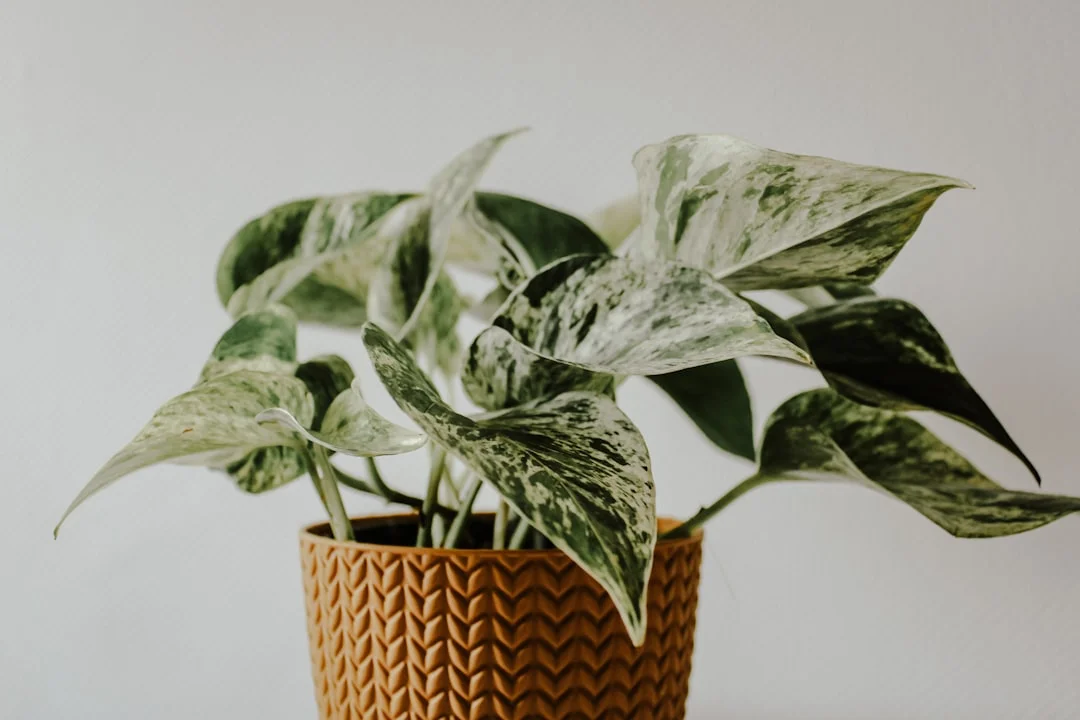
Pick a pot with drainage holes — non-negotiable. Terracotta works wonderfully in humid climates like Kerala or Singapore because it wicks moisture away, but in dry climates like Arizona or southern Spain, plastic or glazed ceramic holds water longer and reduces stress. Size up only one inch wider than the current root ball. Pothos prefer to be slightly root-bound; too much soil holds excess water and invites rot.
First Month Settling Routine
Place the plant in bright, indirect light immediately. Water only when the top 2-3 cm of soil feels dry — usually 5-10 days depending on climate. Skip fertiliser entirely for the first month. Wipe leaves with a damp cloth weekly to remove dust and check for pests hiding underneath. By week four, you should see signs of new growth — a tiny rolled leaf emerging at the vine tip. That’s your green light to start a normal feeding routine.
Soil and Fertilizer Requirements
Get the soil wrong and nothing else matters. Marble Queen Pothos needs a chunky, well-draining mix that holds just enough moisture to keep roots happy without ever staying soggy. Most generic potting soils sold in supermarkets are too dense — they were designed for outdoor bedding plants, not tropical climbers. Here’s a mix that works across climates and ingredients available worldwide: 50% standard potting soil, 25% perlite or coarse pumice, 15% coco coir or peat moss, and 10% orchid bark or fine pine bark. In tropical countries where coco coir is cheap and abundant (India, Sri Lanka, Philippines), you can swap out the peat entirely. In Europe and North America, perlite and bark are widely available at any garden centre. The RHS recommends a pH of 6.1 to 6.8 for pothos — slightly acidic to neutral. Most pre-bagged mixes fall in this range naturally.
Best Fertiliser Schedule
Feed every 4-6 weeks during the active growing season (spring and summer in temperate zones, year-round in the tropics with a small break during monsoon). Use a balanced liquid fertiliser like NPK 10-10-10 or 20-20-20, diluted to half the recommended strength. Over-feeding is the #1 cause of brown leaf tips. In winter, stop feeding entirely if temperatures drop below 15°C (59°F) — the plant goes semi-dormant and won’t use the nutrients.
Organic Options for Sensitive Homes
If you have pets or kids who touch the soil, skip synthetic fertilisers. Worm castings mixed into the topsoil at 1 tablespoon per 6-inch pot, or a diluted seaweed extract (1 ml per litre of water) every fortnight, work beautifully. Banana peel water — a folk remedy popular across India, Brazil, and the Caribbean — also delivers potassium gently and improves leaf colour over time.
Watering Marble Queen Pothos the Right Way
The internet tells you to water pothos weekly. Experienced gardeners know that’s the fastest way to kill it. Proper marble queen pothos care depends on reading the soil, not the calendar. A pothos in a Phoenix apartment with central air may need water every 4 days. The same plant in a damp Edinburgh bedroom might go 14 days between waterings. Stick your finger 2-3 cm into the soil. Dry? Water deeply until it runs out the drainage holes. Still damp? Wait two more days and check again. That’s the entire rule. Here’s a counterintuitive truth: pothos prefer to dry out slightly between waterings. Their thick, succulent-like stems store water. Constantly wet roots suffocate and rot within a week — and root rot, once started, kills faster than drought ever will. Have you ever noticed your plant looks fine in the morning but droops by 3pm? That’s not always thirst — sometimes it’s heat stress, and watering then can actually cause more harm.
Signs of Overwatering vs Underwatering
Overwatered pothos shows yellowing lower leaves, soft mushy stems, and a vaguely sour smell from the soil. Underwatered plants show curling leaves, crispy brown edges, and limp vines that perk up within hours of a drink. When in doubt, underwater rather than overwater. Pothos forgive thirst; they rarely forgive a swamp.
Water Quality Matters
Tap water with high chlorine or fluoride can cause brown leaf tips over time — a common complaint from readers in the US and Australia. Let tap water sit in an open container for 24 hours so the chlorine evaporates, or use rainwater where possible. Filtered water is fine too. In hard-water regions like London or parts of India, an occasional flush with distilled water once a month helps prevent mineral buildup in the soil.
Sunlight and Placement Secrets
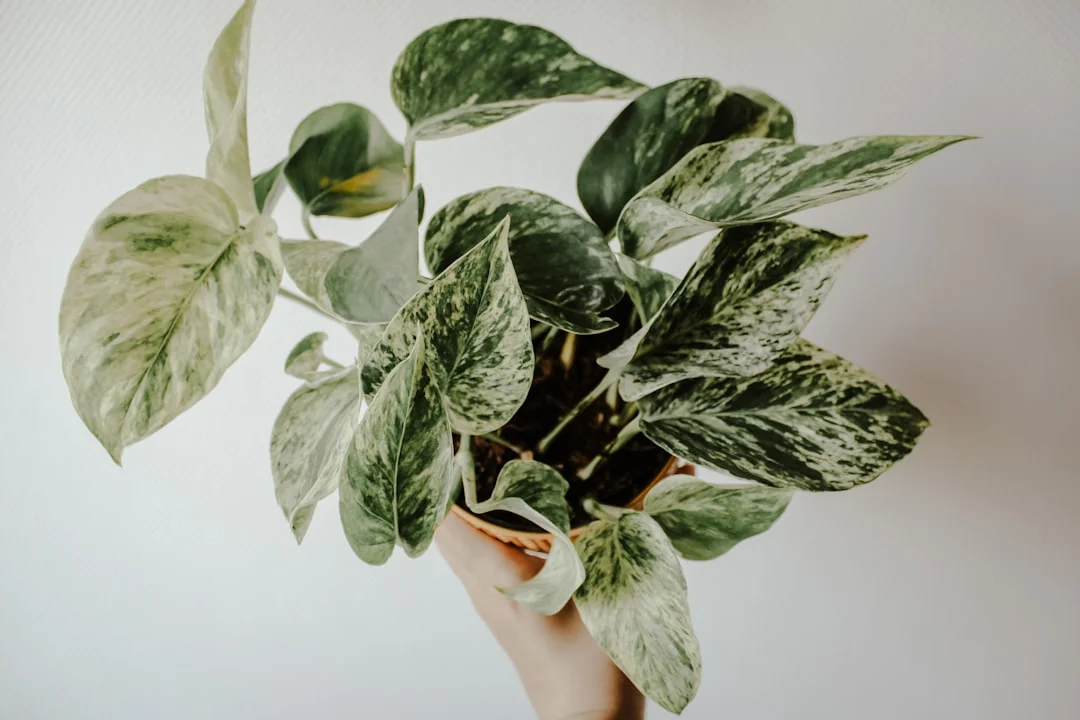
This is where most people go wrong, and it’s the single biggest factor in marble queen pothos care. The Marble Queen needs more light than a regular green pothos because its white sections can’t photosynthesise. Too little light, and new leaves emerge mostly green as the plant compensates — a process called ‘reverting’. Too much direct sun, and the white patches scorch into crispy brown blotches within days. The sweet spot? Bright, indirect light for 6-8 hours daily. Think 1-2 metres back from a south or west-facing window in temperate zones, or behind a sheer curtain in tropical regions where sun intensity is brutal. In a cloudy UK winter, you may need to move the plant directly against the window — or supplement with a grow light. A 2018 study from Wageningen University in the Netherlands found that variegated foliage plants needed roughly 40% more light than their solid-green counterparts to maintain leaf pattern stability. That’s the science behind why your Marble Queen might be slowly turning green.
Light Levels by Region
In the tropics (India, Southeast Asia, northern Australia), place the plant near an east-facing window for gentle morning sun, or 1-2 metres back from any bright window. In temperate climates (UK, US Pacific Northwest, Canada), the plant can usually sit right at a north or east window without issue, especially in winter. In arid regions (Dubai, Arizona, southern Spain), filter all direct light through a sheer curtain — the intensity will scorch variegated leaves quickly.
Grow Lights for Low-Light Homes
If you’re growing in a basement flat or a north-facing room with little natural light, a basic full-spectrum LED grow light (around $20-40 USD / ₹1500-3000 / £20-35) makes a transformative difference. Run it for 10-12 hours daily, positioned 30-45 cm above the plant. Within a month, you’ll see new leaves emerge with brighter, bolder variegation.
Common Problems and Quick Fixes
Even with perfect care, problems crop up. The good news is that Marble Queen Pothos telegraphs its issues clearly through leaf colour, texture, and posture. Once you learn to read the signs, you can fix most problems within a week. Most issues fall into four buckets: water-related, light-related, pest-related, or nutrient-related. Below are the issues I see most often in reader emails, along with fixes that actually work — not the generic advice that floods Pinterest.
Yellowing Leaves
If lower leaves yellow one at a time, it’s natural ageing — pull them off and move on. If multiple leaves yellow at once, it’s almost always overwatering. Let the soil dry out completely, then resume watering on a stricter schedule. If yellowing comes with pale veins, it’s a magnesium or iron deficiency — a foliar spray of Epsom salt (1 teaspoon per litre of water) once monthly usually fixes it.
Reverting to Plain Green
New leaves coming in solid green means insufficient light, full stop. Move the plant closer to a window or add a grow light. You can also prune the green-only sections back to the last well-variegated leaf — this redirects energy and often encourages new variegated growth from dormant nodes.
Pests: Spider Mites and Mealybugs
Spider mites thrive in dry indoor air — common in winter homes with heating. Look for fine webbing and tiny moving dots on leaf undersides. Mealybugs appear as white cottony spots in leaf joints. Wipe affected areas with cotton dipped in 70% isopropyl alcohol, then spray the whole plant with a neem oil solution (5 ml neem + 2 ml mild dish soap per litre of water) weekly for three weeks.
How to Propagate Marble Queen Pothos
Propagation is where Marble Queen Pothos becomes genuinely fun. One healthy plant can produce dozens of cuttings within a year — perfect for swapping with friends, filling more pots, or selling at local plant markets. The success rate is so high (90%+ in water) that this is the plant I use to teach kids and beginners. Spring and early summer are ideal propagation windows in temperate climates. In the tropics, you can propagate year-round, though monsoon season slows root development slightly due to lower light. Take cuttings from healthy, well-variegated vines — avoid the all-green sections, because cuttings will inherit that lack of variegation permanently.
Water Propagation: The Easy Way
Cut a 4-6 inch piece of vine just below a node (the bump where a leaf meets the stem). Each cutting should have 2-3 leaves and at least one node. Remove the lowest leaf, then place the cutting in a glass of room-temperature water with the node submerged but the leaves above water. Change the water every 4-5 days. Roots appear in 10-14 days. Once roots reach 2-3 inches long, transfer to soil and keep moist for the first two weeks.
Sphagnum Moss Method for Stronger Roots
Many growers, myself included, prefer moss propagation because the roots that form are stronger and adapt to soil faster. Soak sphagnum moss until damp but not dripping. Wrap the cutting’s node in moss and place in a clear container with a loose lid for humidity. Roots appear in 7-10 days. Transfer to soil once roots are 2 inches long. This method has near 100% success in my experience, even with finicky variegated cuttings.
Seasonal Care Across Global Climates
Marble queen pothos care shifts subtly through the year, and the changes look very different depending on where you live. A Mumbai gardener in June (peak monsoon) faces completely different challenges than a Toronto gardener in February (deep winter). Understanding these seasonal rhythms is what separates a stagnant plant from a thriving one. The plant’s growth correlates closely with light and temperature. Optimal range: 18-29°C (65-85°F). Below 13°C (55°F), growth halts. Above 35°C (95°F), the plant stresses and may drop leaves. Use these temperature thresholds — not the calendar month — to decide when to feed, repot, and propagate.
Tropical and Subtropical Regions
In India, Southeast Asia, and northern Australia, the main concern during monsoon (June-September in India) is excess humidity and reduced light. Cut watering frequency in half, hold off on fertilising during the heaviest rain weeks, and improve airflow to prevent fungal spots. The cool dry winter (December-February) is actually a great time for steady, controlled growth — keep the plant near bright windows.
Temperate Regions (UK, Northern US, Canada)
Spring and summer (March-September) are peak growth windows — feed monthly, water when soil is dry, and consider moving the plant outside to a shaded patio for the warmest weeks. From October to February, growth slows dramatically. Stop fertilising, reduce watering by 50%, and move the plant as close to windows as possible. Heating dries indoor air drastically — group plants together or use a humidifier.
Arid and Mediterranean Climates
In Dubai, Arizona, southern Spain, and parts of Australia, summer indoor temperatures with air conditioning can drop humidity below 30%. Mist leaves twice weekly, group with other plants, or place the pot on a humidity tray (pebbles + water). Avoid placing the plant directly in the path of AC vents — cold dry air will brown the leaf edges within days.
Uses, Safety, and Cultural Notes
Marble Queen Pothos is grown almost exclusively for decoration — it has no significant culinary or medicinal use in mainstream traditions. However, it carries interesting cultural meaning in several regions. In Feng Shui and Vastu Shastra, pothos plants are associated with wealth, positive energy, and the southeast direction (the wealth corner). They’re commonly placed in homes and offices across China, India, and Southeast Asia for this reason. Importantly, this plant is mildly toxic. The leaves contain insoluble calcium oxalate crystals, which cause oral irritation, drooling, and vomiting if chewed by pets or small children. The ASPCA lists pothos as toxic to dogs, cats, and horses. Symptoms are usually mild and self-resolving, but if your pet ingests a significant amount, contact a vet. Place the plant out of reach in homes with curious cats or toddlers — hanging baskets or high shelves work brilliantly.
Decorative and Functional Uses
Use Marble Queen Pothos as trailing decor on bookshelves, in hanging planters, or trained up a moss pole for a vertical accent. Long vines also work beautifully draped along curtain rails or trained along picture rails. Offices love this plant for its low-light tolerance and cleaner-air reputation — it’s a staple in workspaces from Bangalore to Berlin.
Cultural and Symbolic Meaning
In Chinese tradition, pothos is sometimes called the ‘money plant’ (though that name more commonly refers to Pilea peperomioides or Crassula ovata). In Indian homes, it’s a common gift symbolising prosperity. In Western plant culture, it’s affectionately known as ‘devil’s ivy’ for its near-indestructible nature — a name first popularised in early 20th-century English gardening texts.
Frequently Asked Questions
Can I grow Marble Queen Pothos indoors in a cold climate?
Absolutely. Marble queen pothos care in cold climates like the UK, northern US, or Canada works well as long as you keep indoor temperatures above 13°C (55°F). Place the plant near a bright south or east window during winter to compensate for shorter days, and consider a small grow light if natural light is very limited. Reduce watering by about half during winter dormancy and stop fertilising. Keep it away from cold draughts and heating vents, both of which dry the leaves quickly.
Is Marble Queen Pothos safe for pets and children?
No, it's mildly toxic to dogs, cats, horses, and humans. The leaves contain calcium oxalate crystals that cause mouth irritation, drooling, and vomiting if chewed. Symptoms are usually mild and resolve on their own, but contact a vet if your pet ingests a large amount. The safest approach is to hang the plant high or place it on a shelf well out of reach of curious cats and toddlers. It's not life-threatening but definitely uncomfortable for anyone who takes a bite.
Why is my Marble Queen losing its white variegation?
This is the most common issue in marble queen pothos care, and it almost always comes down to one thing — not enough light. The white parts of the leaves contain no chlorophyll, so when the plant doesn't get enough light, it produces greener new leaves to survive. Move it to a brighter spot (bright, indirect light for 6-8 hours), or add a full-spectrum grow light. Prune back the solid-green sections to redirect the plant's energy into producing variegated growth from older nodes.
How often should I water Marble Queen Pothos?
There's no fixed schedule — climate, pot size, and indoor humidity all change the answer. Check the soil with your finger; water deeply only when the top 2-3 cm feels dry. For most homes, that's every 7-10 days in summer and every 10-14 days in winter. Pothos prefer to dry out slightly between waterings, and overwatering is the leading cause of root rot. When in doubt, wait another day rather than watering too soon.
How do I propagate Marble Queen Pothos in water?
Cut a 4-6 inch stem section just below a node, leaving 2-3 leaves at the top. Remove the lowest leaf and place the cutting in a glass of room-temperature water with the node submerged. Keep it in bright indirect light and change the water every 4-5 days. Roots appear within 10-14 days. Once roots reach 2-3 inches, transplant to well-draining soil and keep slightly moist for the first two weeks while the plant adjusts.
Can Marble Queen Pothos grow outdoors year-round?
Only in true tropical or subtropical climates — USDA zones 10-12, which covers places like southern Florida, Hawaii, much of India, Southeast Asia, and northern Australia. In these regions, it can climb trees or fences spectacularly. In temperate or cool climates, it can summer outdoors in shade once nights stay above 15°C (59°F), but you must bring it inside before autumn temperatures drop. Frost will kill the plant within hours.
What's the difference between Marble Queen and Golden Pothos?
Marble Queen has heavy cream-white-and-green marbled variegation across nearly the whole leaf, while Golden Pothos shows yellow streaks on a mostly green leaf. Because Marble Queen has more white (no chlorophyll), it grows noticeably slower and needs more light to keep its colour. Golden Pothos is more forgiving and grows faster. Both share the same care principles, but Marble Queen demands a bit more attention to light placement to stop it from reverting to plain green.
Does Marble Queen Pothos really purify air?
Partly, yes — but with caveats. NASA's 1989 Clean Air Study showed pothos species absorb formaldehyde, benzene, and xylene from sealed test chambers. Real homes have much higher air exchange rates, so you'd need many plants to see meaningful effects. That said, the plant does measurably raise indoor humidity through transpiration and absorbs CO2 like any houseplant. Treat the air-purifying benefit as a small bonus, not a primary reason to buy it — the real value is in its beauty and easy nature.
Final Thoughts
Mastering marble queen pothos care really comes down to three things: bright indirect light, careful watering, and patience as the plant grows into its full marbled glory. Get those right and you’ll watch this trailing beauty fill your space with creamy variegated leaves year after year, whether you’re growing it in a sunny Sydney living room, a foggy London flat, or a humid Chennai balcony. Remember the small details that make a big difference — propagate only from well-variegated vines, never let the soil stay soggy, and don’t panic when an occasional leaf yellows. Plants communicate clearly once you learn their language. In my experience, the gardeners who succeed long-term are the ones who observe before they react. Your Marble Queen will tell you exactly what it needs through its leaves and growth pattern. Start with the basics this week — check your light levels, repot if needed, and take your first cutting. A year from now, you’ll have a curtain of marbled green and cream that started with one small decision today.

