
⏱ 32 min read
Table of Contents
- What Is the Baby Toes Succulent? (Fenestraria aurantiaca)
- Baby Toes Succulent Characteristics at a Glance
- Baby Toes Succulent Care: Light & Sunlight Requirements
- Soil & Fertilizer: Getting the Foundation Right
- Watering Baby Toes Succulent: The Most Critical Skill
- Temperature, Humidity & Climate Adaptation
- How to Propagate Baby Toes Succulent
- Common Problems, Pests & Diseases
- Seasonal Care Guide: Month-by-Month Adjustments
- Baby Toes Succulent as a Houseplant vs. Garden Plant
- Traditional & Cultural Significance
Baby toes succulent care is surprisingly simple once you understand what this plant is actually trying to tell you. Fenestraria aurantiaca — a tiny, club-shaped succulent from the Namib Desert — looks like a cluster of little toes poking out of the soil, each tipped with a translucent ‘window’ that channels sunlight underground. Most gardeners who struggle with baby toes succulent care make the same mistake: they treat it like a regular succulent and water it far too often. Here’s the counterintuitive truth — this plant survives drought by burying itself in sand, leaving only its transparent tips exposed. That single biological fact changes everything about how you grow it. Whether you’re growing in a humid Singapore apartment, a dry Arizona backyard, a cloudy London flat, or a breezy Melbourne garden, this guide covers every aspect of baby toes succulent care — from soil and sunlight to propagation and seasonal rhythms. By the end, you’ll know exactly why your previous attempts may have failed, and precisely what to do differently. Many gardeners who grow this plant also love to read about Peperomia Plant Care Tips.
Quick Highlights
- Discover the exact watering schedule that keeps Fenestraria aurantiaca alive across tropical, temperate, and arid climates
- Learn the transparent 'window' biology that makes baby toes succulent care uniquely different from other succulents
- Identify the top 5 problems that kill this plant and how to fix each one fast
- Master propagation from offsets and seeds with step-by-step instructions for any climate zone
- Understand seasonal care adjustments for summer heat, winter cold, and monsoon humidity
- Get a full characteristics table, names in 21 languages, and a global climate guide all in one place
Plant Characteristics at a Glance
| Common Name | Baby Toes Succulent, Window Plant, Baby Toes |
| Scientific Name | Fenestraria aurantiaca |
| Family | Aizoaceae |
| Origin | Namaqualand and Namib Desert, South Africa and Namibia |
| Habitat | Sandy, gravelly desert flats and coastal dunes; semi-arid to arid regions |
| Plant Type | Perennial succulent, clump-forming |
| Indoor Plant | Yes — ideal on a south-facing windowsill with maximum direct sun; grow light recommended in dark winters |
| Outdoor Plant | Yes — in USDA zones 9b–11 (RHS H2); suitable for Mediterranean, arid, and subtropical climates year-round |
| Leaves | Cylindrical, club-shaped, grey-green to blue-green; flat translucent tip ('window'); 2–4 cm (0.8–1.6 in) long |
| Flowers | Large, daisy-like, orange-yellow (F. aurantiaca) or white (F. rhopalophylla); 3–4 cm (1.2–1.6 in) diameter |
| Flowering Season | Late summer to autumn (August–October Northern Hemisphere; February–April Southern Hemisphere) |
| Fruit | Small capsule-type fruit containing fine seeds; develops after flowering |
| Seeds | Tiny, dust-like; viable for 1–2 years if stored cool and dry; surface-sow without covering |
| Roots | Shallow, fibrous root system; highly susceptible to rot in waterlogged conditions |
| Height | 2–5 cm (0.8–2 in) above soil; clump spread up to 15–20 cm (6–8 in) in maturity |
| Growth Rate | Slow; clumps expand gradually over 3–5 years |
| Light Requirements | Full direct sun; minimum 6–8 hours daily; intolerant of low light or shade |
| Soil Requirements | Extremely fast-draining; 50–70% inorganic grit/perlite/pumice + 30–50% cactus mix; pH 6.0–7.0 |
| Water Requirements | Low; soak-and-dry method; every 10–14 days in summer, once a month in winter; never allow to sit in water |
| Temperature Requirements | Optimal 18–35°C (64–95°F); tolerates brief -2°C (28°F); damaged by sustained frost below -2°C (28°F) |
| Humidity Requirements | Low; prefers 30–50% relative humidity; avoid misting; ensure good airflow in humid climates |
| Propagation | Offset (clump) division in spring; seed sowing on moist surface mix; not propagated from leaf cuttings |
| Uses | Ornamental houseplant; rockery and gravel garden plant; succulent collection specimen; container gardening |
| Medicinal Properties | No documented medicinal uses; non-toxic to humans and most pets (per ASPCA) |
| Toxicity | Generally considered non-toxic to cats, dogs, and humans; mild GI discomfort possible if consumed in quantity |
| Cultural Significance | Ornamental icon in global succulent collecting culture; native to Khoisan and Nama territory in southern Africa |
| Common Pests | Mealybugs (above and below soil), spider mites, fungus gnats (in overly moist soil) |
| Common Diseases | Root rot (Pythium, Fusarium spp.) from overwatering; fungal leaf spots from surface moisture |
| Special Care Tips | Plant at or just above soil level — do not bury leaves; use terracotta pots; never mist; water from below when possible |
| Cultural Practices | Reduce watering in midsummer and midwinter (natural dual dormancy); fertilize only twice yearly in spring/early summer |
| Vastu Direction | East or south-facing placement recommended for maximum light; symbolises resilience and hidden strength |
Baby toes succulent care Names in Different Languages
| English | Baby Toes Succulent / Window Plant |
| Mandarin Chinese | 宝宝脚趾 (Bǎobǎo jiǎozhǐ) |
| Spanish | Planta dedos de bebé / Planta ventana |
| Hindi | बेबी टोज़ सक्यूलेंट (Baby Toes Succulent) |
| Gujarati | બેબી ટો સક્યુલન્ટ (Baby Toe Sakyulant) |
| Arabic | نبات أصابع الطفل (Nabāt aṣābiʿ al-ṭifl) |
| Bengali | বেবি টোস সাকুলেন্ট (Baby Toes Sakulenṭ) |
| Portuguese | Planta dedinhos / Planta janela |
| Russian | Фенестрария (Fenestraria) / Детские пальчики |
| Japanese | フェネストラリア / 窓植物 (Mado shokubutsu) |
| Punjabi | ਬੇਬੀ ਟੋਜ਼ ਸੁਕੂਲੈਂਟ (Baby Toes Sukūlaiṇṭ) |
| German | Fensterblatt / Baby-Zehen-Sukkulente |
| Javanese | Tanaman jari bayi |
| Korean | 베이비 토스 다육식물 (Beibi toseu daeyuksikmul) |
| French | Plante doigts de bébé / Plante fenêtre |
| Telugu | బేబీ టోస్ సక్యులెంట్ (Bēbī ṭōs sakyuleṇṭ) |
| Marathi | बेबी टोज सक्युलेंट (Baby Toes Sakyulēṇṭ) |
| Tamil | பேபி டோஸ் சதைப்பற்றுள்ள செடி (Pēpi ṭōs cataipaṟṟuḷḷa ceṭi) |
| Urdu | بیبی ٹوز سکولینٹ (Baby Toes Succulent) |
| Turkish | Bebek parmakları bitkisi |
| Vietnamese | Cây ngón chân em bé |
What Is the Baby Toes Succulent? (Fenestraria aurantiaca)
Picture a plant so well adapted to its environment that it literally hides underground. That’s Fenestraria aurantiaca — a South African native that grows in the Namaqualand and Namib Desert regions, where temperatures can swing from 45°C (113°F) midday to near freezing at night. The plant buries its plump, cylindrical leaves almost entirely in sand, with only the flattened, glassy tips poking above the surface. These tips act as natural ‘windows’ — a botanical trick called leaf fenestration (from the Latin fenestra, meaning window) — allowing sunlight to reach the chlorophyll-rich tissue buried safely below.
According to Kew Gardens, Fenestraria belongs to the Aizoaceae family, the same family as living stones (Lithops) and ice plants. There are two accepted varieties: F. aurantiaca, which produces orange-yellow flowers, and F. rhopalophylla, known for white blooms. Both share identical care needs.
Here’s the thing — despite its exotic desert origins, this plant has become a beloved houseplant on every inhabited continent. It’s compact (rarely taller than 5 cm / 2 inches above soil), clump-forming, and produces surprisingly large, daisy-like flowers in late summer to autumn. Many gardeners find it one of the most rewarding small succulents to grow, precisely because it rewards restraint rather than fussing. Many gardeners who grow this plant also love to read about Bear Paw Succulent Care.
Why 'Baby Toes'? The Story Behind the Name
The common name is wonderfully literal. Each leaf is a smooth, rounded cylinder, about 2–4 cm (0.8–1.6 inches) long, with a flat, slightly translucent top — looking uncannily like a row of tiny toes pressing up through the soil. Gardeners in the UK and US sometimes call it ‘window plant’ for the same fenestration feature that gives Lithops their charm. In Afrikaans, the plant is known as ‘vensterplantjie’ — literally ‘little window plant.’ The name captures that magical quality: something that looks like it shouldn’t be alive, yet thrives with almost stubborn determination. For more tips, check out our detailed article on Donkey’s Tail Succulent Care.
Is Baby Toes Succulent Rare?
In the wild, Fenestraria aurantiaca is classified as vulnerable due to habitat loss in coastal Namaqualand. However, as a cultivated plant, it’s widely available at garden centres, succulent nurseries, and online sellers across the US, UK, Europe, Australia, and Asia. It’s far from rare as a houseplant — but it’s still uncommon enough that bringing one home always sparks curiosity from visitors. In my experience, it’s one of those plants that people stop and ask about every single time. For more tips, check out our detailed article on Hens and Chicks Succulent Care.
Baby Toes Succulent Characteristics at a Glance
Before diving into baby toes succulent care specifics, it helps to understand the plant’s baseline biology. This compact grower demands conditions that mimic its natural desert home — bright light, lean soil, and controlled water. The table below summarises everything you need to know at a glance, including temperature ranges for gardeners in both Celsius and Fahrenheit zones. For more tips, check out our detailed article on Peperomia Plant Care.
One detail that surprises new growers: the USDA hardiness zone range for Fenestraria aurantiaca is zones 9b–11 for outdoor growing. That means outdoor year-round cultivation is possible in coastal California, Florida, the Mediterranean coast, much of Australia, and parts of South Africa — but gardeners in colder zones must bring it inside for winter. The RHS assigns it an H2 hardiness rating, meaning it tolerates light frost briefly but cannot survive a hard freeze.
Plant Names in 21 Languages
Fenestraria aurantiaca goes by different common names across the world. While ‘baby toes’ dominates in English-speaking markets, growers in Europe, Asia, and Africa use entirely different descriptors — many referencing the plant’s window-like leaf tips or its unusual clustered form. See the full names table included in this guide for the complete list across 21 languages and dialects.
Baby Toes Succulent Care: Light & Sunlight Requirements
Light is where baby toes succulent care either succeeds or fails — and most indoor growers don’t give it nearly enough. In its native Namaqualand, this plant receives 10–12 hours of direct, intense desert sun daily. That’s the baseline it evolved for. In cultivation, it needs as close to that as you can manage.
For outdoor growers in warm climates — think Phoenix, Arizona; Riyadh, Saudi Arabia; Chennai, India; or Perth, Australia — a south-facing or west-facing spot in full sun is ideal. However, even in hot climates, gradually acclimatise the plant to intense afternoon sun in midsummer, since reflected heat above 45°C (113°F) can scorch the leaf tips.
For indoor growers in temperate climates — London, Toronto, Seoul, or Seattle — placement on a south-facing windowsill is essential. In the Northern Hemisphere, south-facing windows receive the most annual sunlight. If natural light is insufficient, a grow light positioned 15–20 cm (6–8 inches) above the plant for 12–14 hours daily will work well. Full-spectrum LED grow lights (around 5000K colour temperature) are the most energy-efficient choice.
Many gardeners make this mistake: placing baby toes in ‘bright indirect light’ because they’ve read that tip applies to most succulents. It doesn’t apply here. Insufficient light causes the leaves to stretch and elongate — a process called etiolation — which weakens the plant and ruins its compact, cushion-like form. Direct sun is non-negotiable.
How Many Hours of Sun Does Baby Toes Need?
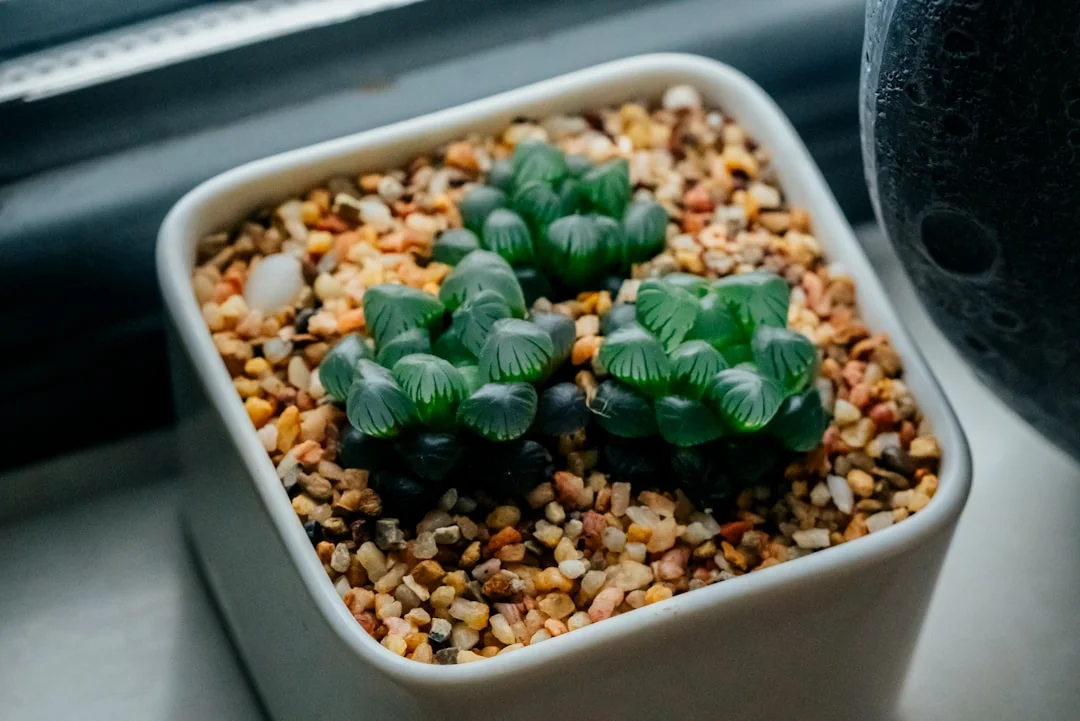
Aim for at least 6 hours of direct sunlight daily — and ideally 8–10 hours in the growing season (spring through early autumn). In winter, even a south-facing windowsill in northern climates (above 50°N latitude, such as London or Vancouver) may only provide 3–4 hours of usable light. This is when a grow light becomes genuinely necessary, not just optional. During June — the month of maximum daylight in the Northern Hemisphere — outdoor growers in temperate climates can take full advantage of long days to boost the plant’s energy reserves before flowering.
Can Baby Toes Succulent Tolerate Low Light?
Short answer: no. Unlike many popular houseplants that tolerate shade, Fenestraria aurantiaca has virtually no tolerance for low light conditions. In dimly lit rooms, the plant will etiolate within weeks, producing abnormally long, pale, floppy leaves. Once this happens, the damage is irreversible — the stretched leaves won’t shorten. Your only option is to move it to brighter light and wait for new, correctly-shaped growth to emerge. Prevention is far easier than correction here.
Soil & Fertilizer: Getting the Foundation Right
The second pillar of baby toes succulent care is soil — and this is where the plant’s desert origins make very specific demands. Standard potting mix retains far too much moisture for Fenestraria aurantiaca. In the wild, it grows in almost pure quartz sand and gravel, where water drains within seconds of rainfall. Your soil mix needs to replicate that drainage speed.
The ideal mix for baby toes succulent care is roughly 50–70% coarse inorganic material blended with 30–50% organic matter. Inorganic options include perlite, coarse sand (horticultural grade, not beach sand), pumice, or crushed granite grit. The organic component can be standard cactus potting mix, coco coir, or fine bark. A reliable home recipe: 2 parts cactus mix + 1 part perlite + 1 part coarse horticultural grit. This drains fast, stays loose, and doesn’t compact around the plant’s base.
For container choice, terracotta pots are strongly preferred over plastic. Terracotta is porous, meaning it wicks moisture away from the soil over time — a significant advantage for a plant that is extraordinarily prone to root rot. The pot must have at least one large drainage hole. Shallow, wide pots suit baby toes better than deep ones, since the root system is relatively shallow.
pH Requirements and Soil Testing
Fenestraria aurantiaca prefers a slightly acidic to neutral soil pH of 6.0–7.0. In practice, most commercial cactus mixes fall within this range, so you rarely need to adjust pH for this plant. However, if you’re mixing your own soil using local components, a quick pH test with an inexpensive strip kit (available globally for under $5 / £4 / ₹200) is worth doing. Highly alkaline soils above pH 7.5 can lock out micronutrients and cause yellowing.
Fertilizing Baby Toes Succulent
This plant is a minimal feeder. In its natural habitat, Namaqualand soils are among the most nutrient-poor in the world. Over-fertilizing causes lush, soft growth that’s highly susceptible to rot and pest attack. Apply a diluted, balanced liquid fertilizer (10-10-10 or a dedicated cactus fertilizer) at half the recommended strength, once in spring and once in early summer. That’s it — two applications per year. Do not fertilize in autumn or winter, when the plant enters a semi-dormant resting phase. According to the USDA Plant Database, Fenestraria aurantiaca’s native soils have extremely low nitrogen and phosphorus levels, confirming that lean feeding is the biologically correct approach.
Watering Baby Toes Succulent: The Most Critical Skill
If there’s one non-negotiable rule of baby toes succulent care, it’s this: underwatering is forgivable, but overwatering is almost always fatal. Fenestraria aurantiaca has evolved its entire physiology around surviving prolonged drought — its swollen leaves store water reserves that can sustain the plant for weeks or even months. The biggest killer of this plant worldwide isn’t neglect; it’s well-meaning overwatering.
A gardener in Bristol, UK messaged me after losing three baby toes plants in succession. Each time, the leaves turned mushy from the base upward — a classic sign of root rot triggered by overwatering in cool, cloudy conditions where soil takes days to dry. The fix was straightforward: water less in autumn and winter, switch to terracotta pots, and improve soil drainage. The fourth plant has now survived two full years.
The correct watering method is the ‘soak and dry’ technique. Water thoroughly — until water runs freely from the drainage hole — then wait until the soil is completely dry before watering again. In summer (growing season), that typically means watering every 10–14 days in warm climates and every 14–21 days in cooler ones. In winter, reduce to once a month or even less.
How to Tell When Baby Toes Needs Water
Rather than following a fixed calendar schedule, learn to read the plant. When baby toes needs water, the leaf tips will begin to look slightly wrinkled or feel less firm than usual. This is normal — it’s the plant drawing on its internal water reserves. At this point, water thoroughly and the leaves will plump back up within 24–48 hours. If the leaves are plump and firm, the plant doesn’t need water. It’s genuinely that simple once you tune in to what you’re looking at.
Watering in Tropical and Humid Climates
For growers in humid tropical climates — Singapore, Mumbai, Lagos, or Manila — baby toes succulent care requires extra vigilance around watering. High ambient humidity means soil stays moist far longer than in dry climates, dramatically increasing rot risk. In such climates, water sparingly even in summer: every 14–21 days at most, and ensure the pot is never sitting in a water-catching tray. Elevating the pot slightly to promote airflow under the base makes a measurable difference in preventing fungal issues at root level.
Temperature, Humidity & Climate Adaptation
Baby toes succulent care across different climates requires understanding the plant’s thermal comfort zone. Fenestraria aurantiaca thrives between 18–35°C (64–95°F). It handles brief exposure to temperatures as low as -2°C (28°F) but will suffer tissue damage from sustained frost. At the upper end, it tolerates short spikes above 40°C (104°F) in well-draining soil with good airflow, though prolonged extreme heat with poor air circulation causes stress.
In temperate climates like the UK, northern Europe, Canada, and the northern US states, outdoor growing is only viable from late spring through early autumn. Bring the plant inside before the first frost — typically October in the UK and Canada. In the Southern Hemisphere, this means bringing plants in around April–May. Indoors, keep the plant away from heating vents and radiators, which create dry hot spots that desiccate the leaf tips.
In Mediterranean climates — coastal California, southern Spain, parts of Chile and South Africa — conditions closely mirror the plant’s native range. Outdoor year-round cultivation is entirely feasible, with only minimal winter protection needed in the coldest months. This is arguably the ideal climate zone for baby toes outside of its South African homeland.
Humidity Requirements
Unlike many tropical houseplants that crave humidity, baby toes prefers low to moderate humidity — ideally 30–50%. In naturally dry climates (Dubai, Riyadh, Phoenix, inland Australia), this is easy to achieve. In humid climates, focus on maximising airflow around the plant rather than trying to reduce household humidity: an open window, an oscillating fan, or simply not grouping it closely with other moisture-loving plants all help. Never mist the leaves — surface moisture on the thick, tightly-packed leaf tips is an invitation to rot.
Winter Dormancy: A Key Concept
Here’s something many growers miss: Fenestraria aurantiaca has an unusual dormancy pattern. Unlike most desert succulents that grow in summer and rest in winter, baby toes actually grows most actively in late winter and spring, and enters a semi-dormant rest phase in midsummer and midwinter. This is a direct adaptation to the Namaqualand climate, where cool, foggy winters provide the most reliable moisture. In cultivation, reduce watering during both peak summer and peak winter, and expect new growth and flowering to appear in late summer through autumn.
How to Propagate Baby Toes Succulent
One of the great joys of baby toes succulent care is that propagation is genuinely achievable for any level of gardener. There are two main methods: division of offsets (clump division) and growing from seed. Both work reliably, but they suit different situations and patience levels.
Offset division is the faster, more reliable method. Fenestraria aurantiaca naturally forms dense clumps over time, producing multiple rosette clusters from a single original plant. When the clump becomes crowded — typically after 3–4 years — you can carefully unpot the entire plant, shake off the soil, and gently separate individual clusters at the root junction. Allow the cut surfaces to callous (dry out) for 24–48 hours before replanting in fresh, dry succulent mix. Don’t water for the first week after replanting to allow new roots to establish without rot risk.
Seed propagation is slower but deeply satisfying. Fenestraria seeds are tiny and need bright light and warmth to germinate. Sow on the surface of a fine, moist (not wet) seed-raising mix — do not cover the seeds, as they need light to germinate. Maintain temperatures of 20–25°C (68–77°F) and expect germination in 7–21 days. Seedlings are delicate for the first few months and need careful watering from below (set the tray in a shallow dish of water briefly, then remove) to avoid dislodging the tiny plants.
Can You Propagate Baby Toes from Leaf Cuttings?
Unfortunately, no. Unlike many succulents (Echeveria, Sedum, Crassula) that propagate readily from individual leaf cuttings, Fenestraria aurantiaca does not reliably produce new plants from single leaves. The leaf structure and internal anatomy don’t support adventitious root formation from a detached leaf. Stick to offset division and seed propagation for the best results — they’re both straightforward once you understand the plant’s biology.
When Is the Best Time to Propagate?
The best time for offset division is in early spring (February–April in the Northern Hemisphere; August–October in the Southern Hemisphere), just as the plant is exiting its winter rest and beginning its active growth phase. Avoid dividing during peak summer heat or mid-winter cold, as the plant’s recovery capacity is lowest during these periods. For seed propagation, late winter to early spring gives seedlings the longest possible warm season to establish before their first winter.
Common Problems, Pests & Diseases
Even with attentive baby toes succulent care, problems can arise — and knowing how to identify them quickly makes the difference between a minor setback and a lost plant. The most common issues are nearly all linked to one root cause: too much moisture. However, there are a handful of pest and environmental problems worth knowing about too.
Root rot is by far the most frequent cause of death. It’s caused by overwatering combined with poorly draining soil. Symptoms include soft, mushy leaves that collapse from the base, a darkening of the stem at soil level, and a faintly unpleasant smell from the soil. If caught early, unpot the plant immediately, trim away all blackened or mushy roots with sterile scissors, dust the cut surfaces with powdered sulphur or cinnamon (a natural antifungal), allow to dry for 48 hours, and repot in fresh, dry mix. Do not water for 7–10 days.
Split or cracked leaves often signal overwatering from a different angle — the cells have absorbed so much water so quickly that they literally burst. This happens most commonly when a long dry period is followed by heavy watering. The fix is to water more consistently in smaller amounts, avoiding extreme dry-then-flood cycles.
Pest Problems: What to Watch For
Mealybugs are the most common pest on baby toes, appearing as white cottony clusters in the crevices between leaves. They suck sap and excrete honeydew that attracts mould. Treat with a cotton bud dipped in 70% isopropyl alcohol, applied directly to each mealybug cluster. For larger infestations, a spray of diluted neem oil (2ml neem oil + 1 litre water + a few drops of liquid soap) applied in the evening is effective. Root mealybugs are sneakier — you won’t see them until you unpot the plant. They appear as white powdery coating on roots. Treatment requires washing all roots thoroughly and dipping in insecticidal solution before repotting.
Yellowing, Shrivelling, and Other Symptoms Explained
Yellow, translucent leaves typically indicate overwatering or root rot — the most urgent scenario. Shrivelled, wrinkled leaves with a leathery texture point to underwatering or extreme heat stress — water thoroughly and move to a slightly less intense light position. Brown, crispy leaf tips suggest sunburn from sudden exposure to intense direct sun after a period indoors. Pale, elongated leaves indicate insufficient light — the plant is etiolating. Addressing each symptom requires diagnosing the correct cause first; treating the wrong problem will worsen the outcome.
Seasonal Care Guide: Month-by-Month Adjustments
Baby toes succulent care shifts meaningfully with the seasons, even for indoor growers. Understanding the plant’s natural growth cycle — which is the inverse of what most people expect — helps you support rather than work against its biology.
In June specifically (Northern Hemisphere early summer), the plant may be in a light summer rest phase. This is not a cause for alarm. Reduce watering slightly compared to spring, ensure maximum light exposure, and hold off on fertilizing. The plant is conserving energy before its late-summer to autumn flowering push. In the Southern Hemisphere, June is mid-winter, which calls for minimal watering — once every 3–4 weeks at most — and bright indoor placement.
The most exciting time in the baby toes calendar is late summer to autumn (August–October in the Northern Hemisphere). This is when the plant wakes from its summer rest, begins producing new leaves, and — if conditions are right — sends up beautiful orange-yellow daisy flowers on short stems. These flowers can last 2–3 weeks and are often fragrant in morning sun. This flowering season is the reward for patient, restrained care all year.
Spring Care (March–May, Northern Hemisphere)
Spring is a gentle awakening period. Resume watering gradually after the winter reduction — start with one thorough watering and observe how the plant responds before watering again. Apply the first light dose of diluted fertilizer in April once you see signs of new growth. If the plant has been indoors all winter, gradually reintroduce it to outdoor sun over 2–3 weeks to prevent sunburn. In the Southern Hemisphere, spring runs September–November, and the same guidelines apply.
Winter Care (November–February, Northern Hemisphere)
Winter is rest time. Cut watering to once every 3–4 weeks — or even once a month in cold, dark climates. Move the plant to the brightest available spot: a south-facing windowsill, a conservatory, or under a grow light. Do not fertilize. Keep temperatures above 5°C (41°F) at all times. If temperatures drop near freezing, move the plant well away from windows. In warmer climates like coastal California, southern Spain, or subtropical Australia, outdoor plants can stay in place — just protect from frost with a light frost cloth if temperatures dip below 0°C (32°F).
Baby Toes Succulent as a Houseplant vs. Garden Plant
One of the most practical questions in baby toes succulent care is whether to grow it indoors or out. The honest answer: it depends entirely on your climate zone and how much direct light your indoor spaces receive.
As an outdoor garden plant, Fenestraria aurantiaca is exceptional in USDA zones 9b–11 — think coastal California, Arizona, Texas, Florida, Mediterranean Europe, most of Australia, and subtropical South Africa. In these regions, it’s a superb rockery plant, thriving in gravel gardens, raised beds with sharp-draining soil, or among other succulents in a desert-themed display. Plant it at soil level in full sun with its crown just at or slightly above the soil surface — don’t bury the leaves.
As an indoor houseplant in cooler climates (UK, Canada, northern Europe, northern US, Japan), it needs the sunniest possible windowsill or supplemental grow lighting. The good news is it’s perfectly content growing in a small terracotta pot on a windowsill for years, as long as light and drainage are adequate. In my experience, a south-facing bay window in a London flat, combined with a grow light for the darkest 3–4 months of winter, produces thriving plants with reliable annual flowering.
Repotting Baby Toes: When and How
Repot Fenestraria aurantiaca only when the clump is visibly overcrowded — roots emerging from drainage holes, or the clump has grown so dense that the outer leaves are being pushed upward. This typically happens every 3–4 years. Always repot in spring or early autumn, never during peak summer or winter. Choose a pot only slightly larger than the current one — this plant actually performs better in slightly snug conditions than in an oversized pot that holds excess moisture around the roots.
Traditional & Cultural Significance
Fenestraria aurantiaca doesn’t feature prominently in Ayurvedic texts or Traditional Chinese Medicine — and that’s worth stating honestly rather than stretching the truth. It’s a plant from the southern tip of Africa, and its traditional use context belongs primarily to Khoisan and Nama people of Namaqualand, where the plant grows wild. Documentation of specific traditional medicinal uses is limited in published ethnobotanical literature, though the Aizoaceae family broadly includes species used in southern African traditional medicine for their cooling, moisture-retaining properties.
In contemporary Western herbalism and horticulture, the plant’s significance is almost entirely ornamental. According to Wikipedia's botanical records on Fenestraria, the species was first formally described by botanist N.E. Brown in 1925, after being collected in the Orange River mouth region of South Africa. Kew Gardens’ records note that the genus Fenestraria contains only this single species (with two varieties), making it a monotypic genus — a botanical oddity that adds to its scientific fascination.
Modern interest in baby toes succulent care has surged with the global rise of succulent collecting, particularly across the US, Japan, South Korea, and Western Europe, where Fenestraria aurantiaca has gained almost cult status among collectors for its prehistoric appearance and minimal maintenance demands.
Is Baby Toes Succulent Toxic to Pets or Children?
This is a critical question for any plant in a home with children or animals. The good news: Fenestraria aurantiaca is not listed as toxic by the ASPCA (American Society for the Prevention of Cruelty to Animals) or other major veterinary toxicology sources. It is generally considered non-toxic to cats, dogs, and humans. That said, no succulent should be eaten in large quantities — the thick, water-storing leaf tissue can cause mild gastrointestinal discomfort if consumed. Keep it out of reach of curious pets and small children as a precaution, not because of specific toxicity, but because no ornamental plant is genuinely intended for consumption.
Frequently Asked Questions
How often should I water baby toes succulent?
Baby toes succulent care requires watering only when the soil is completely dry. In the growing season (spring and autumn), water every 10–14 days in warm climates and every 14–21 days in cooler ones. In winter, reduce to once a month or even less. The golden rule: it's far safer to underwater than overwater. Check the leaf tips — slight wrinkling means it's time to water; firm, plump leaves mean wait.
Can I grow baby toes succulent indoors in a cold climate?
Yes, absolutely. Baby toes succulent care in cold climates like the UK, Canada, or northern US is entirely possible indoors. The key requirement is maximum direct sunlight — a south-facing windowsill is ideal in the Northern Hemisphere. If your winter days are very short and cloudy (above 50°N latitude), supplement with a full-spectrum LED grow light for 12–14 hours daily. Reduce watering significantly in winter and keep temperatures above 5°C (41°F). Many growers in Scandinavia and northern Canada grow thriving plants this way.
Is baby toes succulent safe for pets and children?
Baby toes succulent care around pets is generally low-risk. Fenestraria aurantiaca is not listed as toxic by the ASPCA and is considered non-toxic to cats, dogs, and humans. However, as with any ornamental plant, consuming it in large quantities may cause mild stomach upset. Keep it out of reach of curious pets and small children as a precautionary measure, even though specific toxicity is not a documented concern.
Why are my baby toes leaves turning mushy?
Mushy leaves in baby toes succulent care almost always signal root rot caused by overwatering or poor drainage. Act fast: unpot the plant immediately, remove all soft or blackened roots with sterile scissors, dust cuts with powdered cinnamon or sulphur, let it dry for 48 hours, then repot in fresh dry gritty mix. Do not water for 7–10 days. Switch to a terracotta pot to improve moisture evaporation. Caught early, the plant can fully recover.
Why isn't my baby toes succulent flowering?
Baby toes succulent flowers in late summer to autumn — typically August–October in the Northern Hemisphere. If it isn't flowering, the most common reasons are: insufficient direct sunlight (the single biggest factor), overwatering during the summer rest phase, or the plant being too young (seedlings typically take 2–3 years to first flower). Ensure at least 6–8 hours of direct sun daily, reduce summer watering slightly, and be patient. Established, well-cared-for plants flower reliably every year.
How do I grow baby toes succulent in a container?
Container growing is ideal for this plant. Use a shallow, wide terracotta pot with at least one large drainage hole. Fill with a fast-draining mix of 50% cactus compost and 50% perlite or coarse grit. Plant with the leaves at or just above soil level — never bury the leaves. Place in the sunniest spot available. Water using the soak-and-dry method, and repot only every 3–4 years when the clump becomes overcrowded. Container growing works well on balconies, patios, and sunny windowsills globally.
What is the best soil for baby toes succulent?
The best soil for baby toes succulent care is an extremely fast-draining mix. A reliable recipe: 2 parts commercial cactus potting mix + 1 part perlite + 1 part coarse horticultural grit or pumice. This drains within seconds of watering, which is what the plant needs. Avoid standard potting soil or compost-heavy mixes — they retain too much moisture and cause the root rot that kills most baby toes plants. Aim for a soil pH of 6.0–7.0.
Can baby toes succulent survive outdoors in hot climates?
Yes — in fact, outdoor growing in warm climates is where baby toes truly thrives. In USDA zones 9b–11 (Mediterranean, subtropical, and arid climates including California, Florida, southern Spain, most of Australia, and South Africa), it can grow outdoors year-round. Plant in full sun with extremely well-draining soil or gravel. In extreme heat above 45°C (113°F), provide slight afternoon shade. The main outdoor risk in hot climates is overwatering during summer dormancy — reduce irrigation significantly from June through August.
Final Thoughts
Baby toes succulent care comes down to three non-negotiable principles: maximum direct sunlight, excellent drainage, and disciplined restraint with water. Get those three things right, and Fenestraria aurantiaca is one of the most rewarding, low-maintenance plants you can grow — whether you’re in a sunny garden in Cape Town, a terracotta pot on a London windowsill, or a bright apartment in Tokyo. The plant’s biology is your guide: it evolved to survive by hiding underground, storing its own water, and soaking up desert sun through tiny glass-like windows in its leaf tips. Respect that biology and it will reward you with extraordinary daisy flowers year after year. Ignore it — especially by watering too often — and it will fade quickly. The good news is that baby toes succulent care is genuinely learnable in a single growing season. Start with a gritty soil mix, a terracotta pot, your sunniest window, and a promise to yourself to water less than you think you should. That’s really where the success story begins.

