
⏱ 21 min read
Table of Contents
- What Is Jasmine? A Botanical Introduction
- Top Benefits of Growing Jasmine at Home
- How to Grow Jasmine: Step-by-Step
- Soil Requirements and Fertilizer Schedule
- Watering Jasmine Across Different Climates
- Sunlight, Temperature, and Humidity Needs
- Pruning and Training for Maximum Blooms
- Common Problems and How to Fix Them
- Propagation Methods That Actually Work
- Seasonal Care Calendar (Summer 2026 Focus)
- Traditional and Medicinal Uses of Jasmine
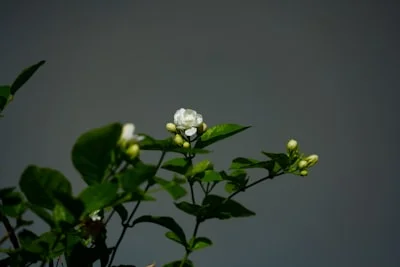
Few flowers carry the romance and fragrance of jasmine. Whether you’re tending a balcony in Mumbai, a greenhouse in Manchester, or a sunny patio in Los Angeles, mastering jasmine plant care grow techniques opens the door to one of the world’s most beloved blooms. Jasminum sambac, known as चमेली in India and Sampaguita in the Philippines, rewards patient gardeners with star-shaped white flowers that perfume entire neighbourhoods at dusk. If you enjoy growing this plant, you might also find our guide on Allamanda Yellow Flower Care very useful.
Here’s the thing — jasmine isn’t fussy, but it does have preferences. Get the basics right and you’ll enjoy blooms for months. Get them wrong and you’ll stare at a leggy, flowerless vine wondering what went wrong. This comprehensive jasmine plant care grow guide covers everything from soil pH to seasonal pruning, with specific tips for tropical, temperate, Mediterranean, and arid climates. You’ll learn the science, the tradition, and the practical shortcuts that experienced gardeners use to coax abundant, fragrant blooms from this remarkable plant. For more tips, check out our detailed article on Hibiscus Plant Care India.
Quick Highlights
- Discover the ideal soil mix, pH, and fertilizer schedule for non-stop blooms
- Learn watering and humidity rules tailored to tropical, temperate, and arid climates
- Master pruning techniques that double flower production in one season
- Solve the top 5 jasmine problems — yellow leaves, no flowers, pests, and more
- Propagate jasmine for free using cuttings, layering, and seeds
- Explore Ayurvedic, TCM, and Western uses backed by modern research
Plant Characteristics at a Glance
| Common Name | Jasmine (Arabian Jasmine, Sampaguita, Mallika) |
| Scientific Name | Jasminum sambac |
| Family | Oleaceae (Olive family) |
| Origin | Tropical Asia, particularly India and Southeast Asia |
| Habitat | Tropical and subtropical regions; cultivated worldwide |
| Plant Type | Evergreen shrub or woody vine |
| Indoor Plant | Yes, with adequate light and humidity |
| Outdoor Plant | Yes, ideal in USDA zones 9-11 |
| Leaves | Glossy, dark green, ovate, 4-12 cm long |
| Flowers | Small, white, star-shaped, intensely fragrant |
| Flowering Season | Spring to autumn; year-round in tropics |
| Fruit | Small black berry (rarely produced in cultivation) |
| Seeds | Tiny, dark; propagation by seed uncommon |
| Roots | Fibrous, moderately deep |
| Height | 1-3 metres (3-10 feet) depending on variety |
| Growth Rate | Moderate to fast |
| Light Requirements | 6-8 hours of direct sunlight; afternoon shade in extreme heat |
| Soil Requirements | Well-draining loam, pH 6.0-7.0, rich in organic matter |
| Water Requirements | Moderate; consistent moisture without waterlogging |
| Temperature Requirements | 18-30°C (65-86°F); minimum 10°C (50°F) for sambac |
| Humidity Requirements | 50-70% relative humidity |
| Propagation | Stem cuttings, layering, and rarely seeds |
| Uses | Ornamental, perfume, tea, garlands, aromatherapy |
| Medicinal Properties | Calming, antioxidant, anti-inflammatory, mild sedative |
| Toxicity | Non-toxic to humans, dogs, and cats (true Jasminum species) |
| Cultural Significance | National flower of Philippines, Indonesia, and Pakistan |
| Common Pests | Mealybugs, aphids, spider mites, caterpillars |
| Common Diseases | Leaf spot, sooty mould, root rot |
| Special Care Tips | Regular pruning after blooming doubles flower production |
| Cultural Practices | Used in weddings, temples, perfumery across Asia |
| Vastu Direction | North or East-facing balcony or garden for positive energy |
Jasmine plant care grow Names in Different Languages
| English | Jasmine |
| Mandarin Chinese | 茉莉花 (Mòlìhuā) |
| Spanish | Jazmín |
| Hindi | चमेली (Chameli) |
| Gujarati | જૂઈ (Jui) |
| Arabic | ياسمين (Yasmin) |
| Bengali | বেলি ফুল (Beli Phul) |
| Portuguese | Jasmim |
| Russian | Жасмин (Zhasmin) |
| Japanese | ジャスミン (Jasumin) |
| Punjabi | ਚੰਬੇਲੀ (Chambeli) |
| German | Jasmin |
| Javanese | Melati |
| Korean | 재스민 (Jaeseumin) |
| French | Jasmin |
| Telugu | మల్లె (Malle) |
| Marathi | मोगरा (Mogra) |
| Tamil | மல்லிகை (Mallikai) |
| Urdu | چنبیلی (Chambeli) |
| Turkish | Yasemin |
| Vietnamese | Hoa Nhài |
What Is Jasmine? A Botanical Introduction
Jasmine refers to a group of around 200 species in the genus Jasminum, part of the olive family (Oleaceae). The most popular varieties for home gardens include Jasminum sambac (Arabian jasmine), Jasminum officinale (common jasmine), and Jasminum grandiflorum (Spanish jasmine). Each one offers a slightly different fragrance, growth habit, and climate tolerance. Many gardeners who grow this plant also love to read about Marigold Grow Pot India.
According to Kew Gardens, jasmine originated in tropical and subtropical regions of Eurasia, Africa, and Oceania. Today, it grows on every continent except Antarctica. In India, jasmine has been cultivated for over 3,000 years and features prominently in temple offerings, weddings, and Ayurvedic medicine. Meanwhile, the Philippines and Indonesia adopted Jasminum sambac as their national flower.
The plant itself is a woody vine or shrub, depending on species. Most varieties produce small, star-shaped white flowers, though yellow and pink forms exist. The fragrance peaks at night, a clever evolutionary trick that attracts moths for pollination. For more tips, check out our detailed article on Tulip Plant Care & Growing Guide.
Popular Jasmine Varieties for Home Gardens
Jasminum sambac suits warm climates and container growing. It blooms repeatedly through summer and tolerates pruning well. Jasminum officinale handles cooler temperatures down to -10°C (14°F) and is the classic choice for UK gardeners. Jasminum polyanthum, or pink jasmine, is popular in California and Australia for its mass spring display. Star jasmine (Trachelospermum jasminoides) isn’t a true jasmine but offers similar fragrance with better cold tolerance — handy for zone 7 gardeners. For more tips, check out our detailed article on Butterfly Pea Flower को हिंदी में.
Hardiness Zones at a Glance
Jasminum sambac thrives in USDA zones 9-11 and RHS H1c-H2. Jasminum officinale handles zones 7-10 (RHS H4). For colder regions, grow jasmine in containers and move indoors when temperatures drop below 5°C (41°F). Gardeners in Dubai or Phoenix should provide afternoon shade, while those in Singapore or Chennai can grow jasmine year-round in full sun.
Top Benefits of Growing Jasmine at Home
Why grow jasmine? The fragrance alone justifies the effort, but there’s much more to this plant. Jasmine flowers are used in teas, perfumes, essential oils, and traditional medicine across cultures. Many gardeners find that a single mature plant scents an entire courtyard, especially in the cool evening hours.
Furthermore, jasmine attracts pollinators like moths and bees, supporting local biodiversity. The plant also acts as a natural privacy screen when trained on trellises or pergolas. In Ayurveda, jasmine (called Mallika) is classified as a cooling herb that balances Pitta dosha. Traditional Chinese Medicine uses jasmine tea to soothe the liver and calm the mind. A 2010 study published on PubMed found that jasmine fragrance can reduce anxiety and improve sleep quality — backing up what grandmothers have said for centuries.
For commercial growers, jasmine farming is profitable. India produces over 200,000 tonnes of jasmine flowers annually, supplying global perfume and garland industries.
Health and Wellness Benefits
Jasmine tea contains antioxidants called catechins, which support heart health and metabolism. The essential oil is widely used in aromatherapy to reduce stress and improve mood. In Western herbalism, jasmine flowers are infused into oils for skin care, while folk traditions in the Middle East use jasmine water as a cooling toner. Always patch-test essential oils, and pregnant women should consult a doctor before using jasmine medicinally.
How to Grow Jasmine: Step-by-Step
Successful jasmine plant care grow strategies start with the right setup. Whether you’re planting in the ground or in a container, the first month matters most. Here’s the process I recommend after years of growing jasmine across different climates.
First, choose a healthy nursery plant or rooted cutting. Look for glossy green leaves and no signs of pests. Next, pick a location with at least 6 hours of sunlight — morning sun is ideal in hot climates. Then, prepare well-draining soil enriched with compost. After planting, water deeply and mulch the base to retain moisture. Finally, install a small trellis or support if growing a climbing variety.
In my experience, gardeners who rush the establishment phase regret it later. Give your jasmine two weeks of consistent care before expecting growth. Once established, the plant becomes remarkably self-sufficient.
Container vs Ground Planting
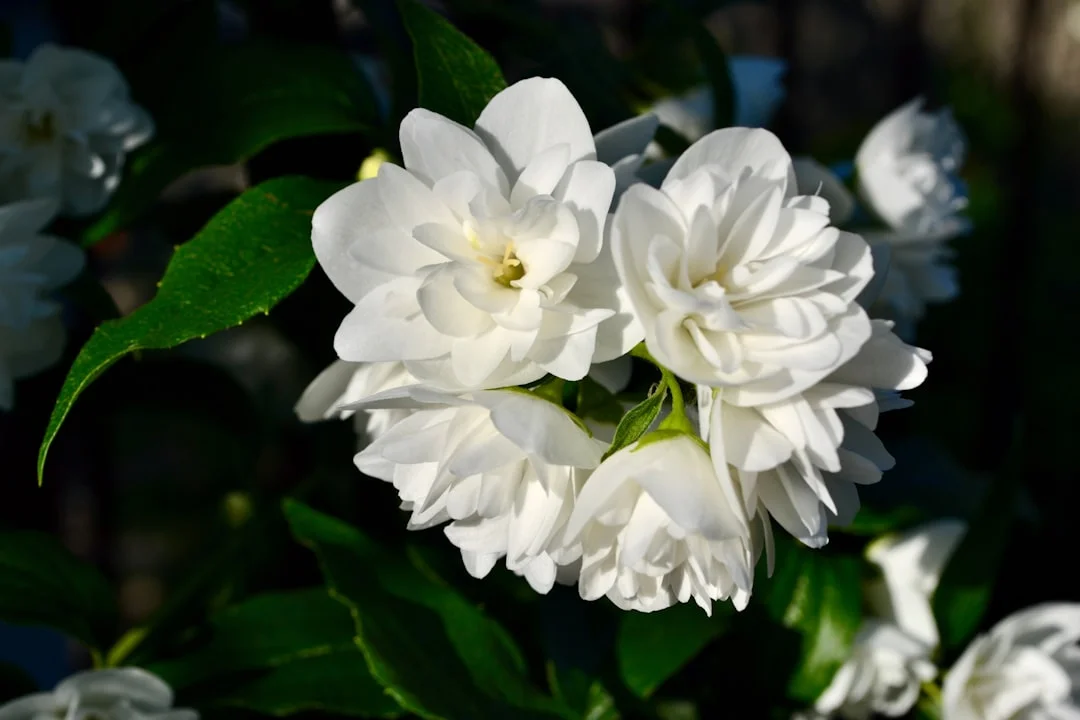
Container growing suits patios, balconies, and cold climates where plants need winter protection. Use a pot at least 12 inches (30 cm) wide with drainage holes. Ground planting works better for vigorous varieties like Jasminum polyanthum that can spread 6 metres. Space ground plants 3-5 feet (1-1.5 m) apart. For both methods, the RHS recommends planting in spring after the last frost in temperate zones.
Soil Requirements and Fertilizer Schedule
Jasmine prefers slightly acidic to neutral soil with a pH between 6.0 and 7.0. The soil must drain well — waterlogged roots quickly lead to rot. A good mix combines two parts garden loam, one part compost, and one part coarse sand or perlite. For container growing, add coco coir or peat moss to improve moisture retention without sogginess.
Feed jasmine every 2-4 weeks during the active growing season (spring through autumn). Use a balanced NPK fertilizer like 10-10-10, or switch to a bloom-boosting formula (5-10-10) once flowering starts. Organic options include compost tea, banana peel water, and well-rotted cow manure — popular among Indian and Southeast Asian gardeners. In the UK and US, fish emulsion and seaweed extract work brilliantly.
On the other hand, over-fertilizing causes lush foliage with few flowers. If your plant looks healthy but won’t bloom, cut back on nitrogen and increase phosphorus.
Best Organic Fertilizers for Jasmine
Bone meal supplies slow-release phosphorus for blooms. Mustard cake (popular in India) provides nitrogen and improves soil microbiology. Epsom salt (1 tablespoon per gallon, monthly) boosts magnesium and enhances flower colour. Rotate organic feeds rather than relying on one type — this builds richer soil over time.
Watering Jasmine Across Different Climates
Watering is where most people go wrong with jasmine plant care grow routines. The plant likes consistent moisture but hates wet feet. The rule? Water deeply, then let the top inch of soil dry before watering again.
In tropical climates like India, Singapore, and northern Australia, water 3-4 times weekly during summer. Meanwhile, in temperate zones like the UK and US Pacific Northwest, twice weekly usually suffices. Gardeners in arid regions like Dubai, Phoenix, or southern Spain should water daily during peak summer, ideally in the early morning. Container plants dry faster — check them daily in hot weather.
A quick tip here: use your finger as a moisture meter. Push it 2 inches into the soil. If it’s dry, water. If it’s damp, wait. This simple habit prevents both drought stress and root rot.
Signs of Over and Underwatering
Overwatered jasmine shows yellow leaves, mushy stems, and a sour soil smell. Underwatered plants droop, develop crispy leaf edges, and drop flowers prematurely. If you spot overwatering, stop watering immediately and improve drainage. For underwatering, soak the rootball thoroughly and mulch to retain moisture.
Sunlight, Temperature, and Humidity Needs
Jasmine craves sunlight. Most varieties need 6-8 hours of direct sun daily to flower well. However, in extremely hot climates (above 38°C / 100°F), afternoon shade prevents leaf scorch. Indoor growers should place jasmine near a south-facing window (north-facing in the Southern Hemisphere).
Temperature-wise, jasmine thrives between 18-30°C (65-86°F). Jasminum sambac suffers below 10°C (50°F), while Jasminum officinale tolerates light frost. Humidity matters too — jasmine loves 50-70% humidity. In dry climates or heated homes, mist the leaves daily or place the pot on a pebble tray.
That said, don’t obsess over perfect conditions. Many gardeners successfully grow jasmine in less-than-ideal spots by adjusting watering and feeding to compensate.
Growing Jasmine Indoors in Cold Climates
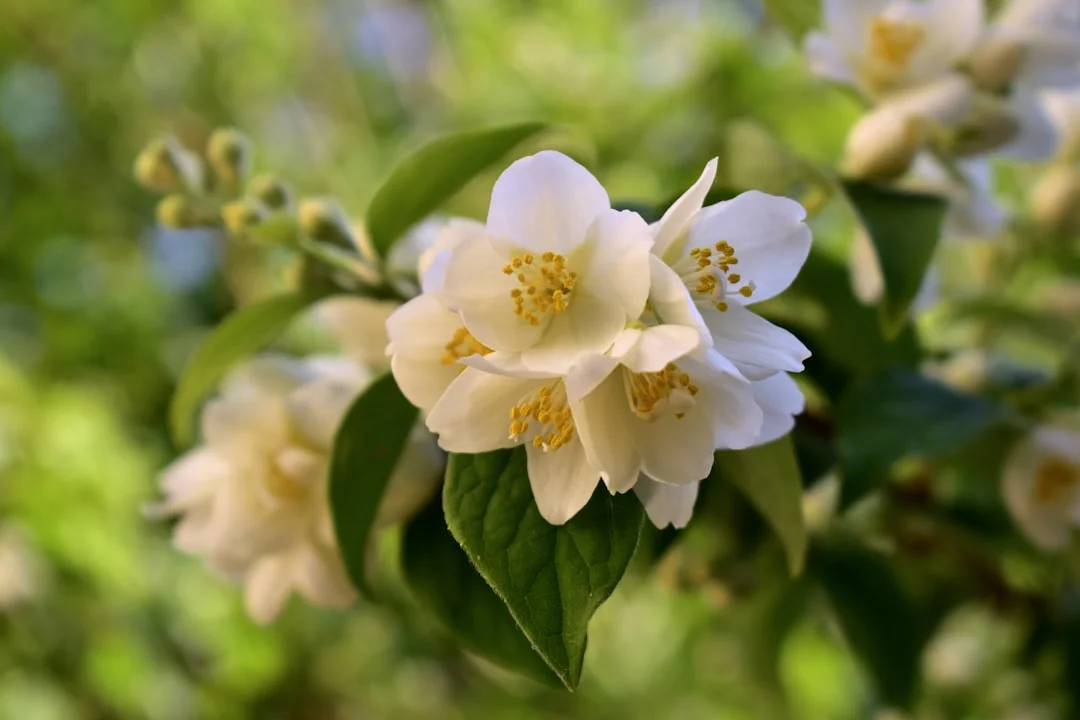
Indoor jasmine plant care grow strategies work well for Canadian, British, and northern European gardeners. Use a grow light if natural sunlight falls short of 6 hours. Maintain humidity with a humidifier or pebble tray. Keep the plant away from radiators and cold draughts. Move it outdoors during summer for a fragrance boost, then bring it back indoors before the first frost.
Pruning and Training for Maximum Blooms
Pruning is the secret weapon of seasoned jasmine growers. Without it, plants become leggy, woody, and stingy with flowers. With regular pruning, you’ll see twice the blooms in a single season.
Prune jasmine just after the main flowering flush ends. For Jasminum sambac, this means light pruning every 6-8 weeks during summer. For Jasminum officinale and polyanthum, do one major prune in late winter or early spring. Cut back about one-third of the plant, focusing on dead, weak, or crossing branches. Always use clean, sharp secateurs to avoid disease transmission.
Furthermore, train climbing varieties onto trellises, arches, or wires as they grow. Gently tie new shoots horizontally — this encourages more side branches, which means more flowers.
Pruning Mistakes to Avoid
Never prune jasmine in autumn in cold climates — fresh growth will be damaged by frost. Avoid hedge-trimmer pruning, which creates a dense outer shell and bare interior. Don’t remove more than one-third of the plant at once, as this stresses the root system.
Common Problems and How to Fix Them
Even well-tended jasmine occasionally develops issues. The good news is that most problems are easy to fix once identified. Here are the top issues gardeners face worldwide and their solutions.
Yellow leaves usually signal overwatering, poor drainage, or nutrient deficiency. Check the soil first, then consider feeding. No flowers? The most common causes are insufficient sunlight, too much nitrogen, or lack of pruning. Move the plant to a sunnier spot and switch to a bloom-boosting fertilizer. Leggy growth points to low light — relocate or supplement with grow lights.
Common Pests and Diseases
Mealybugs, aphids, and spider mites are the usual suspects. Spray with neem oil (1 teaspoon per litre with a drop of soap) every 7-10 days until clear. Insecticidal soap works well too. For fungal issues like leaf spot or sooty mould, improve air circulation and avoid wetting foliage when watering. Caterpillars can defoliate plants quickly in tropical regions — handpick them or use Bt (Bacillus thuringiensis), an organic biological control.
Why Won't My Jasmine Bloom?
This is the number one complaint among jasmine growers. Causes include too little sunlight (most common), too much nitrogen, no pruning, sudden temperature drops, or pot-bound roots. Address each factor systematically. In my experience, a single growing season of corrected care brings most non-blooming jasmine plants back into flower.
Propagation Methods That Actually Work
Propagating jasmine is satisfying and saves money. Three methods work reliably: stem cuttings, layering, and seeds. Stem cuttings are the easiest and most popular.
For cuttings, take 6-inch sections of semi-hardwood stems in late spring or early summer. Remove the lower leaves, dip the cut end in rooting hormone, and plant in a mix of perlite and peat. Keep the medium moist and warm (around 24°C / 75°F). Roots usually develop in 4-6 weeks. Once you see new growth, transplant to a small pot.
Layering works well for climbing varieties. Bend a low branch to the ground, scrape a small section of bark, pin it in place, and cover with soil. After 2-3 months, roots form and you can separate the new plant. Seeds are slower and less reliable — most home growers skip this method.
Step-by-Step Cutting Propagation
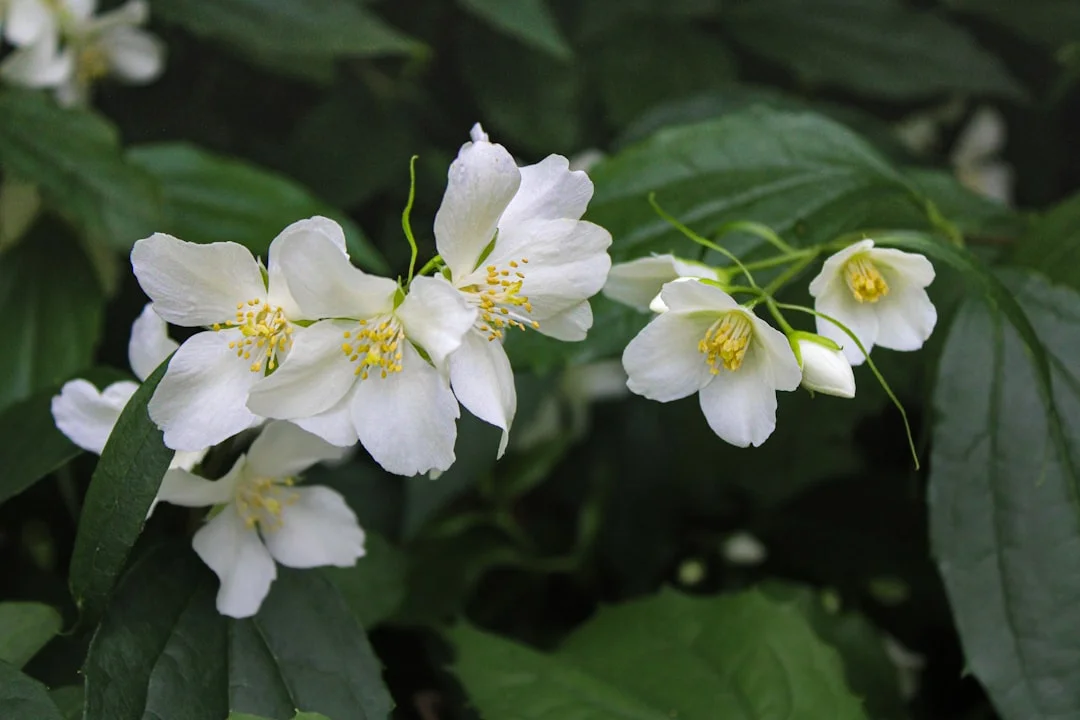
First, sterilise your secateurs. Then, cut a healthy non-flowering stem with 3-4 nodes. Next, remove the bottom two sets of leaves. After that, dip the base in rooting hormone (optional but helpful). Finally, plant in moist propagation mix and cover with a clear plastic bag to maintain humidity. Place in bright indirect light and check weekly for root development.
Seasonal Care Calendar (Summer 2026 Focus)
Jasmine plant care grow routines shift with the seasons. Summer 2026 is the peak growing and flowering period for most jasmine varieties across the Northern Hemisphere. Use this calendar to stay ahead of seasonal tasks.
In summer (June-August in the North, December-February in the South), water consistently, feed every two weeks, and deadhead spent flowers. This is also the best time for taking cuttings. Autumn calls for reduced watering, a final light prune, and applying mulch to protect roots. Winter is dormancy time — water sparingly, stop fertilizing, and protect from frost. Spring marks the awakening — resume regular feeding, do major pruning, and repot if needed.
Summer 2026 Action Checklist
Mulch with 2-3 inches of organic matter to conserve moisture. Inspect weekly for pests, especially after rain. Feed with potassium-rich fertilizer to boost flowering. Mist daily in dry climates. Provide afternoon shade in extreme heat. Keep deadheading to encourage more blooms throughout the season.
Traditional and Medicinal Uses of Jasmine
Jasmine’s role in traditional medicine spans continents. In Ayurveda, jasmine is documented in the Charaka Samhita as a cooling herb used for headaches, skin conditions, and emotional balance. The Ayush Ministry recognises jasmine in several classical formulations. Traditional Chinese Medicine pairs jasmine with green tea to support digestion and reduce stress.
Meanwhile, Western herbalism uses jasmine essential oil for aromatherapy, particularly for anxiety and insomnia. Studies indexed on PubMed show measurable calming effects from jasmine fragrance. In Middle Eastern traditions, jasmine water is added to desserts and used as a skin tonic.
Importantly, jasmine essential oil is highly concentrated. Never apply undiluted oil to skin. Pregnant women, nursing mothers, and people on medication should consult a healthcare provider before using jasmine medicinally. The flowers themselves are generally safe for tea and culinary use.
Safety and Toxicity Notes
True jasmine (Jasminum species) is non-toxic to humans and pets. However, plants commonly mislabelled as jasmine — like Carolina jasmine (Gelsemium sempervirens) and night-blooming jasmine (Cestrum nocturnum) — are toxic. Always verify the scientific name before consuming. Keep all plants out of reach of small children, and supervise pets around new houseplants.
Frequently Asked Questions
Can I grow jasmine indoors in a cold climate like the UK or Canada?
Yes, absolutely. Indoor jasmine plant care grow techniques work well in cold climates when you provide enough light and humidity. Place the plant near a south-facing window or use a grow light for 6-8 hours daily. Keep humidity above 50% with a humidifier or pebble tray. Choose Jasminum polyanthum or sambac for indoor growing — they handle container life well. During summer, move the pot outdoors to a sunny patio for stronger growth and more flowers. Bring it back inside before temperatures drop below 10°C (50°F).
Is jasmine safe for pets like cats and dogs?
True jasmine species (Jasminum sambac, officinale, polyanthum) are non-toxic to dogs and cats according to the ASPCA. However, several toxic plants share the jasmine name — Carolina jasmine (Gelsemium sempervirens), night-blooming jasmine (Cestrum nocturnum), and yellow jasmine are all poisonous. Always check the scientific name on the plant label before bringing it home. Even with safe varieties, large amounts of any plant material can cause mild stomach upset in pets, so it's wise to discourage chewing.
How do I grow jasmine successfully in containers?
Container jasmine plant care grow methods are straightforward. Choose a pot at least 12 inches (30 cm) wide with drainage holes. Use a mix of two parts potting soil, one part compost, and one part perlite or coarse sand. Water when the top inch dries, and feed every two weeks during the growing season. Provide a small trellis for climbing varieties. Repot every 2-3 years in spring. Place the container where it gets 6 hours of sun, with afternoon shade in very hot climates.
Why isn't my jasmine blooming?
Several factors cause poor flowering. The most common is insufficient sunlight — jasmine needs at least 6 hours daily. Other causes include too much nitrogen (switch to a bloom-boosting fertilizer with higher phosphorus), lack of pruning (old wood produces fewer flowers), pot-bound roots (repot every 2-3 years), or sudden temperature swings. Address one factor at a time and give the plant 4-6 weeks to respond. Most non-blooming jasmines recover with corrected care.
How often should I water jasmine in summer?
Watering frequency depends on your climate and whether the plant is in a pot or ground. In tropical regions, water 3-4 times weekly. In temperate zones like the UK or US Northeast, twice weekly is usually enough. Arid climates like Dubai or Phoenix may need daily watering during peak heat. Always check the soil first — water when the top inch feels dry. Container plants dry faster than ground plantings, so check them daily during hot spells.
When is the best time to prune jasmine?
Timing depends on the variety. For summer-flowering Jasminum sambac, prune lightly every 6-8 weeks during the growing season after each flush of blooms. For Jasminum officinale and polyanthum (which flower in spring), do the main pruning immediately after flowering ends. Avoid heavy pruning in autumn in cold climates — fresh growth will be damaged by frost. Use clean, sharp secateurs and remove dead, weak, or crossing branches first.
Can I grow jasmine from a cutting?
Yes, stem cuttings are the easiest way to propagate jasmine. Take 6-inch cuttings from semi-hardwood stems in late spring or early summer. Remove the lower leaves, dip the base in rooting hormone, and plant in a mix of perlite and peat. Keep the medium moist and warm (around 24°C / 75°F) and cover with a clear plastic bag to maintain humidity. Roots typically develop within 4-6 weeks. Once new growth appears, transplant to a small pot.
What's the best fertilizer for jasmine?
Use a balanced NPK fertilizer (10-10-10) during the early growing season, then switch to a bloom-boosting formula (5-10-10) once flowering starts. Organic options include compost tea, banana peel water, bone meal, and well-rotted manure. Feed every 2-4 weeks during spring through autumn. Stop fertilizing in winter when the plant is dormant. Avoid over-feeding with nitrogen, which produces lush leaves but few flowers.
Final Thoughts
Mastering jasmine plant care grow methods is one of the most rewarding journeys in home gardening. With the right balance of sunlight, well-draining soil, consistent watering, and regular pruning, jasmine will reward you with months of intoxicating fragrance and elegant white blooms. Whether you’re growing Jasminum sambac on a Mumbai balcony, Jasminum officinale in a Yorkshire garden, or pink jasmine in a Sydney courtyard, the principles in this guide adapt to your climate.
Start with a healthy plant, give it a sunny spot, water deeply but not too often, and prune after each flowering flush. Watch for pests early, feed during the growing season, and protect from frost in cold regions. Within one season, you’ll see why jasmine has captivated gardeners for over 3,000 years. Ready to begin? Pick your variety, prepare your pot or planting bed, and let the fragrance lead the way.

