
⏱ 29 min read
Table of Contents
- What Is Sempervivum? The Plant That Lives Forever
- Sempervivum Plant Characteristics at a Glance
- Sempervivum Names Around the World
- Sempervivum Care Winter Hardy: Key Growing Conditions
- Soil and Fertilizer for Sempervivum
- Watering Sempervivum: Less Is Always More
- Sunlight Requirements: Full Sun Is Non-Negotiable
- Propagation: How to Multiply Your Collection for Free
- Seasonal Care: Spring Through Winter
- Common Problems, Pests, and Diseases
- Medicinal and Cultural Uses of Sempervivum
Sempervivum care winter hardy plants are one of gardening’s best-kept secrets. Most succulents shiver and die the moment frost arrives — but Sempervivum tectorum laughs at snow. This remarkable rosette plant survives temperatures as low as -30°C (-22°F), making it genuinely one of the toughest plants on earth. Whether you’re in Edinburgh, Denver, Toronto, or the hills of Himachal Pradesh, sempervivum care winter hardy growing is surprisingly simple once you understand what this plant actually needs. And here’s the counterintuitive truth: the biggest mistake gardeners make isn’t neglect — it’s kindness. Overwatering, rich soil, and too much shade are what truly kill this plant. By the end of this guide, you’ll understand exactly why your previous attempts may have failed, and you’ll have a clear, climate-adapted plan to grow thriving sempervivums year-round — in containers, rock gardens, walls, or even rooftops. For more tips, check out our detailed article on Parijat Tree Benefits Planting.
Quick Highlights
- Discover why sempervivum care winter hardy growing works across USDA zones 3–8 and RHS H7 ratings
- Learn the single biggest watering mistake that kills even the toughest succulents
- Understand how to propagate hundreds of new rosettes from a single parent plant for free
- Explore traditional and modern uses of Sempervivum tectorum across European folk medicine
- Get climate-specific tips for tropical, temperate, arid, and cold continental growing conditions
- Master seasonal care adjustments so your sempervivums look stunning all twelve months of the year
Plant Characteristics at a Glance
| Common Name | Hens and Chicks, Houseleek, Common Houseleek |
| Scientific Name | Sempervivum tectorum |
| Family | Crassulaceae |
| Origin | Mountain regions of central and southern Europe — Alps, Carpathians, Apennines, Pyrenees |
| Habitat | Rocky slopes, cliff faces, dry walls, thin soils at altitudes of 500–3,000m (1,600–9,800ft) |
| Plant Type | Evergreen, monocarpic succulent perennial; forms clumping rosette colonies |
| Indoor Plant | Yes, with a bright south-facing window (Northern Hemisphere) or grow light |
| Outdoor Plant | Yes — ideal; thrives in rock gardens, green roofs, dry walls, containers |
| Leaves | Thick, fleshy, pointed; arranged in tight rosettes 3–15cm (1–6in) wide; green to deep red/purple depending on sun exposure |
| Flowers | Star-shaped, pink to reddish-purple; borne on tall (10–30cm) upright stalks; monocarpic (rosette dies after flowering) |
| Flowering Season | Summer — June to August (Northern Hemisphere); December to February (Southern Hemisphere) |
| Fruit | Small dry follicles containing tiny seeds; not ornamentally significant |
| Seeds | Tiny, brown; viable but slow to germinate; offset propagation is strongly preferred |
| Roots | Shallow, fibrous root system; adapted to thin, rocky soils; highly sensitive to waterlogging |
| Height | Rosettes 3–8cm (1–3in) tall; flower stalks 15–30cm (6–12in); spreads indefinitely via offsets |
| Growth Rate | Moderate; a single rosette can produce 4–12 offsets per growing season under good conditions |
| Light Requirements | Full sun — minimum 6 hours direct sunlight daily; tolerates partial shade but loses colour and compactness |
| Soil Requirements | Extremely well-draining; gritty mix 50% sharp grit/perlite + 50% low-nutrient compost; pH 6.0–7.5 |
| Water Requirements | Low; allow soil to dry completely between waterings; almost no water in winter; deep water in summer droughts |
| Temperature Requirements | Hardy to -30°C (-22°F); thrives between 5°C–25°C (41°F–77°F); heat stress above 35°C (95°F) in containers |
| Humidity Requirements | Prefers low to moderate humidity; high tropical humidity increases fungal disease risk — ensure excellent airflow |
| Propagation | Primarily by offsets (chicks) on stolons; also by seed (slow, 2+ years to maturity); leaf propagation unreliable |
| Uses | Rock gardens, green roofs, dry stone walls, containers, ground cover, living walls, traditional folk medicine (topical) |
| Medicinal Properties | Topical anti-inflammatory, astringent, cooling; folk use for burns, stings, earaches, warts; contains flavonoids, tannins, malic acid |
| Toxicity | Non-toxic to humans and pets (dogs, cats) according to ASPCA; safe for children to handle; not recommended for internal consumption |
| Cultural Significance | Planted on European rooftops since Charlemagne's 812 CE edict; symbol of protection and immortality across Alpine folk tradition |
| Common Pests | Mealybugs, vine weevil (especially UK/Europe), aphids on flower stalks; generally low pest pressure |
| Common Diseases | Root rot (overwatering), rust fungus, crown rot (overhead watering); largely preventable with correct drainage |
| Special Care Tips | Never water into the crown; remove dead rosettes promptly; thin colonies every 2–3 years; protect from standing water in winter |
| Cultural Practices | Traditional rooftop planting for fire and lightning protection; widely used in European alpine vernacular architecture |
| Vastu Direction | East or southeast placement recommended — associated with vitality and protective energy in Vastu Shastra practice |
Sempervivum care winter hardy Names in Different Languages
| English | Hens and Chicks / Common Houseleek |
| Mandarin Chinese | 长生草 (Cháng Shēng Cǎo) |
| Spanish | Siempreviva / Hierba de los gallos |
| Hindi | सेम्पर्विवम (Sempervivum) |
| Gujarati | સેમ્પર્વિવમ (Semparvivam) |
| Arabic | عشبة الخلود (Ushbat al-Khulood) |
| Bengali | সেম্পারভিভাম (Semparvivam) |
| Portuguese | Sempreviva / Barba de Júpiter |
| Russian | Молодило (Molodilo) |
| Japanese | センペルビウム (Senperu biumu) |
| Punjabi | ਸੈਂਪਰਵਿਵਮ (Semparwivam) |
| German | Hauswurz / Dachwohlverleih |
| Javanese | Sempervivum |
| Korean | 셈페르비붐 (Semperibibum) |
| French | Joubarbe des toits / Artichaut des murailles |
| Telugu | సెంపర్వివం (Semparwivam) |
| Marathi | सेम्परव्हिव्हम (Semparwhivham) |
| Tamil | செம்பர்விவம் (Semparwivam) |
| Urdu | سیمپرویوم (Sempervivum) |
| Turkish | Damkoruyan / Sempervirüm |
| Vietnamese | Cây trường sinh thảo |
What Is Sempervivum? The Plant That Lives Forever
A gardener in Bristol, UK once told me she planted sempervivums in a dry-stone wall, forgot about them for two winters, came back to find not one plant — but forty. That story captures everything you need to know about this extraordinary genus. If you enjoy growing this plant, you might also find our guide on Mogra Plant Care Tips very useful.
Sempervivum tectorum belongs to the Crassulaceae family and originates in the mountain regions of Europe and western Asia — the Alps, Carpathians, Apennines, and Pyrenees. Its name comes directly from Latin: “semper” meaning always, and “vivum” meaning alive. Always alive. It’s not marketing. It’s botany. For more tips, check out our detailed article on Parijat Plant Care Benefits.
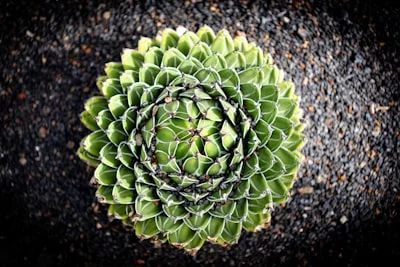
Commonly called hens and chicks, the plant forms tight, fleshy rosettes that multiply by sending out small offsets — the “chicks” — from a central mother plant, the “hen.” Each rosette stores water in its thick leaves, a survival adaptation for rocky, nutrient-poor mountain slopes where rain is unpredictable.
Here’s something most people don’t know: Sempervivum tectorum was historically planted on rooftops across Europe — “tectorum” literally means “of the roofs” — because people believed it protected homes from lightning. Charlemagne actually issued an edict in 812 CE ordering citizens to grow it on their rooftops. That’s a plant with a 1,200-year cultivation history. For more tips, check out our detailed article on Jasmine Plant Care Grow Guide.
According to Kew Gardens, there are over 40 recognised species and hundreds of cultivars within the Sempervivum genus, ranging from pale green to deep burgundy, silver-tipped to cobweb-covered. Whether you’re a beginner or an experienced collector, this plant rewards you generously.
What Makes Sempervivum Different From Other Succulents?
Most succulents are cold-tender. Echeveria, aloe, kalanchoe — beautiful plants, but frost means death. Sempervivum breaks every rule. It’s a monocarpic plant, which means each individual rosette flowers once and then dies — but the offsets it leaves behind carry on the colony indefinitely. That’s why it’s sometimes called the immortal plant. If you enjoy growing this plant, you might also find our guide on Allamanda Yellow Flower Care very useful.
Furthermore, sempervivum uses CAM (Crassulacean Acid Metabolism) photosynthesis, opening its stomata at night to conserve moisture. This adaptation makes it drought-tolerant as well as frost-tolerant — a rare dual superpower. As a result, it thrives where most other plants simply give up.
Sempervivum Plant Characteristics at a Glance
Before diving into sempervivum care winter hardy specifics, it helps to understand what this plant is — biologically and practically. The table below covers every essential characteristic, from root type to vastu direction, so you have a complete reference in one place.
Sempervivum Names Around the World
Sempervivum is known by dozens of names across cultures and languages. In most European countries, the common name reflects either its immortality, its rosette shape, or its old rooftop-planting tradition. The table below captures what people actually call this plant in 21 languages — not literal translations, but the real local names used by gardeners and herbalists in each region.
Sempervivum Care Winter Hardy: Key Growing Conditions
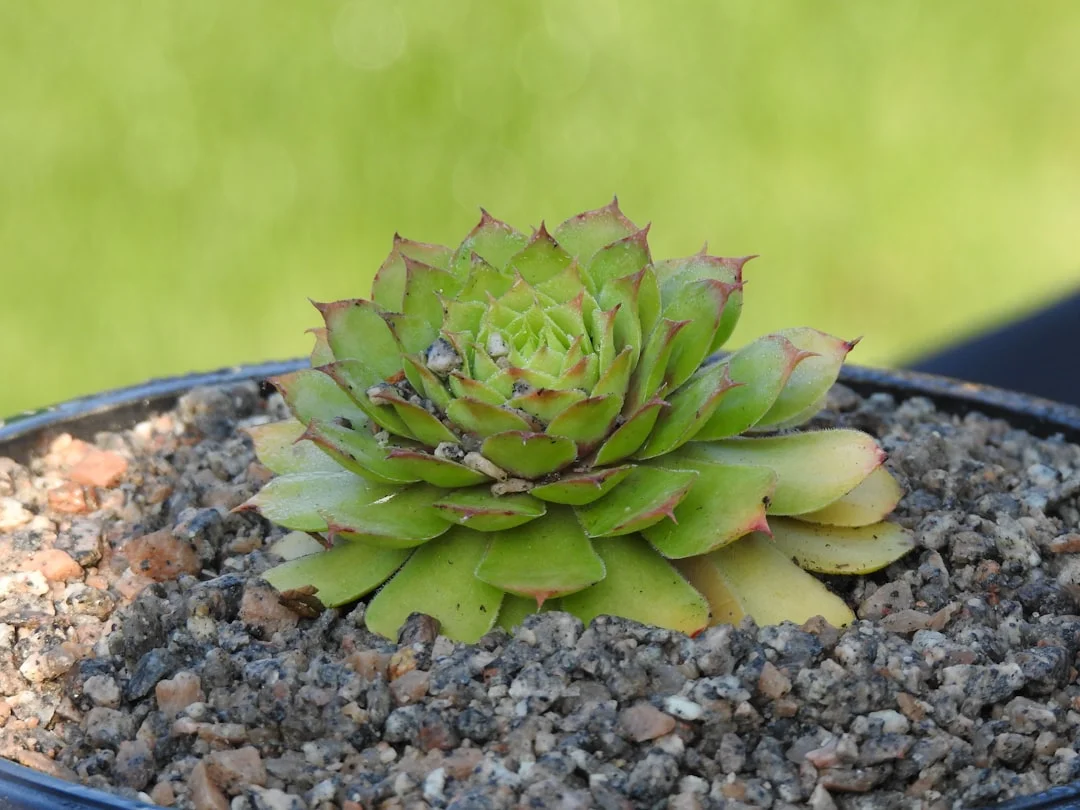
Understanding sempervivum care winter hardy growing starts with one fundamental insight: this plant evolved on rocky Alpine slopes where soil is thin, drainage is perfect, and sun is intense. Replicate those conditions — even loosely — and the plant thrives almost without any help.
The RHS rates Sempervivum tectorum as H7, meaning it’s hardy down to -20°C (-4°F) or below, making it one of the hardiest plants they classify. According to the USDA Plant Hardiness Zone Map, it performs reliably in zones 3 through 8, covering most of Canada, the northern US, all of the UK, most of northern and central Europe, and highland regions elsewhere.
In my experience, the plants that struggle most are the ones that get too much water in winter combined with poor drainage — the combination causes root rot far more reliably than any frost does. Frost alone? Sempervivum barely notices.
Climate matters when setting expectations. Gardeners in tropical regions like southern India, Malaysia, or northern Australia face the opposite challenge — it’s not cold that limits growth, it’s excessive heat and humidity. In those climates, sempervivum care winter hardy principles still apply, but the “winter” challenge becomes a summer challenge instead.
Growing Sempervivum in Tropical and Subtropical Climates
Growing sempervivum in Mumbai, Singapore, or Ho Chi Minh City is possible but requires specific adjustments. In these humid tropical zones, the plant needs afternoon shade to prevent heat scorch, and drainage becomes even more critical since humid air already provides moisture. Raised containers with terracotta pots and sharp grit work best.
That said, Sempervivum genuinely prefers cooler, drier conditions. If you’re in a climate that rarely dips below 25°C (77°F), treat it as an annual or a seasonal patio plant rather than a permanent landscape specimen. Many gardeners in Southeast Asia successfully grow sempervivum at elevations above 800m (2,600ft), where nights are noticeably cooler.
Growing Sempervivum in Temperate and Cold Climates
In the UK, US Pacific Northwest, Canada, and northern Europe, sempervivum care winter hardy growing is at its finest. These plants were made for exactly this climate. Plant them in well-draining soil in autumn, let winter do its thing, and watch them emerge in spring looking almost unchanged.
In continental climates like the US Midwest or central Europe, where winters are harsh and dry, sempervivum actually benefits from a light gravel mulch around the rosettes — not to warm them, but to prevent the freeze-thaw cycle from heaving roots out of the ground. This one tip saves a surprising number of plants each year.
Soil and Fertilizer for Sempervivum
Here’s the thing about sempervivum soil: it prefers poor soil. Genuinely poor soil. Rich, organic, moisture-retaining compost — the kind that makes most plants ecstatic — is actually harmful to sempervivum because it holds too much moisture around the roots.
The ideal mix is roughly 50% sharp grit or perlite and 50% low-nutrient compost or loam. You can also use a commercial cactus and succulent compost, which is widely available in the UK, US, Australia, and increasingly across Asia. Aim for a pH between 6.0 and 7.5 — slightly acidic to neutral.
In containers, the most important factor is drainage holes. Without them, water pools at the bottom and root rot follows within weeks. I always recommend placing a 2–3cm (1-inch) layer of gravel at the bottom of pots before adding soil mix.
Fertilizer? Keep it minimal. In my experience, a single light application of half-strength balanced fertilizer (like a 10-10-10 NPK formula) in early spring is all this plant ever needs. Feeding it more often produces lush, soft growth that’s more susceptible to fungal disease and frost damage — the opposite of what you want from a sempervivum care winter hardy plant.
DIY Sempervivum Soil Mix Recipe
Mix together: 2 parts coarse horticultural grit or perlite, 1 part standard potting compost, and 1 part coarse sand. If you’re in a rainy climate like the UK or US Pacific Northwest, increase the grit to 3 parts for even sharper drainage. In drier climates like California or the Middle East, you can edge slightly toward 1.5 parts compost without risk. This mix drains fast, stays airy, and keeps roots healthy through both wet winters and hot summers.
Watering Sempervivum: Less Is Always More
The internet tells you succulents need occasional watering. Experienced sempervivum gardeners know this plant often doesn’t need any watering at all once established outdoors in a temperate climate — rainfall is usually sufficient.
Have you ever noticed your sempervivum looking slightly puckered or wrinkled in late summer? That’s normal stress — and it means the plant is actively using its water reserves. It’s healthy. Water it at that point, and it’ll plump right back up within a day.
For outdoor plants in temperate climates: water once a week in summer during dry spells. In winter, stop watering almost entirely. Wet, cold soil is the leading cause of sempervivum death, not frost.
For container-grown plants indoors: water every 10–14 days in summer, allowing the soil to dry completely between waterings. In winter, reduce to once a month or even less.
The watering schedule varies significantly by climate. Gardeners in arid regions like the UAE, Arizona, or parts of Australia may need to water outdoor plants every 5–7 days during peak summer. Those in the rainy Pacific Northwest or Scotland may not water at all from October through April.
A quick tip here: always water at the base of the plant, never overhead. Water sitting in the centre of a rosette can cause crown rot, especially in cool weather. This is where many beginners go wrong.
Signs of Overwatering vs. Underwatering
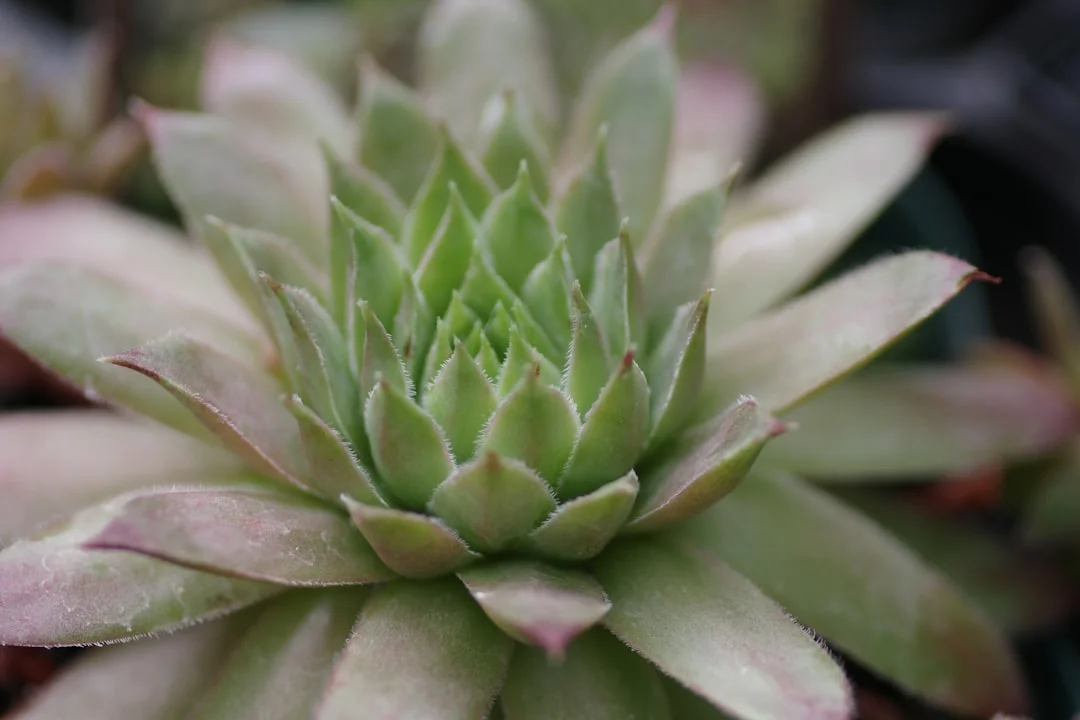
Overwatering signs: mushy, translucent leaves near the base, brown soft rot starting at the stem, leaves falling off with a gentle touch. These are urgent — remove the plant from its pot immediately, let roots dry for 48 hours, and replant in fresh dry mix.
Underwatering signs: shrivelled, thin, papery leaves across the whole rosette. This is far less dangerous. Simply water deeply once and the plant recovers quickly. In fact, sempervivum tolerates underwatering far better than overwatering — always err on the side of dry.
Sunlight Requirements: Full Sun Is Non-Negotiable
Sempervivum is a full-sun plant. Six or more hours of direct sunlight daily is the target — and the more sun it receives, the more vivid its colours become. Many varieties shift from green to deep red, purple, or bronze in response to strong sunlight, a pigment response called anthocyanin production.
In low-light conditions — say, a north-facing windowsill or a shaded corner — sempervivum doesn’t die immediately. Instead, it etiolates: the rosettes stretch outward and upward, lose their tight, compact form, and fade to a pale yellowish-green. It looks unhealthy because it is unhealthy.
For indoor growers, a south-facing windowsill (in the Northern Hemisphere) or a north-facing one (in the Southern Hemisphere) is essential. Alternatively, a grow light set to 14–16 hours per day during winter months maintains healthy growth in apartments and offices without natural light.
Outdoor gardeners in extreme climates need some nuance. In desert regions like Saudi Arabia, southern Spain, or inland Australia, midday sun above 40°C (104°F) can scorch even sempervivum. A little afternoon shade between noon and 3pm protects the leaves while still providing the morning sun the plant loves.
In cool, cloudy climates like northern Scotland or coastal British Columbia, maximise sun exposure by positioning plants on south-facing slopes, raised beds, or white-painted walls that reflect additional light.
Using Sempervivum's Colour Changes as a Health Monitor
Many gardeners don’t realise that sempervivum’s colour tells you exactly how it’s doing. Deep red or purple tones = excellent sun exposure and mild stress, which is healthy and beautiful. Bright uniform green = comfortable conditions, probably slightly too shaded. Pale, washed-out yellow-green = urgent need for more light or possible overwatering. Once you learn to read the colour, you’ll almost never need to guess whether your plant is happy.
Propagation: How to Multiply Your Collection for Free
One of the greatest joys of growing sempervivum is how enthusiastically it propagates itself. You don’t need any specialist skill, equipment, or hormone powders. The plant does the work — you just need to know when and how to help it along.
Sempervivum produces offsets, the small rosettes that emerge on short runners called stolons from the base of the mother plant. These chicks are genetically identical to the parent and ready to be separated once they’re about one-third the size of the mother rosette — typically after 4–8 weeks of attachment.
To propagate, gently snap or cut the stolon as close to the offset as possible. Allow the cut end to callous (dry out) for 24–48 hours before planting. Then press the offset lightly into a prepared gritty compost mix — no burying, no deep planting. Just surface contact. Water very lightly once, then leave it alone for two weeks while roots establish.
A community garden in Bristol, UK, reported propagating over 200 new sempervivum plants from a single original rosette over three growing seasons — all given away to local residents for free as part of a green rooftop project.
Leaf propagation, unlike with echeveria, doesn’t work reliably with sempervivum. Offsets are the way to go — and thankfully, a healthy mother plant produces them abundantly.
Step-by-Step Sempervivum Propagation Process
First, wait until the offset is at least 2–3cm (about 1 inch) in diameter. Next, use clean scissors or fingers to detach it from the stolon. Then, set the offset on a dry surface away from direct sun for 24–48 hours to callous. After that, place it on top of — not buried in — moist gritty compost. Finally, give it a light mist of water and place in a bright, warm spot. Once new roots appear (usually 2–3 weeks), treat it as an established plant and water normally.
Propagating Sempervivum in Different Climates
In temperate climates, spring and early summer are the best propagation times — soil is warm and growing energy is high. In tropical climates, cooler dry-season months (often November through February) offer better success rates. In arid regions, avoid propagating during peak summer heat; wait for the milder autumn window instead. Furthermore, sempervivum seeds can be sown, though germination is slow and seedlings take two years to mature — offsets are always the faster and easier choice for home gardeners.
Seasonal Care: Spring Through Winter
Sempervivum care winter hardy growing means adjusting your approach with the seasons — though thankfully, those adjustments are minimal. This is not a high-maintenance plant. However, understanding what the plant is doing in each season helps you avoid the handful of mistakes that actually cause problems.
In June (where we are right now in the Northern Hemisphere), sempervivum is in peak growing season. Rosettes are expanding, offsets are multiplying, and some mature plants may be sending up their single, dramatic flower spike — a sign that rosette is nearing the end of its life cycle. Don’t panic when this happens. The mother plant will die after flowering, but dozens of chick rosettes will fill the gap.
For Southern Hemisphere gardeners — in New Zealand, southern Australia, South Africa, and southern South America — June is the start of winter, the season when sempervivum goes dormant and requires minimal intervention.
Spring Care (March–May Northern Hemisphere / September–November Southern)
Spring is the most active season. Resume watering as temperatures rise above 5°C (41°F). Apply a single half-strength balanced fertilizer to container plants. Remove any dead outer leaves from winter. Repot any overcrowded containers and separate offsets that have filled their space. This is also the ideal season to plant new specimens outdoors, giving them a full growing season to establish before the next winter.
Summer Care (June–August Northern / December–February Southern)
In summer, watering frequency increases — especially in hot, dry climates. Watch for etiolation if plants are in containers near glass, as heat can build up. Remove spent flower stalks after the monocarpic rosette dies, and fill the gap with surrounding chicks. In tropical climates experiencing their wet season, ensure drainage is excellent to prevent root rot during extended rainfall.
Autumn and Winter Care
Autumn is the ideal time to plant sempervivum in temperate climates — roots establish through the cool months, and plants explode with growth in spring. Reduce watering significantly from October onwards. Remove dead leaves to prevent fungal issues. In very wet winter climates, consider a simple open-sided cloche or lean-to cover — not to protect from cold, but to reduce excessive moisture. Sempervivum care winter hardy growing genuinely requires almost nothing from you in winter — which is one of its greatest gifts.
Common Problems, Pests, and Diseases
Sempervivum is remarkably disease-resistant, but it’s not invincible. Most problems trace back to either too much water or too little light. Once you’ve solved those two issues, the plant becomes almost bulletproof.
Root rot is by far the most common killer. It’s caused by waterlogged soil — especially during winter — and shows up as blackened, mushy stems at the base. Treatment: remove affected tissue with sterile scissors, dust the wound with sulphur powder or cinnamon (a natural antifungal), allow to dry completely, and replant in fresh gritty mix.
Rust fungus occasionally appears as small orange or brown powdery spots on leaves. It’s more common in humid climates. Improve air circulation around the plants and avoid overhead watering. A copper-based fungicide spray resolves most cases within two applications.
Mealybugs appear as small white cottony clusters in the crevices between leaves. Remove them with a cotton swab dipped in 70% isopropyl alcohol, or spray with neem oil solution. Repeat weekly for three weeks to break the lifecycle.
Vine weevil grubs are a more serious pest in the UK and northern Europe specifically — they eat roots underground without any visible above-ground warning until the plant suddenly collapses. Inspect roots when repotting, and use a nematode soil drench (Steinernema kraussei) in late summer as a biological control.
Why Is My Sempervivum Turning Black?
Black discolouration starting at the base almost always means root rot from overwatering. Black that appears on leaf tips after frost can sometimes be normal cosmetic damage on the outer leaves — these dry and fall off naturally, leaving the healthy inner rosette untouched. If blackness is spreading inward through the rosette rapidly, that’s a fungal issue and needs urgent treatment. Act quickly — cut below the rot with sterile tools, callous the wound, and replant in dry mix.
Medicinal and Cultural Uses of Sempervivum
Sempervivum has a rich history in European folk medicine that stretches back over two millennia. The ancient Romans used crushed sempervivum leaves as a topical remedy for burns, insect stings, and skin inflammation — a use documented in Pliny the Elder’s Naturalis Historia (77 CE). The fresh gel from the leaves has a cooling, astringent quality similar in some ways to aloe vera.
In medieval European herbalism, sempervivum was used externally for earaches, warts, and corns. Nicholas Culpeper, the 17th-century English herbalist, described it as “cooling and binding” in his 1653 Complete Herbal, recommending it for fevers and skin conditions.
Modern phytochemical research has identified flavonoids, tannins, malic acid, and mucilage in Sempervivum tectorum leaves — compounds with documented anti-inflammatory and astringent properties. However, it’s important to note that clinical trials in humans remain limited, and sempervivum should not replace conventional medical treatment.
Importantly, while external use has a long folk tradition, internal consumption of sempervivum is not recommended without professional guidance. The plant is not classified as a food plant, and its internal safety profile has not been formally established by bodies like the WHO or EMA.
In terms of cultural significance, the rooftop planting tradition (hence the species name tectorum) was widespread from France to the Carpathian Mountains. In Alpine Switzerland, old farmhouses still have sempervivum growing on slate rooftops — a living connection to pre-modern European domestic culture.
Sempervivum and Ayurvedic or Traditional Medicine
Sempervivum tectorum is not a traditional Ayurvedic plant — it’s native to European mountain regions and doesn’t appear in classical texts like the Charaka Samhita or Sushruta Samhita. However, it has parallels with Ayurvedic cooling herbs used for pitta (heat) conditions, and some modern integrative practitioners in India have explored its topical cooling properties. The closest Ayurvedic analogue is ghritkumari (aloe vera), which shares the same cooling, gel-based soothing action for burns and skin irritation.
Frequently Asked Questions
How cold can Sempervivum survive? Is it truly winter hardy?
Yes — sempervivum care winter hardy growing is one of its most celebrated qualities. Sempervivum tectorum survives temperatures as low as -30°C (-22°F), earning an RHS H7 hardiness rating and USDA zone 3 classification. It handles hard frost, snow cover, and freeze-thaw cycles without damage. The one winter killer is not cold but wet: waterlogged soil during freezing temperatures causes root rot. Ensure excellent drainage and you'll find this plant genuinely needs no winter protection in most climates.
Can I grow Sempervivum indoors in a cold climate like Canada or northern Europe?
You can grow sempervivum indoors, but light is the critical factor. It needs a minimum of 6 hours of bright direct sunlight, so a south-facing windowsill (in the Northern Hemisphere) is essential. In dark northern winters — think Edmonton, Oslo, or Helsinki — a full-spectrum LED grow light running 14–16 hours daily is the most reliable solution. Without adequate light, the plant etiolates (stretches and loses its form). Watering indoors should be minimal in winter — roughly once a month — since indoor heating reduces humidity and the plant is dormant.
Is Sempervivum safe for pets and children?
Sempervivum tectorum is classified as non-toxic to dogs and cats by the ASPCA, making it one of the safer succulent choices for pet-owning households. It's also safe for children to handle. The leaves may cause mild skin irritation in very sensitive individuals due to naturally occurring malic acid, but this is generally not a concern. Internal consumption of large quantities is not recommended as it hasn't been formally assessed for safety — but incidental contact or small accidental ingestion is considered low-risk.
How do I grow Sempervivum in containers successfully?
Container growing requires three non-negotiables: drainage holes, gritty compost mix, and full sun. Use a terracotta or unglazed ceramic pot — these breathe and dry out faster than plastic, which is exactly what sempervivum needs. Fill with 50% sharp grit or perlite and 50% low-nutrient compost. Water deeply but infrequently in summer, and reduce to near-zero in winter. Repot every 2–3 years as offset colonies fill the container. Sempervivum thrives in shallow troughs, hypertufa bowls, and even reclaimed colanders with adequate drainage.
Why is my Sempervivum stretching and losing its tight rosette shape?
This is called etiolation — the plant is reaching for light it isn't getting. Sempervivum needs a minimum of 6 hours of direct sunlight daily to maintain its compact, tight rosette form. Move it to a sunnier location immediately. Unfortunately, stretched growth won't return to compact shape on its own — but new offsets produced in the better-lit location will grow correctly. You can trim the stretched rosette back to improve aesthetics while the plant adjusts.
Can Sempervivum grow in tropical climates like Southeast Asia or southern India?
Growing sempervivum in hot, humid tropical climates is challenging but possible with the right approach. The plant prefers cool, dry conditions and struggles with sustained temperatures above 35°C (95°F) combined with high humidity. In tropical zones, grow it in porous terracotta containers with excellent drainage, provide afternoon shade, and ensure strong airflow to reduce fungal risk. Elevations above 800m (2,600ft) — such as hill stations in India or mountain towns in Southeast Asia — provide more suitable conditions. Treat it as a seasonal or short-term plant in lowland tropical settings.
When and why do Sempervivum plants flower and die?
Sempervivum is monocarpic, meaning each individual rosette flowers once in its lifetime and then dies. This typically happens when a rosette is 3–4 years old. The flowering spike grows 15–30cm tall with star-shaped pink or red flowers — it's actually quite beautiful. After the seeds set, the rosette dies back. This is completely normal. The plant compensates by producing numerous offsets (chicks) before and during flowering, so the overall colony continues growing vigorously. Simply remove the dead rosette and allow the surrounding chicks to fill the space.
How do I practice sempervivum care winter hardy growing for green roofs?
Sempervivum is one of the most popular plants for green roof projects globally, precisely because sempervivum care winter hardy growing requires so little maintenance. Use a specialist green roof substrate — typically a 6–10cm (2.4–4in) layer of lightweight expanded clay aggregate mixed with low-nutrient compost. Plant rosettes 10–15cm (4–6in) apart in late summer or autumn, allowing roots to establish before winter. No irrigation is usually needed once established in temperate climates. Sempervivum tolerates the thin, hot, dry conditions of a rooftop better than almost any other plant — just as it has since Charlemagne's time.
Final Thoughts
Sempervivum tectorum is one of the most rewarding plants any gardener can grow — beginner or expert, tropical or arctic, container or open ground. It asks for almost nothing: sharp drainage, full sun, and the restraint to put the watering can down. In return, it gives you year-round structure, extraordinary cold hardiness, multiplying colonies, and a connection to one of the oldest cultivation traditions in European history.
Mastering sempervivum care winter hardy growing really comes down to working with the plant’s nature rather than against it. Give it the poor, gritty soil it evolved for. Let winter be winter — this plant needs no shelter, no wrapping, no fussing. Use its seasonal colour shifts as your health monitor. Harvest offsets freely and share them widely.
Whether you’re building a green roof in Berlin, filling a trough in Bristol, creating a rock garden in British Columbia, or experimenting on a cool balcony in Bangalore — sempervivum will reward you. Start with one rosette. By next year, you’ll have twenty. That’s the magic of the plant that lives forever.

