
⏱ 20 min read
Table of Contents
- What Is the Parijat Tree?
- Why Every Season Matters for Parijat
- Preparing Soil and Site for Planting
- Watering Needs Through the Year
- Fertilizing for Maximum Blooms
- Pest and Disease Alert
- Medicinal and Traditional Benefits
- Growing Parijat in Containers and Cold Climates
- Recovery and Pruning After Stress
- Cultural and Spiritual Significance
If you’ve ever caught the heady fragrance of night-blooming jasmine drifting through a garden at dusk, you’ve likely met the parijat tree. Known scientifically as Nyctanthes arbor-tristis, this small flowering tree is treasured across continents for its perfumed white blossoms with bright orange centres. Understanding parijat tree benefits planting starts with knowing why this sacred plant has been cultivated for over 3,000 years — from Vedic gardens in India to modern temperate greenhouses in the UK and US. In my experience, few trees offer such a rich blend of beauty, fragrance, and medicinal value. The parijat tree benefits planting offers include air purification, traditional healing uses, and stunning night-blooming flowers that drop like a fragrant carpet by dawn. Whether you garden in tropical Mumbai, sunny California, breezy Sydney, or a cool London conservatory, this guide will walk you through everything you need to grow this remarkable tree successfully. If you enjoy growing this plant, you might also find our guide on how to grow jasmine in containers very useful.
Quick Highlights
- Discover why parijat blooms only at night and drops fresh flowers by morning
- Learn climate-specific planting tips for tropical, temperate, Mediterranean, and arid zones
- Explore Ayurvedic and modern medicinal benefits backed by global research
- Master watering, fertilizing, and pest control across all four seasons
- Get safe, practical advice for growing parijat in containers indoors
- Understand Vastu, Feng Shui, and cultural symbolism across world traditions
Plant Characteristics at a Glance
| Common Name | Parijat, Night-flowering Jasmine, Harsingar, Coral Jasmine |
| Scientific Name | Nyctanthes arbor-tristis |
| Family | Oleaceae |
| Origin | Indian subcontinent, Himalayan foothills, Southeast Asia |
| Habitat | Tropical and subtropical forests, gardens, temple grounds |
| Plant Type | Deciduous flowering tree or large shrub |
| Indoor Plant | Yes, in cold climates when grown in containers |
| Outdoor Plant | Yes, ideal in USDA zones 10–12 or RHS H1c |
| Leaves | Opposite, ovate, rough-textured, 6–12 cm long, deep green |
| Flowers | Small white petals with orange-red tube, night-blooming, fragrant |
| Flowering Season | August to December (Northern Hemisphere); March to May (Southern) |
| Fruit | Flat, heart-shaped brown capsules, 2 cm wide |
| Seeds | 1–2 seeds per capsule, brown, easily germinated |
| Roots | Moderate, fibrous, non-invasive system |
| Height | 10–25 feet (3–8 metres); 6–8 feet in containers |
| Growth Rate | Moderate; 30–60 cm per year |
| Light Requirements | Full sun to partial shade; 5–6 hours of direct light |
| Soil Requirements | Well-drained sandy loam, pH 5.6–7.5 |
| Water Requirements | Moderate; allow top 2 inches to dry between watering |
| Temperature Requirements | 18–35°C (64–95°F); brief tolerance to 5°C (41°F) |
| Humidity Requirements | Moderate to high (50–70%) |
| Propagation | Seeds, semi-hardwood cuttings, layering |
| Uses | Ornamental, medicinal, spiritual, fragrance, natural dye |
| Medicinal Properties | Anti-inflammatory, antimalarial, hepatoprotective, immunomodulatory |
| Toxicity | Generally safe in small doses; avoid during pregnancy; mildly toxic to pets in large amounts |
| Cultural Significance | Sacred in Hinduism; symbolic in Buddhism; valued in Ayurveda |
| Common Pests | Mealybugs, scale insects, aphids, whiteflies |
| Common Diseases | Leaf spot, powdery mildew, root rot |
| Special Care Tips | Protect from strong winds; mulch in winter; avoid waterlogging |
| Cultural Practices | Flowers offered in temples; used in Durga Puja and Krishna worship |
| Vastu Direction | Northeast or East of the property for prosperity and harmony |
Parijat tree benefits planting Names in Different Languages
| English | Night-flowering Jasmine / Coral Jasmine |
| Mandarin Chinese | 夜花 (Yè huā) |
| Spanish | Jazmín de noche |
| Hindi | पारिजात (Parijat) / हरसिंगार (Harsingar) |
| Gujarati | પારિજાત (Parijat) |
| Arabic | ياسمين الليل (Yasmin al-layl) |
| Bengali | শিউলি (Shiuli) |
| Portuguese | Jasmim-da-noite |
| Russian | Никтантес (Niktantes) |
| Japanese | ヤコウカ (Yakouka) |
| Punjabi | ਹਰਸਿੰਗਾਰ (Harsingar) |
| German | Nachtjasmin / Trauerbaum |
| Javanese | Sriganda |
| Korean | 야래향 (Yaraehyang) |
| French | Jasmin de nuit / Arbre triste |
| Telugu | పగడమల్లి (Pagadamalli) |
| Marathi | पारिजातक (Parijatak) |
| Tamil | பவளமல்லி (Pavalamalli) |
| Urdu | ہرسنگار (Harsingar) |
| Turkish | Gece yasemini |
| Vietnamese | Hoa lài đêm |
What Is the Parijat Tree?
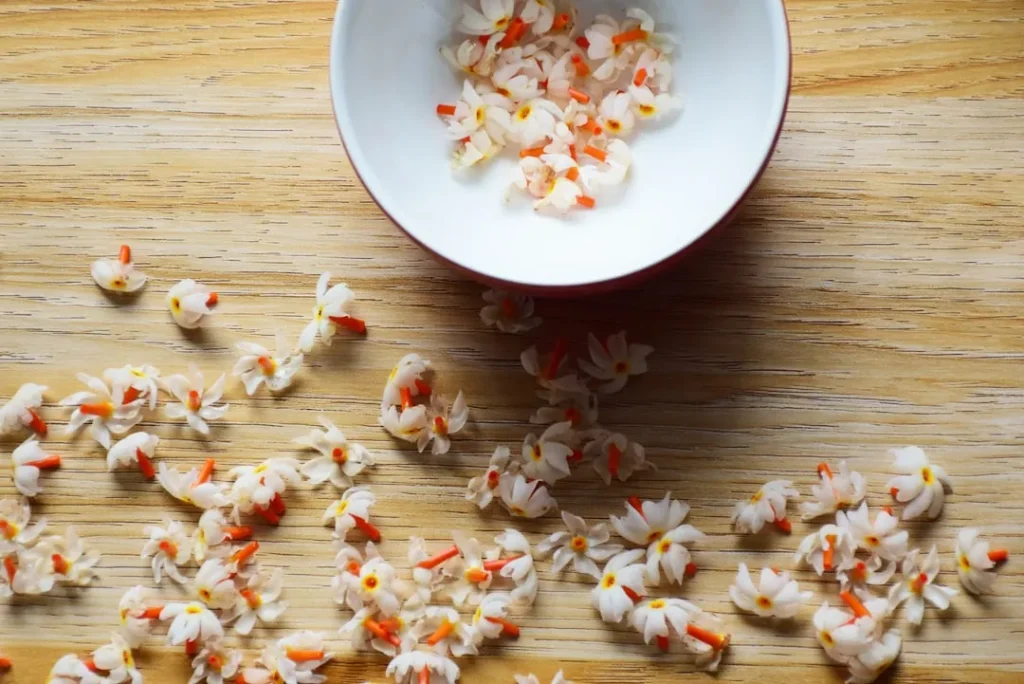
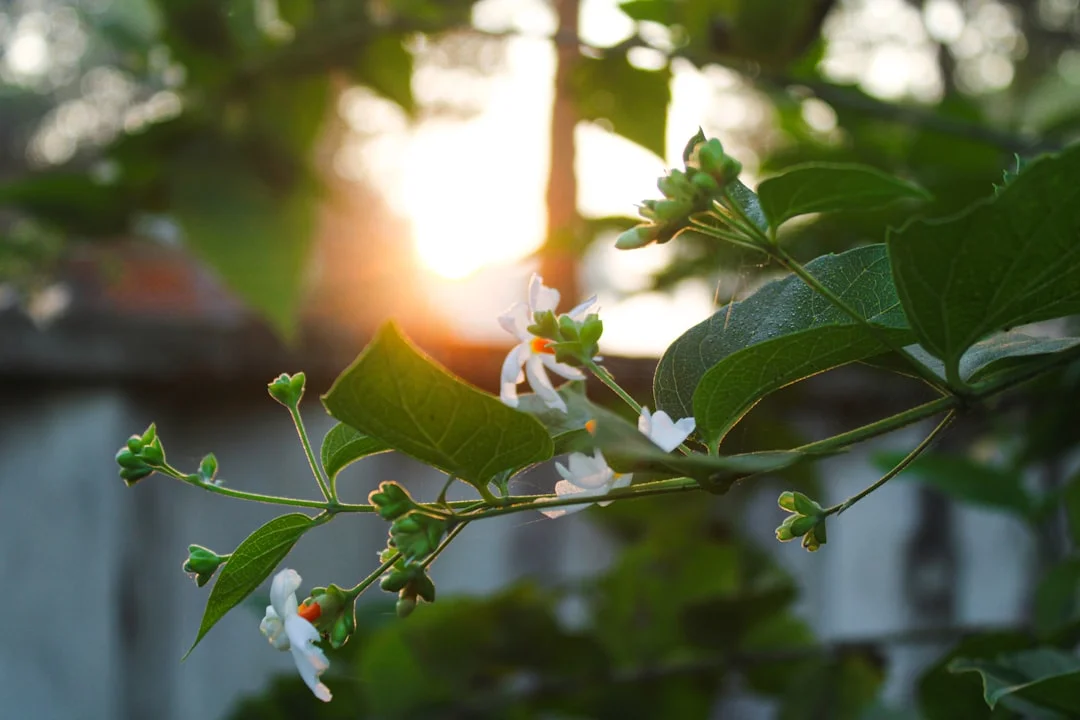
The parijat tree, Nyctanthes arbor-tristis, is a small deciduous tree native to South Asia. Its Latin name translates beautifully to “sad tree of the night” — a nod to its habit of shedding flowers at sunrise. The tree typically grows 10 to 25 feet tall (3 to 8 metres) with rough, greyish bark and soft, hairy leaves. Its flowers are unmistakable: tiny white petals around a glowing orange-red tube. They bloom only after sunset, releasing a sweet, jasmine-like fragrance that travels across whole gardens. By morning, the ground beneath the tree looks like it’s been dusted with stars. According to Kew Gardens, the species belongs to the Oleaceae family, making it a distant cousin of olives and lilacs. Many gardeners find it surprisingly hardy once established, though it prefers warm conditions.
Botanical Classification and Origin
Parijat originated in the foothills of the Himalayas and spread across India, Nepal, Thailand, and parts of Southeast Asia. It’s also called night-flowering jasmine, coral jasmine, or harsingar. The tree is mentioned in ancient Sanskrit texts like the Vishnu Purana, where it’s described as a celestial tree brought from heaven. Today, you’ll find it in botanical gardens from Singapore to Florida. Wikipedia notes that the plant has naturalised in tropical regions of Africa and the Caribbean, where it thrives in USDA zones 10–12 and tolerates light frost briefly. Many gardeners who grow this plant also love to read about best night-blooming fragrant flowers.
Quick Identification Guide
Spotting a parijat is easy once you know the signs. Look for opposite leaves with a sandpaper-like texture, slim grey branches, and clusters of 5–8 tiny white flowers per stem. The orange tube at each flower’s centre is the giveaway — no other common garden tree has this combination. In fact, the orange dye from these tubes was historically used to colour Buddhist monks’ robes in Thailand. If you enjoy growing this plant, you might also find our guide on how to grow jasmine in containers very useful.
Why Every Season Matters for Parijat
Each season brings different needs for this remarkable tree. The parijat tree benefits planting in spring most heavily, but every month plays a role in its long-term health. In tropical climates like India and Southeast Asia, parijat blooms from August to December. However, in temperate zones such as the UK or US Pacific Northwest, container-grown trees may bloom later, often from September into November. Meanwhile, gardeners in Mediterranean regions like southern California or Spain often see flowering from late summer through autumn. Here’s the thing — parijat responds to day length and temperature cues. Cooler nights below 20°C (68°F) trigger heavier blooming. That’s why you’ll see the most spectacular displays during the transition from monsoon to winter in India, or from summer to autumn in temperate zones. For more tips, check out our detailed article on Allamanda Yellow Flower Care.
Spring and Summer Care
Spring is when the parijat tree benefits planting most directly. New growth bursts forth as temperatures climb above 18°C (64°F). Furthermore, summer brings the tree’s main growth phase. In hot regions like Dubai or Phoenix, provide afternoon shade and deep watering. Gardeners in cooler regions like Britain should move container plants outdoors once night temperatures stay above 12°C (54°F). The RHS classifies similar tender shrubs as H1c, meaning they need protection from frost.
Autumn and Winter Adjustments
Autumn is bloom time. As nights cool, flowers appear in waves. Don’t worry if leaves yellow slightly — that’s normal. Winter requires the biggest changes. In tropical zones, simply reduce watering. In temperate or continental climates, bring potted trees indoors before the first frost. Place them near a south-facing window where temperatures stay above 10°C (50°F). For more tips, check out our detailed article on Hibiscus Plant Care India.
Preparing Soil and Site for Planting
Site preparation makes or breaks your success. The parijat tree benefits planting depend heavily on getting the soil right from day one. This tree loves well-drained, slightly sandy loam with a pH between 5.6 and 7.5. Heavy clay is its enemy — roots rot quickly in waterlogged ground. First, choose a spot with at least 5–6 hours of direct sun. Next, dig a hole twice as wide and just as deep as the root ball. Then mix the excavated soil with one-third compost and a handful of bone meal. Many gardeners find that adding coco coir or perlite improves drainage in heavy soils. For container growing, use a mix of two parts potting soil, one part coarse sand, and one part compost.
Choosing the Right Location
Pick a sheltered spot away from strong winds. Parijat branches are brittle and snap easily during storms. In tropical gardens, plant near a fence or wall that offers afternoon shade. In cooler climates like the UK or Canada, choose the warmest microclimate in your garden — typically a south or west-facing wall. Vastu tradition recommends planting parijat in the northeast or east of your property, while Feng Shui practitioners favour the eastern “family” sector.
Soil Amendments for Different Climates
Arid zone gardeners in Australia, Israel, or the southwestern US should add extra organic matter and mulch heavily. Conversely, tropical gardeners in Kerala or Bali need to focus on drainage — raised beds work wonders. For temperate container growers, a quality peat-free potting mix with added grit gives ideal results. A quick tip here: always test drainage by filling the planting hole with water. If it drains in under an hour, you’re good to go.
Watering Needs Through the Year
Water management is where most people go wrong. Parijat hates wet feet but also dislikes drought. The trick is consistent moisture without sogginess. Young trees need watering twice a week during their first year. After that, established trees only need water when the top 2 inches (5 cm) of soil feel dry. In hot climates, that might mean every 4–5 days. In cooler temperate zones, once a week is usually enough. During winter dormancy, cut back drastically — once every 2–3 weeks is plenty.
Signs of Over and Under-Watering
Yellow leaves that drop suddenly usually mean too much water. Crispy brown leaf edges signal drought stress. The good news is parijat recovers quickly from mild underwatering. However, root rot from overwatering can be fatal. Always use pots with drainage holes and never let the saucer sit full of water. In humid regions like Singapore or Mumbai during monsoon, reduce watering by half.
Fertilizing for Maximum Blooms
Feeding your tree right unlocks its full flowering potential. The parijat tree benefits planting respond beautifully to balanced organic feeding. In spring, apply a slow-release NPK 10-10-10 fertilizer at the rate of 2 tablespoons per square metre. Then switch to a bloom-boosting formula like NPK 5-10-10 in late summer to encourage flowers. Organic options work wonderfully too — well-rotted cow manure, vermicompost, or banana peel tea all support healthy growth. According to research published on PubMed, Nyctanthes arbor-tristis shows enhanced flowering when phosphorus levels are optimised.
Organic vs Synthetic Feeding
I generally recommend organic for backyard gardeners. Synthetic fertilizers work faster but can burn roots if overdone. Compost tea applied monthly during the growing season feeds soil microbes too. For container plants, dilute liquid seaweed fertilizer to half strength and apply every two weeks from April to September (or October to March in the Southern Hemisphere).
Seasonal Feeding Schedule
First, feed in early spring as buds swell. Next, apply a second dose in early summer. Then a final bloom-boost application in late summer. After that, stop feeding completely through autumn and winter. Many gardeners make the mistake of feeding year-round, which stresses the tree and reduces blooming.
Pest and Disease Alert
Parijat is generally pest-resistant, but a few pests do cause trouble. Watch out for mealybugs, scale insects, aphids, and occasionally whiteflies. Fungal issues like leaf spot and powdery mildew can appear during humid weather. The good news is most problems are easily controlled with simple, eco-friendly methods.
Common Pests and Natural Remedies
For mealybugs and scale, dab affected areas with a cotton swab dipped in 70% isopropyl alcohol. Aphids respond well to a strong jet of water or neem oil spray (5 ml per litre of water). Neem oil is widely available globally and approved for organic gardening by the USDA. Apply in the evening to avoid leaf burn.
Disease Prevention Tips
Good airflow prevents most fungal issues. Prune crowded branches and avoid wetting leaves when watering. If powdery mildew appears, spray with a milk solution (1 part milk to 9 parts water) every 7 days. For leaf spot, remove infected leaves and apply a copper-based fungicide. Importantly, never compost diseased material.
Medicinal and Traditional Benefits
This is where parijat truly shines. Few trees offer such a wide medicinal profile. The parijat tree benefits planting include access to a natural pharmacy at your doorstep. In Ayurveda, every part — leaves, flowers, bark, seeds — has documented uses. The Ayush Ministry recognises Nyctanthes arbor-tristis as an important medicinal plant for treating fevers, joint pain, and skin conditions. Modern research from NIH has confirmed anti-inflammatory, antimalarial, and hepatoprotective properties.
Ayurvedic Uses
Traditional Ayurvedic texts including the Charaka Samhita describe parijat leaf decoction as a remedy for sciatica and arthritis. The flowers are used in cooling teas. Folk practitioners across India still recommend 5–10 fresh leaves boiled in water as a daily tonic during chikungunya or dengue recovery. However, always consult a qualified practitioner before using medicinally. Pregnant women should avoid parijat entirely.
Modern Research Findings
Recent studies show parijat extracts have promising activity against liver toxicity, inflammation, and certain parasites. Western herbalism doesn’t traditionally use this plant, but interest is growing. Results may vary, and self-medicating is never recommended. That said, the tree’s safety profile in moderate doses is well-established in centuries of traditional use.
Growing Parijat in Containers and Cold Climates
You don’t need a tropical garden to enjoy this tree. Container growing works beautifully if you follow a few rules. Choose a pot at least 18 inches (45 cm) wide with excellent drainage. Use a free-draining mix and place the container where it gets morning sun and afternoon shade.
Indoor Care for Cold Climate Gardeners
In Canada, the UK, or northern Europe, parijat must overwinter indoors. Place the pot near a bright south-facing window. Maintain humidity around 50–60% using a pebble tray or humidifier. Stop fertilizing from November to February. Water sparingly. The tree may drop most leaves indoors — that’s normal. Fresh growth returns in spring.
Repotting and Pruning Containers
Repot every 2–3 years in early spring. Trim roots by one-third to prevent the tree from becoming root-bound. Prune lightly after flowering to maintain shape. Containers limit final tree size to around 6–8 feet (2 metres), which actually makes parijat manageable as a patio specimen anywhere in the world.
Recovery and Pruning After Stress
Trees stressed by frost, drought, or transplant shock can usually bounce back. First, identify the cause — overwatering, cold damage, or pest infestation. Then trim away dead wood with clean, sharp secateurs. Apply a thin layer of compost mulch around the base, keeping it away from the trunk. Many gardeners find that a weak seaweed solution helps revive struggling trees within 2–3 weeks.
Annual Pruning Routine
Prune parijat in late winter or very early spring before new growth starts. Remove crossing branches, dead wood, and any inward-growing stems. Aim for an open vase shape that lets light into the centre. Avoid heavy pruning — parijat blooms on current-season wood, so cutting too late removes flower buds.
Cultural and Spiritual Significance
Parijat carries deep meaning across cultures. In Hindu mythology, it’s the celestial tree of Lord Krishna and Indra’s heaven. Thai Buddhists used its orange flower tubes to dye monks’ robes. In Bengal, fallen parijat flowers are gathered at dawn for temple offerings. Even in Western gardens, the tree is increasingly grown as a conversation piece and a symbol of grace. Vastu places it in the northeast for prosperity, while Feng Shui associates it with the wood element and family harmony.
Symbolism Across World Traditions
The parijat represents love, sacrifice, and divine grace. Folk songs in India tell of celestial origins. Modern flower arrangers in Japan and Europe value parijat for its delicate fragrance and unique drop-pattern blooms. Whether you grow it for beauty, medicine, or spiritual reasons, this tree rewards every gardener who gives it a chance.
Frequently Asked Questions
Can I grow Parijat indoors in a cold climate like the UK or Canada?
Yes, you can. Grow parijat in a large container (at least 18 inches wide) with free-draining soil. Place it near a bright south-facing window where temperatures stay above 10°C (50°F). During winter, reduce watering and stop fertilizing completely. The tree may drop most of its leaves indoors — don't panic, this is normal. Fresh growth returns in spring once light levels improve. Move the pot outdoors once night temperatures stay above 12°C (54°F).
Is Parijat safe for pets like cats and dogs?
Parijat is considered mildly toxic to pets in large quantities. The leaves contain compounds that can cause mild digestive upset, drooling, or vomiting if eaten in volume. However, casual contact or accidental nibbling rarely causes serious harm. Keep curious puppies and kittens away from fallen flowers and leaves. If your pet eats a significant amount, contact your vet immediately. Many gardeners with pets simply place container-grown parijat on elevated patios or balconies.
How long does it take a Parijat tree to bloom after planting?
Trees grown from cuttings typically bloom in 2–3 years, while seed-grown trees may take 4–6 years to flower. Understanding parijat tree benefits planting timing helps set realistic expectations. Container-grown trees may bloom slightly later than ground-planted ones because of restricted root growth. Once mature, parijat blooms reliably each year from late summer through early winter. Patience is rewarded — a well-established tree produces thousands of fragrant flowers every season for decades.
What are the main parijat tree benefits planting offers for the garden?
The parijat tree benefits planting brings include stunning night-blooming flowers, sweet evening fragrance that scents the whole garden, attraction of pollinators like moths and bats, natural air purification, and a regular supply of edible flowers for teas and offerings. Furthermore, the tree provides medicinal leaves used in Ayurveda for joint pain and immunity support. It's also a symbol of grace and good fortune in many cultures, making it both beautiful and meaningful.
Why is my Parijat not flowering?
Several reasons could explain this. Insufficient sunlight is the most common — parijat needs at least 5 hours of direct sun daily. Over-fertilizing with nitrogen-heavy feeds also pushes leafy growth at the expense of flowers. Too much pruning, particularly in summer, removes flower buds. Young trees simply need more time. Try switching to a phosphorus-rich bloom booster in late summer, move the tree to a sunnier spot, and avoid pruning after July. Patience and the right care usually solve the problem.
How do I grow Parijat in containers on a balcony or patio?
Choose a container at least 18 inches (45 cm) wide with multiple drainage holes. Use a mix of two parts quality potting soil, one part coarse sand, and one part compost. Place it where it gets morning sun and afternoon shade. Water when the top 2 inches of soil feel dry. Feed monthly during the growing season with a balanced liquid fertilizer. Repot every 2–3 years. Container parijat stays manageable at 6–8 feet, making it perfect for apartment gardeners in any climate.
When is the best time to plant a Parijat tree?
Spring is ideal — March to May in the Northern Hemisphere, or September to November in the Southern Hemisphere. This timing gives roots a full growing season to establish before winter. In tropical regions, you can plant year-round except during peak monsoon. Cold-climate gardeners should plant container specimens after the last frost. Avoid planting in extreme heat or cold.
Can I use Parijat leaves and flowers medicinally at home?
Yes, but with caution. Traditional Ayurvedic use includes boiling 5–10 fresh leaves in water as a tea for joint pain or fever support. Flowers can be infused for a calming bedtime tea. However, always consult a qualified healthcare practitioner before using parijat medicinally, especially if you're pregnant, breastfeeding, on medications, or treating a child. The Ayush Ministry recognises it as a medicinal plant, but self-medication isn't recommended. Results may vary, and quality of plant material matters greatly.
Final Thoughts
The parijat tree benefits planting offers go far beyond just beautiful flowers. From its sacred place in ancient texts to its proven medicinal uses, from its incredible night-blooming fragrance to its surprising adaptability across climates, this small tree truly is one of the garden world’s hidden treasures. Whether you garden in tropical Mumbai, sunny Sydney, breezy California, or a chilly London conservatory, parijat can find a home with you. Start with healthy soil, give it sunshine, water carefully, and feed seasonally. In return, you’ll get decades of fragrant blossoms, traditional medicine at your fingertips, and a living link to thousands of years of human history. Plant one this season and watch the magic unfold each evening as those tiny white flowers open and perfume your world. The journey is well worth taking — and your future self will thank you for it.

