
⏱ 34 min read
Table of Contents
- What Is Aloe Vera? A Plant That Has Stood the Test of Time
- How to Care for Aloe Vera: The Core Essentials at a Glance
- Sunlight Requirements for Aloe Vera in Every Climate
- Watering Aloe Vera: The Most Misunderstood Rule
- Soil and Fertilizer: Getting the Foundation Right
- How to Grow Aloe Vera Indoors and Outdoors
- How to Propagate Aloe Vera from Pups and Leaf Cuttings
- Common Aloe Vera Problems and How to Fix Them
- Seasonal Care for Aloe Vera: Month-by-Month Tips
- Medicinal and Everyday Uses of Aloe Vera
- Safety, Toxicity, and Contraindications
Learning how to care for aloe vera is one of the best decisions any plant lover can make. This ancient succulent has survived deserts, monsoons, and everything in between — yet millions of gardeners still manage to kill it within months. Here’s the counterintuitive truth: aloe vera dies not from neglect, but from too much love. Overwatering is responsible for the vast majority of aloe deaths worldwide, and it happens everywhere from humid Mumbai apartments to cool London flats. Many gardeners who grow this plant also love to read about Seed Germination Tips Faster India.
Knowing how to care for aloe vera correctly means understanding a plant that has thrived on six continents for over 6,000 years. According to Kew Gardens, Aloe barbadensis is among the most widely cultivated succulent species on earth — and for good reason. It demands almost nothing, gives back enormously, and adapts to an extraordinary range of climates.
By the end of this guide, you’ll understand exactly why your previous attempts may have failed — and precisely what to do differently. Whether you’re growing on a windowsill in Toronto, a balcony in Singapore, or a sun-drenched terrace in Marrakech, this guide covers every climate, every scenario, and every question you’ll have.
Quick Highlights
- Discover the single biggest mistake that kills aloe vera in every climate — and how to avoid it
- Master watering, sunlight, and soil requirements with specific measurements for tropical, temperate, and arid zones
- Learn propagation techniques that give you free plants from a single mother aloe
- Understand the scientifically proven medicinal benefits referenced by NIH and Ayurvedic texts
- Identify and fix the 5 most common aloe problems before they become fatal
- Follow seasonal care tips tailored for June and every other month of the year
Plant Characteristics at a Glance
| Common Name | Aloe Vera |
| Scientific Name | Aloe barbadensis Miller |
| Family | Asphodelaceae (formerly Liliaceae) |
| Origin | Arabian Peninsula; naturalised across North Africa, Mediterranean, Asia, and the Americas |
| Habitat | Arid and semi-arid regions, rocky slopes, sandy soils; sea level to 1,500m altitude |
| Plant Type | Stemless, evergreen succulent perennial |
| Indoor Plant | Yes — excellent indoor plant in all climates; thrives on bright windowsills |
| Outdoor Plant | Yes — outdoors year-round in USDA Zones 9–11 (above 0°C / 32°F); container plant elsewhere |
| Leaves | Thick, fleshy, lance-shaped; grey-green to bright green with serrated margins; 30–60 cm (12–24 in) long; gel-filled interior |
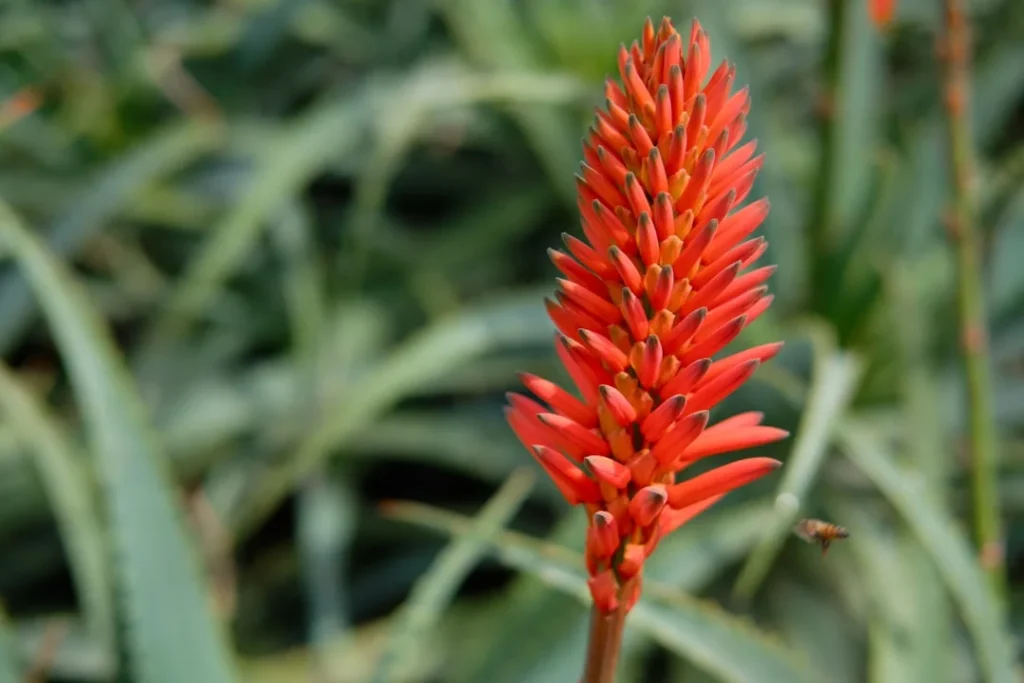
| Flowers | Tubular, yellow to orange-red flowers on tall erect spikes (30–90 cm / 12–35 in); attractive to bees and sunbirds |
| Flowering Season | Late winter to early spring (January–March in Northern Hemisphere); plant must be 3–4 years old to flower |
| Fruit | Dry, 3-lobed capsule containing flattened seeds; rarely set in cultivation |
| Seeds | Flat, winged seeds; viable but slow to germinate (2–4 weeks at 21–27°C / 70–80°F) |
| Roots | Shallow, fibrous root system; spreads laterally rather than deeply; sensitive to waterlogging |
| Height | 60–100 cm (2–3 ft) for leaves; flower spikes up to 90 cm (3 ft); spread 60–90 cm (2–3 ft) |
| Growth Rate | Slow to moderate — typically 10–20 cm (4–8 in) of new leaf growth per year under good conditions |
| Light Requirements | Full sun to bright indirect light; minimum 6 hours daily; avoid deep shade; can scorch in reflected heat above 45°C (113°F) |
| Soil Requirements | Sandy, fast-draining cactus/succulent mix; pH 6.0–7.0; avoid water-retentive soils or peat-heavy mixes |
| Water Requirements | Infrequent; soak and dry method; every 14–21 days in summer, every 4–6 weeks in winter; never allow roots to sit in water |
| Temperature Requirements | Optimal: 15°C–32°C (60°F–90°F); tolerates up to 40°C (104°F) in good drainage; frost-tender below 0°C (32°F) |
| Humidity Requirements | Low to moderate (30–50%); tolerates dry indoor air well; susceptible to fungal issues in high humidity with poor ventilation |
| Propagation | Primarily by pup (offset) division; also by seed; leaf cuttings unreliable due to high gel content |
| Uses | Topical skin care (burns, sunburn, wounds); cosmetic ingredient; Ayurvedic and TCM medicine; air purifying; ornamental; food industry (aloe juice) |
| Medicinal Properties | Wound healing (acemannan polysaccharides); anti-inflammatory; antimicrobial; laxative (aloin in latex); immunomodulatory; antioxidant (vitamins C, E, beta-carotene) |
| Toxicity | Mildly toxic to dogs and cats (ASPCA); latex layer irritant for sensitive humans; avoid internal use during pregnancy; consult doctor if on medications |
| Cultural Significance | Known as 'Plant of Immortality' in ancient Egypt; revered as Kumari in Ayurveda; documented in Greek, Arab, and Chinese medicine for 4,000+ years; grown in homes globally for good luck and health |
| Common Pests | Mealybugs, scale insects, spider mites, aphids, fungus gnats (from overwatered soil) |
| Common Diseases | Root rot (Phytophthora spp. from overwatering); aloe rust (Phakopsora pachyrhizi); leaf spot; powdery mildew in cool damp conditions |
| Special Care Tips | Never let the plant sit in water; always use pots with drainage holes; drain aloin latex before using gel medicinally; avoid repotting in winter |
| Cultural Practices | In many cultures (Middle East, South Asia, Caribbean), aloe is hung above doorways for protection; given as housewarming gifts in Mexico and Greece |
| Vastu Direction | North or east-facing placement recommended in Vastu Shastra for health, prosperity, and positive energy; avoid south-west placement |
How to care for aloe vera Names in Different Languages
| English | Aloe Vera / Burn Plant / Medicine Plant |
| Mandarin Chinese | 芦荟 (Lú Huì) |
| Spanish | Sábila / Áloe Vera |
| Hindi | Aloe Vera / Ghee Kunwar / Ghrita Kumari (घृतकुमारी) |
| Gujarati | Korphad (કોરફડ) |
| Arabic | الصبار (Al-Sabbār) / خضار |
| Bengali | Ghritakumari (ঘৃতকুমারী) |
| Portuguese | Babosa / Aloés |
| Russian | Алоэ Вера (Aloe Vera) / Столетник (Stoletnik) |
| Japanese | アロエ (Aroe) / アロエベラ |
| Punjabi | Kwar Gandal (ਕਵਾਰ ਗੰਢਲ) |
| German | Echte Aloe / Aloe Vera |
| Javanese | Lidah Buaya |
| Korean | 알로에 베라 (Alloe Bera) |
| French | Aloès / Aloe Vera |
| Telugu | Kalabanda (కలబంద) |
| Marathi | Korphad (कोरफड) |
| Tamil | Katralai (கற்றாழை) |
| Urdu | Aloe Vera / Gheekwar (گھیکوار) |
| Turkish | Sarısabır / Aloe Vera |
| Vietnamese | Nha Đam / Lô Hội |
What Is Aloe Vera? A Plant That Has Stood the Test of Time
A gardener in Bristol once told me she had the same aloe vera plant for eleven years — and had never once repotted it intentionally. She’d simply forgotten about it on a north-facing windowsill, and it quietly thrived. That’s the magic of this plant. Many gardeners who grow this plant also love to read about Giloy Plant Benefits Immunity.
Aloe vera (Aloe barbadensis Miller) is a stemless, succulent perennial belonging to the family Asphodelaceae. It originates from the Arabian Peninsula, though it has naturalized across North Africa, the Mediterranean, the Canary Islands, and large parts of Asia. Today, it’s commercially grown in Mexico, the Dominican Republic, Australia, and throughout South Asia. For more tips, check out our detailed article on Marua Plant Benefits Kadha.
The plant stores water in its thick, fleshy leaves — a survival strategy honed over millions of years in arid environments. Each leaf is filled with a clear, gel-like parenchyma tissue. This gel is the source of aloe’s famous medicinal and cosmetic properties. For more tips, check out our detailed article on Tulsi Plant Benefits.
Historically, aloe vera has appeared in Egyptian papyri dating to 1550 BCE, in ancient Greek medical texts, and in Chapter 22 of the Charaka Samhita as ‘Kumari’ — a rejuvenating herb for skin and digestion. According to the USDA Plants Database, Aloe barbadensis is classified as a naturalized species across the southern United States, thriving in USDA Hardiness Zones 9–11. In RHS terms, it’s rated H1c — suitable for heated glasshouses in the UK but outdoor-capable in sheltered southern coastal areas.
What Makes Aloe Vera Different from Other Succulents?
Here’s the thing — aloe vera isn’t just another succulent. While most succulents store water primarily in their roots or stems, aloe concentrates gel-rich water inside its leaves, making it uniquely useful to humans. The inner leaf gel contains over 200 biologically active compounds, including polysaccharides (acemannan), vitamins C, E, and B12, enzymes, and amino acids, as documented in a 2015 review published on NIH PubMed. No other common garden succulent matches this biochemical complexity.
Global Distribution and Climate Adaptation
Aloe vera thrives in diverse climates — from the Sonoran Desert in Arizona (where summer temperatures exceed 45°C / 113°F) to humid coastal gardens in Kerala and Queensland. It tolerates drought with remarkable grace, yet adjusts well when given moderate humidity. However, it cannot survive frost below −2°C (28°F) for extended periods. In cold climates like Canada, northern Europe, and highland regions of East Africa, it’s grown exclusively as a container plant brought indoors for winter. This global adaptability is precisely why learning how to care for aloe vera correctly varies meaningfully by region. For more tips, check out our detailed article on Ashwagandha Plant Benefits.
How to Care for Aloe Vera: The Core Essentials at a Glance
Understanding how to care for aloe vera starts with one simple principle: treat it like the desert plant it is. It wants sunlight, fast-draining soil, infrequent water, and warm temperatures. Give it those four things, and you’ll rarely have problems.
Here’s a quick-reference summary before we dive into details.
Aloe Vera Quick-Care Summary Table
Light: Bright indirect to direct sun (6+ hours daily). Water: Every 2–3 weeks in summer; every 4–6 weeks in winter. Soil: Sandy, fast-draining cactus or succulent mix (pH 6.0–7.0). Temperature: Best between 15°C–32°C (60°F–90°F); frost-sensitive below 0°C (32°F). Humidity: Low to moderate (30%–50%); avoid high humidity with poor air circulation. Fertilizer: Diluted balanced fertilizer once in spring, once in early summer. Pot: Terracotta pots with drainage holes are ideal worldwide. Repotting: Every 2–3 years, or when roots crowd the pot.
The Golden Rule Most Gardeners Ignore
Many gardeners find that the hardest habit to break is watering on a schedule rather than reading the plant. Aloe vera communicates clearly. When the leaves are plump and upright, it doesn’t need water. When the leaves start to curl slightly inward or look faintly wrinkled, it’s asking for a drink. In my experience, this visual check — rather than any calendar — is the most reliable guide to how to care for aloe vera, regardless of your climate or season.
Sunlight Requirements for Aloe Vera in Every Climate
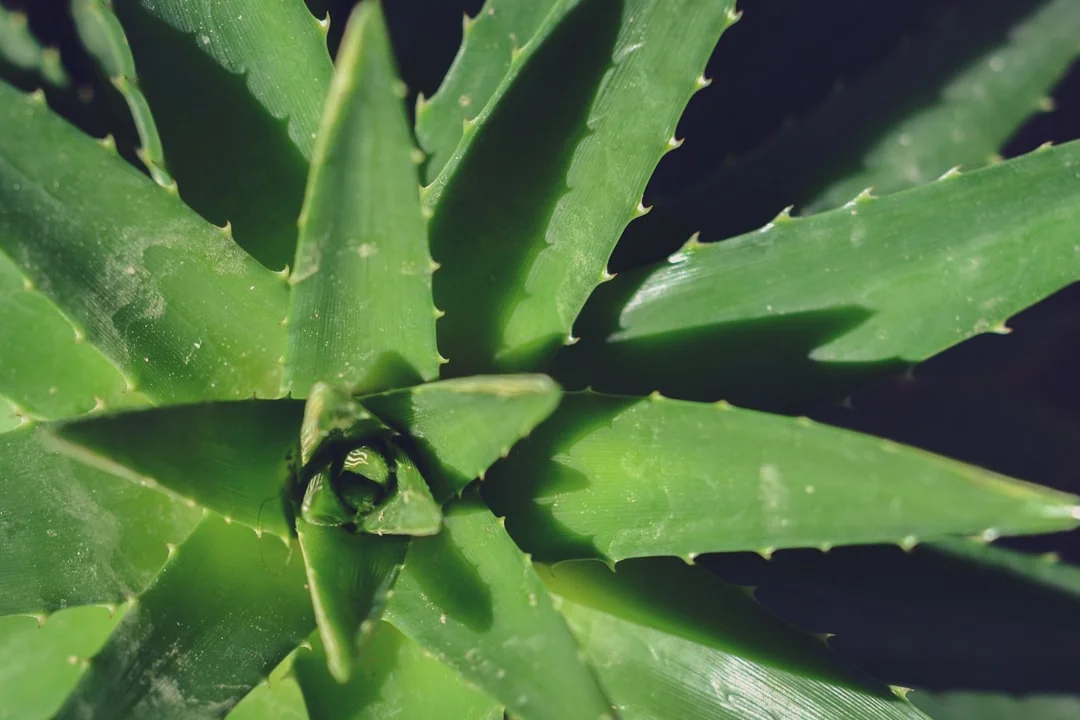
Aloe vera loves light. That’s the simple truth. However, the type of light it needs differs depending on where you live — and getting this wrong is the second most common cause of aloe decline after overwatering.
In tropical regions like Southeast Asia, southern India, and Central America, full outdoor sun from May to September can actually scorch aloe leaves, producing brown, dried tips. Bright shade or morning sun with afternoon shelter works better in these zones.
In temperate regions — the UK, Pacific Northwest USA, Germany, New Zealand — aloe rarely gets too much light. Place it in your brightest south-facing window (in the Northern Hemisphere) or north-facing window (in Australia and New Zealand). It will thrive with 6–8 hours of indirect light.
In arid zones like the Middle East, North Africa, and southwestern USA, aloe performs brilliantly outdoors from autumn through spring. During peak summer, move it to a spot with morning sun and dappled afternoon shade — temperatures above 40°C (104°F) stress even the most sun-hardy specimens.
Indoor Light for Aloe Vera: What Actually Works
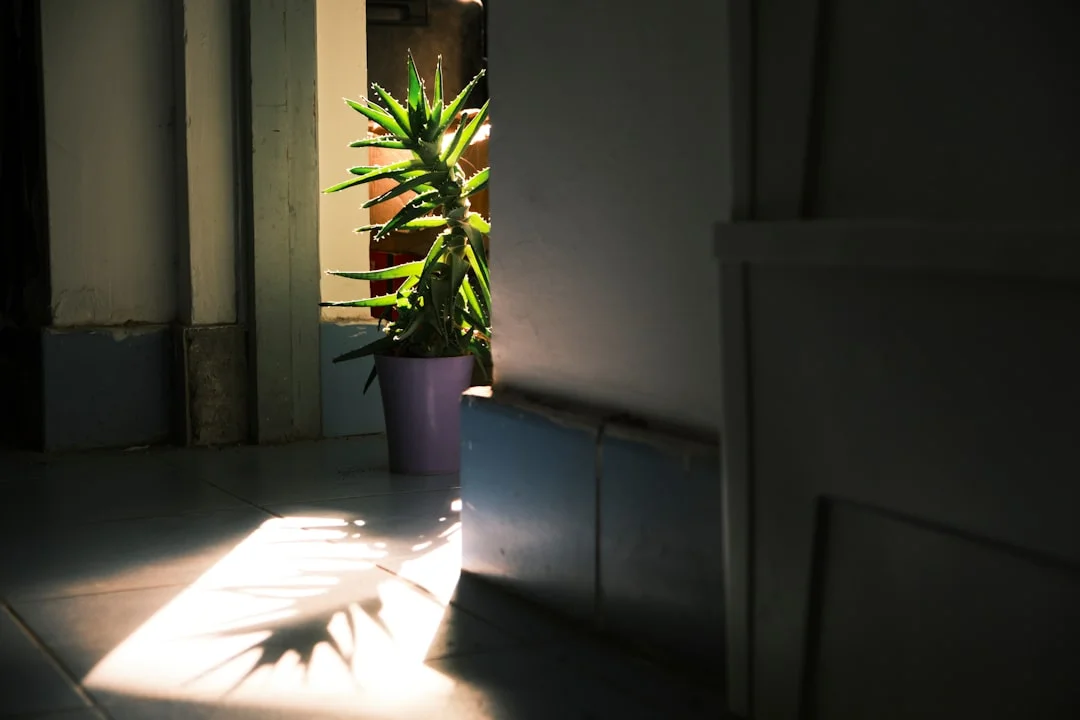
If you’re growing aloe indoors — which most people in northern climates do — placement is everything. A south-facing windowsill in the Northern Hemisphere gives the most direct light. East-facing windows provide gentler morning sun and suit apartments in cooler cities like London, Toronto, and Seoul. Avoid north-facing windows unless you supplement with a grow light (6500K full-spectrum LEDs work well at 12–14 hours per day). One clear sign of insufficient light: your aloe will stretch and lean dramatically toward the light source, a process called etiolation. The leaves will also lose their deep green and become pale. Move it promptly when you notice this.
Transitioning Aloe Between Indoors and Outdoors
Many gardeners make this mistake: they move their aloe directly from a dim indoor spot to blazing outdoor sun in spring. The result is sunscald — bleached, papery patches on the leaves that never fully recover. Instead, transition gradually over 10–14 days. Start with 1–2 hours of morning sun outdoors, then increase by 30 minutes daily. This process — called hardening off — applies whether you’re in Sydney, Dallas, or Cape Town. Furthermore, always check nighttime temperatures before leaving aloe outdoors permanently. It cannot survive frost, so bring it in whenever the forecast drops below 4°C (39°F).
Watering Aloe Vera: The Most Misunderstood Rule
Here’s where almost everyone goes wrong. Aloe vera is succulent — it stores water in its leaves. So when you water it too often, those leaves become waterlogged, the roots sit in wet soil, and a fungal pathogen called Phytophthora (root rot) sets in quietly. By the time the leaves turn mushy and yellow, the damage is often irreversible.
The correct approach to how to care for aloe vera watering is the ‘soak and dry’ method. Water thoroughly — until water drains freely from the pot’s base — then wait until the top 5–7 cm (2–3 inches) of soil is completely dry before watering again. In summer across most climates, this means watering every 14–21 days. In winter, stretch that to every 4–6 weeks.
Have you ever noticed your aloe looks fine for weeks, then suddenly collapses? That’s classic root rot from accumulated overwatering — not a sudden event, but a slow accumulation.
Watering Frequency by Climate Zone
Tropical climates (India, Southeast Asia, Brazil): High ambient humidity means soil stays moist longer. Water every 3 weeks in the dry season, and be especially cautious during monsoon. If your plant is outdoors during heavy rainfall, consider moving it under a covered patio — excess rain is as harmful as overwatering by hand. Temperate climates (UK, Canada, northern USA): Cooler temperatures slow evaporation, so water every 3–4 weeks in summer and every 5–6 weeks in winter. Arid climates (Middle East, southwest USA, Australia outback): Despite the dry air, the same ‘soak and dry’ rule applies. However, evaporation is faster, so check soil moisture weekly in peak summer and water every 10–14 days if needed.
Water Quality and Best Practices
Aloe vera is sensitive to fluoride and chlorine in tap water, which can cause brown leaf tips over time. If your tap water is heavily treated — as it often is in cities like London, New York, and Singapore — let it sit in an open container for 24 hours before use, or switch to collected rainwater. Always water at the soil level, not over the leaves. Moisture trapped in the rosette (the central cluster of leaves) can cause rot at the plant’s heart. Furthermore, always use pots with drainage holes — there is no exception to this rule if you want a healthy aloe.
Soil and Fertilizer: Getting the Foundation Right
Soil is the silent partner in how to care for aloe vera. Get it right, and everything else becomes easier. Get it wrong, and no amount of careful watering will save your plant.
Aloe needs fast-draining, low-organic soil. A commercial cactus and succulent mix — widely available at garden centres from Cape Town to Calgary — is your safest starting point. For improved drainage, mix in 30–50% coarse perlite or horticultural grit. Avoid standard potting soil, which retains too much moisture.
The ideal soil pH for aloe vera is 6.0–7.0 (slightly acidic to neutral). If you’re unsure about your local soil, a simple pH test kit (available online for around $8–$12 USD / ₹400–600 / £6–10) will tell you what adjustments to make. Ground limestone raises pH; sulfur or peat moss lowers it.
In my experience, gardeners in humid tropical climates benefit from adding extra grit — up to 50% — because ambient humidity already slows soil drying. In arid climates, a 30% perlite mix is usually sufficient.
Fertilizing Aloe Vera: Less Is Always More
Aloe vera is a light feeder. In its native habitat, it grows in nutrient-poor sandy soils — so it has no expectation of rich feeding. Over-fertilizing causes salt buildup in the soil, which burns roots and turns leaf tips brown. Feed once in early spring and once in early summer with a balanced, diluted fertilizer (10-10-10 at half strength, or a specific succulent fertilizer). Never fertilize in autumn or winter, when the plant is in a semi-dormant rest phase. As documented by the RHS, aloe grown primarily for ornamental purposes needs even less feeding — perhaps just once a year.
Choosing the Right Pot for Aloe Vera
Pot choice matters more than most people realise. Terracotta (clay) pots are ideal worldwide because they are porous — they allow the soil to breathe and excess moisture to evaporate through the walls. Plastic pots retain moisture longer, which increases rot risk in humid climates. Choose a pot that is 1–2 inches (2.5–5 cm) wider than the plant’s root ball. Too large a pot holds excess wet soil around the roots, which is a classic route to root rot. Wide, shallow pots — rather than tall, deep ones — suit aloe’s shallow root system best.
How to Grow Aloe Vera Indoors and Outdoors
One of the most frequently asked questions I receive is: ‘Can I grow aloe vera inside my apartment?’ The answer is a confident yes — with the right setup. Aloe is one of the most successful indoor plants globally, particularly in cold-climate countries where outdoor growing isn’t year-round viable.
For indoor growing, position your plant in the brightest spot available — ideally a south- or east-facing window. Use a terracotta pot with a well-draining succulent mix. Keep it away from cold drafts and heating vents, both of which cause stress. Room temperatures between 18°C–27°C (65°F–80°F) are ideal for most homes.
For outdoor growing in temperate climates, bring aloe outside in late spring once nighttime temperatures stay above 10°C (50°F) consistently. In tropical and subtropical climates — parts of Florida, southern California, the Mediterranean coast, South Africa, and all of South and Southeast Asia — aloe can stay outdoors year-round in a sheltered spot with good drainage.
Growing Aloe Vera in Containers: A Step-by-Step Approach
Container growing is how most people around the world successfully cultivate aloe. First, choose a terracotta pot 1–2 inches wider than your plant’s current root ball. Next, fill the bottom third with cactus-succulent mix blended with 30% perlite. Then, place the aloe in the pot and backfill, leaving 2 cm (1 inch) of space below the pot rim. After that, wait 5–7 days before watering for the first time — this allows any damaged roots to callous over. Finally, position in your brightest indoor spot or a sheltered outdoor location above 10°C (50°F).
How to Grow Aloe Vera in a Garden Bed
Growing aloe directly in garden soil works beautifully in Mediterranean climates (California, southern Spain, Morocco, parts of Australia), arid zones, and tropical highlands. Choose a raised bed or sloped ground to ensure excellent drainage — flat, waterlogged ground is fatal. Amend native soil heavily with coarse sand or grit before planting. Space plants 45–60 cm (18–24 inches) apart to allow for pup growth. In humid tropical zones, planting in raised mounds further protects roots from standing water during monsoon or rainy seasons. Similarly, mulching lightly with gravel (not bark mulch, which retains moisture) keeps the root zone drier.
How to Propagate Aloe Vera from Pups and Leaf Cuttings
Aloe vera is one of the most generous plants you’ll ever grow. A healthy, mature plant produces ‘pups’ — small offsets that grow from the base of the mother plant — and each pup is a free new plant waiting to happen. This is the most reliable propagation method, and it works beautifully across all climates.
Leaf cuttings are possible but notoriously unreliable with aloe. Unlike many succulents (such as Echeveria), aloe leaves contain a high proportion of gel, which tends to rot rather than callous and root. Pup division is almost always the better choice.
The best time to propagate is in late spring or early summer — March to June in the Northern Hemisphere, or September to December in Australia, New Zealand, and South Africa. This gives new plants a full growing season to establish before winter.
Step-by-Step: Dividing Aloe Vera Pups
First, remove the entire mother plant from its pot and brush away soil to expose the root system. Next, locate the pup — it will be attached to the mother’s root base by a short connecting root. Then, using a clean, sharp knife or pruning shears, sever the connection cleanly. After that, allow the cut end to dry and callous in open air for 24–48 hours — this step is critical and often skipped. Once calloused, pot the pup in a small terracotta pot with cactus mix. Finally, wait 7–10 days before the first watering. Roots typically establish within 3–4 weeks.
Growing Aloe Vera from Seed
Seed propagation is slower but rewarding for patient gardeners. Aloe seeds germinate best at 21°C–27°C (70°F–80°F) with a humidity dome to maintain moisture during the 2–4 week germination period. Sow seeds on the surface of a damp cactus mix and cover lightly with fine sand. Once seedlings reach 5–7 cm (2–3 inches), they can be transplanted to individual pots. In tropical climates with warm nights, seeds can be germinated outdoors in a sheltered spot. In colder climates, a heated propagation tray indoors gives the best results. Be patient — seed-grown aloe may take 3–4 years to reach full size.
Common Aloe Vera Problems and How to Fix Them
Even when you know how to care for aloe vera correctly, problems can appear. The good news is that most aloe issues have clear visual symptoms and straightforward solutions — if you catch them early.
Brown, mushy leaves at the base almost always mean root rot from overwatering. Remove the plant from its pot, cut away all black or brown roots with sterile scissors, dust the healthy roots with horticultural sulfur powder (a natural antifungal), allow to dry for 48 hours, then repot in fresh dry cactus mix. Don’t water for 7–10 days.
Brown, dry leaf tips with otherwise healthy leaves usually indicate low humidity, fluoride sensitivity from tap water, or physical damage. Switch to rainwater and ensure good air circulation.
Yellow leaves are most often caused by overwatering, but can also signal insufficient light or cold temperatures. Diagnose by checking root health and your watering log.
Pest Identification and Treatment
The most common aloe pests worldwide are mealybugs (white cottony clusters in leaf joints), scale insects (brown bumps on leaves), and spider mites (fine webbing, especially in dry indoor air). For mealybugs and scale, wipe affected areas with a cotton swab dipped in 70% isopropyl alcohol — this works without harsh chemicals and is available globally. For spider mites, increase humidity temporarily and spray with a diluted neem oil solution (2ml neem oil per litre of water with a drop of liquid soap). Repeat every 7 days for 3 weeks. In my experience, keeping aloe slightly root-bound and in good light significantly reduces pest susceptibility.
Leaf Discolouration: A Diagnostic Guide
Red or purple-tinged leaves: Usually a stress response to sudden temperature change, intense direct sun, or underwatering. Not an emergency — adjust conditions and the colour normalises within weeks. Pale, washed-out green: Insufficient light. Move to a brighter location immediately. Translucent, water-soaked patches: Frost or cold damage. If temperatures dipped below 0°C (32°F), the affected tissue is dead. Cut it away cleanly with sterile scissors to prevent fungal spread. White or grey powdery patches: Could be powdery mildew (a fungal disease favoured by poor air circulation and cool damp conditions). Improve ventilation, reduce watering, and treat with diluted bicarbonate of soda spray.
Seasonal Care for Aloe Vera: Month-by-Month Tips
One of the keys to how to care for aloe vera throughout the year is understanding its natural growth rhythm. Aloe vera grows actively in spring and summer, slows significantly in autumn, and enters a semi-dormant rest in winter. Matching your care routine to this cycle makes an enormous difference.
In June — which is peak summer in the Northern Hemisphere and mid-winter in the Southern Hemisphere — your care approach should differ dramatically based on where you live. In the UK, USA, Europe, and most of Asia, June is prime growing time: increase watering frequency slightly, consider moving outdoor plants to full morning sun, and apply a half-strength succulent fertilizer if you haven’t done so in spring. In Australia, South Africa, and New Zealand, June is the beginning of the cool rest period: reduce watering to every 4–6 weeks, stop fertilizing, and keep the plant in the warmest sheltered spot available.
Spring Care (March–May, Northern Hemisphere / September–November, Southern)
Spring is when aloe wakes up. You’ll often notice new leaves appearing from the centre of the rosette and pups multiplying at the base. This is the ideal time to repot if needed, propagate pups, and begin a light fertilizing schedule. Gradually increase watering from winter’s minimal schedule back to the regular 2–3 week cycle. If you’re moving your plant outdoors after winter, begin the gradual hardening-off process now — 1–2 hours of outdoor sun to start, increasing slowly over two weeks.
Autumn and Winter Care: The Critical Rest Period
Autumn and winter are when aloe vera care mistakes become most consequential. Many gardeners continue summer watering schedules into the cooler months, which is a primary cause of winter root rot. Reduce watering dramatically — once a month is often enough indoors in a cool room. Stop fertilizing entirely from September through February (Northern Hemisphere). Keep aloe away from cold windowsills in regions with harsh winters — glass conducts cold effectively, and a plant touching a frosty window can suffer leaf damage even in a heated room. A minimum indoor temperature of 10°C (50°F) is the absolute lower limit for healthy aloe.
Medicinal and Everyday Uses of Aloe Vera
Aloe vera is so much more than a decorative plant. It’s one of the most thoroughly studied medicinal plants on earth, with documented use spanning over six millennia across at least four major healing traditions.
In Ayurveda, aloe is called Kumari (‘young girl’ — a reference to its rejuvenating properties). According to the Charaka Samhita, one of Ayurveda’s foundational texts, Kumari is recommended for liver health, skin conditions, and as a general tonic. The Indian Ministry of AYUSH recognises aloe vera as a key ingredient in numerous formulations for digestive health and skin care.
In Traditional Chinese Medicine (TCM), aloe is known as Lú Huì (芦荟). TCM practitioners have used it for centuries to clear heat, cool the liver, and treat constipation — applications remarkably consistent with modern pharmacological findings.
In Western herbalism, aloe was documented by Greek physician Dioscorides in the first century CE as a wound-healing agent. Its use spread across the Arab world through medieval Islamic medicine, then into European botanical traditions.
A 2019 NIH-funded systematic review found that topical aloe gel reduced healing time for first- and second-degree burns by approximately 9 days compared to conventional dressings — a significant clinical outcome.
Harvesting and Using Aloe Gel at Home
To harvest aloe gel, select the outermost, most mature leaf from your plant — these contain the highest concentration of active compounds. Cut it cleanly at the base with a sterile knife. Stand the cut leaf upright in a glass for 10–15 minutes to allow the yellow latex (aloin) to drain away. Aloin is a potent laxative and skin irritant, and should not be used directly. After draining, slice the leaf lengthwise and scoop out the clear inner gel. This gel can be applied directly to minor burns, sunburn, dry skin, and insect bites. Store excess gel in a clean airtight container in the refrigerator — it stays fresh for 5–7 days.
Important Cautions About Internal Use
While aloe gel is generally safe for topical use, internal consumption requires caution. The gel is classified as Generally Recognized as Safe (GRAS) by the US FDA in small amounts. However, whole-leaf aloe juice — which may contain aloin — has been associated with electrolyte imbalance and, in a 2016 US National Toxicology Program study, with potential carcinogenic effects at very high doses in animal models. For internal use, always use decolorised, purified aloe juice products, stay within manufacturer-recommended doses, and consult a healthcare provider if pregnant, breastfeeding, or taking medications. Furthermore, children under 12 should not consume aloe vera internally without medical guidance.
Safety, Toxicity, and Contraindications
This is an important section — and one that many care guides skip entirely. Understanding how to care for aloe vera responsibly means knowing its risks alongside its benefits.
Aloe vera is mildly toxic to dogs and cats. The culprit is saponins and anthraquinones (including aloin) found in the plant’s skin and latex layer. According to the ASPCA, ingestion by pets can cause vomiting, diarrhoea, lethargy, and tremors. If you have dogs or cats, keep your aloe in a location they cannot access — a high shelf or a room they don’t enter. The clear inner gel is far less toxic than the latex layer, but all parts of the plant should be kept away from pets as a precaution.
For humans, direct skin contact with the latex (the yellow fluid just beneath the skin) can cause contact dermatitis in sensitive individuals. Always drain the latex before using the inner gel topically.
Pregnant women should avoid consuming aloe vera internally in any form, as anthraquinones may stimulate uterine contractions. People taking diuretics, digoxin, or diabetes medications should also exercise caution, as aloe may interact with these drugs.
Aloe Vera Safety for Children
Topical application of the clear inner gel is generally safe for children over 2 years for minor burns and skin irritation. However, internal consumption of any aloe product is not recommended for children under 12 without medical supervision. Keep the whole plant out of reach of young children — not because it’s highly toxic, but because the latex layer can cause stomach upset if chewed or ingested. In households with very young children, consider placing aloe vera on high shelves or in rooms that are not easily accessible. The same precaution applies in childcare settings and schools where plants are used as decorative elements.
Frequently Asked Questions
How often should I water aloe vera?
Water aloe vera every 14–21 days in summer and every 4–6 weeks in winter. Always use the 'soak and dry' method — water thoroughly until drainage flows freely from the pot's base, then wait until the top 5–7 cm (2–3 inches) of soil is completely dry before watering again. In humid tropical climates, stretch the interval slightly longer. Overwatering is the single most common cause of aloe death worldwide, so when in doubt, wait another week before watering.
Can I grow aloe vera indoors in a cold climate?
Absolutely, yes. Aloe vera is one of the most successful indoor plants for cold climates including the UK, Canada, Scandinavia, and northern USA. Place it in your brightest south-facing window (Northern Hemisphere) for maximum light. Maintain indoor temperatures above 10°C (50°F) at all times. Reduce watering significantly in winter when the plant rests. If natural light is insufficient during winter months, supplement with a 6500K full-spectrum grow light for 12–14 hours daily. With these adjustments, aloe thrives indoors in virtually any climate.
Is aloe vera safe for pets?
Aloe vera is mildly toxic to dogs and cats, according to the ASPCA. The plant's latex layer and saponins can cause vomiting, diarrhoea, and lethargy if ingested by pets. The clear inner gel is significantly less toxic but should still be kept away from animals as a precaution. Place your aloe on a high shelf or in a room your pets cannot access. If your pet ingests part of the plant, contact your veterinarian or a pet poison helpline immediately. The plant is generally safe for adult humans when used topically in gel form.
Why are my aloe vera leaves turning yellow?
Yellow leaves on aloe vera are most commonly caused by overwatering — the roots are suffocating in wet soil. Check immediately by removing the plant from its pot and inspecting the roots. Brown, mushy roots confirm root rot; healthy roots are white or tan and firm. Other causes include insufficient light, cold drafts below 10°C (50°F), or nutrient deficiency from long-term neglect. Fix overwatering by trimming dead roots, allowing them to dry for 48 hours, then repotting in fresh cactus mix. Adjust your watering schedule to every 3 weeks at minimum.
How do I grow aloe vera in a container?
Growing aloe vera in containers is ideal for most climates. Choose a terracotta pot 1–2 inches (2.5–5 cm) wider than the root ball — terracotta is preferred because it breathes, reducing root rot risk. Use a cactus or succulent potting mix blended with 30% perlite for added drainage. Place the plant in your brightest spot. Water only when the top 5 cm (2 inches) of soil is dry. Repot every 2–3 years or when pups crowd the container. Container-grown aloe can be moved indoors for winter in cold climates — a major advantage over ground-planted specimens.
When and how should I harvest aloe vera gel at home?
Harvest outer leaves from a mature plant at least 3–4 years old, as these contain the highest concentration of active gel. Cut the leaf cleanly at the base with a sterile knife. Stand it cut-end down in a glass for 10–15 minutes to drain the yellow latex (aloin), which is an irritant. Then slice the leaf lengthwise and scoop out the clear inner gel with a spoon. Apply directly to skin for burns, dryness, or minor wounds. Store unused gel in a sealed glass container in the refrigerator for up to 7 days.
How long does aloe vera take to grow from a pup?
A separated aloe pup typically establishes roots within 3–4 weeks when planted in well-draining cactus mix. From a freshly separated pup, expect the plant to reach a medium, usable size — with leaves 15–20 cm (6–8 inches) long — within 12–18 months under good growing conditions (bright light, warm temperatures, correct watering). Full maturity, with large harvestable leaves and the ability to produce flowers, takes approximately 3–4 years. Growth is faster in warm climates like tropical Asia and the Mediterranean, and slower in cooler temperate regions.
What is the correct soil mix for aloe vera?
The ideal soil for aloe vera is a commercially available cactus and succulent potting mix blended with 30–50% coarse perlite or horticultural grit for additional drainage. The soil pH should be between 6.0 and 7.0. Avoid standard potting compost, which retains too much moisture and increases root rot risk. If you're in a humid climate, use up to 50% perlite. In arid climates, 30% perlite is usually sufficient. Refresh the soil mix completely every 2–3 years at repotting, as salts and compaction reduce drainage over time.
Final Thoughts
Knowing how to care for aloe vera is ultimately about working with the plant’s nature rather than against it. It’s a desert survivor that wants bright light, fast-draining soil, infrequent water, and warmth. Give it those things — and a pot with proper drainage holes — and it will reward you for decades with minimal effort.
The most important shift most gardeners need to make is this: stop watering on a schedule. Instead, check the soil. Wait for it to be genuinely dry before reaching for the watering can. That single change saves more aloe plants than any other advice I can offer.
Whether you’re growing on a windowsill in Manchester, a balcony in Bangkok, or a garden bed in Cape Town, the core of how to care for aloe vera remains the same. Start with well-draining soil, choose a terracotta pot, find your brightest window, and trust the plant’s remarkable resilience. It has survived 6,000 years of human cultivation — it simply needs you to get out of its way a little more often.
Start with one plant. Let it thrive. Then let it give you more. That’s the aloe way.

